
BAL Rated Composite Decking: The Complete Australian Guide to Fire-Resistant Outdoor Living
What if the material designed to shield your home from the Australian bushfire season actually became the most beautiful feature of your outdoor living space? Many homeowners feel a sense of dread when they first encounter the complexities of AS 3959:2018, fearing that safety requirements will force them to settle for a deck that looks industrial or "plastic." It's a valid concern. You want a sanctuary for those long summer afternoons, not a commercial-grade platform that feels cold and uninviting. Choosing the right BAL rated composite decking shouldn't mean sacrificing the rich textures and natural warmth of timber for the sake of compliance.
We understand that navigating council inspections and evolving building codes can be a source of significant stress. This guide is designed to provide clarity, helping you discover how to protect your property with high-performance materials that meet rigorous fire standards while maintaining a premium aesthetic. We'll walk you through the nuances of different Bushfire Attack Levels, the importance of non-combustible subframes like our adjustable pedestal systems, and why modern engineering allows your deck to withstand both embers and the relentless Australian sun for years to come.
Table of Contents
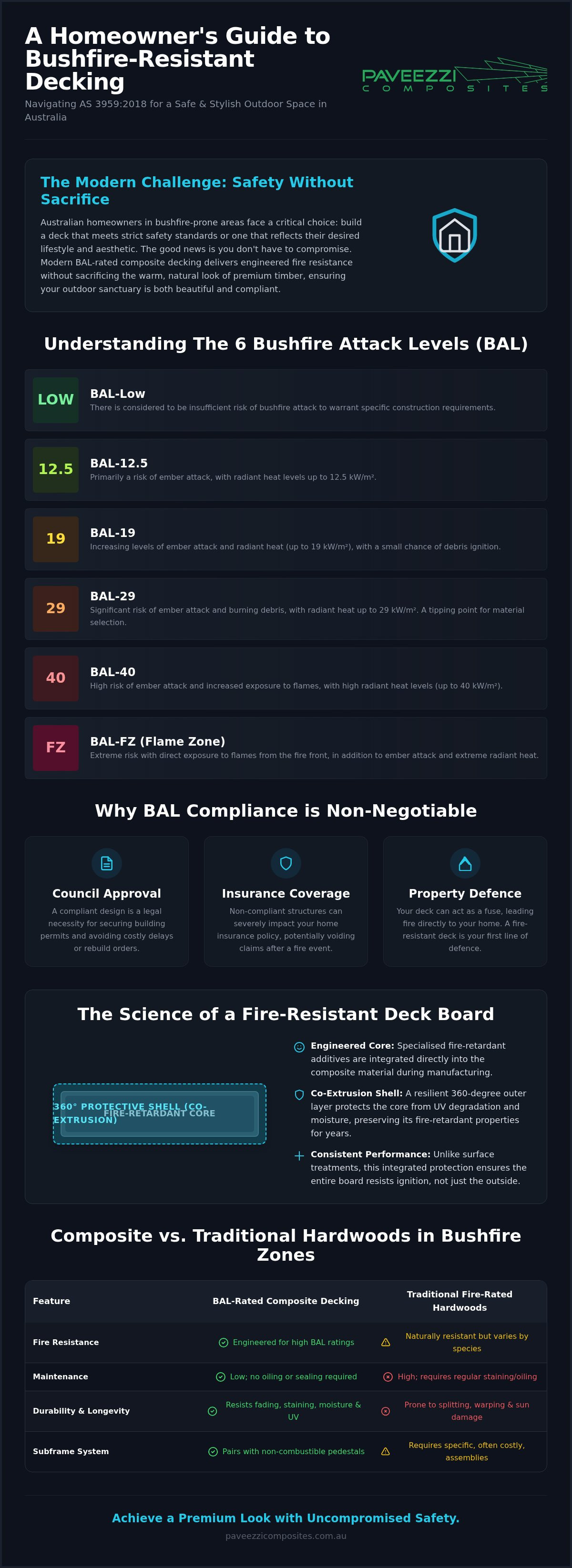
Understanding Bushfire Attack Levels (BAL) for Australian Decks
For any Australian homeowner building in a bushfire-prone area, the term "BAL" is far more than just a technical acronym; it's a critical safety benchmark. BAL stands for Bushfire Attack Level. It serves as a measure of a building's potential exposure to ember attack, radiant heat, and direct flame contact. The Australian Standard AS 3959:2018 governs how we build in these regions, ensuring that structures like decks don't become fuel for a fire front. Since the devastating events of one of Australia's all-time worst bushfire disasters, these building regulations have become significantly more stringent to protect lives and property.
While traditional timber is often prized for its natural look, it frequently fails to meet higher BAL requirements without incredibly expensive chemical treatments or specific, costly assembly methods. High-quality BAL rated composite decking provides a more reliable, engineered path to safety. These boards are manufactured with specific fire-retardant additives that allow them to withstand harsh conditions that would cause standard timber to ignite. It's a modern solution that respects our landscape's volatility while providing a durable, high-end finish for your home.
Why BAL Compliance is Non-Negotiable
Compliance is about much more than just ticking a box for your local council approval. It's a legal necessity that directly impacts your property's future. If your outdoor structure doesn't meet the specific BAL requirements for your block, you may face significant hurdles during the building permit process. Even more importantly, non-compliant decks can severely affect your insurance coverage. A deck is often the bridge between the natural bush and your back door. If it isn't fire-resistant, it can act as a literal fuse, leading fire directly to your main dwelling. Safety isn't just a preference; it's your first line of defence.
The 6 Bushfire Attack Levels Explained
The levels defined under AS 3959:2018 range from minimal risk to extreme danger. Understanding where your property sits is the first step in your design journey.
BAL-Low: There is insufficient risk to warrant specific construction requirements.
BAL-12.5: Risk of ember attack and low levels of radiant heat.
BAL-19: Increasing levels of radiant heat and ember attack.
BAL-29: Significant radiant heat and risk of ember attack. This is often the tipping point where standard composite boards require specific fire-retardant additives to remain compliant.
BAL-40: High risk of ember attack, exposure to flames, and increased radiant heat.
BAL-FZ (Flame Zone): Direct exposure to flames from the fire front and extreme radiant heat.
Paveezzi acts as a trusted pioneer in this space, offering the technical expertise needed to help you select BAL rated composite decking that matches your specific zone. We ensure your choice meets the rigorous demands of Australian standards without losing the natural, tactile beauty you desire for your entertaining area.
The Science of Fire-Resistant Composite Decking Materials
The fire resistance of modern outdoor flooring isn't a superficial treatment; it's a result of meticulous engineering at the molecular level. For a product to qualify as BAL rated composite decking, manufacturers integrate specialised fire-retardant additives directly into the core during the production process. This ensures that the entire board, not just the surface, can withstand the radiant heat levels outlined in the official Planning for Bush Fire Protection guidelines. This scientific approach creates a material that performs consistently under pressure, providing a reliable barrier against the unpredictable nature of an ember attack.
A critical component of this performance is co-extrusion technology. This process wraps the fire-rated core in a resilient, 360-degree outer shell, shielding the critical internal additives from UV degradation and moisture ingress. Without this protective layer, the fire-retardant properties could diminish over years of exposure to the elements. The Ressisto series utilizes this advanced engineering to ensure the boards remain durable and safe in extreme Australian temperatures, maintaining their structural integrity when traditional materials might begin to fail.
Composite vs. Traditional Timber in Bushfire Zones
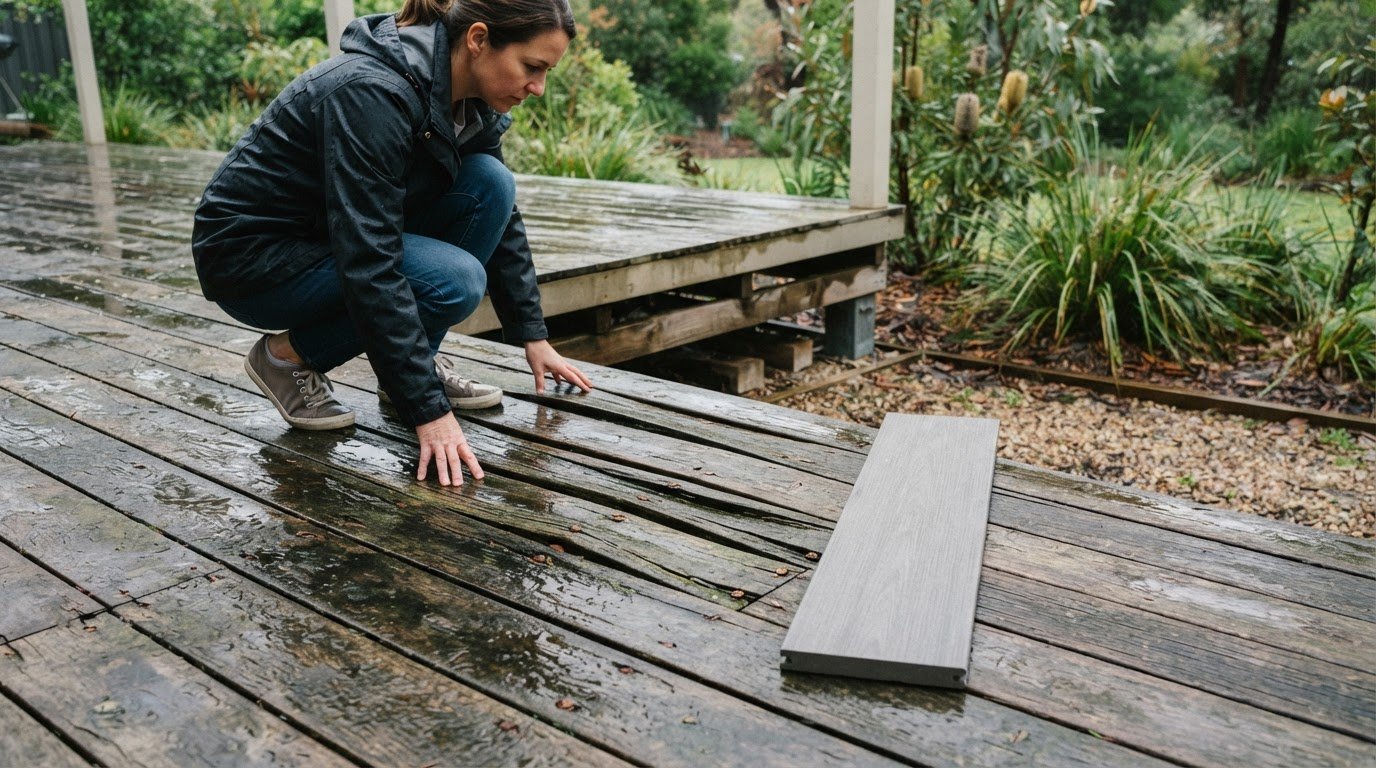
Hardwoods like Spotted Gum or Ironbark are naturally dense, but they remain organic materials that dry out and degrade over time. As timber ages, it develops small cracks and fissures that can trap wind-borne embers, increasing the risk of ignition. Maintaining the fire resistance of timber requires frequent, expensive oiling and staining to prevent the wood from becoming "fuel." Composite solutions offer a "set and forget" alternative that doesn't splinter or warp as it ages. Fire-retardant additives in composite cores inhibit flame spread by releasing suppressed water vapour or creating a protective char layer that insulates the board's internal structure from heat. This makes it a much safer, low-maintenance choice for family entertaining areas where safety is the priority.
UV Stability and Thermal Expansion
The Australian sun is a brutal testing ground for any building material. High temperatures can cause inferior composites to expand excessively or lose their colour within just a few seasons. Paveezzi boards are specifically engineered for these high-heat zones, using advanced thermal stability to minimise expansion and contraction. For homeowners concerned about glare and heat retention, the Ressisto 138 Extra Matte provides a sophisticated solution. This finish is designed to reduce light reflection and minimise heat absorption, ensuring the deck remains comfortable underfoot even during a scorching afternoon. If you are beginning to plan your layout, you can explore our full range of fire-resistant solutions to find the perfect match for your home's orientation and local climate.
Designing for Safety: Subframes, Pedestals, and Assembly
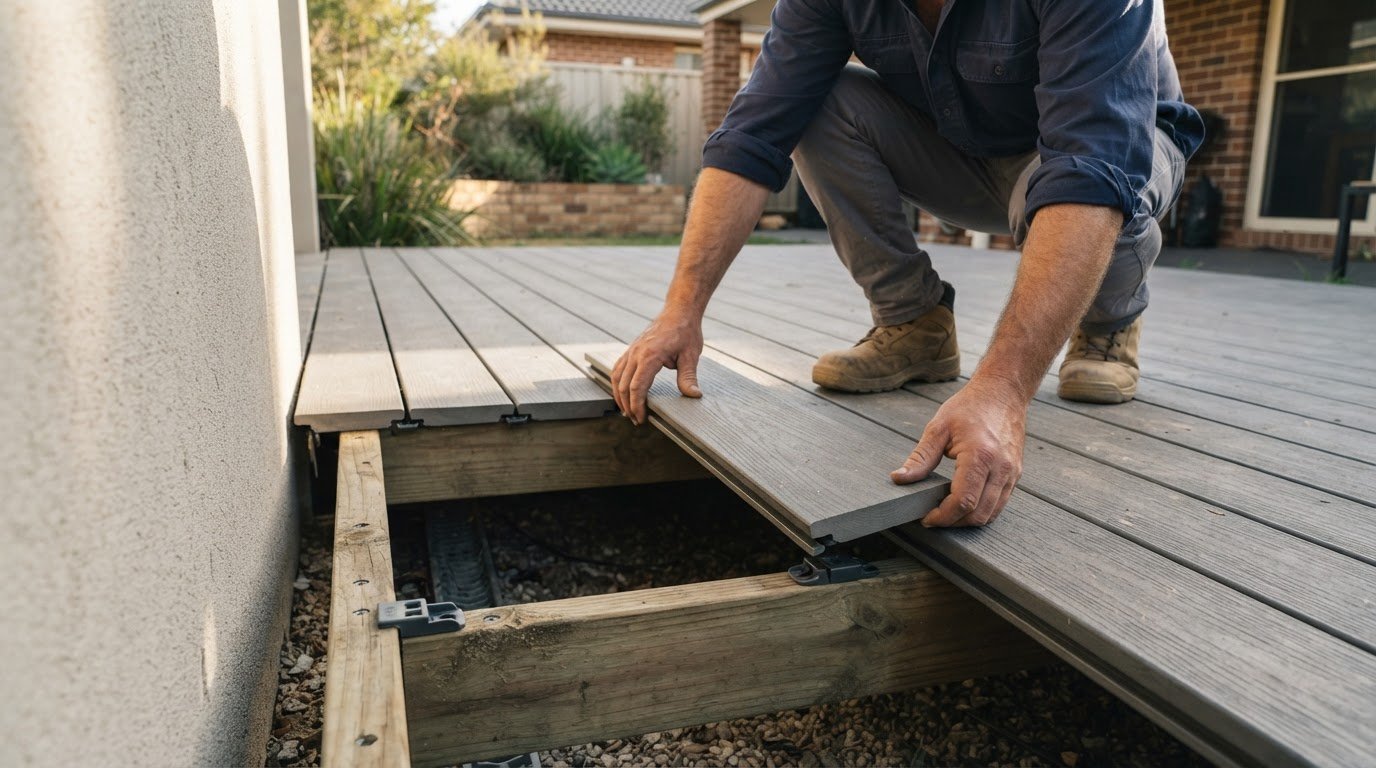
Achieving a compliant outdoor space requires looking beneath the surface. While the fire-resistant properties of the boards themselves are crucial, a BAL-rated deck is only as safe as its weakest component. In many high-risk zones, installing BAL rated composite decking on a traditional timber subframe is simply not enough to satisfy safety standards or council requirements. If the supporting structure ignites, the entire assembly is compromised regardless of how fire-resistant the surface appears. This is why non-combustible subframes, typically constructed from aluminium, have become the gold standard for fire-prone areas.
Proper assembly also involves managing the environment around and under the deck. Adequate spacing and ventilation are essential to prevent the buildup of heat pockets and, more importantly, to stop the accumulation of flammable debris. Wind-blown leaves and dry twigs trapped in the gaps can act as kindling during an ember attack. By designing a system that allows for easy cleaning and airflow, you create a more resilient structure that stands up to the unique challenges of the Australian climate.
The Role of Non-Combustible Pedestals
For projects involving raised surfaces, balconies, or uneven terrain, the choice of support system is vital. Rhino Adjustable Pedestals provide a sophisticated solution for creating compliant, level decks without the need for traditional timber posts. These pedestals are engineered to be non-combustible, making them ideal for both commercial developments and residential homes in high BAL zones. Their self-levelling capabilities simplify the installation process on sloped ground, ensuring a perfectly flat finish. When paired with aluminium joists, these pedestals form a completely fire-resistant foundation that supports the longevity of your composite boards.
Maintaining Your Fire-Safe Zone
Safety is an ongoing commitment that extends beyond the initial build. Even the best materials require sensible maintenance to remain effective against bushfire threats. Consider the following checklist for your outdoor area:
Regularly clear the gaps between boards to prevent organic matter buildup.
Ensure the area underneath the deck remains free of stored firewood or garden waste.
Inspect the perimeter for any gaps where embers could potentially enter the subframe.
The choice between "closed-edge" and "grooved-edge" boards also plays a role in ember protection, as closed edges leave fewer entry points for sparks. For detailed technical information and layout advice, you can visit the Paveezzi resources page to download our installation guides. If you're ready to start your project with the right foundation, explore our range of fire-compliant subframe solutions today.
Selecting the Right Aesthetic: Safety Meets Australian Style
Building in a bushfire-prone area should never feel like a retreat from high-end design. It's a common misconception. Homeowners often worry that choosing a BAL rated composite decking solution means settling for a clinical finish that looks more like a commercial platform than a family sanctuary. This simply isn't the case with modern engineering. Safety should be a seamless design feature, not a compromise that detracts from your home's character. Paveezzi has established itself as a trusted pioneer by providing luxury, fire-resistant solutions that elevate the Australian outdoor lifestyle.
The Ressisto 143 Brushed series exemplifies this balance, offering a natural, tactile timber feel that is indistinguishable from traditional hardwood at a distance. These boards provide the warmth and organic texture that Australians love, without the inherent risks of organic timber. Wide-board options are particularly effective in contemporary backyards; they create a sense of expansive space and clean lines that complement modern architecture. As a family-run Australian business since 2010, we've focused on ensuring our products meet the highest safety standards while satisfying the most discerning aesthetic tastes.
Colour Palettes for Contemporary Australian Homes
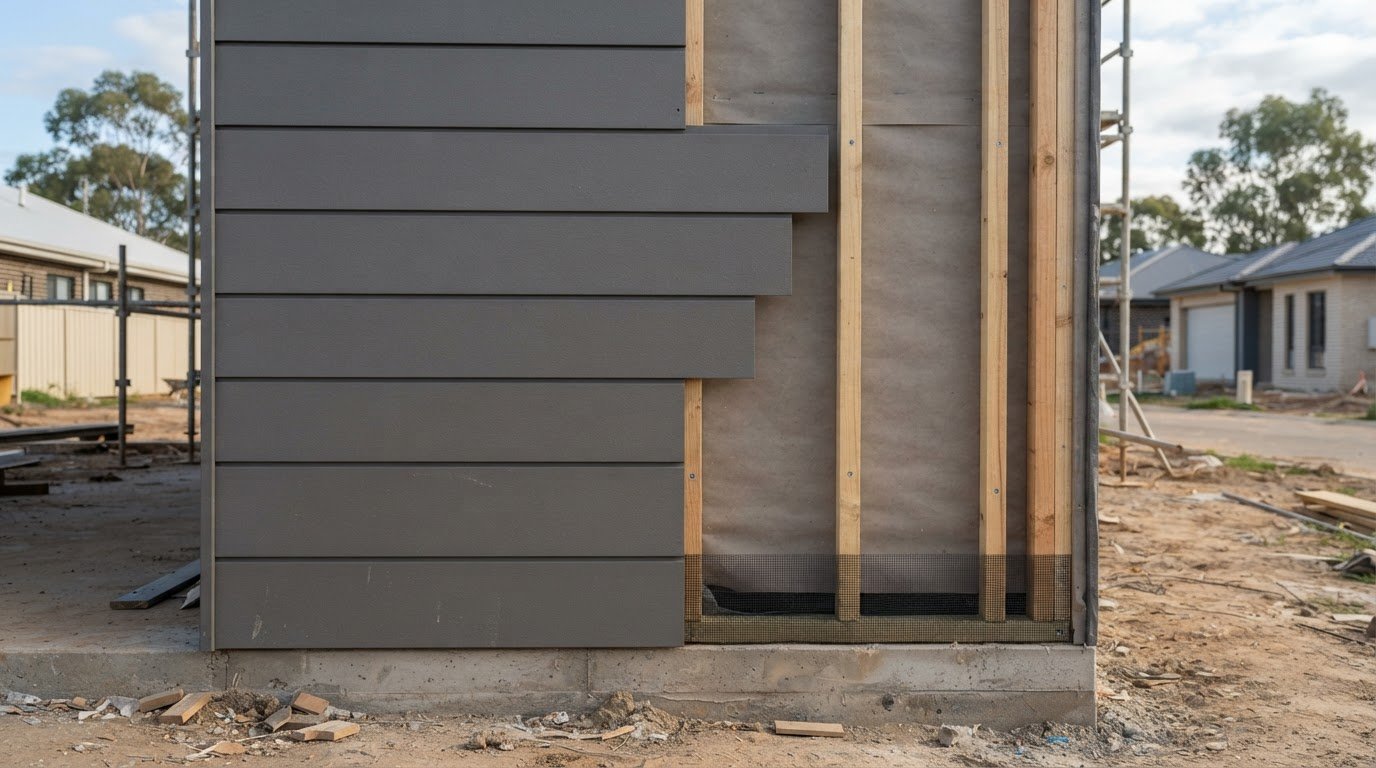
Modern exterior design is moving toward a sophisticated palette that mirrors our unique landscape. We see a strong trend in silver greys that mimic weathered coastal timber, as well as deep, earthy browns that provide a grounded, forest-inspired feel. To achieve a truly cohesive architectural statement, many designers match their floor surfaces with architectural composite cladding. This creates a unified look that wraps the home in a protective, stylish envelope. The sophisticated, extra matte finish provides a non-reflective surface that eliminates harsh glare during the peak of a summer afternoon.
Finishing Touches: Nosing and Edging
The integrity of your fire-rated structure depends on the details. It's vital to use matching nosing and edging options for stairs and exposed board ends to ensure the BAL rating remains consistent across the entire deck. These finishing touches aren't just about compliance; they provide a polished, professional look that defines the borders of your entertaining area. Safety is further enhanced by slip-rated finishes, which are essential for pool surrounds and high-traffic zones where families gather. For more design inspiration and technical advice on creating your dream outdoor space, visit the Paveezzi blog to see how we've helped Australians build safer, more beautiful homes.
Build Your Fire-Safe Australian Sanctuary
Creating a compliant outdoor space doesn't have to mean compromising on the architectural vision for your home. By understanding the specific Bushfire Attack Level of your property and selecting a high-performance BAL rated composite decking, you can achieve a sophisticated, low-maintenance entertaining area that meets the strictest safety standards. We've explored how fire-retardant additives and non-combustible subframe systems work together to provide a robust defence against ember attacks while maintaining the tactile beauty of natural timber.
With over 15 years of expertise in the Australian market, Paveezzi remains a dedicated partner for homeowners and developers seeking steadfast reliability. Our specialised non-combustible subframe solutions and premium architectural finishes are designed to withstand the intensity of our climate without fading or warping. You can secure your property's future and enjoy peace of mind during the summer months by choosing materials engineered for long-term performance and elegance.
Explore our range of BAL-compliant composite decking and pedestals to find the perfect balance of safety and style for your next project. We're here to help you create a beautiful, resilient space that your family will enjoy for decades to come.
Frequently Asked Questions
Can I use composite decking in a BAL-40 zone?
Yes, you can use specialised composite decking in a BAL-40 zone, provided the specific product has been tested to AS 1530.8.1 standards. Not every board is suitable for this high-risk level. You must ensure the entire assembly, including the subframe and fixings, meets the stringent requirements for radiant heat and flame exposure. It's a high benchmark to meet, but modern engineering makes it possible to achieve this without losing the timber aesthetic.
Does BAL-rated composite decking require special installation?
Proper installation of BAL rated composite decking involves more than just laying boards; it requires a compliant system. This often includes specific gap spacing for ventilation and the use of non-combustible subframes in higher risk zones. Following the manufacturer’s technical guides is essential to ensure the finished deck passes council inspections and provides the intended protection. It isn't just about the boards themselves, but how they interact with the entire structure.
How does fire-rated composite decking compare in price to hardwood?
While the initial purchase price of fire-rated composite is typically higher than standard hardwood, it offers superior long-term value. Traditional timber requires ongoing oiling and maintenance to retain its fire resistance. In contrast, composite boards are a "set and forget" solution. The return on investment is often realised within five to seven years through maintenance savings alone, making it a financially sound choice for the life of your home.
Is all composite decking fire-resistant by default?
No, not all composite decking is fire-resistant by default. Standard boards are often made from wood fibres and recycled plastics that can ignite under high heat. Only boards specifically engineered with fire-retardant additives are suitable for use in bushfire-prone areas. Always look for a clear BAL rating and certification before making a purchase for your project. Don't assume a product is safe just because it's a composite material.
What happens to composite decking in a bushfire?
When exposed to extreme heat, BAL rated composite decking is engineered to resist ignition and inhibit the spread of flames. Unlike dry timber that can act as a fuel source, these boards are designed to char or release suppressed moisture to protect their internal structure. This critical performance helps prevent the deck from becoming a bridge that carries fire to your main dwelling. It's a calculated response designed to save your property during a crisis.
Can I install BAL-rated composite decking over an existing timber subframe?
Installing fire-rated boards over an existing timber subframe is generally not permitted in BAL-29 zones or higher. The subframe is a critical part of the fire-safe assembly. If the underlying timber ignites, the fire-resistance of the surface boards becomes irrelevant. For a fully compliant and safe structure, we recommend using non-combustible aluminium joists and adjustable pedestals. Safety requires a holistic approach from the ground up.
Comments