
Benefits of Wide Composite Decking Boards: The 2026 Australian Design Guide
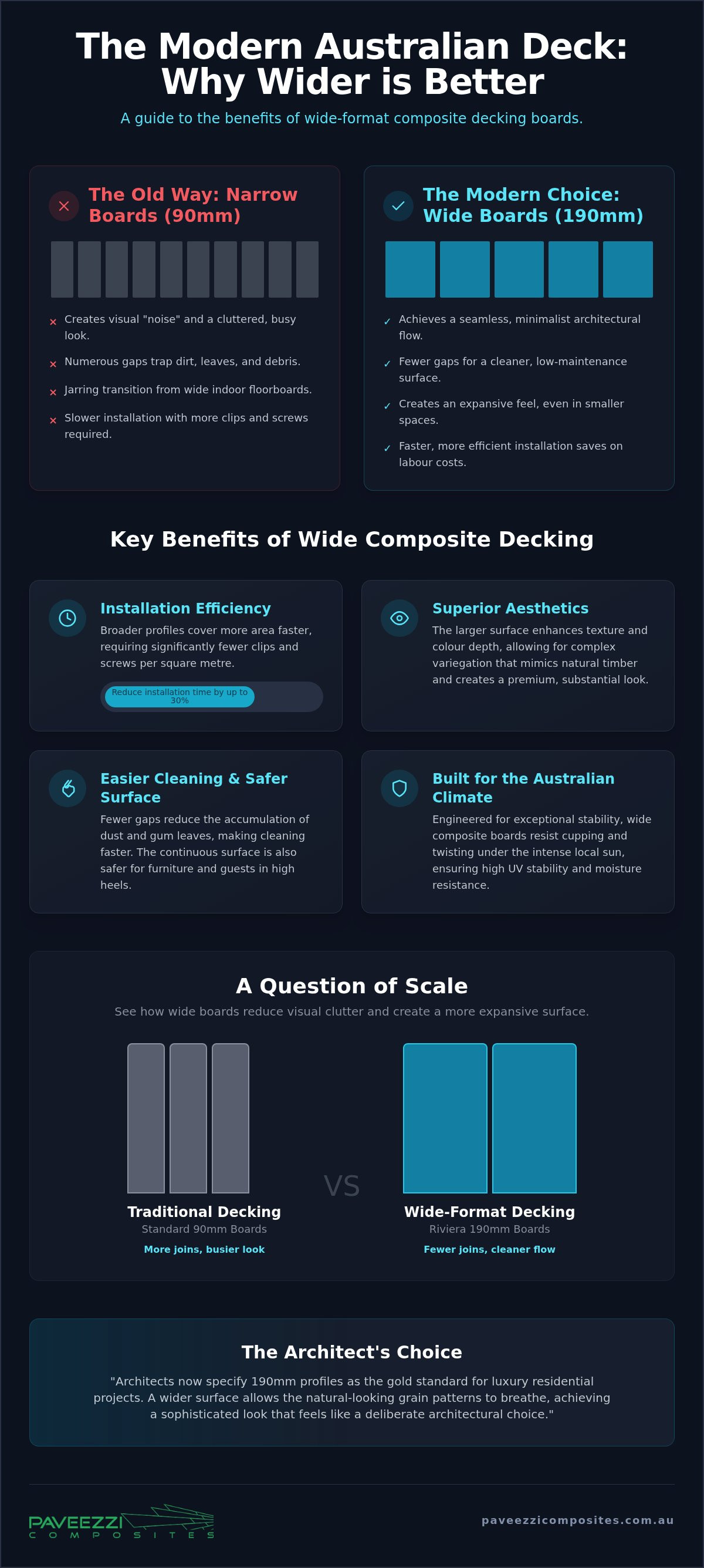
Why do so many expansive Australian decks feel cluttered and fragmented instead of open and inviting? The visual "noise" created by dozens of narrow joins often shrinks a space, making even a generous backyard feel unnecessarily busy. Understanding the benefits of wide composite decking boards is the first step toward solving this, as many homeowners now seek a cleaner look that mirrors the minimalist lines of a modern interior. You've likely worried about mounting labour costs or how dozens of narrow boards will hold up under the punishing local sun.
These broader profiles, like the Riviera 190, offer a seamless luxury flow that standard widths simply can't match. By choosing a wider board, you're not just opting for a premium aesthetic; you're significantly reducing installation time and creating a more stable, durable surface for high foot traffic. This 2026 design guide examines how these innovative boards handle thermal expansion, why they're a favourite for architects, and how they can transform your next project into a lasting architectural statement.
Table of Contents
The Evolution of the Australian Deck: Why Wide Boards are Trending
Australian outdoor design has matured significantly over the past decade. We've moved beyond the basic "back deck" to sophisticated outdoor rooms that demand higher standards of finish. Historically, narrow 90mm timber boards were the default; however, they often felt spindly and cluttered in larger areas. The rise of Wood-plastic composites (WPCs) allowed manufacturers to engineer larger, more stable profiles. One of the primary benefits of wide composite decking boards is their ability to anchor a large alfresco area without the "busy" look of countless joins. You can see how these modern profiles have evolved by browsing our latest composite decking options.
Matching Indoor Flooring Scale
Modern Australian homes prioritise open-plan living and a sense of continuity. When your internal floorboards are 180mm or wider, transitioning to a narrow 90mm deck creates a jarring visual break at the threshold. Wide boards align these scales perfectly. This creates a true "indoor-outdoor flow" where the eye doesn't stop at the sliding door; it glides straight through to the garden. Even on smaller urban balconies, wider boards can make a space feel larger. They reduce the number of parallel lines that chop up the floor area, creating a calmer, more expansive feel underfoot.
A Modern Architectural Aesthetic
Architects now specify 190mm profiles as the gold standard for luxury residential projects. Why? Because narrow boards create significant "visual noise" in expansive areas like poolside surrounds. A wider surface allows the natural-looking grain patterns to breathe and show their full character. It results in a cleaner, minimalist outdoor floor with fewer visible join lines across the deck surface. By minimising these interruptions, you achieve a sophisticated look that feels like a deliberate architectural choice rather than a mere utility.
Embracing the benefits of wide composite decking boards isn't just about following a trend. It's about scale and presence. Whether you're designing a sprawling rural veranda or a sleek city rooftop, the 190mm Riviera profile provides the weight required for modern Australian architecture. It simplifies the landscape. It allows your furniture, your plants, and your view to take centre stage without the distraction of a cluttered floor.
Visual and Practical Benefits of Wide Composite Decking Boards
In the Australian decking industry, we define a "wide board" as any profile exceeding 150mm in width. While traditional timber planks of this size are notorious for cupping and twisting under the intense heat of the sun, one of the primary benefits of wide composite decking boards is their exceptional structural stability. Modern engineering ensures these broader profiles remain flat and true over their entire lifespan. This reliability is often matched by the environmental benefits of composite decking, as many high-performance boards now utilise recycled materials to help lower the carbon footprint of residential builds.
Enhanced Texture and Colour Depth
The increased surface area of the Riviera 190 Wide Board range allows for a more sophisticated aesthetic than narrow alternatives. Wider profiles provide the canvas needed for complex "variegation," where multiple tones blend to mimic the random beauty of natural timber. This depth of colour prevents the deck from looking like a uniform plastic sheet. Instead, it offers a sense of permanence and visual weight. It feels substantial. It looks like a premium architectural choice that complements the scale of a modern Australian home.
Cleaner Surfaces and Easier Cleaning
Practicality is where these boards truly shine for busy families. By using wider planks, you significantly reduce the total number of gaps across your deck. This means fewer grooves where stubborn Australian dust, gum leaves, and debris can accumulate. Fewer gaps also mean the deck structure underneath is better protected from the elements. During the annual wash-down, you'll find the process much faster because there are fewer recesses to scrub. Beyond cleanliness, a more continuous surface provides better stability for outdoor furniture and is far safer for guests wearing high heels. If you're planning a large-scale project, you can view our full range of profiles to see how they might work for your space.
Installation Efficiency: Saving Time and Labour Costs
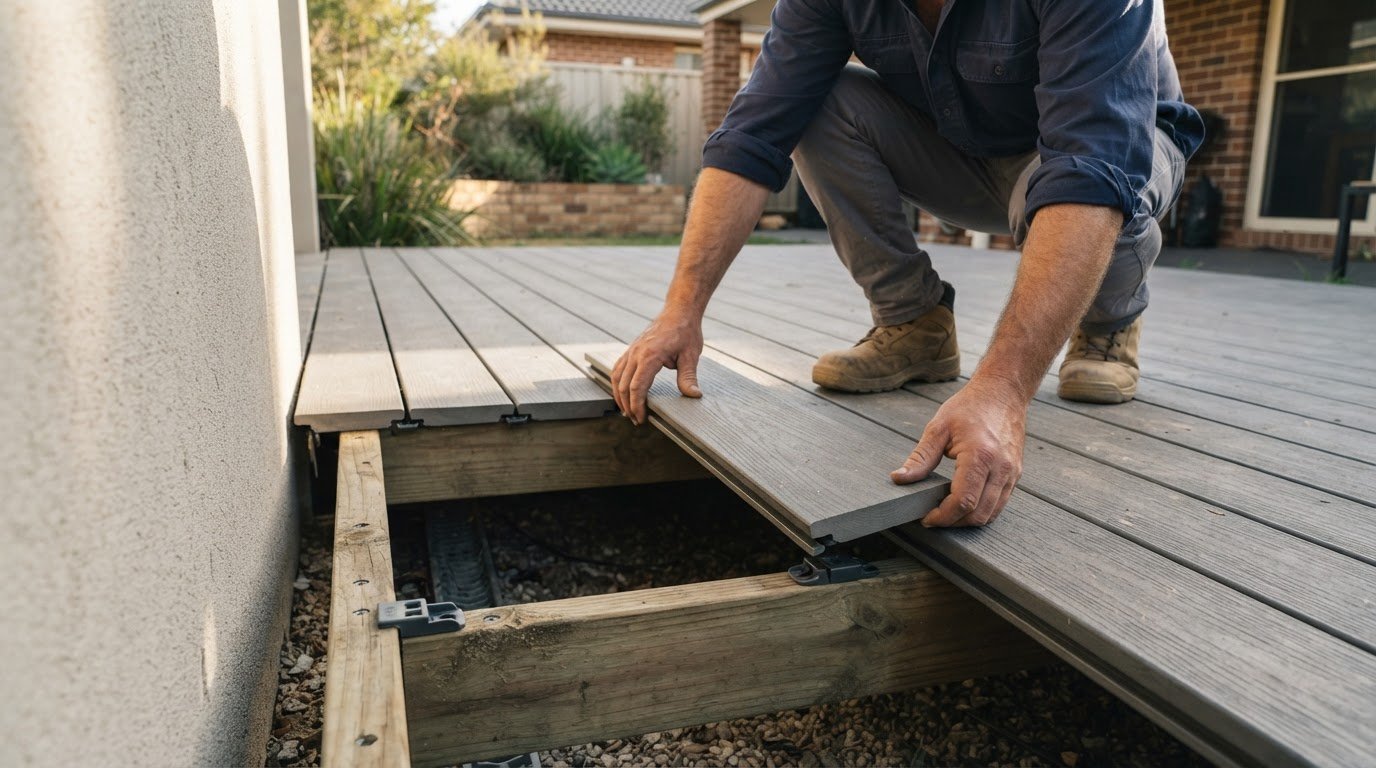
Efficiency on a build site isn't just about working faster; it's about working smarter with the right materials. While we've discussed the aesthetic appeal, one of the most compelling benefits of wide composite decking boards is the tangible reduction in on-site labour. Every time a builder lays a 190mm board instead of a standard 140mm profile, they cover significantly more ground in a single motion. This cumulative effect transforms the timeline of a project, especially when dealing with expansive outdoor living areas or commercial walkways.
Labour Savings for Large Projects
The math is simple but impactful. Fewer boards mean fewer "board-runs" across the subframe. By reducing the total number of planks required for a deck, you can decrease the installation time by up to 30%. This is why high-end residential developers are increasingly specifying wider profiles. It allows them to maintain a luxury finish while significantly lowering the total project cost associated with labour hours. It's a no-nonsense approach to value that benefits both the property owner and the trade professional.
Fastener and Accessory Requirements
Fastener efficiency is another area where wider boards provide a clear advantage. Because you're installing fewer rows of decking, you require significantly fewer clips and screws per square metre. Each board is secured using premium decking accessories designed to facilitate natural thermal expansion without compromising the board's position. This reduction in hardware doesn't just save money on consumables. It also means fewer penetrations into the subframe, which can improve the long-term integrity of the timber joists.
Layout becomes much simpler when you have fewer joints and butt-joins to align. In the harsh Australian sun, managing expansion gaps is critical for wide-profile stability. We recommend a maximum of 450mm joist centres for residential applications to ensure the deck remains rock-solid under high foot traffic. If you're ready to streamline your next build with a wider profile, you can explore our range of high-performance boards today.
Choosing the Right Wide Board for the Australian Climate
Australia's climate is famously unforgiving, with high UV levels and significant temperature swings. When selecting a profile, you must prioritise materials engineered specifically for these local conditions. One of the primary benefits of wide composite decking boards is their substantial presence, but this larger surface area requires superior UV stability to prevent fading. Whether you prefer a tactile brushed finish or the understated elegance of an extra matte look, the material must withstand the baking afternoon sun without losing its structural integrity. Professionalism matters in these high-end builds. Builders often rely on specialised nosing and edging options to hide the core material and provide a polished, safe finish to stairs and perimeters.
Performance in High-Heat Environments
Wide boards act as a heat sink, so their internal composition is vital. High-quality composite cores are designed to manage heat absorption and maintain rigidity across a full 190mm span. This prevents the cupping or sagging that often plagues inferior wide-format products. Wide boards require precise gap spacing for thermal movement. Without this foresight during the planning phase, even the best materials can struggle with the natural expansion and contraction cycles of a local summer. It is about ensuring the deck looks as good in five years as it does on the day of handover.
The Paveezzi Riviera 190 Advantage
The Riviera 190 Wide Board is the result of meticulous engineering aimed at the premium residential and commercial market. Its construction balances long-term durability with a natural aesthetic that remains consistent from the first board to the last. For large-scale decks, sourcing from a national supplier ensures consistent batch quality. This is essential when you're trying to maintain a uniform colour and texture across hundreds of square metres. Understanding the technical benefits of wide composite decking boards allows you to design with confidence. If you require technical drawings or load ratings for your next architectural project, you can contact the Paveezzi team for expert guidance and support.
Designing for the Future of Australian Outdoor Living
Choosing a wider profile is a deliberate step toward a more sophisticated, low-maintenance lifestyle. By embracing the benefits of wide composite decking boards, you're investing in an outdoor floor that mirrors the scale of modern architecture while significantly cutting down on installation time. These boards offer a cleaner finish with fewer visual interruptions, allowing the natural beauty of the grain to take centre stage. It's a practical choice that doesn't compromise on luxury.
As an Australian-owned and operated family business, Paveezzi understands the unique demands of our local climate. Our products are engineered for high UV resistance and feature premium architectural finishes that stand the test of time. Whether you're an architect specifying for a commercial project or a homeowner planning a backyard transformation, the right materials make all the difference. Explore the Riviera 190 Wide Board range at Paveezzi Composites and discover how a broader perspective can redefine your outdoor space. We're ready to support your next build with quality you can trust.
Frequently Asked Questions
Are wide composite decking boards more expensive than standard boards?
Generally, the upfront cost per square metre for wide boards is higher than standard 140mm profiles. However, this initial investment is often offset by the significant reduction in labour and hardware costs. Because you're handling fewer planks and installing fewer fasteners, the total project cost frequently balances out. It's important to view the price through the lens of long-term value and the premium architectural finish achieved.
Do wide composite boards require different joist spacing?
Yes, wide boards often require specific joist centres to maintain structural integrity under load. While standard residential decks might use 450mm centres, some wide-profile installations benefit from tighter spacing, such as 400mm, depending on the board's thickness and core density. Always consult the manufacturer's technical specifications to ensure the subframe provides adequate support. This prevents any potential for deflection and ensures the deck remains rock-solid for decades.
Can wide boards cup or warp like wide timber boards?
High-quality composite boards are specifically engineered to resist the cupping and warping that typically plague wide timber planks. Unlike natural wood, which absorbs moisture and reacts to heat unevenly, composite cores provide uniform stability across the entire 190mm span. This is one of the standout benefits of wide composite decking boards in the harsh Australian climate. They stay flat and true even when exposed to intense summer heat.
How do I calculate how many wide boards I need for my deck?
To calculate your requirements, divide the total width of your deck area by the combined width of the board and the recommended expansion gap. For a 190mm board with a 5mm gap, your calculation "cover" is 195mm. Remember to account for approximately 5% to 10% wastage for offcuts and staggered joins. Having a clear plan for your layout helps minimise waste and ensures you order the correct quantity.
Are wide composite boards suitable for poolside areas in Australia?
Wide composite boards are an excellent choice for poolside environments due to their superior moisture resistance and slip-rated surfaces. They don't splinter like traditional timber, making them much safer for bare feet. Additionally, the reduced number of gaps means less pool water and chemicals seep through to the subframe. Choosing a lighter colour can also help manage surface temperature, ensuring the deck remains comfortable to walk on during a typical Australian summer day.
What is the best way to clean a wide-board composite deck?
Cleaning a wide-board deck is remarkably straightforward because there are fewer grooves to trap debris. Start by sweeping away loose leaves and dust. Then, use a bucket of warm water mixed with a mild detergent and a soft-bristled brush to scrub the surface. For a deeper clean, a pressure washer can be used on a low setting, but be careful not to hold the nozzle too close to the board's surface.

Comments