
Composite Cladding vs Aluminium in Australia: The Definitive 2026 Comparison
The material you choose to wrap your home in today could be the difference between a soaring valuation and a "banned" notice from your local council. Most Australians feel a sense of unease when comparing composite cladding vs aluminum australia, often caught between the desire for architectural warmth and the fear of non-compliant materials. It is a valid concern, especially as the NCC 2026 standards bring renewed focus to fire safety and material integrity. You likely want a home that looks like a high-end retreat rather than an industrial shed, but you don't want to be tethered to a maintenance schedule of oiling and staining every second summer.
We believe that choosing a facade should be a process of excitement, not anxiety. This comparison provides a clear path through the complex world of Australian fire ratings, heat performance, and aesthetic durability. You will learn how modern architectural timber-composites differ from banned panels and why aluminium might not always be the coolest choice under the blistering sun. We are going to look at the practical performance of these materials over a twenty year horizon, ensuring your choice balances safety with the timeless beauty of a natural finish.
Table of Contents
The Great Australian Facade Debate: Defining "Composite" vs Aluminium
The conversation around composite cladding vs aluminum australia is often clouded by a fundamental misunderstanding of terminology. In the wake of high-profile building fires, the word "composite" became synonymous with risk for many developers and homeowners. It is vital to distinguish between Aluminium Composite Panels (ACP) and Wood-Plastic Composites (WPC). Understanding what is cladding and how these materials differ is the first step toward a safe, compliant project. Choosing between composite cladding vs aluminum australia requires looking past the labels to the actual engineering behind the product. While solid aluminium is the industrial heavyweight for high-rise compliance, architectural timber-composites are carving out a significant space in premium residential design.
The ACP Ban: What You Need to Know
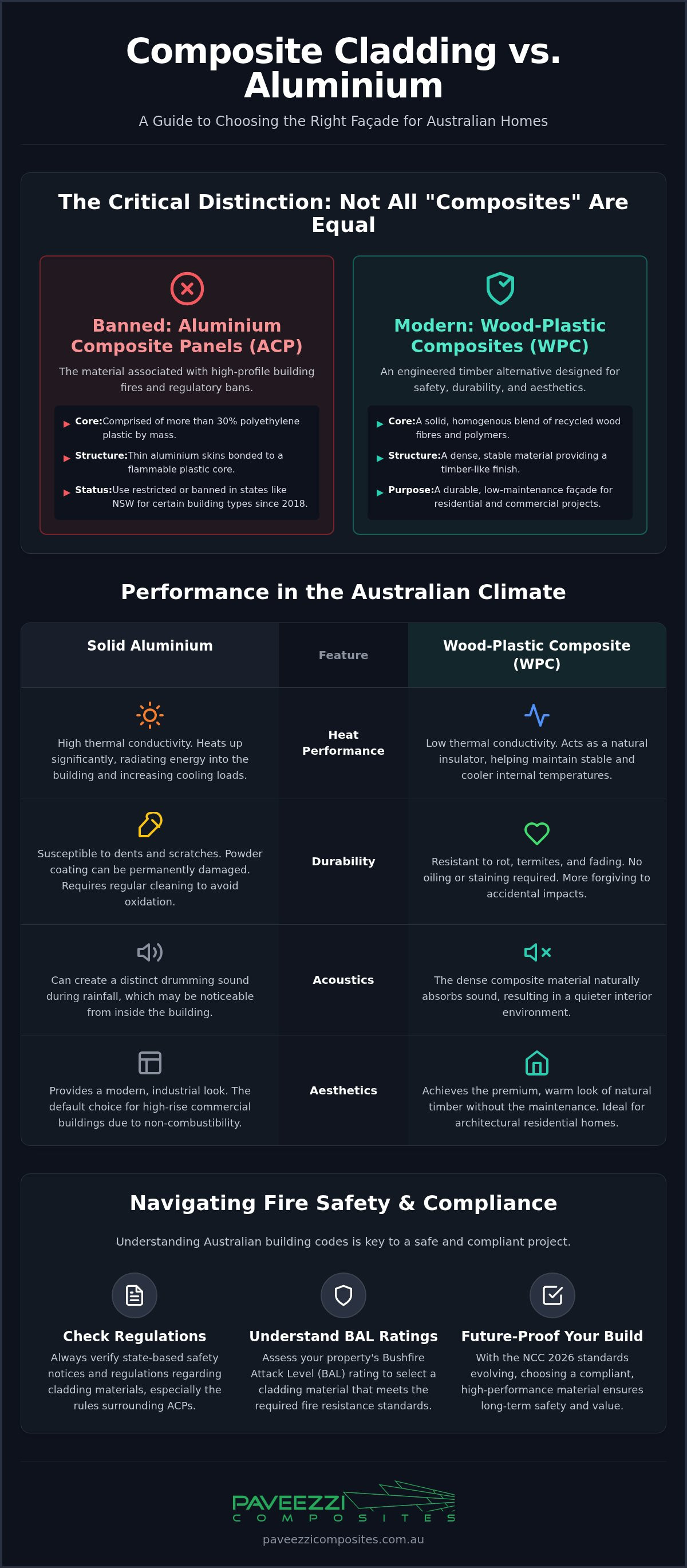
The turning point for the Australian industry arrived on 15 August 2018. New South Wales banned the use of certain aluminium composite panels with a core comprised of more than 30% polyethylene by mass. This regulation changed the landscape for buildings over a certain height. Since then, solid aluminium has become the default choice for commercial high-rises where non-combustibility is a non-negotiable requirement. Identifying if a product is affected requires checking the specific core composition and current state-based safety notices. These notices ensure that materials used in high-density developments meet rigorous fire performance criteria.
Architectural Timber-Composites (WPC) Explained
Unlike ACPs, which use thin metal skins over a plastic core, Wood-Plastic Composites like our cladding ranges are engineered from a blend of recycled wood fibres and high-density polymers. These materials are designed as a timber alternative. They provide the visual warmth of natural wood without the susceptibility to rot or termites. They aren't a replacement for ACP; they are a separate category of architectural finish. WPC stands as a durable, non-rot facade solution specifically engineered to withstand the unique challenges of Australian conditions. High-performance options such as the Ressisto 144 Fineline offer a sophisticated shadow-line aesthetic that solid metal often struggles to replicate.
Performance Comparison: Durability, Heat, and Maintenance
When evaluating composite cladding vs aluminum australia, the raw performance of these materials under our harsh sun is often the deciding factor for homeowners and architects alike. Aluminium is an exceptional conductor of heat. On a 40 degree January afternoon, a dark powder-coated metal facade can become almost too hot to touch, radiating that energy back into the building structure and significantly increasing cooling loads. In contrast, timber-composites possess a much lower thermal conductivity. They act as a natural insulator, helping to maintain more stable internal temperatures throughout the year. The sensory experience also differs. Rain on a metal facade often creates a distinct drumming effect, whereas the density of a timber-composite material naturally absorbs sound, providing a quieter interior environment.
The Thermal Factor in Australian Climates
The National Construction Code (NCC) places a heavy emphasis on the thermal performance of building envelopes. To manage aluminium's conductivity, installers must often incorporate complex thermal breaks and insulation layers to meet energy efficiency standards. Composite materials simplify this process. While both materials experience thermal expansion, the way they are installed is critical. We ensure that expansion gaps are meticulously calculated to prevent warping or buckling in extreme temperatures. This engineering oversight ensures the facade remains straight and true for decades, regardless of the climate zone.
Long-term Maintenance and Fade Resistance
Maintenance requirements are a significant part of the long-term cost equation. Aluminium facades require regular cleaning, particularly in coastal Australian properties where salt spray can lead to oxidation if left unchecked. Powder-coated finishes are also susceptible to permanent scratches or dents from hail or accidental impact. The Ressisto range offers a more forgiving alternative. These boards are engineered for colour-fastness and do not require the constant oiling or painting associated with raw timber. If you are looking for a facade that retains its premium architectural finish with minimal effort, you might want to view our full range of durable solutions. High-performance composites provide a "set and forget" peace of mind that industrial metal simply cannot match.
Fire Safety and Compliance: Navigating the NCC and BAL Ratings
Fire safety is the most scrutinised aspect of modern Australian construction. The National Construction Code (NCC) 2026 sets a high bar for external walls, and understanding the nuances of composite cladding vs aluminum australia is essential for long-term compliance. While solid aluminium is frequently chosen for its non-combustible properties, high-quality wood-plastic composites are designed to meet specific safety benchmarks for residential and medium-density projects. The distinction between AS 1530.1 and AS 1530.3 is often where confusion begins. AS 1530.1 is a rigorous test for non-combustibility, typically required for high-rise structures or Flame Zone builds. AS 1530.3 measures how a material reacts to fire, focusing on ignitability and flame spread. Insurance companies now look closely at these results. A compliant facade doesn't just protect your home; it protects your financial investment by keeping premiums manageable.
Building in Bushfire Zones
For projects in high-risk areas, the Bushfire Attack Level (BAL) rating dictates your material palette. Solid aluminium is often the necessary choice for BAL-FZ (Flame Zone) requirements due to its inherent resistance to extreme heat. However, architectural composites are highly effective in regions rated BAL-12.5 to BAL-29, provided they have passed the AS 1530.8.1 fire test. It isn't just about the boards themselves. Utilising non-combustible accessories like Rhino pedestals is a critical step in ensuring the entire facade system, not just the surface material, meets fire-sensitive design requirements. This holistic approach to safety ensures that no weak points exist within the wall assembly.
Verification and Certification
Approaching these standards requires a methodical approach to documentation. You should always request a Certificate of Conformity from your supplier to verify that the product meets Australian Standards. Your building certifier will require this evidence before approving your cladding choice. Don't be deterred by the origin of a product. If an imported material has undergone rigorous testing to AS 1530.1 or AS 1530.3 standards within an Australian laboratory, it can be a perfectly safe and compliant option. Integrity in testing is what matters most. If you want to ensure your project meets the latest safety criteria, you can explore our certified product range to find a solution that balances aesthetic appeal with strict NCC compliance.
Aesthetic Selection: Achieving the Premium Architectural Look
Choosing between composite cladding vs aluminum australia often comes down to a simple "visual warmth" test. While aluminium offers a sleek, industrial aesthetic, it can sometimes feel flat or repetitive when used over large spans. Modern architectural composites provide a tactile depth that powder-coated metal struggles to replicate. The colour palettes also tell a different story. Aluminium usually leans toward industrial greys and charcoals, whereas high-end composites embrace the organic tones of natural oaks, teaks, and walnuts. Many contemporary Australian designs now mix these materials, using the strength of metal alongside the softness of timber-look finishes to create sophisticated, multi-textured facades that stand out in any streetscape.
The Texture of Luxury: Ressisto 144 Fineline
The Ressisto 144 Fineline profile is a favourite among architects for its sophisticated shadow play. Its unique geometry creates deep lines that change with the sun’s movement, adding a layer of architectural interest that flat panels simply lack. While premium aluminium offers an "extra matte" look, it lacks the "brushed" organic texture found in high-end composites. This tactile quality is why the Fineline range is increasingly specified for luxury residential facades where a premium, natural feel is paramount. It provides the authentic look of timber slats without the visible fasteners or the risk of warping over time.
Making Your Final Decision
Your ultimate choice depends on several environmental and lifestyle factors. Before making a commitment, consider this brief checklist:
Coastal vs Inland: Aluminium requires frequent rinsing in salt-prone zones to prevent oxidation, while composites are naturally resilient against salt spray.
Modern vs Traditional: Aluminium suits sharp, geometric builds; composite fits both ultra-modern and classic architectural styles.
Maintenance Appetite: If you want a "set and forget" facade that never needs oiling, composite is the clear winner.
Sourcing your materials from an Australian-owned pioneer ensures you receive support from experts who understand our local conditions and building codes. We always recommend ordering samples to compare weight, texture, and colour in the unique clarity of natural Australian light. This hands-on approach removes the guesswork, giving you the confidence that your facade will retain its beauty for twenty years or more.
Securing Your Facade for the Decades Ahead
Building a home that stands the test of time requires a balance between rigorous safety standards and enduring architectural beauty. We have explored the critical differences in the composite cladding vs aluminum australia debate, highlighting that your choice impacts everything from NCC compliance to your summer cooling bills. While solid aluminium serves a clear industrial purpose, the warmth and thermal efficiency of a high-performance wood-plastic composite offer a more refined living experience for residential projects. Your choice today defines your home's performance tomorrow.
As an Australian-owned and operated business since 2010, we specialise in the high-performance Ressisto series. These products are meticulously engineered for the harsh Australian climate; ensuring they won't rot, warp, or require the constant burden of oiling. We take pride in helping homeowners and architects navigate these complex material decisions with quiet confidence and technical integrity.
Take the next step in your design journey today. Explore our range of premium architectural cladding solutions and discover why a textured, durable finish is the ultimate investment for your project. We look forward to helping you build a facade you'll be proud of for decades.
Frequently Asked Questions
Is composite cladding banned in Australia?
No, architectural wood-plastic composite cladding is not banned in Australia. The bans mentioned in building safety notices specifically target Aluminium Composite Panels (ACP) with a core containing more than 30% polyethylene. High-performance timber-look alternatives, like the Ressisto 144 Fineline, are engineered differently. They use wood fibres and polymers rather than the sandwich-panel construction found in the banned materials. Always check for current NCC compliance to ensure your specific product meets safety standards for your building class.
Does aluminium cladding rust in coastal areas?
Aluminium doesn't rust in the traditional sense because it contains no iron, but it is susceptible to oxidation and tea-staining in coastal environments. Salt spray can compromise the powder-coated finish over time, leading to a dull or pitted surface if not rinsed regularly with fresh water. For properties within 500 metres of the ocean, maintenance becomes a weekly or monthly commitment. Many owners find that high-quality composites offer a more resilient finish in these salt-heavy zones.
Which cladding is better for DIY projects?
Composite cladding is generally the superior choice for DIY projects due to its ease of installation. It can be cut, drilled, and sanded using standard woodworking tools, much like natural timber. In contrast, aluminium often requires specialised metal-cutting blades and precise folding techniques that can be challenging without industrial equipment. When comparing composite cladding vs aluminum australia for a backyard renovation, the hidden fastener systems found in the Ressisto range make achieving a professional finish much simpler.
How much more does aluminium cladding cost compared to composite?
Initial material costs for solid aluminium are typically higher than those for architectural timber-composites. While prices fluctuate based on finish and profile, aluminium often carries a premium due to the energy-intensive manufacturing process and the need for powder-coating. Beyond the boards, you must also account for specialised trims and thermal breaks required for metal facades. Choosing a high-performance composite provides a cost-effective way to achieve a luxury architectural look without the industrial price tag or the complex installation requirements of metal.
Can I use composite cladding in a BAL-40 zone?
Most architectural wood-plastic composites are not suitable for BAL-40 or Flame Zone (BAL-FZ) areas. These high-risk bushfire zones generally require non-combustible materials like solid aluminium or specific fibre cement products. While many composite ranges are tested and certified for use in BAL-12.5 to BAL-29 zones, they don't yet meet the extreme heat resistance standards required for BAL-40. It is vital to consult your local council or a fire consultant to ensure your material choice satisfies the specific requirements of your site's BAL rating.
Does composite cladding fade in the Australian sun?
All materials exposed to the harsh Australian sun will experience some level of UV impact, but premium composites are engineered for extreme colour-fastness. While older generations of WPC were prone to significant fading, modern ranges like the Ressisto series include advanced UV inhibitors and protective capping. You might notice a subtle weathering in the first few months as the wood fibres settle, but the colour remains remarkably stable over the long term. This provides a consistent aesthetic that doesn't require the frequent repainting associated with other materials.
Comments