
Composite Cladding vs Fibre Cement: The Ultimate Australian Comparison Guide
The most popular choice for an Australian facade might actually be the one that costs you the most in time and effort over the next twenty years. When weighing up composite cladding vs fibre cement Australia developers and homeowners often default to the familiar, yet they frequently find themselves caught in a relentless cycle of repainting and sanding just to keep the exterior looking fresh. It's a frustrating trade-off. You deserve a home that stands up to the punishing UV rays and meets strict Bushfire Attack Level (BAL) requirements without sacrificing the warm, natural beauty of timber.
We recognise the confusion that comes with navigating the National Construction Code (NCC) and fire safety standards like AS 1530.1. This guide provides the clarity you need to choose between these two materials, focusing on long-term durability, fire compliance, and aesthetic value. We'll break down the lifecycle costs and performance metrics of each option to ensure your project achieves a premium architectural finish that remains maintenance-free. From understanding non-combustibility to selecting a high-performance profile like the Ressisto 144 Fineline, you'll gain the insights required to build with total confidence and lasting peace of mind.
Table of Contents
Understanding the Basics: Composite Cladding vs Fibre Cement in Australia
Selecting the right facade for an Australian home involves more than just picking a colour. Our climate is unforgiving; the combination of intense UV radiation and varying moisture levels can quickly degrade inferior materials. When evaluating composite cladding vs fibre cement Australia builders must consider how these materials respond to our unique environmental pressures. While both options offer distinct advantages, understanding their structural DNA is the first step toward a successful build. The choice isn't just about the look today, but how the building performs a decade from now.
What is Fibre Cement Cladding?
This material has been a staple in Australian construction for decades. Fibre cement siding consists of a composite mix of cellulose fibre, sand, and cement. It's often found on traditional weatherboards or used for eaves and soffits. While it's durable and resistant to termites, it typically requires a finish of paint or render to ensure weatherproofing. For local tradies, handling these sheets is a heavy task that requires specific cutting tools and safety equipment to manage dust. It's a reliable, functional choice, but one that demands regular attention to keep it looking its best.
The Rise of Architectural Composite Systems
Modern engineering has paved the way for a new generation of facades. Unlike the early plastics of the past, products like Cladding Ressisto 144 Fineline are sophisticated, co-extruded systems. These panels utilise a blend of recycled wood fibres and high-grade polymers to achieve a genuine timber aesthetic without the susceptibility to rot or warping. They represent a shift toward sustainability, often incorporating recycled content that would otherwise end up in landfill. This evolution provides a premium architectural finish that doesn't demand the constant sanding or staining associated with natural wood or the regular repainting needed for cement-based products.
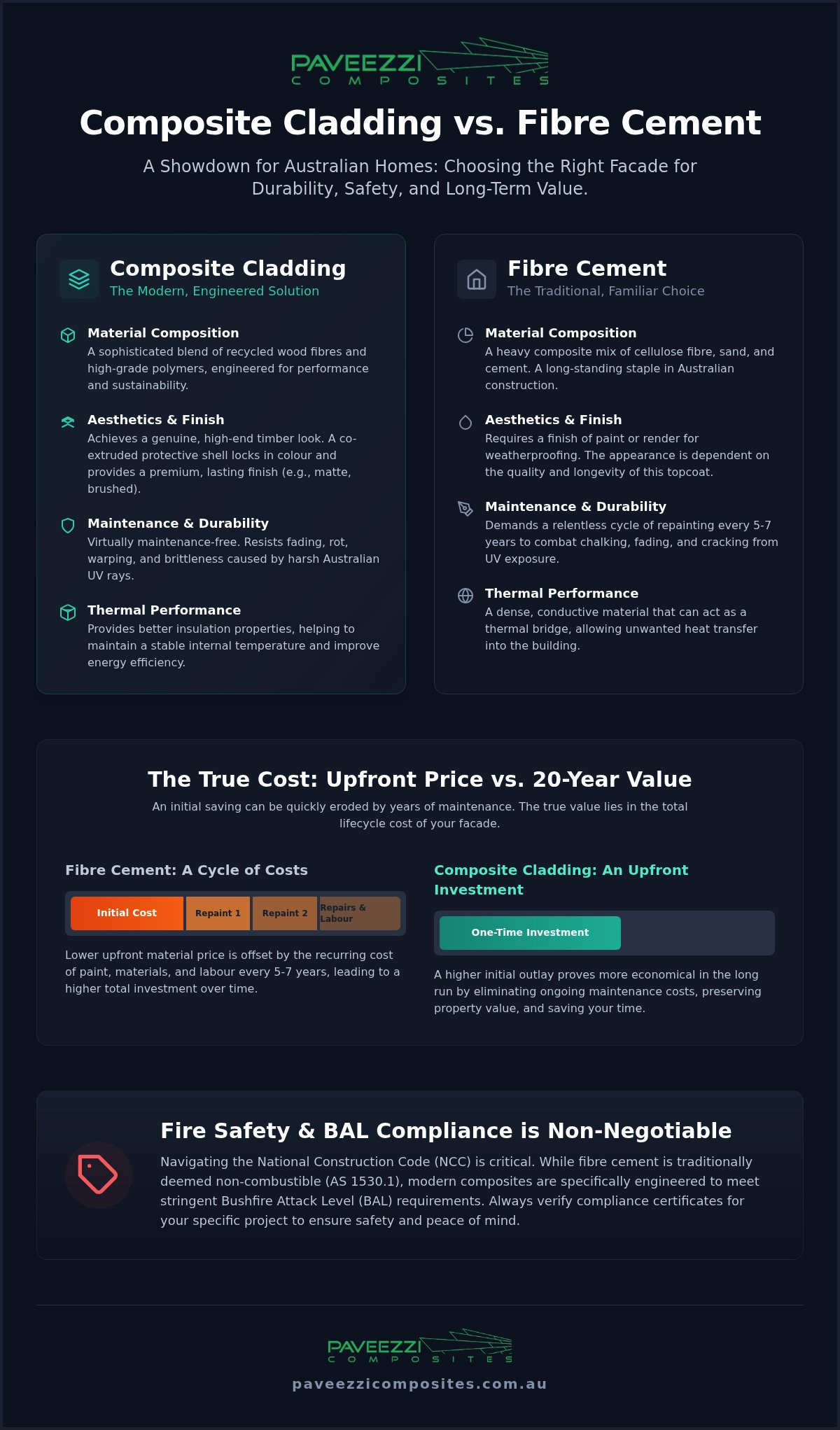
The choice between these systems often starts with the budget. Fibre cement generally offers a lower upfront material cost, which appeals to many entry-level renovation projects. However, the true value lies in the lifecycle. When you factor in the recurring costs of paint, the labour for maintenance, and the long-term resistance to fading in the Australian sun, the premium nature of composite systems often proves more economical over time. It's about balancing the immediate expense with the promise of a maintenance-free future. We see this as an investment in both your property's value and your own time.
The Performance Showdown: Durability, Fire Safety, and Maintenance
When evaluating composite cladding vs fibre cement Australia, the decision often hinges on how these materials endure our extreme conditions. Beyond the surface, thermal performance plays a critical role. Fibre cement is a dense, conductive material that can act as a thermal bridge, allowing heat to transfer into the building envelope during a scorching summer. In contrast, engineered composite systems often provide better insulation properties, helping to maintain a stable internal temperature. It's a subtle difference that impacts your energy bills and overall comfort. We believe a facade should work for you, not against you.
Fire Ratings and BAL Compliance
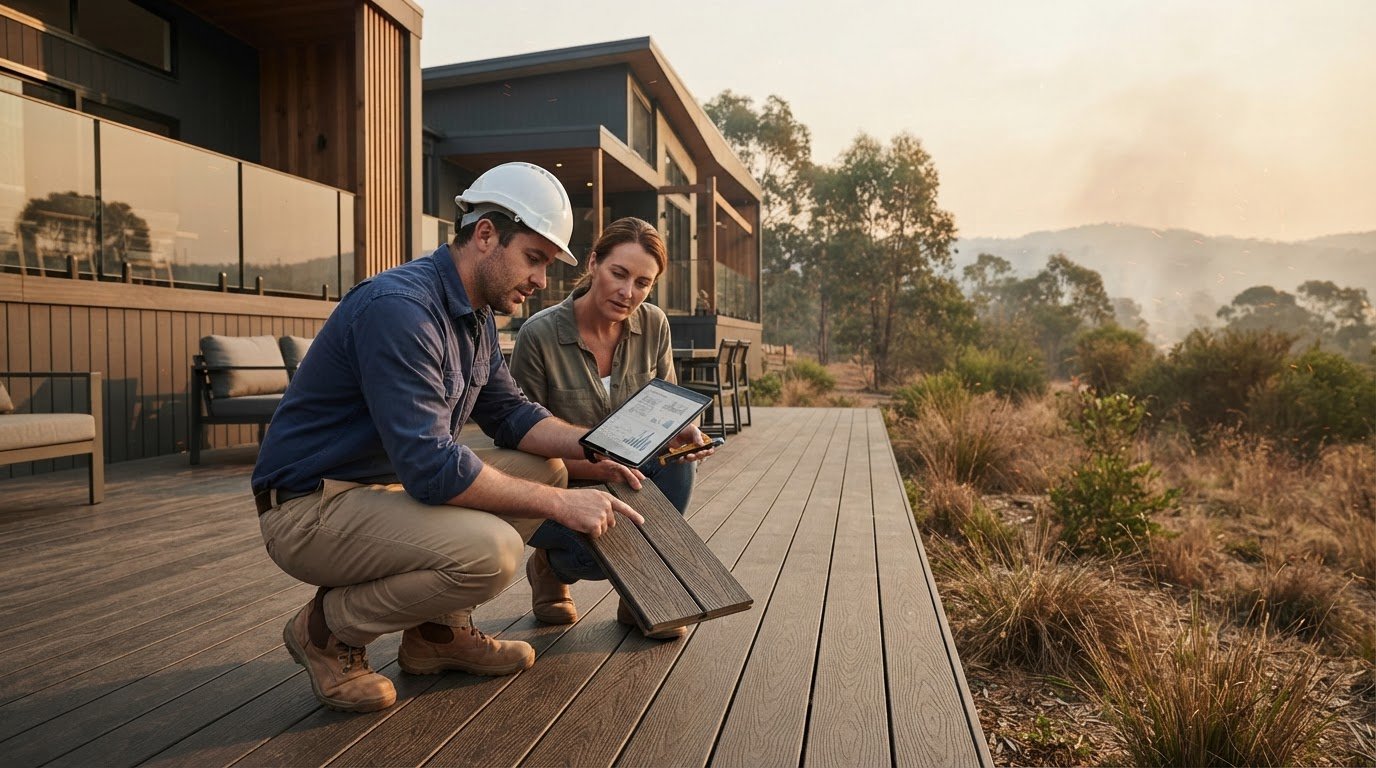
Fire safety is non-negotiable. The National Construction Code for cladding sets stringent benchmarks, particularly for projects in bushfire-prone areas. While fibre cement is traditionally deemed non-combustible under AS 1530.1, modern composites are engineered to meet specific Bushfire Attack Level (BAL) requirements. You must distinguish between 'fire-retardant' and 'non-combustible' labels. A fire-retardant product slows the spread of flames, whereas a non-combustible material won't ignite. For regional builds, verifying these certificates ensures your permit is approved and your home is protected. Precision here is paramount for long-term safety.
Maintenance Cycles and Long-Term Costs
The Australian sun is relentless. Over time, UV exposure causes painted fibre cement to chalk and fade, necessitating a full repaint every five to seven years. These hidden costs accumulate quickly. High-performance composites are co-extruded with a protective outer shell, locking in colour and resisting the brittleness that leads to cracking in cement-based products. Impact resistance is another key factor. While a stray cricket ball might shatter a fibre cement plank, the inherent flexibility of composite panels allows them to absorb force without failing. Keeping them clean is simple. A quick wash with soap and water usually suffices, whereas porous cement surfaces might require more intensive care to prevent mould growth. If you are looking for a facade that balances these technical demands with effortless longevity, exploring our architectural ranges can provide the clarity your project needs.
Aesthetic and Design Flexibility for Modern Architecture
The visual identity of a project is often determined by the depth and texture of its exterior. When comparing composite cladding vs fibre cement Australia, architects often find that while fibre cement provides a functional canvas, it can struggle to deliver the authentic warmth of natural timber. Many budget-friendly cement boards rely on a printed grain or a flat paint finish that lacks the tactile richness required for premium residential builds. In contrast, engineered systems offer a sophisticated palette that mirrors the organic variations of wood, providing a level of design flexibility that elevates the entire structure. It is about more than just colour; it is about the interplay of light and shadow.
Achieving the Vertical Fineline Look
Verticality is a defining trend in contemporary Australian architecture. It creates a sense of height and clean, elongated lines that traditional horizontal weatherboards simply cannot match. Profiles like the Fineline series are engineered to produce deep shadow lines, adding a rhythmic quality to the facade. Achieving this with fibre cement often requires complex on-site modifications and can result in visible fasteners that disrupt the clean aesthetic. By using dedicated nosing and edging options, you can ensure a professional, crisp finish at every corner and junction. This creates a seamless look that stands up to close inspection.
Texture Matters: Brushed vs Matte
The way a material interacts with the harsh Australian light is crucial. A high-gloss or poorly finished board can create uncomfortable glare, whereas a brushed or extra matte texture diffuses light beautifully. These finishes offer a tactile difference you can feel. A brushed surface provides a rugged, natural character, while an extra matte finish offers a modern, sophisticated edge. These options allow you to complement other architectural elements like raw stone or smooth render without the materials competing for attention. It is a subtle balance that defines a premium finish.
Choosing a rich, natural tone from the Ressisto Lightissimo 202 range ensures your home maintains its premium look without the flat, heavy appearance of standard grey cement. While aesthetics are vital, ensuring Building Code of Australia compliance remains the foundation of every design choice we support. This ensures your project is as safe as it is beautiful. For those ready to transform their exterior with a world-class finish, view our full architectural collection and discover the difference of a truly engineered facade.
Making the Choice: Which Cladding is Right for Your Project?
Choosing between composite cladding vs fibre cement Australia involves a careful balance of immediate financial outlay and long-term property performance. While the initial material cost of fibre cement is often lower, the recurring maintenance requirements can quickly erode those savings. Your decision should be guided by the project's specific environment, whether you're facing the corrosive salt spray of a coastal block or the intense, arid heat of the inland plains. A facade is a permanent investment in your home's structural integrity and street appeal. Getting it right at the start saves years of effort later.
When to Choose Fibre Cement
There are scenarios where fibre cement remains a practical utility choice. If your project is a low-budget renovation or an internal lining where high-end aesthetics aren't the priority, it serves its purpose well. It is also a logical option for basic eave and soffit applications where the material is protected from direct sunlight and impact. Additionally, if you must precisely match a rendered or painted finish on an existing structure, the paintable surface of fibre cement allows for that specific colour coordination. It remains a functional, entry-level material for straightforward construction tasks.
Why Composite is the Premier National Choice
For high-end Australian homes, architectural composite cladding has become the gold standard. Our national supply capability ensures that premium materials are accessible for projects across the country, regardless of location. The superior UV protection inherent in co-extruded boards prevents the 'bleach' effect that turns vibrant facades into faded afterthoughts. As a family-run business with over 15 years of industry expertise, we've seen how these materials consistently outperform traditional alternatives in our harsh climate.
Investing in a high-quality composite facade isn't just about avoiding the paintbrush. It's about future-proofing your property's resale value. A home that retains its pristine, timber-look finish without the rot or cracking associated with older materials is a far more attractive prospect for future buyers. By selecting a system like the Ressisto range, you're choosing peace of mind and a sophisticated finish that reflects a commitment to quality. The ultimate verdict on composite cladding vs fibre cement Australia is simple. If you value longevity, architectural beauty, and a maintenance-free lifestyle, premium composite is the clear winner for the modern Australian home.
Building for the Future of Australian Architecture
Choosing the right facade is a decision that defines your home for decades. We've explored the critical factors of composite cladding vs fibre cement Australia, from the immediate utility of cement boards to the long-term architectural performance of engineered systems. While fibre cement serves basic needs, the superior UV resistance and maintenance-free nature of composite profiles offer a higher standard of living. You don't have to settle for a facade that demands your constant attention. You can choose a finish that stands the test of time.
As a family-run Australian business since 2010, we're dedicated to providing the technical expertise and national delivery required for your project's success. Whether you're navigating BAL ratings or seeking the sophisticated textures of our specialised Fineline and Lightissimo ranges, our team is here to support your vision. We believe in the quality of our materials and the long-term performance of your home. It's about creating a lasting legacy for your property.
Explore the Paveezzi Cladding Range for Your Next Project and start building with total confidence today.
Frequently Asked Questions
Is composite cladding more expensive than fibre cement in Australia?
Initial material costs for composite systems are typically higher than fibre cement, but the long-term value tells a different story. Fibre cement requires a cycle of painting every few years to maintain its integrity. In contrast, our Ressisto range arrives pre-finished and requires no ongoing staining. When evaluating composite cladding vs fibre cement Australia builders often find that the lack of maintenance costs makes composite the more cost-effective choice over the building's life.
Can I use composite cladding in a high BAL bushfire zone?
Many modern composite products are specifically engineered to meet various Bushfire Attack Level (BAL) requirements. While fibre cement is traditionally non-combustible, high-performance composites can be used in BAL-29 and BAL-40 zones when installed correctly. You must always verify the fire-rating certificates for the specific profile, such as the Lightissimo range, to ensure it meets 2026 standards. Always consult your building surveyor to confirm that your chosen material aligns with your site's fire safety requirements.
Does fibre cement cladding crack over time?
Fibre cement is a dense, rigid material that lacks the inherent flexibility of engineered composites. This brittleness makes it susceptible to cracking if the building experiences structural movement or ground settling. If moisture enters through these cracks or unsealed edges, the cellulose fibres can swell, leading to further degradation. Maintaining a perfect paint seal is the only way to protect cement boards from the elements, whereas composite panels are designed to withstand these environmental stresses without failing.
Is non-combustible external cladding mandatory for all Australian homes?
Non-combustible cladding isn't a blanket requirement for all Australian homes, but the National Construction Code (NCC) sets specific rules based on building class and location. While multi-storey residential and commercial buildings face strict non-combustibility mandates, detached houses have different standards. These usually relate to your home's proximity to property boundaries and its Bushfire Attack Level (BAL) rating. It's essential to check with a qualified building professional to ensure your facade choice complies with the latest Australian safety regulations.
How do I clean and maintain my composite facade?
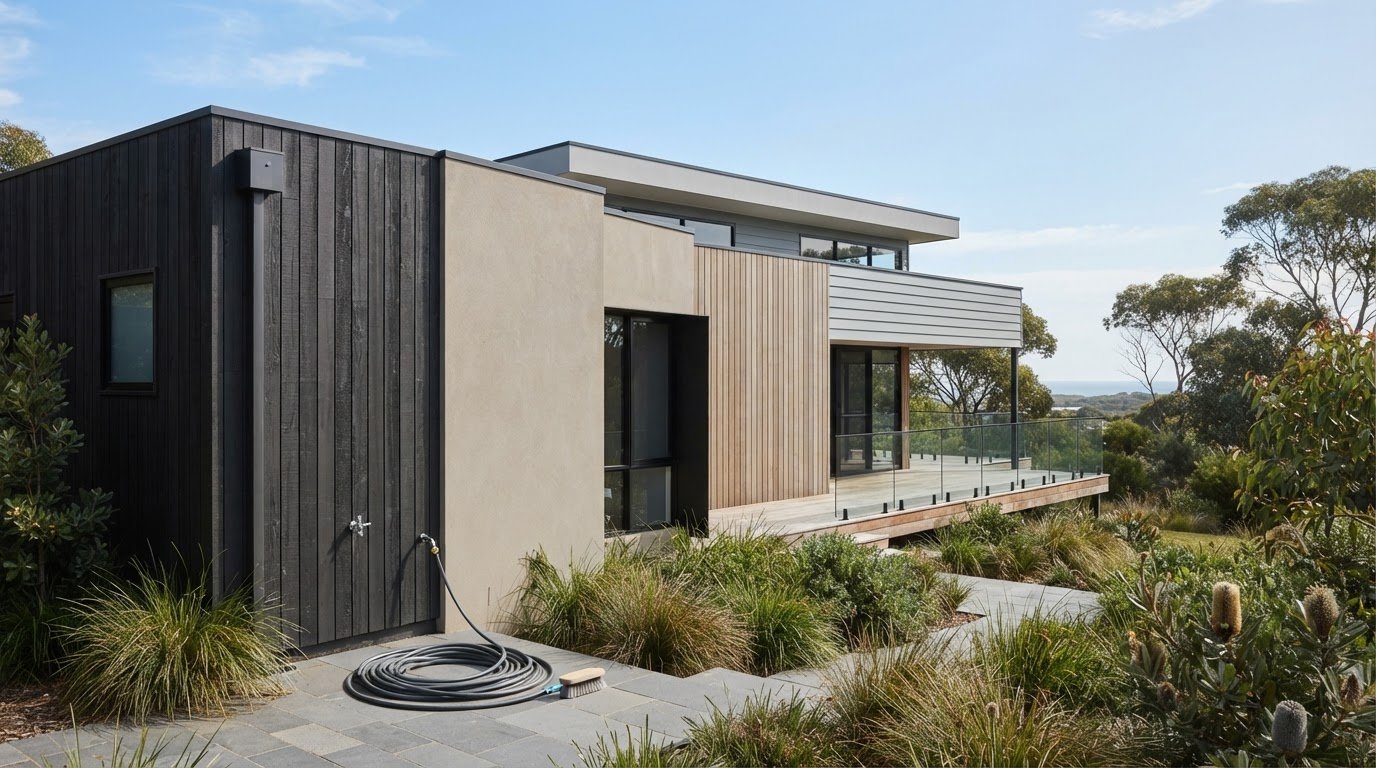
One of the primary benefits of a composite facade is the 'set and forget' nature of the material. Unlike timber or fibre cement, you don't need to sand, stain, or repaint the boards to keep them looking pristine. For routine maintenance, simply wash the surface with warm soapy water and a soft brush to remove salt or dust. Avoid using abrasive chemicals or high-pressure cleaners at close range, as these can impact the integrity of the protective co-extruded layer.
Which cladding material is better for coastal Australian properties?
Composite materials are generally superior for coastal properties because they aren't porous. Fibre cement relies on a paint film to block out salt spray; if that film fails, the board can absorb moisture and salt. High-performance composites like the Ressisto 144 Fineline are engineered with a protective shield that is impervious to salt corrosion. This ensures the facade remains structurally sound and visually striking even in demanding beachfront conditions without the risk of rot or the need for constant repainting.
Comments