
Composite Decking vs Timber in Australia: The 2026 Comparison Guide
The "natural" choice for your backyard might actually be the one that keeps you furthest away from enjoying it. While the initial price tag of a hardwood deck often looks attractive, the hidden tax of the Australian sun quickly adds up in both hours and dollars. We all want a premium outdoor space. We want to host a summer barbecue without worrying about splinters or grey, fading boards. However, the reality of maintaining timber in our harsh climate often involves a relentless cycle of sanding and staining that eats into your precious weekend downtime.
Deciding between composite decking vs timber Australia wide involves more than just an aesthetic preference; it is a strategic investment in your lifestyle. This 2026 guide explores how specialised materials like the Ressisto series stack up against traditional timber when it comes to UV resistance, heat retention, and total cost of ownership over twenty years. You will discover which material survives the local elements while providing a high-end finish that lasts. It is about more than just looks. We will compare the upfront costs against the long-term freedom of a low-maintenance lifestyle, ensuring your deck remains a place for entertaining rather than a permanent list of chores.
Table of Contents
Navigating the Australian Climate: Why Material Choice Matters
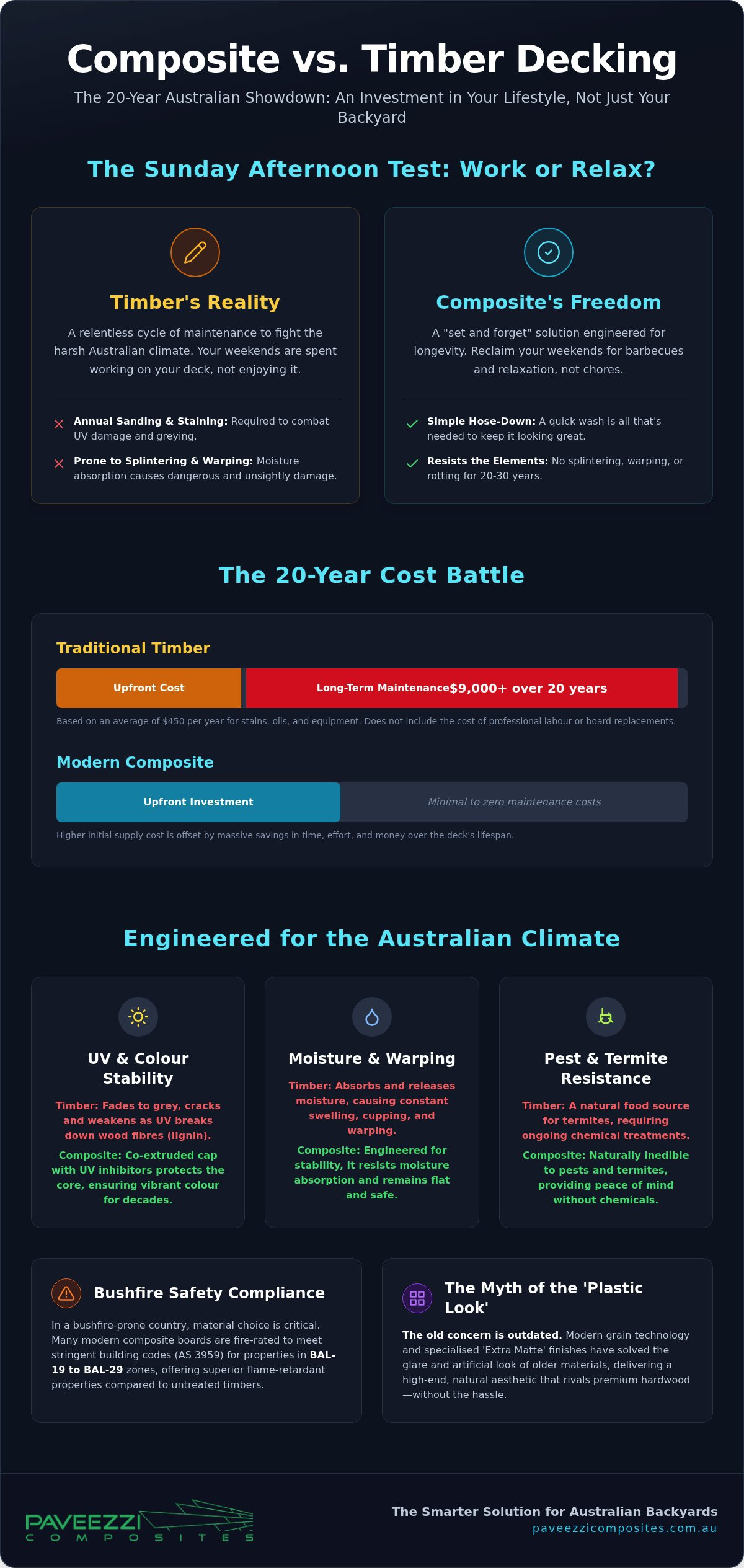
Australia's environment is unforgiving. Our backyard installations face some of the highest UV indices on the planet. When weighing up composite decking vs timber Australia wide, the first consideration must be how the material handles this solar bombardment. Natural timber relies on lignin to bind its fibres. However, UV radiation breaks this bond, leading to the familiar silver-grey fading and eventual surface cracking. This isn't just an aesthetic issue; it's the beginning of structural degradation.
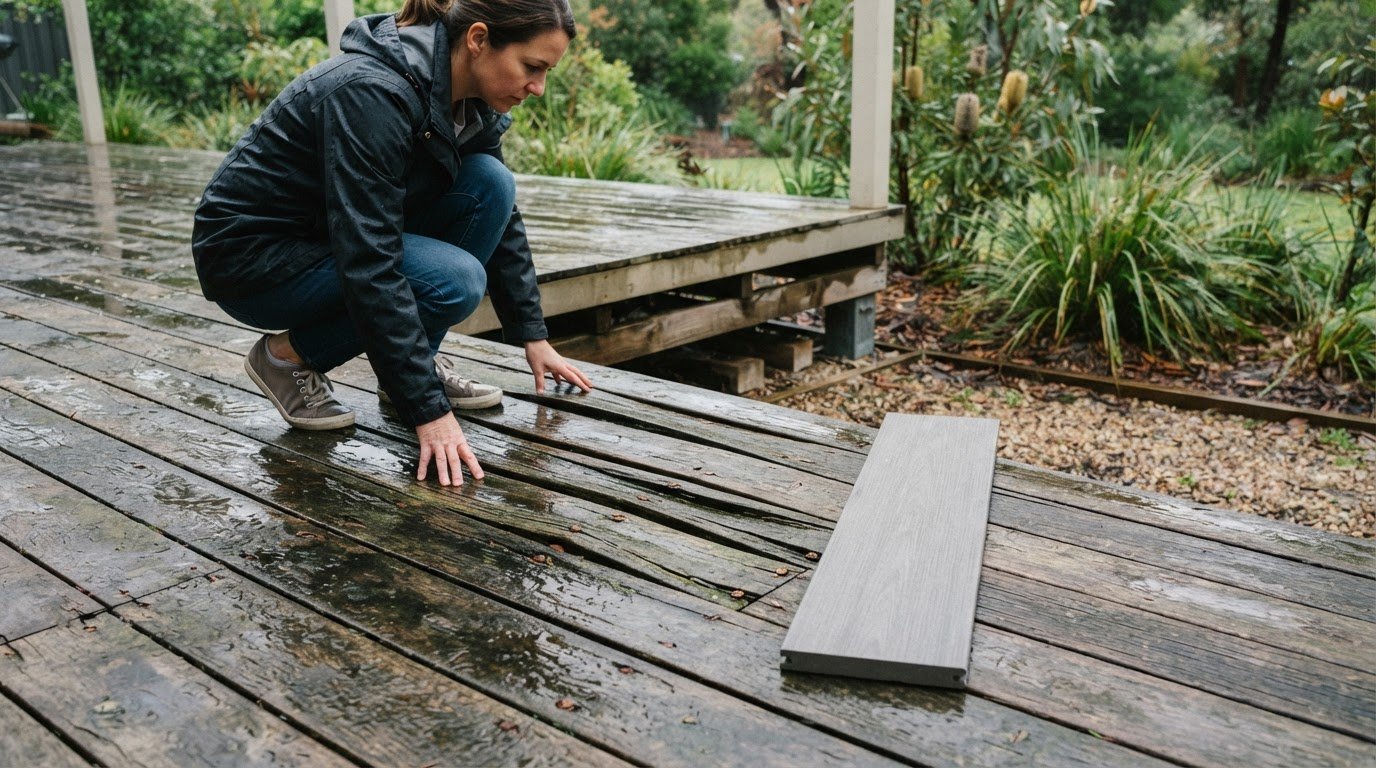
Humidity cycles further complicate things. Timber is hygroscopic, meaning it naturally absorbs and releases moisture. This constant swelling and shrinking lead to cupping, warping, and the development of dangerous splinters. Engineered Wood-plastic composites (WPCs) offer a more stable alternative. Because they are manufactured with a blend of recycled wood fibres and polymers, they don't have the same reactive behaviour as raw hardwood.
There is also the "Termite Factor" to consider. In high-risk zones, using a material that doesn't serve as a food source provides immense peace of mind. While timber requires ongoing chemical treatments to stay safe, composite is naturally resistant to these destructive pests.
UV Stability and Colour Retention
Maintaining the rich hue of a new deck is a primary concern for most homeowners. Traditional timber needs annual sanding and staining to fight the "grey-out" effect caused by the sun. In contrast, premium boards use co-extruded caps that act as a protective shield. Specifically, the UV inhibitors within the Ressisto series are engineered to protect the board core from deep-penetration solar damage, preventing the internal breakdown that plagues natural wood. This ensures the colour you choose today remains vibrant for decades.
Bushfire Ratings and Regulatory Compliance
Safety is paramount in our bushfire-prone landscape. Homeowners must understand the Bushfire Attack Level (BAL) rating of their property before selecting materials. Under AS 3959, requirements change based on risk level. For properties in BAL-19 to BAL-29 zones, decking must often be made from fire-resisting timber species or fire-rated composites. Some modern engineered boards are designed to meet these stringent standards, offering superior flame-retardant properties compared to many softwoods. Always check with your local council regarding non-combustible components, particularly for elevated structures requiring adjustable pedestals or sub-frames.
Maintenance and Longevity: Reclaiming Your Aussie Weekends
For many homeowners, the dream of a backyard sanctuary is often interrupted by an orbital sander. The "Sunday Afternoon" test is simple. On a timber deck, you might spend your day scrubbing away grey oxidation and applying multiple coats of oil. On a composite deck, you're likely just giving it a quick hose-down before the guests arrive. This fundamental difference in lifestyle is why the conversation around composite decking vs timber Australia wide has shifted so heavily toward engineered boards. It's a choice between working on your deck or relaxing on it.
Long-term durability is the cornerstone of this investment. While softwoods are prone to rot and decay when exposed to the elements, composite materials are engineered to remain structurally sound for 20 to 30 years. This "set and forget" mentality is the primary driver for modern Australian builds. People want a premium look that doesn't require a lifetime of manual labour to maintain.
The Real Cost of Timber Maintenance
While timber has a lower entry price, the ongoing financial commitment is steep. Research suggests that annual maintenance, including sanding and staining, can cost around $450 per year for a standard deck. Over a twenty-year period, this adds an extra $6,000 to your total investment. This figure doesn't even account for the hidden cost of professional labour if you hire a tradie to refinish the surface for you. At Paveezzi, our heritage is built on providing solutions that respect both your time and your budget over the long term.
Composite Durability: Beyond the Surface
Longevity isn't just about the board surviving; it's about how it performs under pressure. In humid coastal areas, timber is highly susceptible to mould and mildew. High-performance composite is engineered to resist moisture absorption, preventing the internal decay that eventually compromises natural wood.
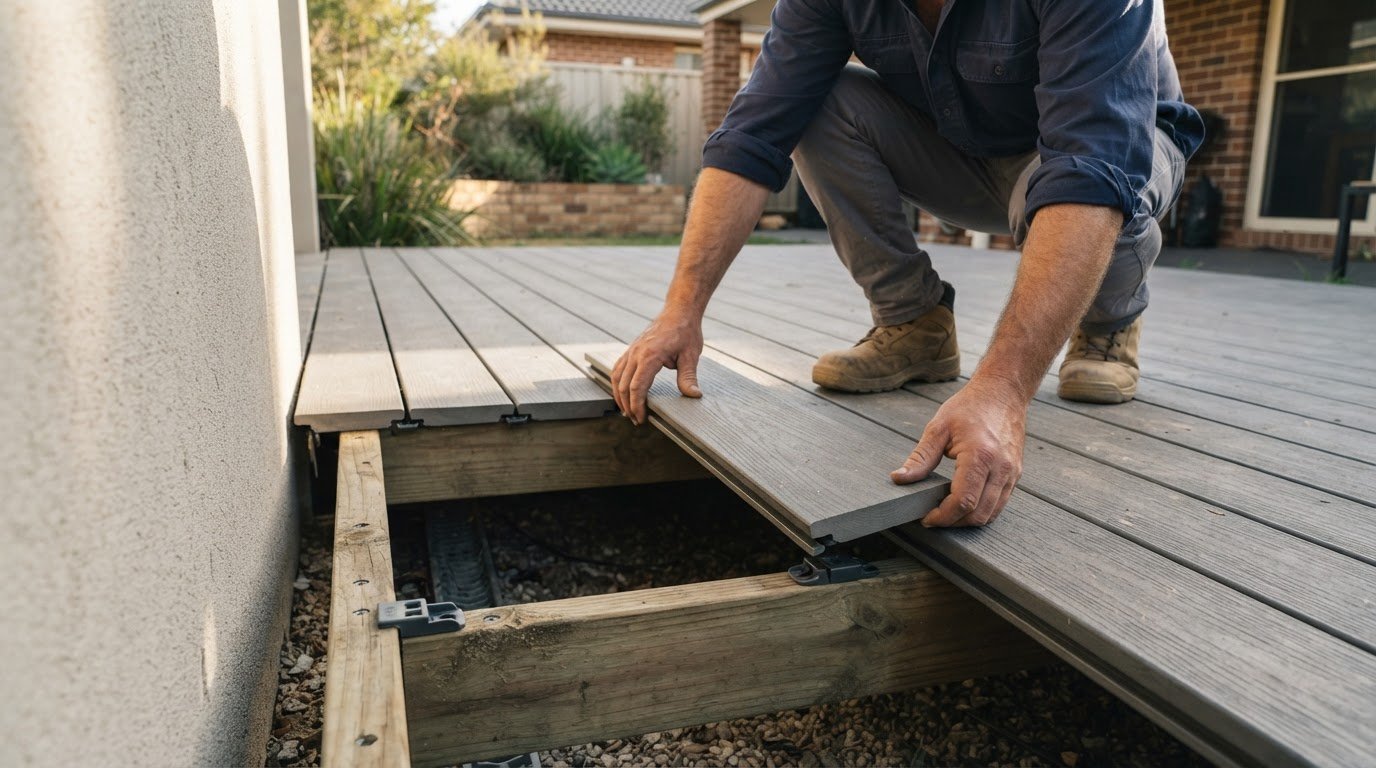
Safety also plays a major role in the selection process. A splinter-free surface is essential for family homes where children and pets are often running around with bare feet. Modern systems also utilise hidden fastening clips rather than traditional nails. This creates a clean, hazard-free finish without the risk of protruding nail heads as the sub-frame settles. If you're planning a new build, you can view our high-performance decking options to see how these systems integrate into modern designs.
Aesthetic Appeal: Achieving the Natural Look Without the Hassle
For years, the most significant hurdle in the composite decking vs timber Australia debate was the visual trade-off. Early generations of alternative materials often looked synthetic, featuring a repetitive grain and a high-sheen surface that felt out of place in a premium backyard. Modern engineering has firmly put those "plastic" myths to rest. Today, high-performance boards utilise multi-tonal technology to replicate the subtle colour variations found in natural hardwood. This ensures your outdoor space has the depth and character of real timber without the inevitable fading that occurs with raw wood.
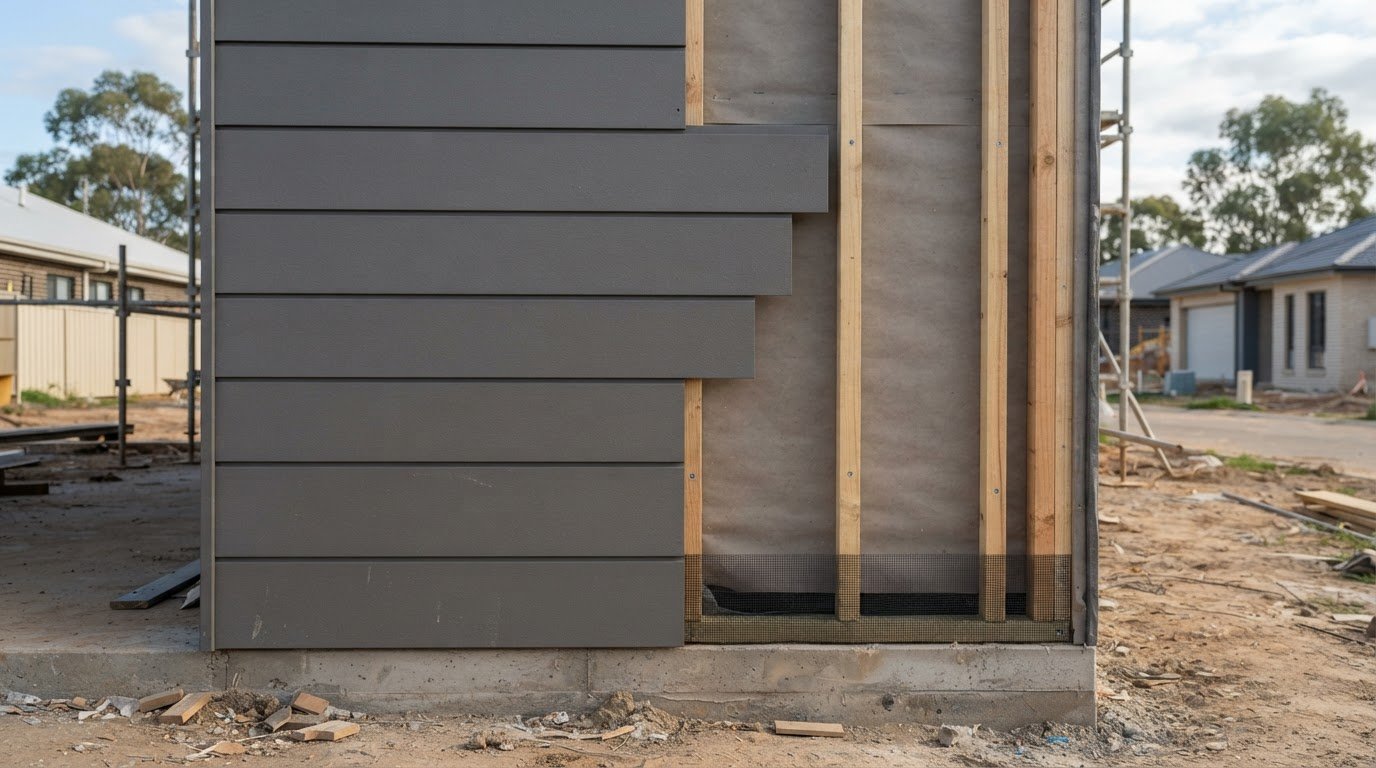
Architectural trends for 2026 are moving toward larger formats and seamless transitions. Wide Board decking, often exceeding 190mm, is now a staple in contemporary design, providing a bold, expansive look that smaller timber planks can't easily match. Many designers are also integrating these floors with architectural composite cladding to create a unified facade that wraps the home in a consistent, low-maintenance finish.
Brushed vs. Matte Finishes
The tactile experience of a deck is just as important as its colour. The Ressisto 143 Brushed range offers a textured surface that feels organic underfoot, providing an authentic grain that mimics seasoned timber. In contrast, the Ressisto 138 Extra Matte finish is specifically engineered for high-end residential projects where glare is a concern. In the bright Australian sun, a matte finish reduces light reflection, making the area more comfortable for the eyes while maintaining a sophisticated, velvety appearance. These boards use variegated tones to mimic the natural "flaws" and highlights of real timber, ensuring no two planks look identical.
Design Flexibility and Accessories
Achieving a professional result requires more than just quality boards; it requires a complete system. Using specialised nosing and edging options allows for clean, mitred corners that hide the core of the board, giving the deck a solid, "built-in" look. For elevated or uneven sites, the use of adjustable pedestals ensures a perfectly level finish without the need for complex timber sub-frames. Paveezzi accessories ensure a refined architectural result by providing the finishing touches that separate a DIY project from a professional installation. To see these finishes in person, view our full range of architectural decking and find the perfect match for your home.
The Final Verdict: Selecting the Best Solution for Your Project
The decision between composite decking vs timber Australia wide eventually comes down to your project's specific environment and your personal priorities. Natural timber remains a relevant choice for heritage restorations where material authenticity is a strict requirement. If your deck is situated in a permanently shaded area with minimal UV exposure, the maintenance burden may be slightly less intense, though the risk of moisture-related rot remains a factor. However, for the vast majority of modern Australian homes, the benefits of engineered boards are difficult to ignore.
For high-traffic entertaining zones in full sun, high-performance composite is the superior investment. It supports a lifestyle where you spend your weekends hosting rather than oiling. Sourcing your own materials provides a significant advantage for savvy project managers. By opting for a supply-only model, you ensure that every board meeting your architectural standards is on-site before the first joist is laid. This allows you to control the quality and grade of the material rather than leaving it to a builder's standard preference. Preparing your site correctly involves ensuring the ground is clear and the subframe is designed for long-term stability.
A Checklist for Your Decking Tradie
When you hire an installer, it's vital to ensure they are familiar with the specific requirements of engineered materials. Ask these key questions to protect your investment:
Can you confirm the joist spacing is set to the manufacturer's specifications for composite boards?
How will you ensure adequate ventilation and drainage under the subframe to prevent moisture traps?
Are you experienced with hidden fastening systems to ensure a clean, nail-free finish?
Choosing a specialist supplier ensures you receive better material warranties and technical support than you might find with generic hardware store alternatives. This professional oversight is what guarantees a deck that remains beautiful for 20 years or more.
Next Steps for Your Australian Outdoor Space
The best way to move forward is to experience the material in your own environment. Ordering samples allows you to test heat absorption and colour accuracy under your specific local light conditions. You should also review technical data sheets to understand the engineering behind the boards. For detailed technical specifications and installation guides, visit the Paveezzi Resources page. Taking the time to research the data now ensures a seamless build and a premium result that survives the Australian climate.
Investing in Your Future Lifestyle
Choosing between composite decking vs timber Australia wide involves balancing initial costs against decades of weekend freedom. While the raw appeal of hardwood is undeniable, the reality of our climate often turns timber into a lifelong maintenance project. By opting for high-performance materials, you're investing in a surface that remains splinter-free and vibrant through every summer heatwave. It's a strategic decision that prioritises your time without compromising on the premium aesthetic your home deserves.
As a trusted Australian family business since 2010, we specialise in supplying architectural-grade materials Australia-wide. Our boards are engineered for UV stability and moisture resistance, ensuring they survive the local elements for years to come. We believe your deck should be a place for hosting friends and family, not a source of endless labour. Our supply-only model gives you total control over material quality, allowing you to build with confidence and integrity.
Explore the premium Ressisto Decking range at Paveezzi Composites and take the first step toward a beautiful, low-maintenance outdoor space that you can truly enjoy.
Frequently Asked Questions
Does composite decking get hotter than timber in the Australian sun?
Composite materials are denser than natural wood, which means they can absorb and retain more heat during a typical Australian summer. However, the temperature difference often depends on the colour choice rather than the material alone. Selecting lighter shades or specialised finishes like the Ressisto 138 Extra Matte can significantly reduce surface heat. It's always best to test samples in your specific location to see how they perform under direct midday sun.
Can I install composite decking myself or do I need a professional?
You can certainly install these systems yourself if you have experience with basic carpentry and the right tools. Because we operate on a supply-only basis, homeowners often take charge of the material procurement before hiring a local tradie or completing the build themselves. It's vital to follow the specific installation guides regarding joist spacing and thermal expansion. Using systems like adjustable pedestals can simplify the process for DIYers working on uneven ground.
Is composite decking more expensive than Merbau or treated pine?
Comparing composite decking vs timber australia wide usually reveals a higher upfront cost for engineered boards. While treated pine is the most budget-friendly entry point, it requires the most maintenance. Hardwoods like Merbau sit in the middle. When you factor in the cost of oil, brushes, and your own time over a decade, composite often becomes the more economical choice. It's an investment in your property's long-term value and your personal downtime.
How do I clean a composite deck compared to a timber one?
Cleaning is remarkably straightforward compared to the intensive labour required for natural wood. You don't need to sand, strip, or oil the surface at any point. Most dirt and debris can be removed with a soft-bristled broom and a quick wash using warm, soapy water. For stubborn spots, a standard garden hose is usually sufficient. This simple routine keeps the boards looking premium without the chemical treatments necessary to preserve a timber deck.
Do I need to gap composite decking boards differently for Australian weather?
Yes, proper gapping is essential because engineered boards expand and contract along their length as temperatures fluctuate. Australian conditions can see significant thermal shifts in a single day. You must use the recommended hidden fastening clips, which automatically set the correct side-to-side gap. Additionally, leaving the specified butt-joint gaps at the ends of the boards ensures the deck won't buckle or warp during a heatwave. Always refer to the technical data sheets for precise measurements.
Is composite decking environmentally friendly compared to harvesting timber?
High-quality composite is often considered a sustainable choice because it utilises recycled wood fibres and reclaimed polymers. This reduces the demand for logging old-growth forests or relying on chemically treated softwoods that can leach toxins into the soil. By repurposing waste materials into a product with a 25-year lifespan, you're contributing to a circular economy. It's a durable solution that combines environmental consciousness with the high-level engineering required for the harsh Australian landscape.
Comments