
Composite vs Fibre Cement Cladding Fire Rating: An Australian Guide
The most fire-safe choice for your home might not be the industrial material you've been led to expect. Many Australians believe they must choose between the cold aesthetic of fibre cement and the warmth of timber, especially as the composite vs fibre cement cladding fire rating debate grows more complex under the NCC 2025 standards. You want a home that reflects your style, but you can't ignore the necessity of compliance after recent high-profile fire events across the country.
We agree that your peace of mind is paramount, and you shouldn't have to settle for a clinical exterior to achieve it. This guide will show you how modern architectural composites now offer fire performance and safety profiles that rival traditional materials while providing superior aesthetic longevity. We'll provide a clear path through the confusion of BAL ratings and AS 1530.1 non-combustibility testing. You'll discover how to select a compliant material that offers the meticulous engineering your project deserves, resulting in a facade that looks like natural timber but stands firm against the unique challenges of the Australian climate.
Table of Contents
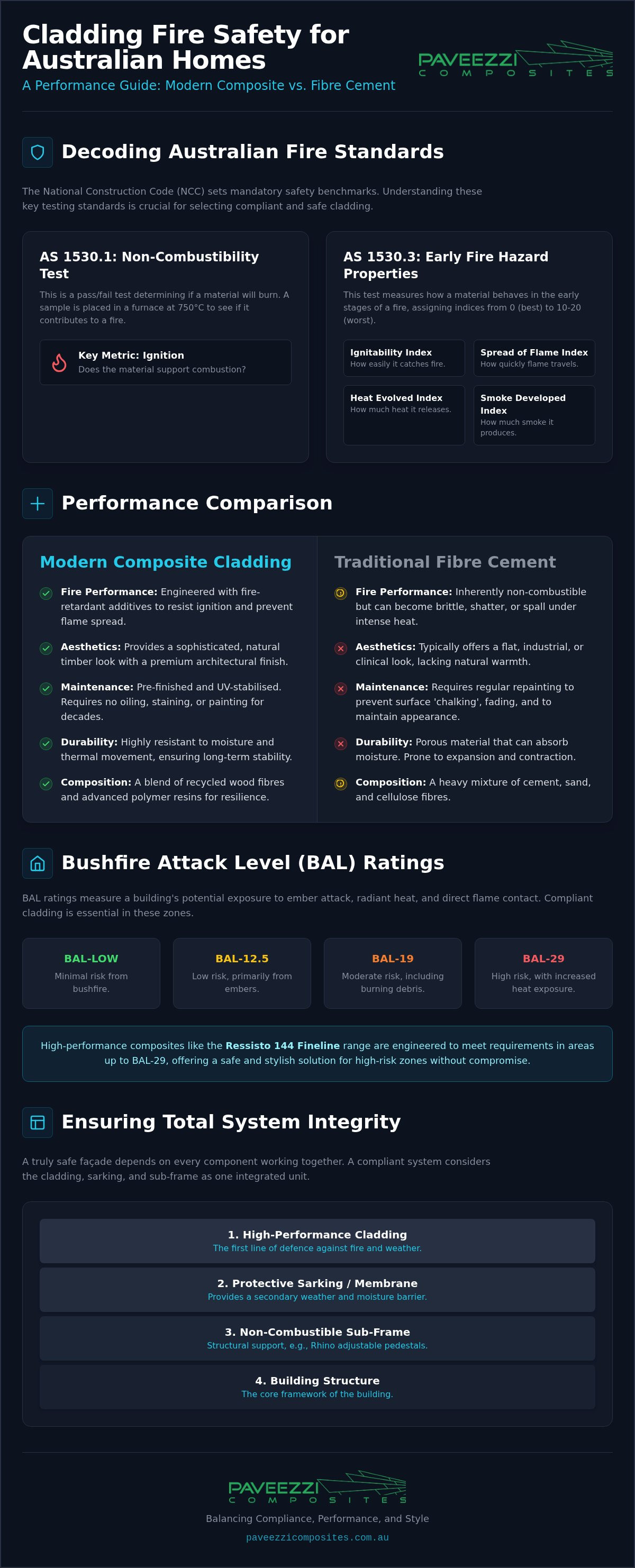
Understanding Australian Fire Standards for External Cladding
The National Construction Code (NCC) serves as the definitive benchmark for building safety across Australia. It establishes the minimum necessary standards for health, safety, and amenity in new constructions. In the current transition toward NCC 2025, which saw its final version published on 1 May 2026, the focus on cladding integrity has never been more intense. Architects and homeowners alike often find themselves weighing up the composite vs fibre cement cladding fire rating to ensure their projects meet these evolving legal requirements without compromising on design. It is a decision that carries significant weight; choosing the right material is about protecting lives as much as it is about protecting an investment.
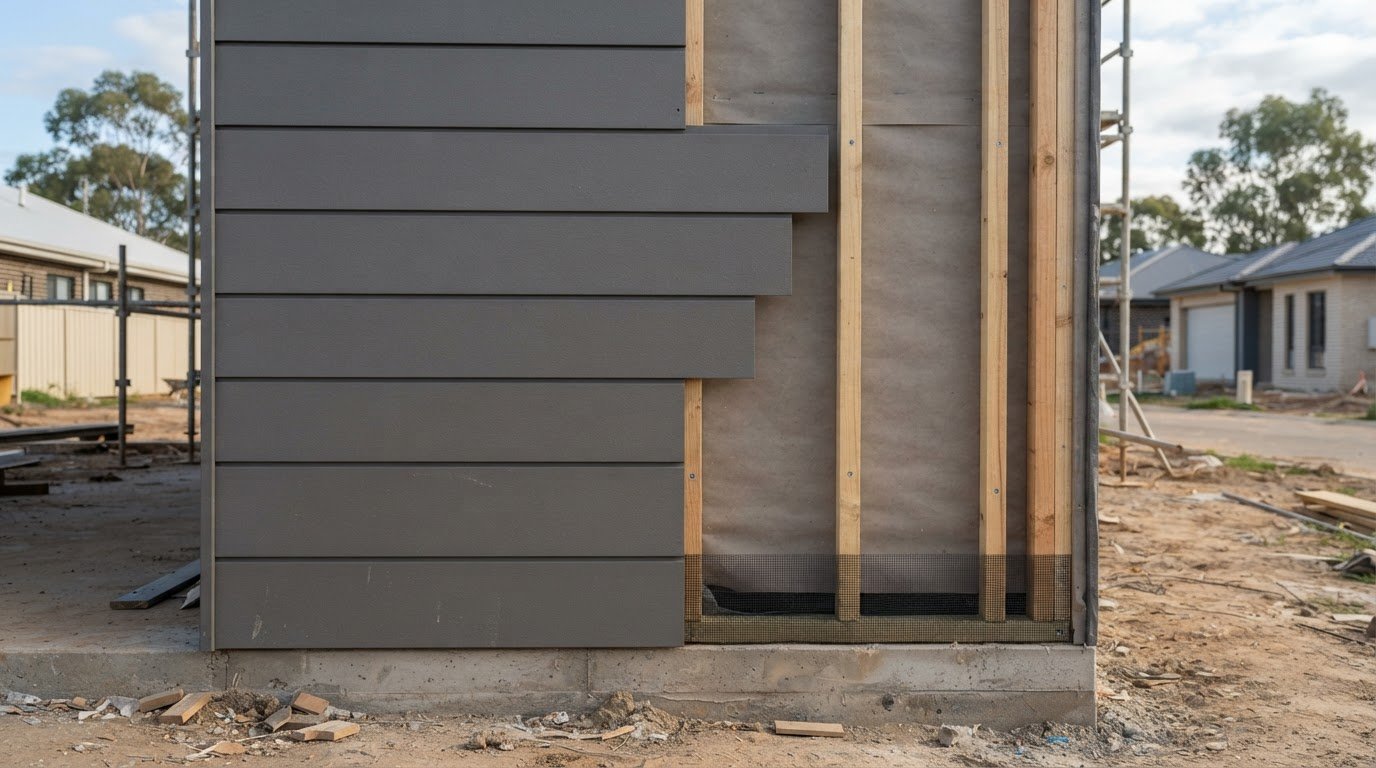
One common point of confusion is the difference between "fire-rated" and "non-combustible" materials. In a residential context, a product might be marketed as fire-rated because it resists ignition for a set period, yet it could still be classified as combustible under strict laboratory conditions. Safety doesn't stop at the outer skin, either. A truly compliant facade requires a holistic view of the total wall system. This includes the cladding itself, the sarking, and even the Rhino adjustable pedestals or sub-frames used in the installation. If one component fails to meet the standard, the safety of the entire building could be compromised.
The Role of AS1530.1 in Material Specification
To be classified as non-combustible in Australia, a material must pass the AS1530.1 test. This process involves placing a small sample into a furnace heated to 750 degrees Celsius to observe if it supports combustion or contributes to a rise in temperature. AS1530.1 is the rigorous furnace test for material ignition. Traditionally, Fiber cement siding has been the baseline for these requirements because its composition of cement and sand is inherently resistant to fire. However, the industry has seen a shift. Modern engineering now allows for high-performance composite alternatives that provide similar peace of mind while offering a more refined, architectural finish.
AS1530.3: Flammability and Smoke Indices
While AS1530.1 looks at whether a material will burn, AS1530.3 measures how it behaves once a fire has started. This standard evaluates four critical indices: Ignitability, Spread of Flame, Heat Evolved, and Smoke Developed. These ratings are particularly vital for multi-residential developments where smoke inhalation is a primary concern. Premium composites are meticulously designed to achieve low indices across all four categories. By prioritising materials with low smoke development and minimal flame spread, you can create a facade that isn't just compliant, but genuinely safer for the families living behind it.
Performance Comparison: Composite vs Fibre Cement Cladding
Choosing between materials often feels like a trade-off. Fibre cement is a traditional mixture of cement, sand, and cellulose fibres. While it provides a solid foundation for fire resistance, its dense, heavy nature can lead to challenges during the long, hot Australian summers where thermal expansion becomes a genuine concern. Modern composites take a different approach. They blend recycled wood fibres with advanced polymer resins to create a material that is both resilient and beautiful. This fundamental difference in DNA dictates how each product performs over time. While fibre cement is often the default choice for compliance, the composite vs fibre cement cladding fire rating of architectural ranges like Ressisto proves that safety doesn't have to look industrial.
Fibre cement won't ignite, but it can shatter or spall when exposed to intense heat. High-end composites are engineered to meet Australian fire safety standards by incorporating fire-retardant additives within their polymer matrix. This careful chemistry ensures they don't contribute to the spread of flame. Understanding the composite vs fibre cement cladding fire rating is essential for any homeowner looking to combine safety with low-maintenance living. Maintenance is where the gap truly widens. Fibre cement is porous. It absorbs moisture and requires regular repainting to prevent the surface from "chalking" or fading under UV stress. Composites are different. They are pre-finished and UV-stabilised. You won't need to oil, stain, or paint them. They stay vibrant for decades without the constant upkeep.
Thermal Stability and Moisture Resistance
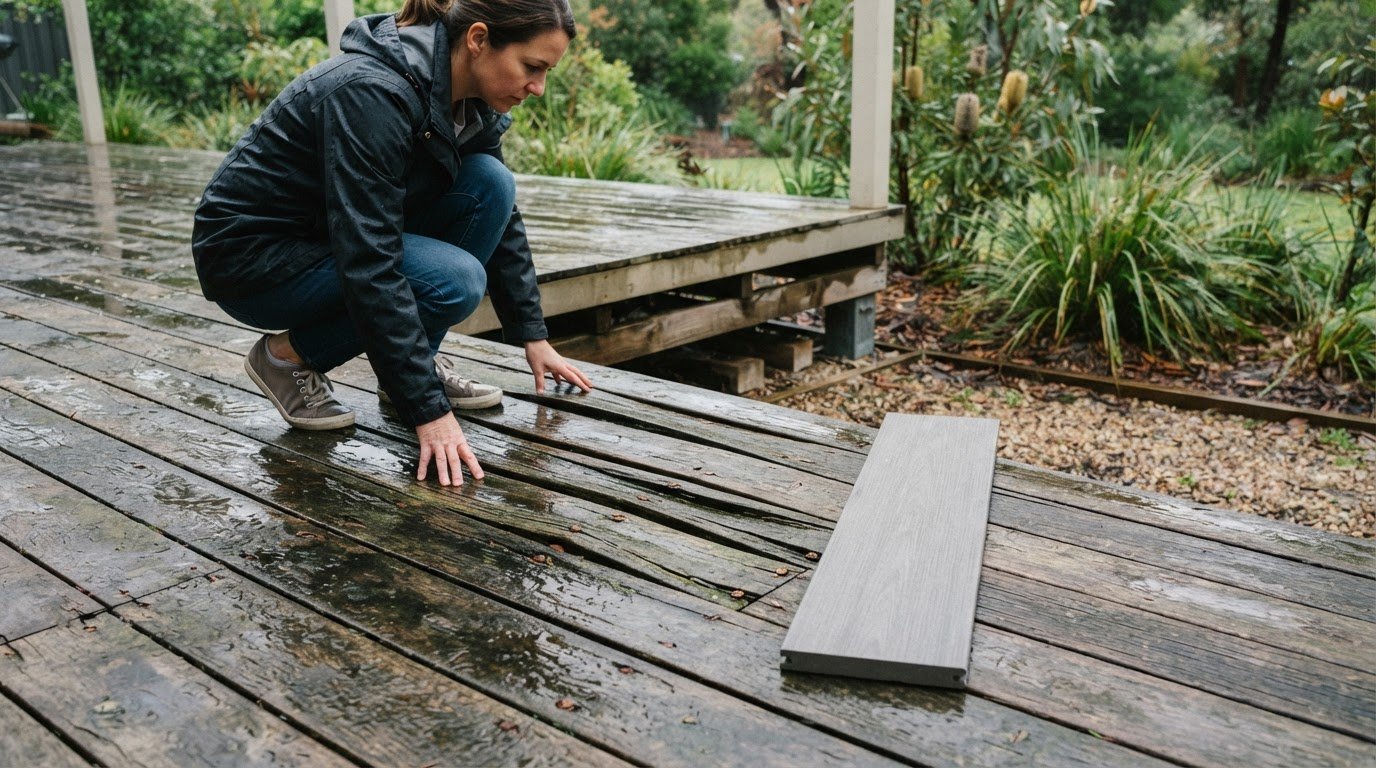
Fibre cement panels are prone to movement. This constant expansion and contraction can lead to cracked joints or compromised fixings. In contrast, Ressisto products offer superior dimensional stability. They resist moisture absorption, which means they won't swell, rot, or warp in humid coastal environments. This reliability ensures the facade remains tight and secure regardless of the season.
Impact Resistance and Site Handling
Handling fibre cement on-site is a physically demanding task. It's notoriously brittle. One accidental bump and a corner snaps off. Choosing lightweight composite cladding panels makes the installation process significantly more efficient. The polymer core provides a toughness that resists the inevitable dents and dings of a busy family home. If you want a facade that balances these technical benefits with effortless style, you can explore our full range of architectural solutions.
Selecting Cladding for Bushfire-Prone Areas (BAL Ratings)
Living in the Australian bush or on the urban fringe brings a unique set of architectural responsibilities. The Bushfire Attack Level (BAL) system is designed to quantify the risk of ember attack, radiant heat, and direct flame contact. From BAL-LOW to the extreme BAL-FZ, every increment changes the rules for your facade. When evaluating the composite vs fibre cement cladding fire rating, it's important to recognise that most modern Australian homes fall into the BAL-12.5 to BAL-29 range. In these zones, high-performance composites are a popular choice because they provide the necessary protection against embers and heat without the industrial look of traditional materials.
For sites classified as BAL-40 or BAL-FZ, the requirements become far more stringent. These zones demand materials that are either non-combustible or have been tested as part of a specific wall system. Some homeowners worry that choosing a composite material might compromise their compliance in high-risk areas. However, many premium composite ranges are specifically engineered with fire-retardant cores to meet these challenges. The key is to look for products that carry the correct certification for the specific BAL level of your land. Always check the technical data sheets to ensure the material matches the specific heat flux requirements of your zone.
The BAL-29 Threshold for Residential Homes
BAL-29 is a common requirement for many new Australian subdivisions located near bushland. This level requires materials that can withstand significant radiant heat and defend against a constant barrage of burning embers. To stay compliant, you must verify that your chosen composite meets the requirements of AS 3959. This involves more than just picking a board; you must also consider the use of non-combustible sarking and ensuring all gaps are sealed to prevent embers from entering the wall cavity. It's a holistic approach to safety that ensures your home remains a sanctuary.
System Integrity: Beyond the Cladding Board
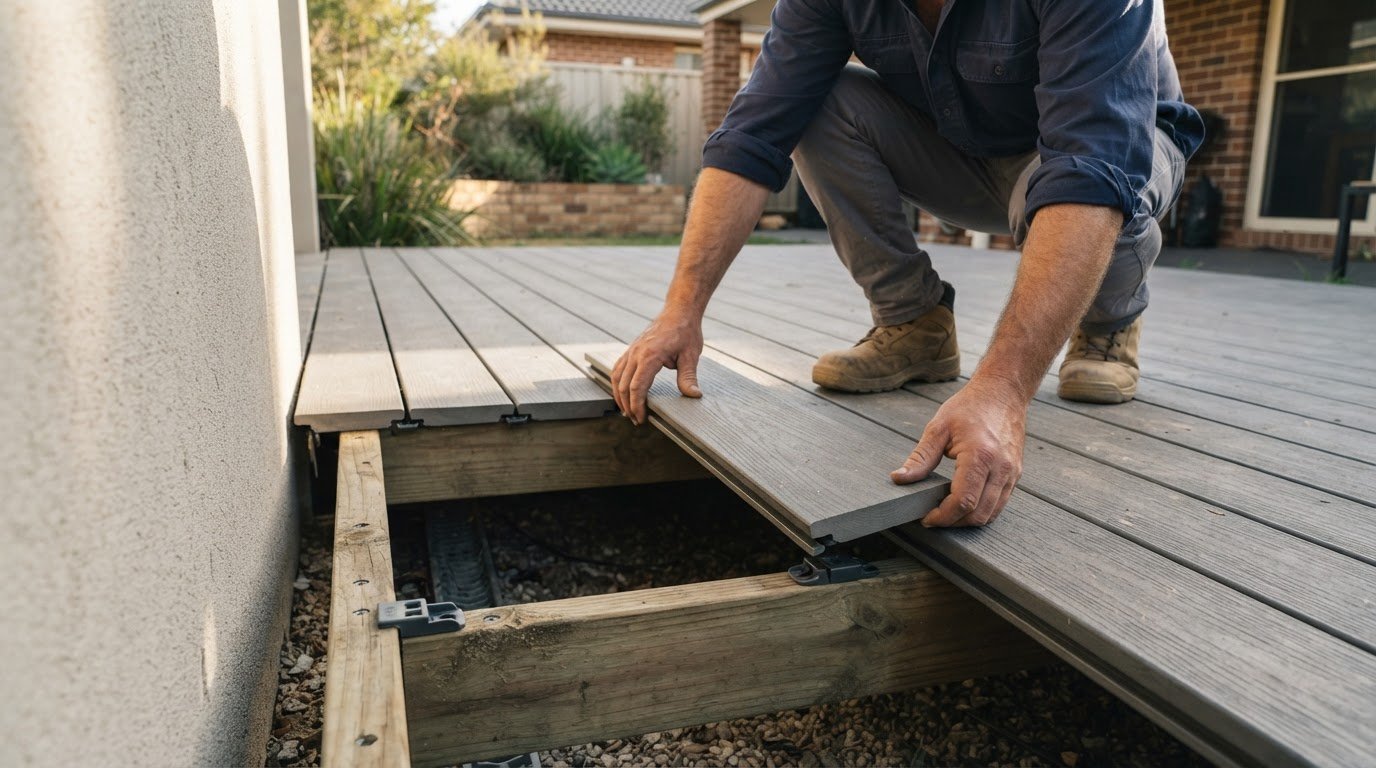
Safety is a collective effort. Your cladding board is only as secure as the structure supporting it. Using non-combustible adjustable pedestals ensures that the entire system, from the ground up, resists fire spread. A fire-rated board on a combustible sub-frame creates a weak link in safety. By choosing a unified, non-combustible system, you protect the structural integrity of the building during a fire event. If you are planning a build in a bushfire-prone area, view our compliant cladding options to find a solution that balances safety with style.
The Paveezzi Advantage: Balancing Compliance and Style
Safety should never be a compromise on style. While the technical nuances of the composite vs fibre cement cladding fire rating are vital for compliance, the ultimate goal is a home that feels as good as it looks. At Paveezzi, we bring over 15 years of expertise as a family-run Australian business to every project we support. We understand that architects and homeowners are looking for more than just a fire-safe board; they're looking for a long-term investment that stands up to the harsh sun and coastal winds. Our range is designed to provide that steadfast reliability without the industrial, clinical appearance often associated with traditional fire-rated materials.
Choosing Paveezzi means choosing a partner that prioritises meticulous production and environmental consciousness. We've moved beyond the "basic" options to offer solutions that satisfy both the building inspector and the design enthusiast. By focusing on high-level performance and premium aesthetics, we ensure your facade remains a point of pride rather than a maintenance burden. It's a smarter way to build, providing the quiet confidence that comes from knowing your home is protected by a system engineered for the specific demands of the Australian landscape.
Ressisto 144 Fineline: The Modern Facade Solution
The Cladding Ressisto 144 Fineline represents the pinnacle of modern facade design. It features a unique architectural profile that creates deep shadow lines, offering the warmth and texture of natural timber without the inherent fire risks or the constant need for oiling. Unlike fibre cement, which can require regular repainting to manage surface degradation, the Ressisto range is a "set and forget" solution. Available in premium brushed and extra matte finishes, it retains its colour integrity and structural stability long after traditional materials have begun to show their age.
Total System Safety with Rhino Pedestals
A truly safe building requires a holistic approach that looks past the surface. We recommend the use of Rhino non-combustible pedestals to ensure the entire assembly meets the highest safety standards. Many industry comparisons focus solely on the cladding board, but a fire-rated exterior on a combustible support structure creates a significant vulnerability. By integrating our non-combustible pedestals, you eliminate the weak links in your facade system. For those ready to begin their next project, our installation guides and technical resources provide the clear, professional oversight needed to ensure a compliant and beautiful result.
Designing a Safer, More Beautiful Future for Your Home
Selecting the right exterior is about more than just checking a box for a building inspector. You've seen how modern architectural standards have evolved, allowing for materials that provide both the necessary safety ratings and the timeless beauty of natural timber. When you evaluate the composite vs fibre cement cladding fire rating, the decision becomes a matter of balancing immediate compliance with long-term lifestyle benefits. You can choose a solution that protects your family while significantly reducing your weekend maintenance. Safety shouldn't be an afterthought. It's the foundation of every design choice we make.
Paveezzi has been Australian-owned and operated since 2010, specialising in high-performance architectural facades that stand the test of time. We provide national supply for both residential and commercial builds, ensuring your project has the professional support it needs from start to finish. Our commitment to excellence means we don't just sell boards; we provide total system safety for a truly secure finish. You deserve a home that reflects your style without compromising on peace of mind. Explore the Ressisto Cladding Range for Your Next Project and discover how to build with confidence.
Frequently Asked Questions
Is composite cladding fire-rated for use in Australia?
Yes, composite cladding is fire-rated for Australian use provided it meets the specific requirements of the National Construction Code (NCC). While older wood-plastic materials faced restrictions, modern architectural ranges are engineered to comply with AS 1530.1 or AS 1530.3 standards. It's essential to verify the certification for your specific project type, especially as we transition toward the NCC 2025 updates which place greater emphasis on material safety and system integrity.
Can I use fibre cement cladding in a BAL-40 zone?
Yes, fibre cement is a common choice for BAL-40 zones because it is typically classified as a non-combustible material under AS 1530.1. This classification allows it to withstand the high levels of radiant heat and ember attack associated with extreme bushfire risks. However, compliance depends on the entire wall system. You must ensure that all components, including the fixings and internal sarking, meet the construction requirements set out in AS 3959:2018.
Does composite cladding melt or produce toxic smoke during a fire?
Modern architectural composites are designed with fire-retardant additives that significantly reduce the risk of melting or contributing to flame spread. In Australia, materials are tested under AS 1530.3 to measure their smoke-developed index and heat release. By selecting a high-performance product with a low smoke rating, you ensure the material performs safely and predictably. This is a vital consideration when comparing the composite vs fibre cement cladding fire rating for multi-residential buildings.
Which is cheaper to install: composite or fibre cement?
Fibre cement often has a lower upfront material cost, but the total installation expense depends on labour and handling. Fibre cement is heavy and brittle, which can lead to higher breakage rates and longer installation times on-site. Composites are generally lighter and more efficient to handle, which can reduce labour hours. When you factor in that composites don't require regular painting or sealing, they often provide a better long-term financial outcome for homeowners.
Do I need to paint fibre cement cladding to keep it fire-resistant?
No, you don't need to paint fibre cement to maintain its fire resistance because the core material is inherently non-combustible. Painting is primarily required to protect the porous surface from moisture absorption and UV damage. While the fire safety remains intact without paint, a lack of surface maintenance can lead to "chalking" or cracking over time. This can eventually compromise the durability and aesthetic appeal of your home's facade.
How do I find the fire rating for Paveezzi Ressisto products?
You can find the specific fire ratings and technical test results for our Ressisto range by accessing the resources section on our website. Each product, including the Ressisto 144 Fineline, is backed by rigorous testing to ensure it meets Australian standards for safety and performance. If your project has specific BAL or NCC requirements, our team can provide the necessary certification documents to ensure your build is fully compliant and secure.
Comments