
Durable Exterior Cladding in Australia: The 2026 Guide to Resilient Facades
Can a facade truly capture the organic warmth of natural timber without becoming a lifelong burden of sanding, oiling, and warping under the relentless Australian sun? For many, the search for durable exterior cladding Australia often feels like a series of compromises between aesthetic soul and structural survival. You want the architectural prestige of a "Fineline" finish, yet you're faced with strict bushfire regulations and the reality of extreme UV exposure that strips the rich colour from traditional materials within years. Performance matters.
We understand that a home's exterior is both a protective shield and a personal statement. It's frustrating when the "natural" choice leads to high maintenance costs or fails to meet the updated NCC 2022 standards. This guide promises to simplify that decision, showing you how to achieve a beautiful, wood-like appearance with minimal maintenance requirements for over 25 years. We'll examine the engineering behind resilient facades like the Ressisto 144 Fineline and Lightissimo series, ensuring your project remains compliant, safe, and stunning for decades to come.
Table of Contents
What Makes Exterior Cladding Durable in the Australian Climate?
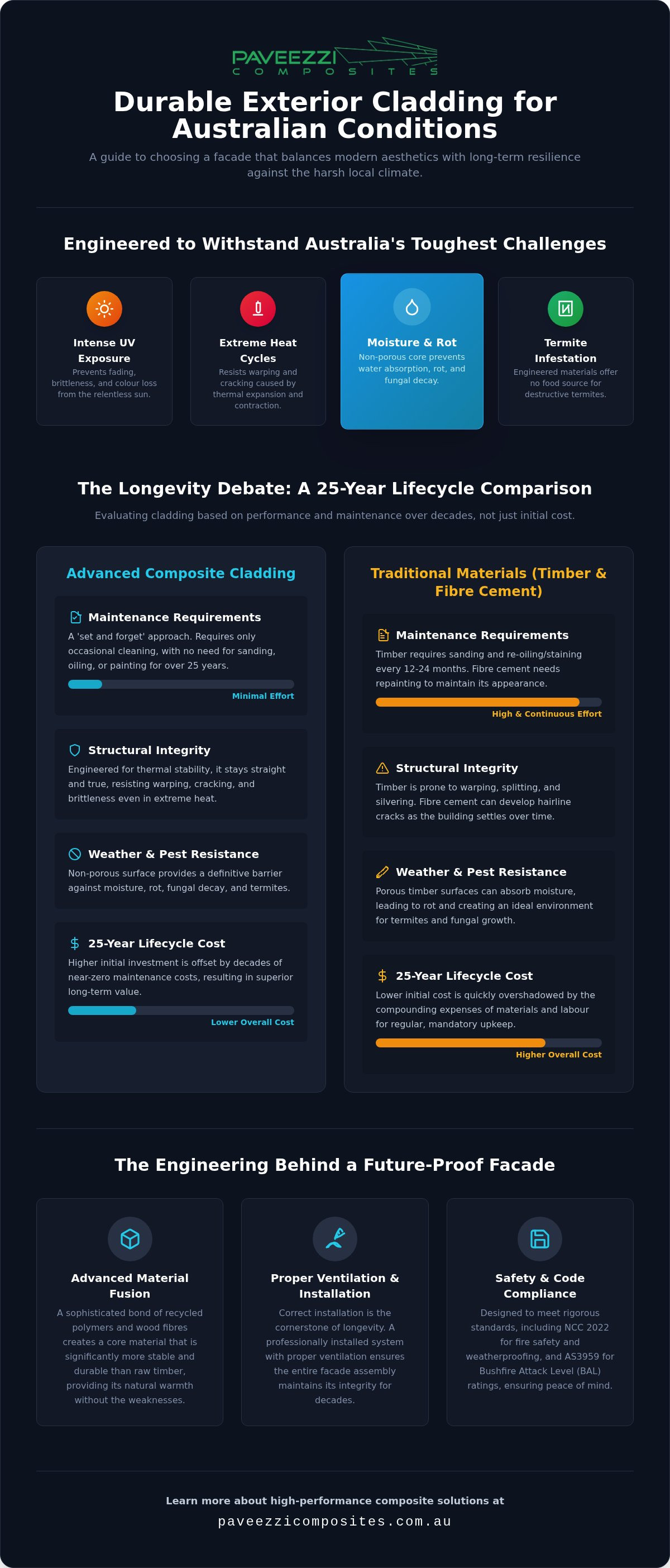
In the context of our local environment, durable exterior cladding Australia requires a multifaceted approach to engineering. It's not enough for a material to simply look good on the day of handover. True durability encompasses UV stability, moisture resistance, and a definitive barrier against termite infestation. Because our continent experiences extreme heat cycling, materials must handle significant expansion and contraction without cracking or losing their fastening. For those living along our vast coastline, salt spray resilience is equally critical to prevent corrosion and surface degradation. As a foundational principle in Cladding (construction), the primary goal is protection.
To set a benchmark for your project, durable cladding is a system that maintains structural integrity and colour for decades. This longevity separates high-performance solutions from standard alternatives that require constant attention.
The UV Factor: Protecting Your Facade from the Sun
Standard plastics and many softwoods often fail prematurely under the intense Australian sun. High UV levels break down the molecular bonds in inferior materials, leading to fading, brittleness, and warping. Premium composite cladding systems solve this through the scientific application of UV inhibitors. These stabilisers are integrated during the manufacturing process to protect the core and the surface. This ensures that your facade retains its deep, rich colour without the need for annual oiling or staining. It's a "set and forget" approach to architectural beauty. Reliability is built-in.
Moisture and Termite Resistance
Traditional timber often succumbs to rot and fungal decay, particularly in humid or tropical climates. Moisture penetrates porous surfaces, creating an ideal environment for pests. In contrast, the non-porous nature of advanced composite materials acts as a natural barrier. Termites find no sustenance in these engineered boards; water cannot seep into the core to cause swelling or structural failure. For larger projects, choosing commercial exterior cladding Australia ensures that these performance standards are met on a grander scale, protecting the investment for the long term. This provides peace of mind for developers and homeowners alike.
Composite vs. Traditional Materials: The Longevity Debate
Choosing between materials for a project often comes down to a struggle between immediate cost and long-term value. When we look at a 25-year lifecycle, the differences between timber, fibre cement, and composite become stark. Timber requires a rigorous schedule of sanding, oiling, or staining every 12 to 24 months to prevent silvering and rot. Fibre cement is certainly robust, but it can be prone to hairline cracking as a building settles and inevitably requires repainting to maintain its aesthetic appeal. Performance shouldn't be a part-time job.
Composite materials offer a "no-nonsense" alternative that removes these chores entirely. There's a common misconception that composite is merely a plastic imitation. In reality, Ressisto products are engineered with a high percentage of wood fibres. This blend provides the tactile warmth of natural timber while the polymer component ensures the board remains shielded from the elements. This synergy is what makes it a premier choice for durable exterior cladding Australia. It's about finding the balance between nature and science.
The Engineering Behind Ressisto Technology
The secret to longevity lies in the sophisticated bond between recycled polymers and wood fibres. This fusion creates a material that's significantly more stable than raw timber. By carefully managing thermal expansion, these boards stay straight and true even during the intense heat of an Australian summer. If you're looking for deeper technical insights, our architectural composite cladding guide provides a detailed look at these design principles. Quality engineering doesn't have to be invisible.
Bushfire Safety and Compliance
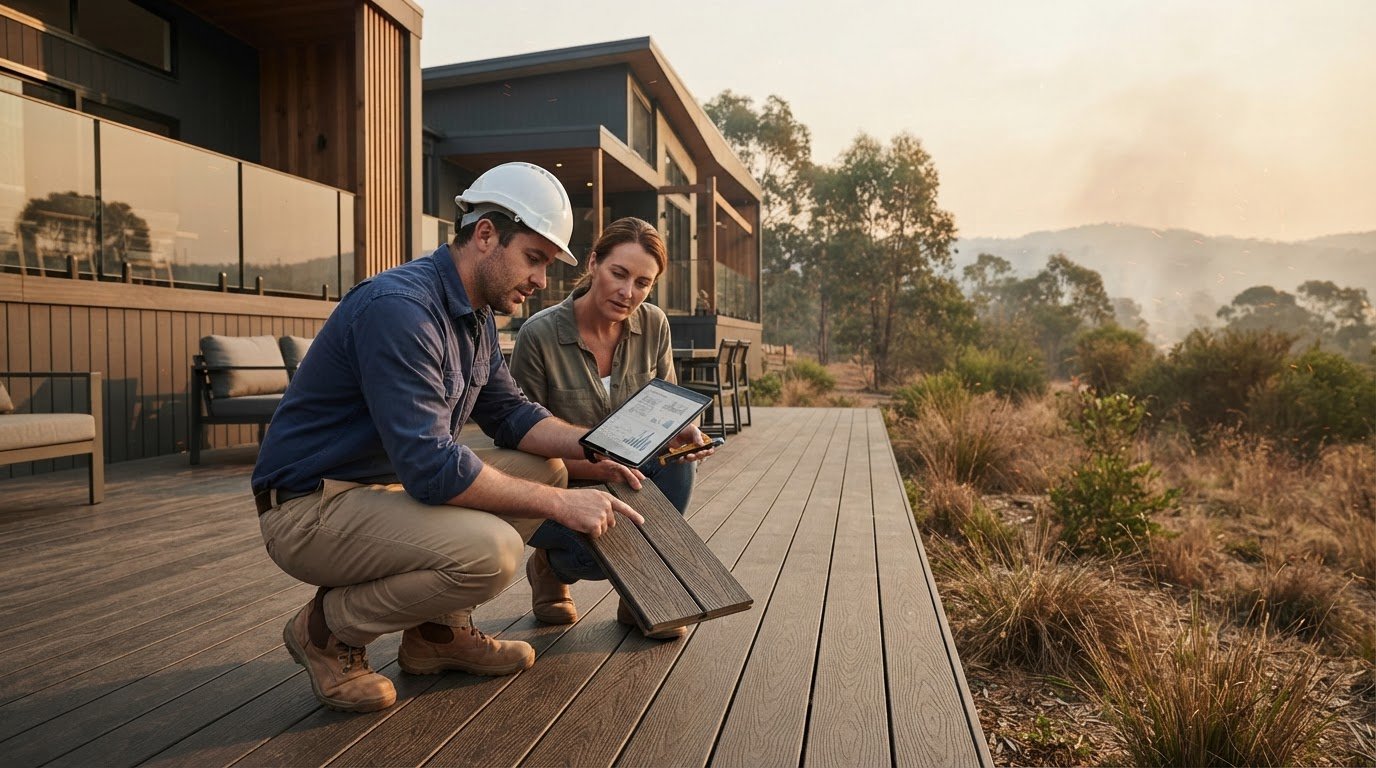
Safety is non-negotiable. Understanding Bushfire Attack Level (BAL) ratings is a critical part of any build, ensuring compliance with the Building Code of Australia (BCA) requirements and AS3959. For projects requiring raised facades, using non-combustible accessories like Rhino pedestals is an essential step in future-proofing the structure. These components work together to create a system that's as safe as it is resilient. You can explore our range of compliant solutions to find the right fit for your specific BAL requirements.
Selecting the Right Profile for Architectural Impact
The visual impact of a building is dictated by the play of light and shadow across its surface. Selecting the right profile is about more than just colour; it's about defining the architectural character of the structure. For those seeking durable exterior cladding Australia, the "Fineline" aesthetic has emerged as a modern favourite. It replaces the chunky, overlapping look of traditional weatherboards with sleek, recessed shadow gaps. Whether you're aiming for a coastal retreat or a sharp urban dwelling, the profile you choose communicates the design's intent. It's a signature of quality.
Finishes play a pivotal role in this sensory experience. A brushed finish provides a subtle, organic texture that mimics seasoned timber, while an extra matte finish offers a sophisticated, non-reflective surface that feels contemporary. When planning these details, referencing the Australian timber cladding standard helps in understanding traditional design principles, though composite technology allows for tighter tolerances and more predictable shadow lines. The orientation of these boards is equally impactful. Vertical installation draws the eye upward, adding perceived height to a home, whereas horizontal layouts provide a sense of stability and breadth.
Ressisto 144 Fineline: The Modern Standard
The Cladding Ressisto 144 Fineline is the architect's tool of choice for creating precise, minimalist facades. With its specific 144mm width and engineered shadow gap, it creates a rhythmic pattern that remains consistent across the entire wall. This uniformity is nearly impossible to achieve with natural wood, which often bows or shrinks over time. It's a reliable way to ensure the finished build matches the original vision. Clean lines stay clean.
Ressisto Lightissimo: Lightweight Strength
For multi-storey projects or renovations where weight is a primary concern, the Lightissimo series offers a strategic advantage. These panels provide the visual weight of wide-board timber without the structural load. The Lightissimo 202, for instance, allows for a premium finish that feels substantial yet remains easy to handle on-site. This lightweight strength ensures that even the most ambitious designs remain feasible and durable. You can view our full range of architectural profiles to find the perfect match for your next project.
Installation Best Practices and Future-Proofing
The journey from a pallet of boards to a resilient facade requires more than just high-quality materials. While we take pride in being a trusted supplier of the Ressisto and Lightissimo series, the ultimate performance of durable exterior cladding Australia relies heavily on professional installation. It's the difference between a facade that merely looks good and one that remains stable for thirty years. A premium product deserves a premium finish.
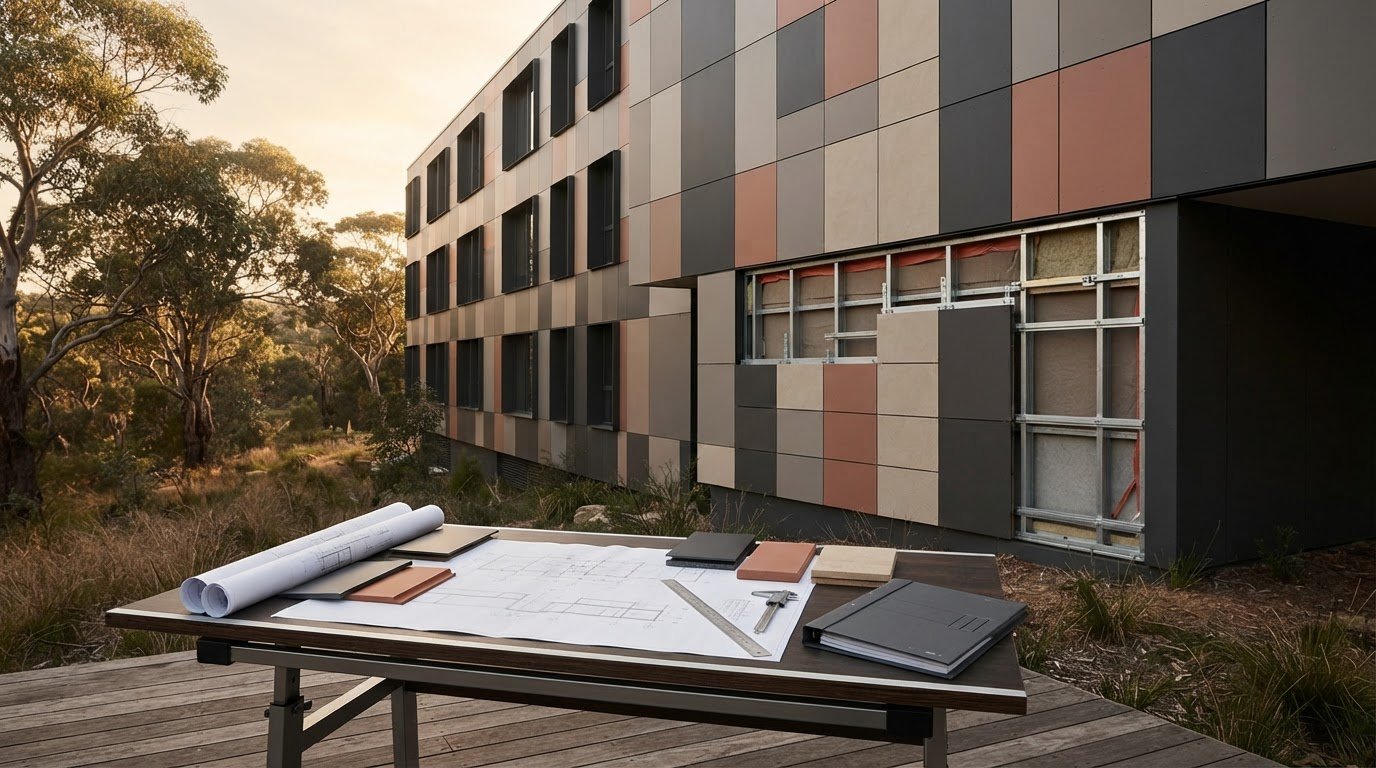
One of the most critical factors in Australian home design is the implementation of a "breathable" wall system. Proper ventilation behind the cladding allows moisture to escape, preventing the buildup of mould and rot within the building envelope. When fixing composite boards, it's essential to ensure the substructure is perfectly aligned and that the fixings allow for natural thermal movement. This methodical approach prevents warping and ensures the shadow lines stay as crisp as the day they were installed. Stability is built into the process.
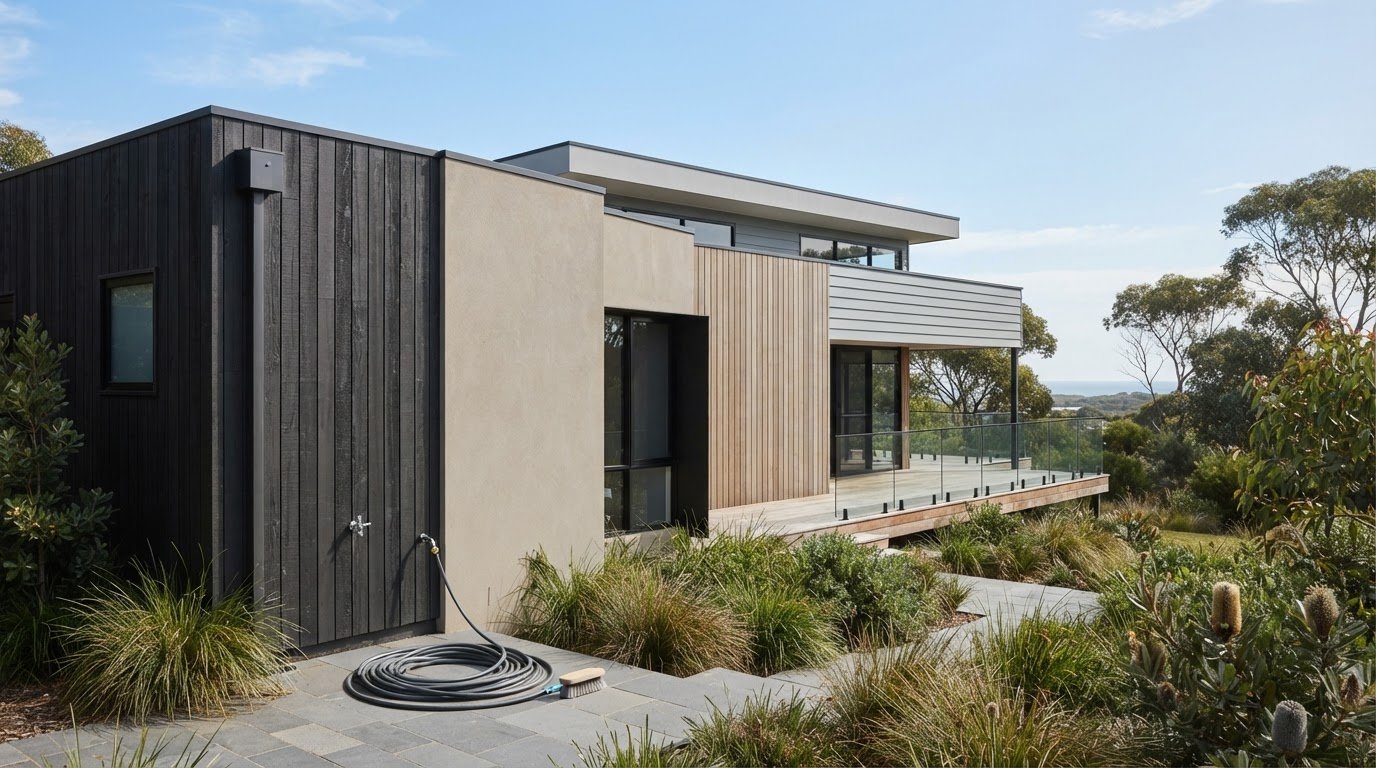
It's important to remember that low maintenance doesn't mean no care at all. To keep your facade looking its best, we recommend a simple wash with warm, soapy water once or twice a year. This removes salt spray, bird droppings, and environmental dust that can dull the finish over time. It's a small investment of time for a massive architectural payoff.
The Role of Accessories in System Longevity
The details often define the lifespan of the entire system. Using the correct Ressisto Nosing & Edging Options is vital for effective water shedding away from the building's joints. Similarly, choosing high-quality installation hardware is essential to prevent the unsightly rust streaks and staining often seen on inferior builds along the coast. For more technical details on system components and layouts, you can explore our decking and cladding resources. Precision matters.
Planning for the Next 30 Years
Investing in a high-end composite facade is a strategic move for property resale value. Prospective buyers in Australia increasingly look for homes that don't come with a weekend "to-do" list of sanding and oiling. From a sustainability perspective, choosing a long-life composite over short-life timber reduces the environmental footprint by extending the replacement cycle significantly. It's a choice that respects both your time and the landscape. If you're ready to elevate your project, contact Paveezzi for expert cladding supply to discuss your requirements.
Building a Legacy with Resilient Facades
A home's exterior is its first line of defence and its most visible signature. Throughout this guide, we've explored how modern engineering allows you to capture the timeless appeal of timber without the relentless cycle of maintenance. By prioritising materials like the Ressisto 144 Fineline, you ensure a premium finish that stays crisp and true despite the harsh conditions of our landscape. It's a strategic investment in both style and longevity.
When specifying durable exterior cladding Australia, the choice often comes down to long-term performance. Our family-run Australian expertise is built on providing solutions specifically engineered for extreme UV stability and structural integrity. Whether you're an architect seeking sharp shadow lines or a homeowner looking for peace of mind, the path to a resilient facade is now clearer than ever. It's about choosing quality that stands the test of time while elevating your property's value.
Ready to transform your project with a facade that balances science and style? View our range of durable architectural cladding and discover the Paveezzi difference today. We're here to help you build something that lasts for decades.
Frequently Asked Questions
Is composite cladding really durable enough for the Australian sun?
Yes, high-performance composite systems are specifically engineered to withstand extreme UV levels. Unlike standard plastics that become brittle, premium durable exterior cladding Australia utilises advanced UV inhibitors integrated during manufacturing. This ensures the boards maintain their structural integrity and colour depth without warping or cracking. Our Ressisto range is tested against the harsh local climate, providing a stable facade that resists the degradation typically caused by intense solar exposure over many years.
Does durable exterior cladding require painting or staining?
No, one of the primary advantages of choosing a resilient composite facade is the complete removal of the maintenance cycle. Unlike traditional timber, which requires sanding and oiling every year or two, composite materials are pre-finished with permanent pigments. This means you won't ever need to apply paint, stain, or sealants. The "no-nonsense" value of the Ressisto series ensures that your home maintains its premium architectural appeal without any recurring labour or material costs.
What is the best cladding for a bushfire-prone area in Australia?
For bushfire-prone areas, you must select materials that comply with specific Bushfire Attack Level (BAL) requirements. Under the current NCC 2022 standards, non-combustible materials or those tested to AS 1530.1 are preferred for high-risk zones. While many composite boards are suitable for various BAL zones, it's vital to use non-combustible accessories like RHINO Adjustable Pedestals for raised systems. Always verify the specific BAL rating of your chosen profile before commencing your build.
How does the cost of composite cladding compare to timber over time?
While the initial purchase price of composite is often higher than raw timber, it's significantly more cost-effective over a 25-year lifecycle. Timber requires ongoing expenditure on oils, stains, and professional labour to prevent rot. When you factor in these recurring costs plus the eventual replacement of decayed wood, composite becomes the smarter financial choice. It provides long-term value by eliminating the maintenance overhead while preserving the resale value of your property through a pristine facade.
Can I install Ressisto 144 Fineline cladding vertically?
Yes, the Ressisto 144 Fineline profile is designed for both vertical and horizontal installation. Choosing a vertical orientation is a popular architectural technique used to add perceived height and a sense of modern grandeur to a structure. This profile's engineered shadow gap ensures that the clean lines remain consistent regardless of the direction. It's a versatile solution for durable exterior cladding Australia, allowing architects to achieve a sharp, minimalist aesthetic that suits contemporary design trends perfectly.
What maintenance is required for Paveezzi composite cladding?
Maintenance for our composite range is remarkably simple but essential for longevity. We recommend a basic clean once or twice a year using warm, soapy water and a soft-bristled brush. This process removes surface dust, salt spray, and environmental pollutants that can accumulate over time. Unlike timber, there is no need for chemical stripping or re-sealing. This straightforward care routine ensures your Lightissimo or Ressisto facade continues to look spectacular and perform reliably for decades to come.
Comments