
Fade Resistant Composite Decking Australia: The 2026 UV-Stability Guide
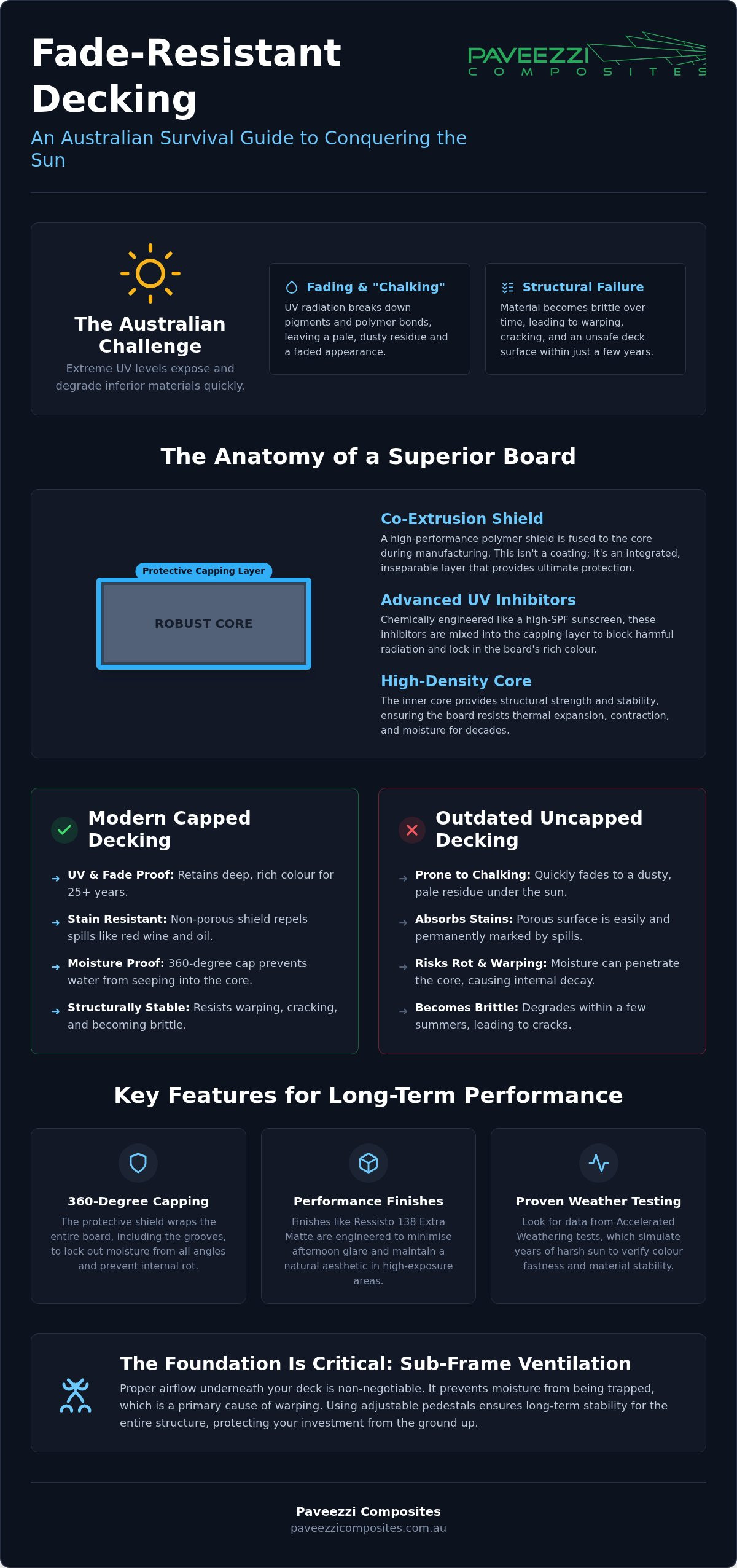
In the harsh reality of the Australian climate, UV radiation is not just a weather forecast; it is a relentless structural challenge that can turn a premium investment into a chalky, faded eyesore in just a few short seasons. Finding genuine fade resistant composite decking Australia requires looking beyond the surface level to understand the meticulous engineering that prevents pigment loss. You likely chose composite to escape the exhausting cycle of sanding and oiling timber, only to find that many entry-level imports simply cannot withstand our local conditions. It's a common frustration to watch a vibrant deck lose its character under the weight of intense heat and "chalking."
We believe that your outdoor sanctuary should remain as striking as the day it was installed. This guide will show you how to identify materials that maintain their integrity and rich colour for over twenty years. We will explore the critical role of advanced polymer capping, the performance of specialised finishes like Ressisto 143 Brushed and Ressisto 138 Extra Matte, and why a dedicated approach to UV-stability is the only way to ensure your investment survives the sun. By the end of this guide, you will have the confidence to select a deck that stays cool, vibrant, and beautiful for the long haul.
Table of Contents
Why Fade Resistance is Non-Negotiable for Australian Decks
The Australian sun is relentless. With some of the highest UV index levels in the world, our climate acts as a high-intensity laboratory that quickly exposes inferior building materials. While traditional timber decks require annual oiling to combat the breakdown of lignin, many early Wood-plastic composites (WPCs) failed to address the specific intensity of local radiation. This led to the notorious "chalking" effect, where the polymer bonds degrade into a dusty, pale residue. Choosing genuine fade resistant composite decking Australia means investing in a board designed to withstand these conditions for a 25-year lifecycle without losing its structural soul.
Modern decking has evolved significantly from the first-generation porous boards of the early 2000s. Today, the gold standard is co-extrusion. This process fuses a high-performance, UV-stable shield to a robust core, creating a barrier that pigments can't easily escape. You should realistically expect a premium board to maintain its intended colour palette with only minor, natural shifts that occur during the first few months of "seasoning" in the sun. It's about long-term aesthetic stability rather than a temporary surface fix.
The Impact of UV on Structural Integrity
Surface fading is often the first warning sign of deeper material fatigue. When UV radiation penetrates a low-grade plastic, it breaks down the molecular chains that provide flexibility and strength. In sun-drenched environments, boards undergo constant thermal expansion and contraction. Without high-quality stabilisers, cheap imports often become brittle and warp or crack within their first three Australian summers. A fade-resistant board isn't just about looking good; it's about ensuring the deck remains safe and stable underfoot for decades.
Verifying Performance Standards
Don't rely on vague marketing promises. Technical data sheets should provide evidence of Accelerated Weathering tests, which simulate years of extreme sun exposure in a controlled environment. Look for high colour fastness ratings and clear evidence of UV-inhibitor integration. As a trusted pioneer in the Australian market since 2010, Paveezzi focuses on a no-nonsense approach to quality. We provide materials that have been proven in local conditions, giving you the peace of mind that your outdoor entertaining area won't become a maintenance burden or a visual disappointment as the years pass.
The Science of UV-Stable Composite Technology
The secret to a deck that keeps its deep, rich hues lies in a process called co-extrusion. This isn't just a surface coating. It is a high-performance shield fused to a stable core during the manufacturing process. For homeowners seeking fade resistant composite decking Australia, this dual-layer construction is the only way to ensure the board remains impervious to the sun's high-energy photons. Within this capping layer, chemists integrate advanced UV inhibitors that act like a high-SPF sunscreen. These inhibitors work alongside specifically engineered pigments that resist the "bleaching" effect commonly seen in lower-quality materials.
A 360-degree cap is another non-negotiable feature for long-term performance. By wrapping the entire board, including the grooves, the manufacturing process prevents moisture from seeping into the core. This eliminates the risk of internal rot and ensures the structural integrity remains as consistent as the colour. It's a comprehensive approach to durability that protects every millimetre of the timber-alternative material.
Capping vs. Uncapped Boards
The evolution of composite decking has moved rapidly from basic wood-flour mixes to these sophisticated shielded systems. Uncapped boards are essentially naked to the elements. Without a shield, they are prone to "chalking," where the plastic binders break down and leave a white, dusty residue on your feet. Beyond UV protection, a quality cap also creates a non-porous surface. This means accidental spills like red wine, oils, or tannins from overhanging trees won't leave permanent stains on your investment.
Heat Dissipation and Colour Choice
Many people worry that dark colours will become unbearable during a scorching Australian arvo. While darker hues naturally absorb more energy, modern engineering focuses on heat dissipation to keep boards more comfortable underfoot. By choosing a product with a high-density cap and specific reflective properties, you can enjoy deep charcoal or chocolate tones without the extreme heat retention of older plastics. In technical terms, UV-stability is the material ability to retain molecular bonds under high-energy radiation. This molecular resilience is what allows a deck to survive the peak of summer year after year. If you are ready to explore these technical standards in person, you can browse our full range of high-performance decking solutions.
Choosing the Right Finish for High-Sun Environments
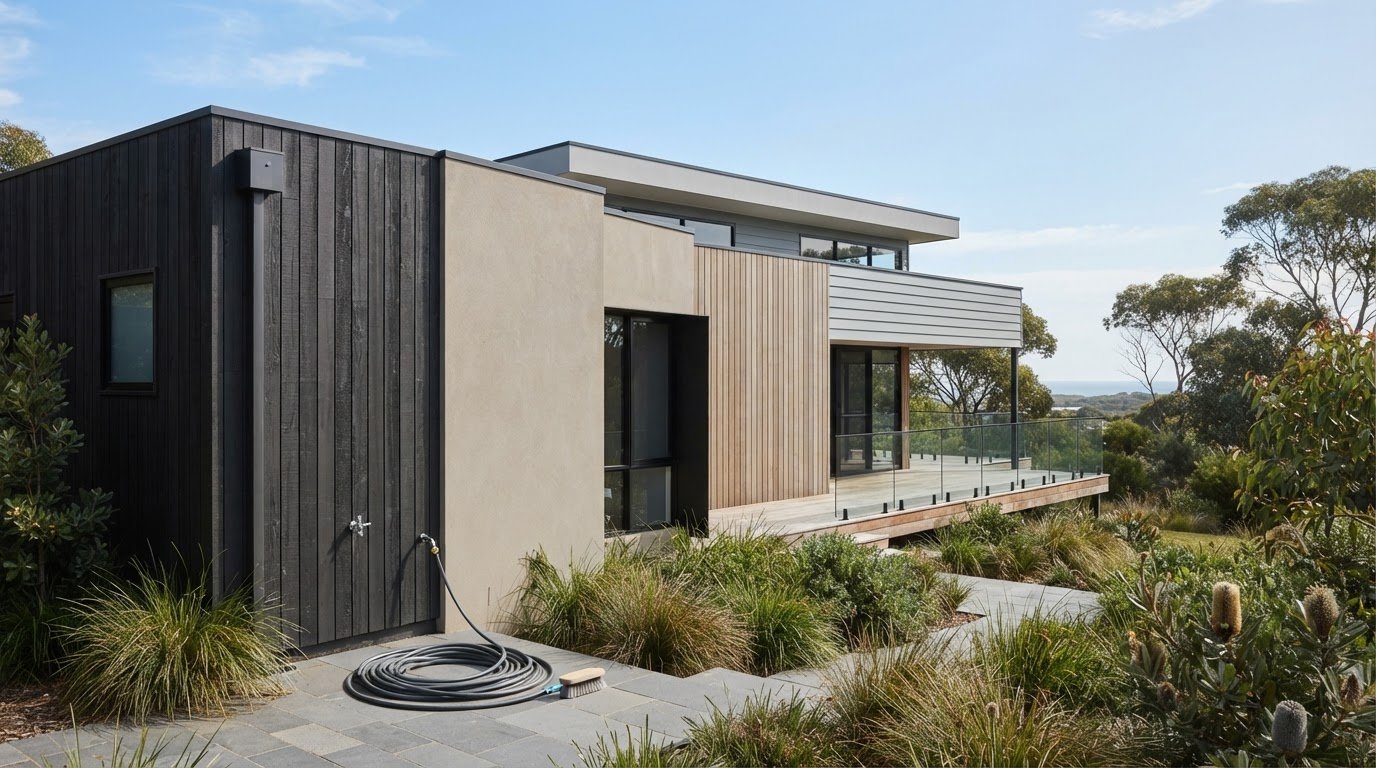
Selecting the right surface finish is a critical step in ensuring your outdoor area remains functional during the peak of summer. While many homeowners focus solely on the base colour, the texture of the board significantly influences how light is reflected and how the human eye perceives fading. Smooth, glossy finishes tend to highlight minor surface imperfections and can produce an uncomfortable glare during the afternoon. By contrast, a high-quality fade resistant composite decking Australia solution uses texture to diffuse light, creating a softer, more natural appearance that stays consistent for years. Matching your finish to your home's architectural style ensures that the deck feels like a deliberate extension of the living space rather than an afterthought.
Decking Ressisto 138 Extra Matte: The Sophisticated Choice
There is a clear shift in modern Australian design toward extra matte decking finishes. This trend is driven by a desire for understated elegance that doesn't compete with the surrounding landscape. The primary functional advantage of a matte surface is its ability to scatter light. This diffusion makes minor scuffs and scratches far less visible than they would be on a reflective surface. For open, unshaded entertaining areas that receive direct northern sun, an extra matte finish is the most practical way to minimise eye strain and maintain a cool, contemporary look.
Decking Ressisto 143 Brushed: Organic Texture
If you prefer the tactile warmth of traditional timber, brushed finish composite decking offers a compelling alternative. This surface is treated with specialised wire brushes during manufacturing to create a grain that mimics aged Australian hardwoods. Beyond the aesthetic appeal, this texture provides superior slip resistance, which is essential for poolside zones or high-traffic stairs. It's a no-nonsense choice for families who want the rugged look of timber without the splinters or the constant maintenance. The wire-brushed surface helps the board retain its character even in the face of heavy foot traffic and coastal salt spray. To see how these textures can transform your project, you can explore our full range of premium finishes.
The Paveezzi Standard: Long-Term Performance
Our commitment to excellence extends far beyond the surface of a single board. At Paveezzi, we focus on providing a premium supply of materials for the most demanding residential and commercial projects across the country. Selecting fade resistant composite decking Australia is a vital first step, but the longevity of your outdoor space depends on the entire system. We've spent over 15 years refining our range to ensure that every component, from the core of the board to the smallest accessory, is engineered for the local climate. Our national supply capability ensures that whether you're working on a coastal retreat or an inland urban space, you have access to the same high-performance standards.
The sub-frame is the unsung hero of any deck that looks new for decades. Without proper airflow and drainage, even the best composite can suffer from heat buildup and moisture issues. We recommend using RHINO Ajustable Pedestals to create a stable, ventilated foundation. These pedestals allow for precise levelling and provide a critical gap for water runoff, which protects the structural integrity of the entire installation. It's this methodical approach to deck planning that separates a professional finish from a temporary solution.
Architectural Integrity and Accessories
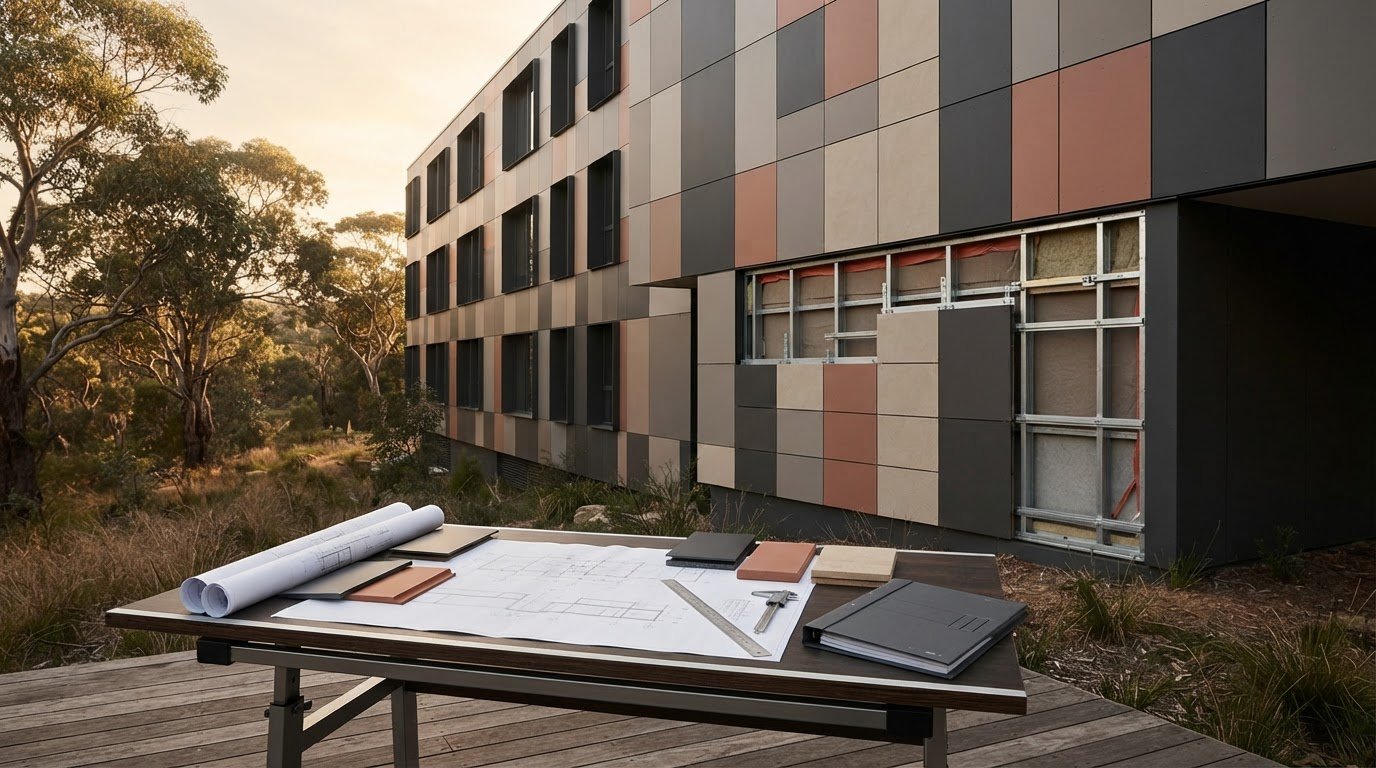
Finishing touches are about more than just aesthetics; they're essential for protecting the exposed edges of your deck from UV damage and moisture ingress. Integrating composite decking nosing and edging ensures a seamless transition between your deck and the rest of your home's facade. This creates a cohesive look that maintains its visual appeal for 20+ years. For projects with strict safety requirements, our non-combustible Ajustable pedestals offer an additional layer of security without compromising on the precision of the build.
The Value of a Family-Run Pioneer
Paveezzi has operated as a family-run Australian pioneer since 2010. This history provides us with a deep understanding of how different materials perform under the unique stress of our local sun. We don't believe in aggressive sales tactics. Instead, we take a no-nonsense approach to technical support and material supply. We're passionate problem solvers who act as a steadfast partner for architects and homeowners alike. When you choose our materials, you're benefiting from fifteen years of oversight and a genuine investment in the success of your outdoor project.
Securing Your Investment Against the Elements
Creating an outdoor sanctuary that retains its beauty requires a deliberate focus on material science and local expertise. You've seen how advanced co-extrusion technology acts as a shield against molecular breakdown and why the right surface texture is essential for managing the intense Australian glare. By choosing a board designed for our specific UV conditions, you escape the cycle of constant maintenance and the frustration of surface chalking. Investing in fade resistant composite decking Australia means your deck will remain a vibrant, structurally sound extension of your home for over 20 years.
As a family-run business established in 2010, Paveezzi remains a trusted pioneer in the national supply of premium architectural materials. We pride ourselves on a no-nonsense approach to quality, ensuring that every project we support is built on a foundation of reliability and technical excellence. Your vision for a low-maintenance, high-performance entertaining area is within reach.
Request a sample of our fade-resistant Ressisto range today to experience the quality of our finishes firsthand. We're here to help you build with total confidence.
Frequently Asked Questions
Does fade resistant composite decking ever change colour?
High-quality fade resistant composite decking Australia is engineered to stabilise after an initial seasoning period of a few months. Unlike traditional timber, it won't continue to grey off or lose its base pigment under the sun. The advanced polymer capping ensures the intended hue remains consistent for decades. This prevents the board from developing the chalky white residue often seen with inferior, uncapped imports that lack proper UV inhibitors and technical oversight.
How do I clean a composite deck without damaging the UV shield?
Regular maintenance is straightforward and won't harm the protective capping. Use a soft-bristled broom and warm soapy water to remove dust and organic debris. Avoid using harsh chemicals or solvent-based cleaners that could degrade the polymer shield. For stubborn spots, a pressure washer can be used on a low setting, but keeping the nozzle at a safe distance is vital to prevent surface etching. Simple care preserves the board's aesthetic integrity.
Is dark-coloured composite decking too hot for the Australian sun?
Dark colours naturally absorb more heat, but modern engineering has improved thermal performance significantly. Premium boards like the Ressisto range are designed with high-density materials that manage heat dissipation more effectively than older plastic decking. While any surface in direct sun will get warm, choosing a matte finish can help reduce glare and heat perception. For the best results, ensure your sub-frame has adequate airflow by using RHINO Ajustable Pedestals.
Can I install composite decking in bushfire-prone areas?
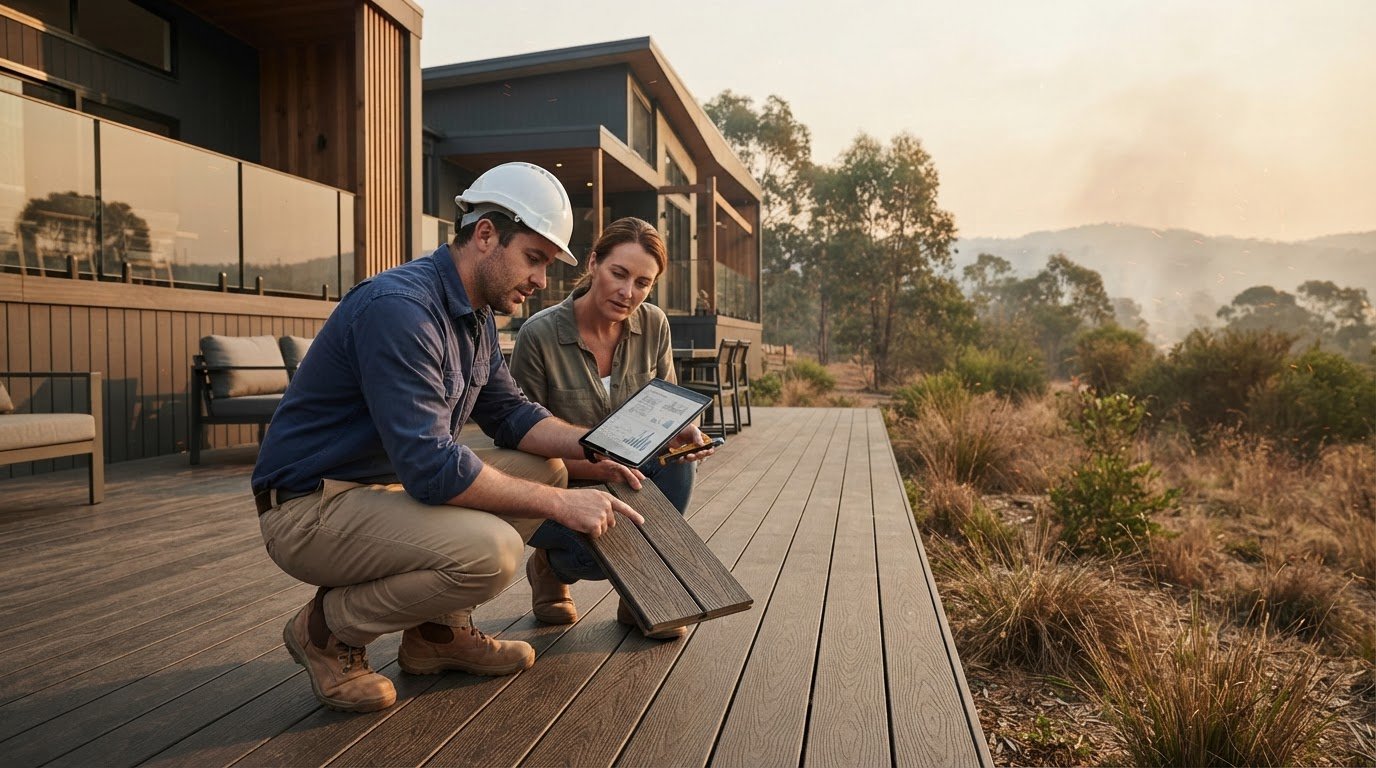
Yes, provided the material meets the specific Bushfire Attack Level (BAL) requirements for your property. Many premium composite products are rated for use in BAL-29 zones. You must check the technical data sheet of the specific board to ensure it complies with the National Construction Code and Australian Standards for fire resistance. For elevated decks, using non-combustible Ajustable pedestals is a common requirement to ensure the entire system meets safety regulations.
What is the difference between capped and uncapped composite boards?
Capping is the critical difference in long-term performance. Uncapped boards are exposed wood-plastic mixes that are prone to staining, moisture absorption, and rapid fading. Capped boards feature a high-performance polymer shield fused to the core. This shield acts as a barrier against UV radiation and moisture ingress. It is the only reliable way to ensure you have truly fade resistant composite decking Australia that maintains its structural integrity and colour over time.
How long does fade resistant composite decking typically last in Australia?
A high-quality capped composite deck is designed to last 25 years or more in local conditions. While traditional timber might rot or warp within a decade without constant oiling, premium composites remain stable and vibrant. The longevity of the installation also depends on the quality of the sub-frame and drainage. Using robust accessories and professional-grade materials ensures your outdoor entertaining area stays looking new for the duration of its extensive warranty period.
Comments