
Hidden deck fixings: A practical Australian buyer's guide
Hidden fastening system for decking: A practical Australian buyer's guide
Hidden deck fixings: A practical Australian buyer's guide
A hidden fastening system for decking can create a clean surface, but its suitability depends on the board profile and substructure, not appearance alone. Choose a system that doesn’t match the board and installation may become more complicated than expected.
If you’re considering concealed fixings, weigh the consistent appearance against installation requirements and future access. Face-fixed screws leave a visible pattern, but may offer a more familiar approach and can make fixings easier to reach for some repairs. The right option depends on the board instructions and the priorities of your project.
This guide compares hidden and face-fixed fasteners, explains what to check against your chosen decking profile and substructure, and highlights details that affect board spacing and access. If you’re considering composite boards such as Paveezzi’s Ressisto 143 Brushed or Ressisto 138 Extra Matte, confirm the current installation instructions and fixing requirements for that exact profile before selecting a system. Checking compatibility first can help you shortlist suitable options and plan the work more clearly.
Table of Contents
What is a hidden fastening system for decking, and what does it change?
A hidden fastening system for decking secures boards without screw heads exposed on the top face. The fixings sit between boards, engage an edge or are concealed by another method, creating a less interrupted surface. For a short overview of the structure being built, see What is a deck?
“Hidden fixing” describes the finish, not one universal product. Clips, side-fixing methods and plugs that cover screw heads work differently, so they shouldn’t be treated as interchangeable. A plug may conceal a screw driven through the board face, while a clip may engage a purpose-designed groove. The board manufacturer’s installation instructions determine which method suits a particular profile.
How do hidden decking fasteners hold boards in place?
In a clip-based system, a fastener may engage grooves or shaped edges on adjoining boards and attach to the supporting frame. Some side-fixing approaches secure the board through its edge instead. These methods rely on compatible board geometry. A board without the required groove or edge detail may not suit the system. Spacing, screw type and fixing sequence can also vary, so follow the instructions for the selected board and fastener rather than assuming one method fits all.
Hidden versus face-fixed decking: what is the practical difference?
Hidden fixings reduce visible screw heads and can create a more uniform surface. Face-fixed screws leave a visible pattern, but this method may suit some board profiles. Check the permitted fixing methods in the board instructions before deciding.
Access is another consideration. Replacing a board can depend on the fixing arrangement and its position in the deck. Concealed clips may require access to edges or neighbouring boards, while face-fixed screws may be visible and reachable. Check the system’s removal and replacement guidance before installation.
The main difference is a trade-off: hidden fixings prioritise a clearer surface, while face-fixed screws keep fixings visible and may offer a more direct route to them. Neither is automatically the better choice. Compare both options against the board profile, frame and likely maintenance needs.
Paveezzi’s composite decking range includes Ressisto 143 Brushed and Ressisto 138 Extra Matte. Their fixing suitability should be checked against the current instructions for each exact profile. The product range itself doesn’t establish compatibility with a particular hidden system. Start with the composite decking range and verify the fixing requirements before selecting fasteners.
Hidden decking fasteners: how boards, clips and substructure must match
A hidden clip that suits one board can be unsuitable for another, even if both are composite or timber. The fastener, board and supporting frame work as a system. A hidden fastening system for decking isn’t automatically compatible with your chosen boards or easier to install. Check the relevant product instructions before selecting fixings or setting out the frame.
Which decking board details affect fastener compatibility?
Start with the exact board profile and the manufacturer’s approved fixing methods. Some boards have purpose-designed grooves or shaped edges for clips; others may require a different fixing approach. Board thickness and edge design matter because a fastener must engage as intended without damaging the board or leaving it inadequately secured. Don’t assume a clip described as “universal” is approved for every profile.
Paveezzi’s composite decking options provide a starting point for checking board details. For profiles such as Ressisto 143 Brushed or Ressisto 138 Extra Matte, seek the current installation instructions for the exact board and verify whether your preferred fixing method is specified. The product name or material alone doesn’t confirm compatibility.
Why does the substructure matter to hidden fastening?
Clips and their screws attach to the supporting frame, so joist material, layout, spacing and condition all affect whether a proposed system can be used. Check these details against both the decking and fastener instructions. Timber and metal frames may call for different fixings, while the required layout and installation sequence depend on the products selected. Don’t carry over spacing or screw specifications from another deck.
Exposure matters too. Confirm that the fasteners suit the project conditions, including the frame material and potential corrosion exposure. As an additional reference, consult this government deck safety guidance, alongside the documentation relevant to your project.
Before committing, ask the board supplier and fastener manufacturer to confirm compatibility, including any required accessories and frame conditions. If you’re reviewing Paveezzi’s materials, its company information offers further background. Resolve the match before installation begins, not after the first boards are laid.
How to compare hidden fastening systems before choosing one
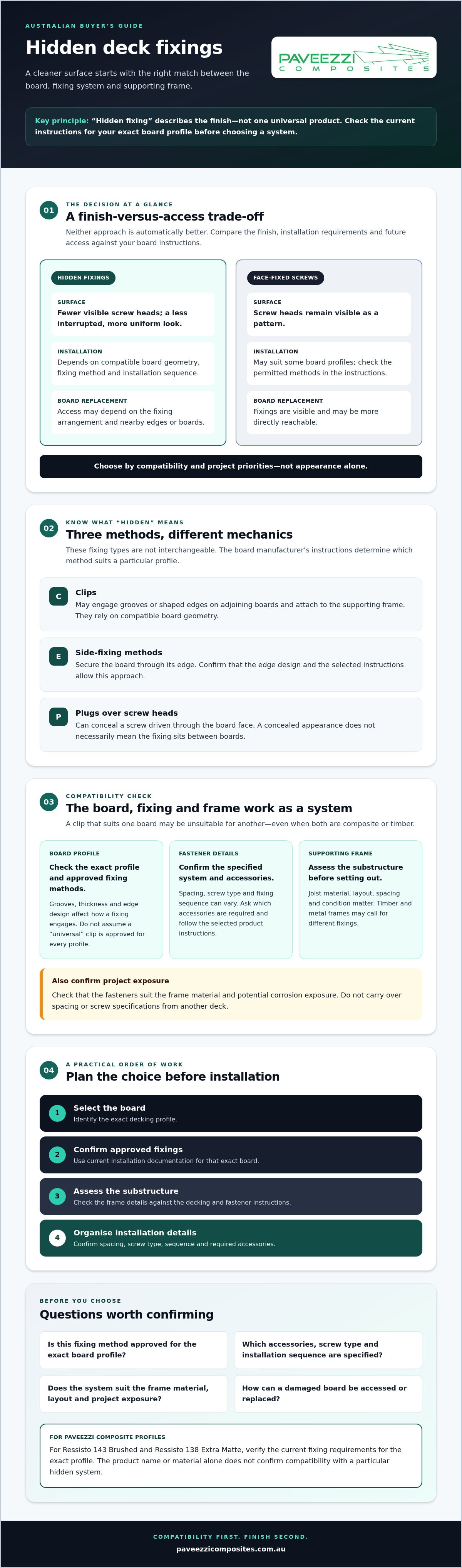
Compare documented compatibility and practical use, not just how invisible a fixing looks. A hidden clip, a plug-concealed screw and a face-fixed screw can produce different finishes and require different installation steps. Use the table to identify what to check, then refer to the specific board and fastener instructions.
What should you check in a hidden fastening system specification?
Look for named compatible board profiles and clear installation documentation, not a broad claim that a system suits “composite decking”. Check the fixing material, required tools, installation sequence, substructure conditions and any stated exposure limitations. If compatibility remains unclear, ask the fastener supplier or board manufacturer to confirm it for your exact products. Keep that guidance with the project documents so it can be checked during installation.
When might face-fixed screws be the more practical option?
Face fixing may be appropriate when the board instructions specify it or don’t support concealed fixing. It may also be worth considering if visible fixings are acceptable and you’re weighing access for inspection or board removal. Neither method is automatically stronger, faster or cheaper. Those claims need evidence for the specific products and project.
Before choosing, verify board approval, substructure fit and the installation instructions. Then compare the finish you want with the access you may need later. For Paveezzi’s decking information, explore the Paveezzi website and confirm fixing requirements for the exact board profile before selecting a system.
Plan your decking fastening choice and confirm the next steps
Make fastening part of the board specification, not an afterthought. A hidden fastening system for decking belongs on the shortlist only once its fit with the exact board and substructure has been confirmed. Work through these checks before materials are ordered or installation is planned.
Choose the board. Compare the profile and current product information, including the specified fixing methods.
Confirm approved fixings. Ask whether the proposed hidden or face-fixed method is approved for that exact board. Request written confirmation if compatibility isn’t clear.
Assess the substructure. Check the frame material, layout and condition against the board and fastener requirements.
Plan installation. Confirm the fixing sequence, tools, accessories and how a board could be accessed or replaced later.
What should you confirm with your decking supplier or installer?
Ask specific questions: Which board profile does the fastener suit? What substructure does it require? Which accessories and tools are needed, and where are the current installation instructions? Ask how to remove or replace a board if required. Also clarify who is responsible for installation and for resolving questions about how the board, fastener and frame work together.
Paveezzi supplies composite decking and decking accessories, but doesn’t provide direct installation. Confirm the fixing method and installation arrangements with the relevant product suppliers and your chosen installer.
How can you shortlist decking boards before specifying fasteners?
Review the product details for Ressisto 143 Brushed decking and Ressisto 138 Extra Matte decking as separate board options. Don’t assume either profile suits a particular concealed fixing. Check the current instructions for the exact board before selecting fasteners or accessories.
Use this order: settle on a board, verify its fixing requirements, then specify compatible components for the project. To review Paveezzi’s decking information, explore the Paveezzi website.
Make your fixing choice with confidence
The right fixing choice starts with the decking board, not the clip. Check the manufacturer’s instructions for the exact profile, confirm the fastener suits the substructure, and compare the clean finish of concealed fixings with the visibility and access offered by face-fixed screws. A hidden fastening system for decking is suitable only when those details align.
Paveezzi Composites is a family-run Australian supplier, established in 2010, with national coverage and composite decking and related accessories available. Its decking range is a useful place to compare board information, but confirm the fastening requirements for your chosen profile before specifying a system. Paveezzi doesn’t provide direct installation.
Explore Paveezzi decking options as you shortlist boards and plan your next checks. Review the product information, then confirm the fixing requirements for your selected profile before making a decision.
Frequently Asked Questions
What is a hidden fastening system for decking?
A hidden fastening system for decking fixes boards without exposed screw heads on the top surface. Depending on the design, clips or other fixings engage a board edge or a purpose-made profile. The term describes a concealed finish, not one standard fixing method. Check the decking manufacturer’s current instructions to confirm which systems suit the exact board and whether the required fasteners and installation steps are specified.
Are hidden decking fasteners compatible with all composite boards?
No. Compatibility depends on the board’s profile and edge design, as well as the fastener manufacturer’s approved product information. Some systems need a purpose-designed groove; other boards may specify a different fixing method. Check current documentation for the exact board and fastener combination rather than relying on a general claim that a clip suits composite decking. If the instructions don’t make compatibility clear, ask the relevant supplier to confirm it.
Are hidden fasteners better than face-fixed screws for decking?
Neither method is automatically better for every project. Hidden fasteners can reduce visible fixings, while face-fixed screws may be specified for certain boards and can offer a different kind of access for inspection or replacement. Compare the finish you want with documented compatibility, installation requirements and future maintenance needs. Most importantly, follow the board manufacturer’s fixing instructions. Appearance alone isn’t enough to determine the suitable method.
Can you replace a decking board fixed with a hidden system?
It may be possible, but replacement depends on the fastener design, board layout and access to the affected area. Some systems may require neighbouring boards to be removed or fixings to be released in a particular sequence. Before installation, check the system’s replacement guidance and ask how a damaged or inaccessible board can be reached. Planning for access early can help avoid surprises if a repair is needed later.
Do hidden fastening systems need a particular substructure?
They can have specific substructure requirements, including suitable joist material, layout and fixing points. Requirements vary with the board and fastener, so don’t rely on a general spacing rule or specifications from another system. Check the current instructions for both products and have the project conditions assessed by the responsible installer or building professional before work begins. Confirm that the proposed fixings suit the frame and the project’s exposure conditions.
Does Paveezzi install decking or confirm hidden fastener compatibility?
Paveezzi Composites supplies composite decking and related accessories, but doesn’t provide direct installation services. The supplied product information doesn’t confirm a specific hidden fastening system or compatibility with individual board profiles. For a Paveezzi board, check the current instructions for that exact product and ask the relevant supplier or installer to confirm the proposed fixings before specifying them. This keeps product selection and installation planning grounded in verified information.


Comments