
Low Maintenance Exterior Cladding: A Practical Australian Guide
What does low maintenance exterior cladding actually involve? In Australia, sun, rain, airborne dirt and coastal conditions can all affect how a facade looks and what care it needs. Choosing a material that reduces routine upkeep is a sensible goal, but “low maintenance” does not mean “maintenance-free”. Each cladding option has its own care requirements, and the right choice depends on your project and the conditions the facade will face.
This guide explains how to compare cladding materials by cleaning needs, finish, exposure and access. It also covers practical questions to ask when assessing composite cladding and the importance of product-specific care and installation information. Use these points to set realistic expectations and narrow your options to products that suit your design and project requirements.
Table of Contents
What Does Low Maintenance Exterior Cladding Really Mean?
Low maintenance exterior cladding is cladding that can suit a project with a manageable routine of cleaning and observation, rather than frequent or intensive care. It still needs attention. The care involved depends on the material, finish and conditions around the building.
Cladding forms part of a building’s outer layer, and materials can serve different purposes, including helping protect against weather. For a general overview of its role and material types, see Cladding. For project-specific options, compare Paveezzi’s composite cladding ranges with your design and care requirements.
Low-maintenance cladding can reduce routine effort, but it does not remove the need to care for or observe the facade. Keep that distinction in mind when comparing products, so your expectations are based on everyday upkeep rather than broad promises.
What upkeep might exterior cladding still need?
As a general practice, owners may periodically look over the exterior and clean off surface dirt when needed. Dust, windblown debris, organic growth in shaded or damp areas, and everyday marks can affect a facade’s appearance. How visible these are, and how to clean them, varies by material and finish.
There is no single care schedule for every Australian property. A facade exposed to coastal salt spray or strong sun faces different conditions from one sheltered from the elements or shaded by vegetation. Follow the selected product’s current care instructions for appropriate cleaning methods and product-specific guidance.
Why low maintenance is not the same as maintenance-free
Every exterior finish benefits from appropriate care and periodic observation. These steps can help owners notice changes in appearance or condition, but they do not guarantee that a facade will keep its original appearance or perform in a particular way over time. Low maintenance describes an upkeep expectation, not a promise of lasting results.
Material, surface texture, colour, building orientation and surrounding conditions can all influence the care a facade needs. Make a realistic comparison by considering the effort you are prepared to manage and the care information for the exact product. Do not assume one material or maintenance routine will suit every home or commercial project.
How Cladding Material, Finish and Exposure Affect Maintenance
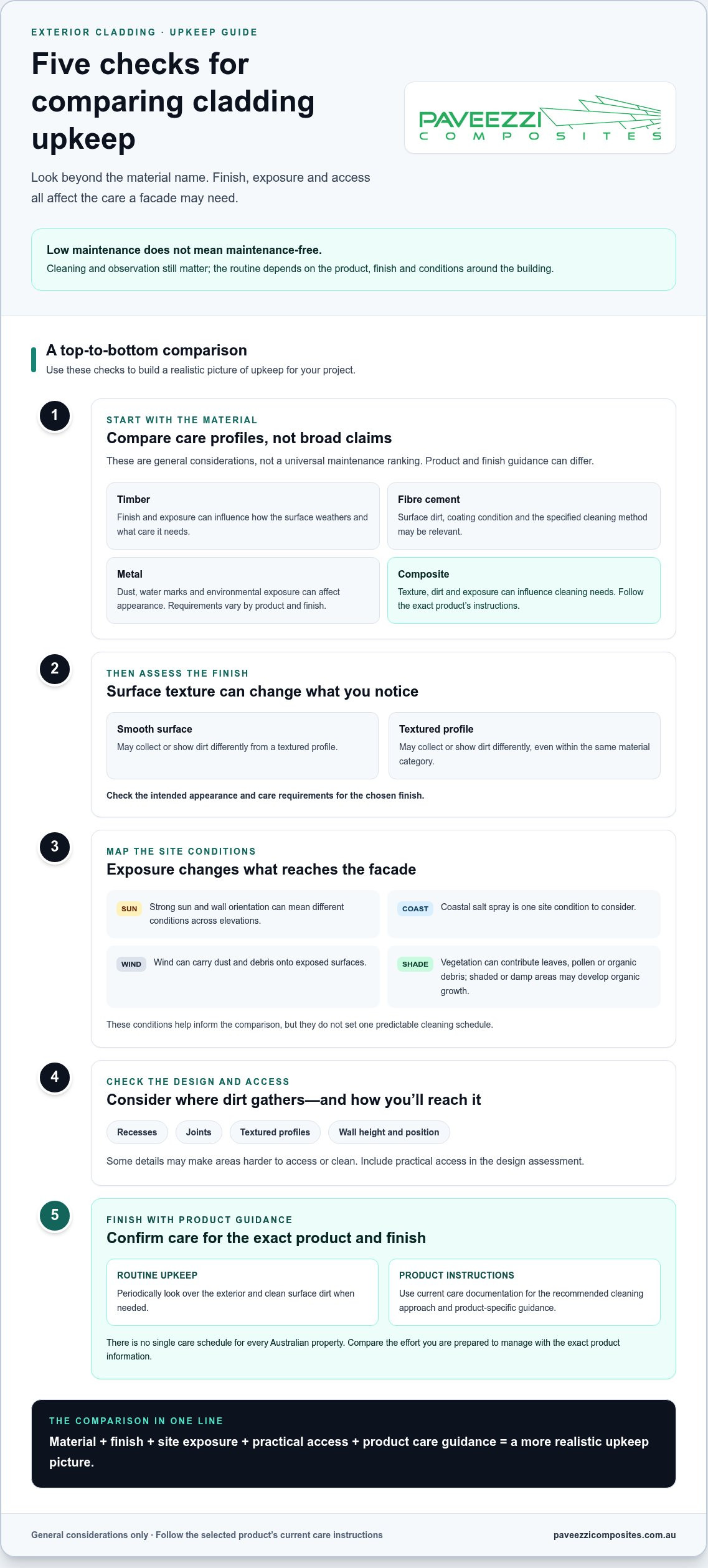
Comparing low maintenance exterior cladding means looking beyond the material name. Surface finish, building orientation, nearby vegetation and the local environment can all affect what collects on a facade and how practical it is to clean. The table below outlines general considerations, not a universal maintenance ranking. Product-specific care can differ, so use current manufacturer guidance when weighing options.
Compare cladding options by their care profile
Material choice alone does not determine the whole upkeep routine. A smooth surface and a textured profile may collect or show dirt differently, even within the same material category. Check how the chosen finish is intended to look and what care it requires. Australian projects must also account for relevant building requirements. The Victorian Government outlines Building Code of Australia (BCA) requirements and cladding considerations.
How exposure and design details influence upkeep
A sun-facing wall may experience different conditions from a sheltered elevation. Nearby planting can contribute leaves, pollen or organic debris, while wind can carry dust onto exposed surfaces. These factors do not determine one predictable cleaning schedule, but they are useful to consider when assessing the site and the appearance you want to maintain.
Cladding layout matters as well. Recesses, joints and textured profiles may make some areas harder to access or clean, while the height and position of a wall affect practical access. Include these details in your design assessment, alongside the desired appearance and care routine.
If composite cladding is on your shortlist, explore Paveezzi’s composite cladding options as part of your project comparison.
A Practical Checklist for Choosing Low Maintenance Exterior Cladding
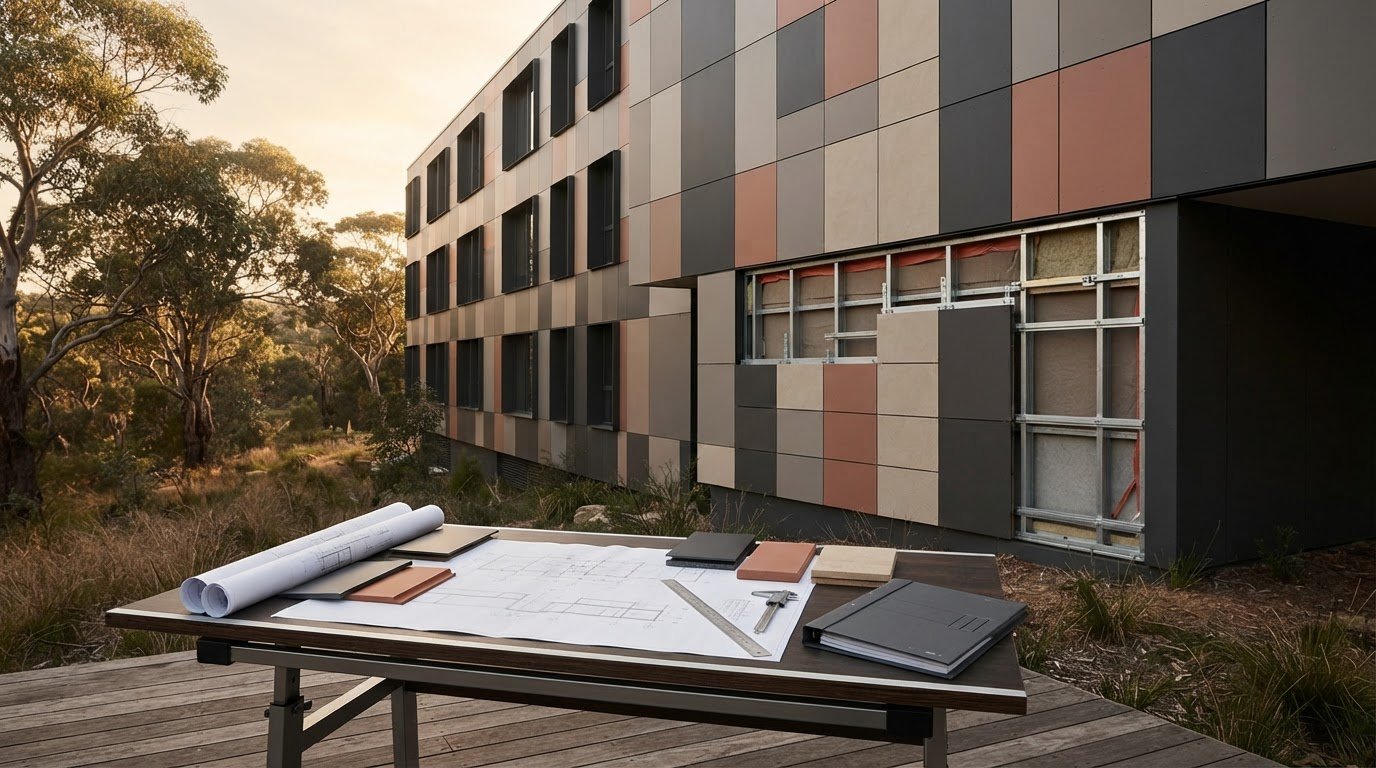
A clear project brief makes cladding comparisons more useful. Before weighing products, record the look you want, the site conditions and the level of care you are prepared to manage. Then assess low maintenance exterior cladding against those practical needs, rather than relying on a broad label.
Set your design intent. Note which elevations will be clad, the appearance you want and how the finish should work with the rest of the building.
Be realistic about care. Decide what routine observation and cleaning you are comfortable with. Treat “low maintenance” as a care profile, not a promise that no upkeep will be needed.
Record site exposure. Consider orientation, strong sun, coastal conditions, windblown debris, shade and nearby planting. These can affect what reaches a surface and how its appearance changes.
Compare finishes and access. Consider whether texture or joints may collect visible dirt, and how easily higher or recessed areas can be reached for inspection and cleaning.
Read product documentation. Review the specific product’s installation and care instructions. Do not assume products made from similar materials have the same requirements.
Check project requirements. Keep relevant design and technical considerations in view. Fairview discusses the National Construction Code (NCC) 2022 changes. Use current, project-relevant documentation when assessing compliance.
Make product comparisons consistent
Once you have recorded your requirements, compare every shortlisted option against the same criteria: design fit, finish, exposure, access, installation information and care guidance. Separate product-specific details from general advice and marketing language. Make a note of any care instruction or technical detail that needs clarification before you finalise your selection.
Explore Paveezzi cladding options as part of your comparison. For an overview of the business and its composite cladding offering, explore Paveezzi Composites.
Choosing Composite Cladding for a Lower-Upkeep Exterior
Composite cladding is one option to weigh when comparing materials for an exterior with a considered, manageable care routine. Its suitability depends on more than the material category. The intended appearance, site conditions, building design and product-specific care guidance all matter. Do not treat composite cladding as maintenance-free or assume it will need less attention in every setting.
Where composite cladding can fit your project
Start with the role cladding needs to play in your design. Consider which elevations it will cover, the look you want and how the finish will work with surrounding materials. Then assess site conditions and upkeep priorities together. A residential facade and a commercial project may have different design goals, access considerations and practical requirements. Compare options against the actual brief rather than a broad claim about a material.
Paveezzi’s composite cladding ranges include Ressisto 144 Fineline, Ressisto Lightissimo202 and other Lightissimo options. Compare these with your project requirements and preferred finish. Explore Paveezzi cladding options and assess whether Ressisto 144 Fineline aligns with your facade design and project needs.
What to do before making a final selection
Before selecting a cladding product, review its current product information, installation documentation and care instructions. Compare products consistently by noting the relevant finish and stated details, then matching them to the elevations, exposure and access conditions in your project brief. Do not assume two similar products have identical installation or care requirements.
Keep verified product information separate from general advice and marketing language. If a detail affects your design or maintenance expectations, use the product-specific documentation to guide your decision. This gives you a clearer basis for choosing cladding that suits both the intended appearance and the routine you are prepared to manage.
For a closer look at composite cladding, explore Paveezzi’s cladding range.
Choose Cladding With Clear, Realistic Care Expectations
The right low maintenance exterior cladding is the option that fits your design intent, site conditions and willingness to manage its care. Compare materials and finishes in context, consider how exposure and access may affect cleaning, and use current product documentation to understand the requirements. “Low maintenance” should set realistic expectations, not imply a maintenance-free facade.
Composite cladding may suit projects where a considered upkeep routine is a priority, provided the specific product aligns with the brief. Paveezzi supplies composite cladding options including Ressisto 144 Fineline and Ressisto Lightissimo202. Assess each against your preferred appearance and project requirements.
Build your shortlist around the finish, exposure and care routine that suit your project. Explore Paveezzi’s cladding range to compare composite options.
Frequently Asked Questions
What is the lowest-maintenance exterior cladding?
There is no single cladding material that needs the least care on every Australian project. Upkeep depends on the specific product and finish, the facade’s orientation, exposure to sun, salt or windblown debris, nearby vegetation, and how easily surfaces can be reached. Compare likely cleaning and inspection needs using current product-care information, then choose a routine you can realistically manage. A broad “low maintenance” label alone does not establish the best fit.
Is low-maintenance cladding maintenance-free?
No. Low-maintenance cladding may suit a project where a manageable care routine is a priority, but it should not be understood as maintenance-free. Exterior surfaces can collect dirt or show marks, and periodic observation can help you notice changes. Care varies by product, finish and exposure. Check the chosen product’s current instructions rather than assuming its appearance or performance will remain unchanged without attention.
How do you clean composite exterior cladding?
Follow the current care instructions for the exact composite cladding product, as recommended cleaning methods can vary. Check which cleaning tools, products and techniques are suitable before starting, and do not assume advice for another composite product also applies. Consider the surface finish and the type of dirt or marks present. If the documentation does not address a particular cleaning situation, do not guess at a method that could affect the surface.
Does composite cladding need painting or sealing?
Do not assume composite cladding needs painting or sealing, or that every product has the same requirements. The answer depends on the specific product and its manufacturer’s guidance. Before planning ongoing care, review the current product documentation for instructions about coatings, cleaning or surface treatment. Avoid applying paint, sealant or another treatment unless the product information states it is suitable. This keeps your upkeep plan grounded in product-specific guidance.
What should I consider when choosing low-maintenance cladding in Australia?
Consider the design you want, the product’s finish and care guidance, and the conditions around each elevation. Strong sun, coastal salt, windblown debris, shade and nearby planting can all influence what reaches a facade and how practical it is to clean. Think about access to high or recessed areas, too. Compare product-specific documentation with your project requirements rather than expecting one care routine to suit every Australian property.
Is composite cladding a good option for a low-maintenance exterior?
Composite cladding may suit a project where a considered, manageable upkeep routine is one of the priorities. Whether it is the right choice depends on the intended appearance, site conditions, project requirements and care instructions for the particular product. Paveezzi’s composite cladding ranges include Ressisto 144 Fineline and Ressisto Lightissimo202. Review their current product information and care guidance as part of a balanced comparison with other suitable materials.
Comments