
Low Maintenance Exterior Cladding: The 2026 Australian Homeowner’s Guide
Why should the most striking feature of your home also be your most demanding weekend chore? For years, many Australian homeowners have been caught in the "timber trap," where the initial beauty of a natural facade quickly fades into a relentless cycle of sanding, staining, and oiling under our punishing UV exposure. Choosing low maintenance exterior cladding shouldn't mean sacrificing the premium architectural aesthetic you've worked so hard to design. It's about finding the precise intersection where sophisticated engineering meets the rugged demands of our unique climate.
We understand that you want a home that stays looking new for decades, not just until the next summer heatwave hits. This 2026 guide explores how modern composite solutions like the Ressisto 144 Fineline and Lightissimo ranges are redefining durability for the contemporary Australian house. You'll discover how to protect your investment from termites and rot while reclaiming your weekends for relaxing rather than property upkeep. We will walk you through the latest standards and the innovative materials that ensure your property value remains as high as your street appeal.
Table of Contents
What is Low Maintenance Exterior Cladding and Why Does it Matter in Australia?
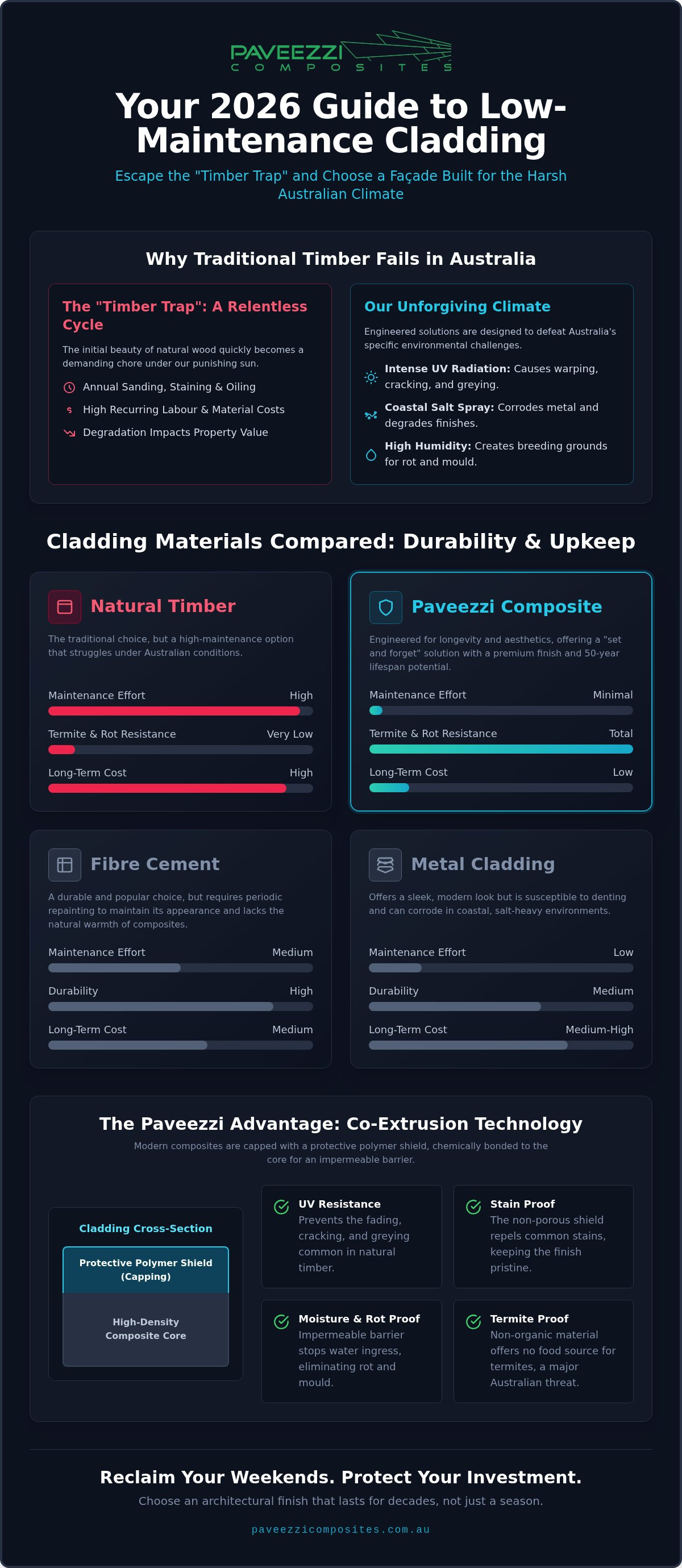
Understanding What is cladding? involves more than just selecting a surface material; it's about engineering a protective layer for your home. True low maintenance exterior cladding refers to materials designed to require zero structural upkeep or refinishing beyond an occasional wash with water. In 2026, Australian homeowners are increasingly prioritising "set and forget" solutions to avoid the "timber trap." This is the exhausting cycle where the initial charm of natural wood quickly turns into a relentless chore of sanding, staining, and oiling. High-performance composite cladding offers a way out of this cycle while maintaining a premium architectural look.
Beyond simple aesthetics, your cladding acts as the first line of defence for your building envelope. It must effectively manage moisture, resist pests like termites, and withstand physical impact. Selecting a durable material ensures these protective qualities remain intact for decades without constant intervention. The shift we see in the current market reflects a deeper desire for homes that serve their owners, rather than owners serving their homes. It's a move toward longevity and peace of mind.
The High Cost of "Cheap" Cladding
Choosing a budget-friendly material often leads to significant hidden expenses. While the initial purchase price of natural timber or basic vinyl might seem attractive, those savings usually evaporate by the third year. Professional labour for painting and oiling is a recurring cost that adds up to thousands over a decade. When you factor in the price of premium oils and the loss of your own weekends, the "cheap" option becomes a financial burden. Additionally, a facade that shows signs of degradation or fading will negatively impact your property's resale value in a competitive market.
Australian Climate Challenges: UV, Salt, and Humidity
Our environment is famously unforgiving. Intense UV radiation aggressively breaks down the cellular structure of natural timber, causing it to warp, crack, and turn grey. In coastal areas, salt spray acts as a silent corrosive agent on many metal cladding systems. Meanwhile, the high humidity of our northern regions creates the perfect breeding ground for rot and mould in porous materials. Engineered low maintenance exterior cladding solutions are designed to defeat these specific challenges. They provide the warmth of wood with the resilience of advanced polymers, ensuring your home stays beautiful regardless of the weather.
Comparing Cladding Materials: Durability, Lifespan, and Upkeep
Selecting the right material requires balancing upfront investment with long-term performance. In 2026, the Australian Government guide to cladding highlights how building systems must manage weather protection and fire resistance. While traditional masonry and brick veneer offer longevity, their extreme weight necessitates heavy-duty structural support. Lightweight low maintenance exterior cladding panels, such as those in the Ressisto range, provide a sophisticated alternative that reduces structural load while maintaining a 50-year lifespan potential.
The secret to modern composite durability lies in co-extrusion technology. Unlike early generations of wood-plastic composites, premium ranges are "capped" with a protective polymer shield. This layer is chemically bonded to the core during manufacturing to create an impermeable barrier. Moisture stays out. UV rays cannot penetrate. This engineering prevents the fading and staining that often plague organic materials. Because these panels are non-organic, they offer a definitive solution to termite concerns, which remain a significant threat to Australian building integrity.
Timber vs. Composite: The Real-World Comparison
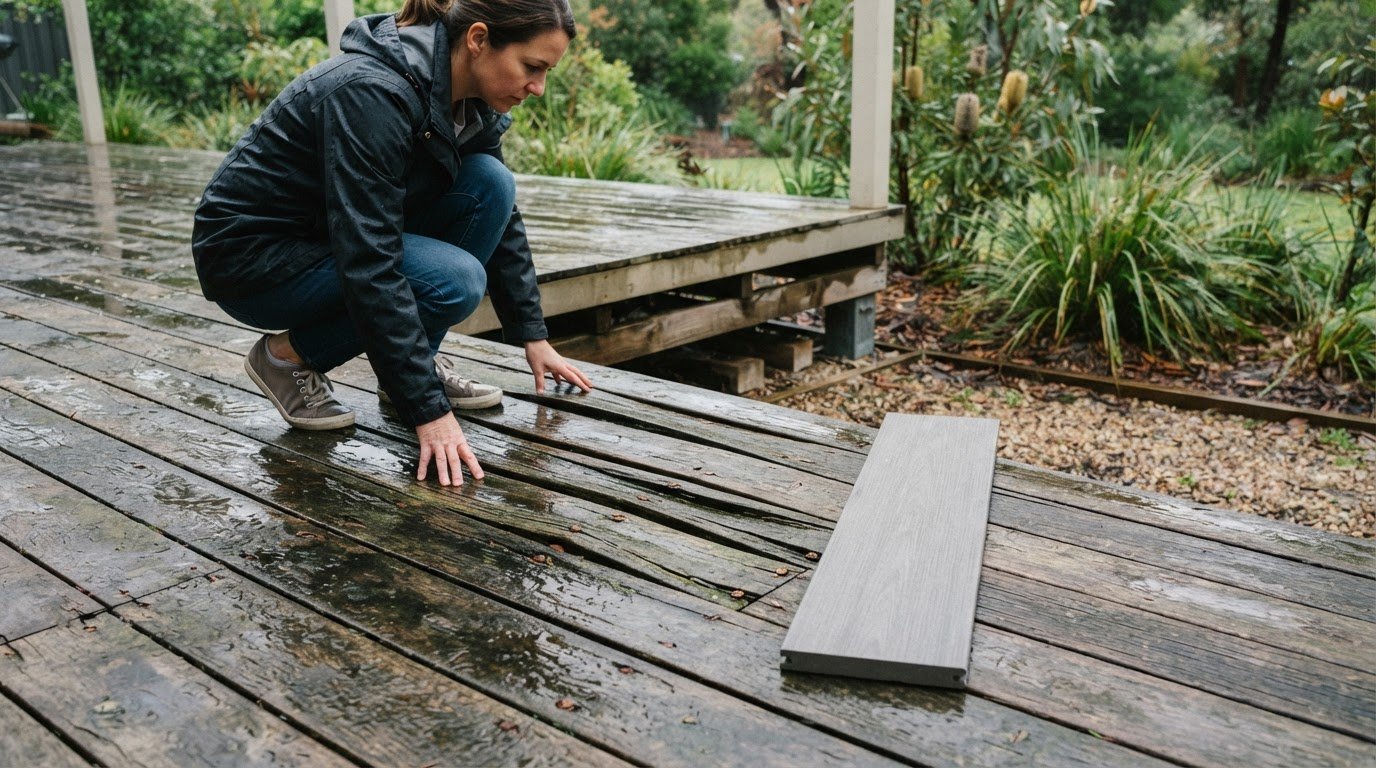
Natural timber demands an annual commitment to oiling and staining to prevent it from turning grey or splitting. In contrast, architectural composites require only a simple soapy water wash to maintain their original hue. Premium profiles like Ressisto 144 Fineline are engineered to resist the warping and cupping often seen in hardwoods exposed to 40-degree Australian summers. They retain their precise architectural lines for decades without the need for a single paintbrush.
Fibre Cement and Metal: Pros and Cons
Fibre cement remains a popular durable choice, yet it typically requires periodic repainting to stay fresh. It lacks the natural warmth and tactile texture found in high-end composites. Metal cladding, while sleek, faces risks of denting and significant thermal expansion in high-heat zones. For those seeking the perfect balance of warmth, durability, and minimal upkeep, exploring architectural composite solutions provides a superior long-term result. This low maintenance exterior cladding offers the aesthetic of wood with the resilience required for our harsh environment.
Choosing the Right Profile: Achieving an Architectural Facade
The profile of your home's facade is its architectural signature. It defines whether a building feels grounded and traditional or soaring and contemporary. When selecting low maintenance exterior cladding, homeowners in 2026 are looking beyond simple durability to the specific shadow-line effects that define modern Australian design. The right profile creates a sense of depth and complexity that mimics traditional timber craftsmanship without the associated labour. By choosing a finish that suits your home’s proportions, you transform a simple wall into a sophisticated design statement.
Modern architectural trends have seen a significant shift toward verticality. Vertical installation draws the eye upward, creating an illusion of height that is particularly effective for single-storey dwellings or projects with limited footprints. Beyond the orientation, the texture of the material plays a crucial role in the final aesthetic. Options ranging from a natural brushed feel to an extra matte finish allow you to achieve the warmth of wood while ensuring the material remains resilient against the elements. Safety and compliance remain at the heart of every design choice; ensuring your selections meet the Building Code of Australia requirements is essential for long-term security and peace of mind.
The Fineline Aesthetic: Modern and Minimalist
The Ressisto 144 Fineline has emerged as a premier choice for those seeking a sleek, minimalist facade. This profile is engineered to produce a crisp shadow-line that adds rhythmic texture to a building without overwhelming the overall design. It's particularly effective when used to create seamless joins across large surface areas, providing a premium, high-end finish that stays precise year after year. This "Fineline" look is currently dominating contemporary Australian residential projects due to its ability to modernise a property instantly.
Wide Board and Traditional Profiles
For those who prefer a more relaxed or coastal character, wider boards offer a classic "Hamptons" or rustic vibe. These profiles provide a substantial, sturdy appearance that feels right at home in regional or beachside settings. You can also combine different cladding styles, such as using the Lightissimo 400 or Lightissimo 195 profiles, to create focal points or highlight specific architectural features like entryways or gables. This layering of textures adds visual interest and significantly boosts street appeal. Explore our architectural composite cladding guide to see how these profiles can be integrated into your next project.
Finding the perfect balance between form and function is easier when you have access to engineered materials designed for our unique environment. Discover how our premium composite range can elevate your home’s exterior while removing the burden of constant maintenance.
The Paveezzi Advantage: Premium Composite Solutions for Australia
Paveezzi has established itself as a trusted pioneer in the Australian building industry. With over 15 years of expertise, we have meticulously engineered our range to withstand the harshest local conditions, from the tropical humidity of the north to the biting salt spray of our coastal fringes. Choosing our low maintenance exterior cladding means investing in a product refined through years of research and a steadfast commitment to excellence. As a family-run operation, we take immense pride in providing a high-performance alternative to traditional materials that often struggle under our climate's rigorous tests. We are passionate problem solvers dedicated to the long-term satisfaction of every homeowner.
Our commitment to quality extends to environmental consciousness. By utilising recycled composite materials, we offer a sustainable building solution that reduces the reliance on old-growth timber without compromising on aesthetic appeal. This approach allows you to achieve a premium architectural look while supporting eco-friendly manufacturing practices. It's a sensible way to build for the future. Our national network ensures that whether you're in a metropolitan centre or a regional area, you have access to the highest standards of composite technology.
Ressisto: The Benchmark for Durability
The Cladding Ressisto 144 Fineline represents the pinnacle of our design efforts. Its unique shadow-line design provides a sophisticated texture that remains stable and vibrant for decades. For developers or homeowners managing large-scale residential or commercial projects, the Lightissimo series, including the Lightissimo 400 and 195 profiles, offers unparalleled versatility and scale. Our no-nonsense approach to quality ensures that every board delivered meets our exacting standards. We don't just supply materials; we provide the foundation for a home that stays beautiful with minimal effort.
Next Steps for Your Renovation or Build
Moving from the planning phase to a finished facade is a collaborative process. We recommend requesting samples as your first step. This allows you to see how the specific colours and textures respond to the unique light at your property. While we focus on the supply of these premium materials, we encourage you to work closely with your builder to integrate our profiles into your technical plans. Our team is here to provide the technical data and support needed to ensure a smooth transition from vision to reality. Learn more about our family-run Australian story and discover why we remain a stable ally in the construction space.
Elevate Your Home with Sustainable Durability
Your home’s facade is more than just a surface; it is a long-term investment in your property's value and your own quality of life. By moving away from the demanding upkeep of natural timber and embracing high-performance low maintenance exterior cladding, you ensure your home remains a sanctuary rather than a source of constant weekend labour. We have explored how advanced co-extrusion technology and architectural profiles like the Ressisto 144 Fineline can achieve a premium look that withstands the unique challenges of our national climate.
As a family-run Australian business since 2010, Paveezzi has spent over 15 years specialising in high-performance Ressisto composite technology to provide reliable, beautiful solutions for residential and commercial projects nationwide. We believe in a no-nonsense approach to quality that gives you peace of mind for decades to come. It’s time to stop oiling and start enjoying your home’s aesthetic. Browse the Paveezzi Cladding Range and Request a Sample Today to see the difference for yourself. We look forward to helping you transform your architectural vision into a durable reality.
Frequently Asked Questions
Does low maintenance cladding still need to be cleaned?
Yes, though the effort required is minimal compared to traditional materials. While you don't need to sand, paint, or oil your low maintenance exterior cladding, an occasional wash with soapy water and a garden hose is recommended to remove surface dust, pollen, or salt spray. This simple routine prevents organic matter from settling on the boards and ensures the architectural finish remains as vibrant as the day it was installed.
Is composite cladding fire-rated for Australian bushfire zones?
Compliance depends on the specific product and your property's Bushfire Attack Level (BAL) rating. Many composite cladding options are engineered to meet stringent Australian Standards, such as AS 3959 for construction in bushfire-prone areas. It's essential to verify the BAL rating of a specific range, such as Ressisto, against your local council requirements before purchase. For high-risk zones, non-combustible alternatives might be necessary to ensure complete safety and regulatory adherence.
Can I install low maintenance cladding over existing brickwork?
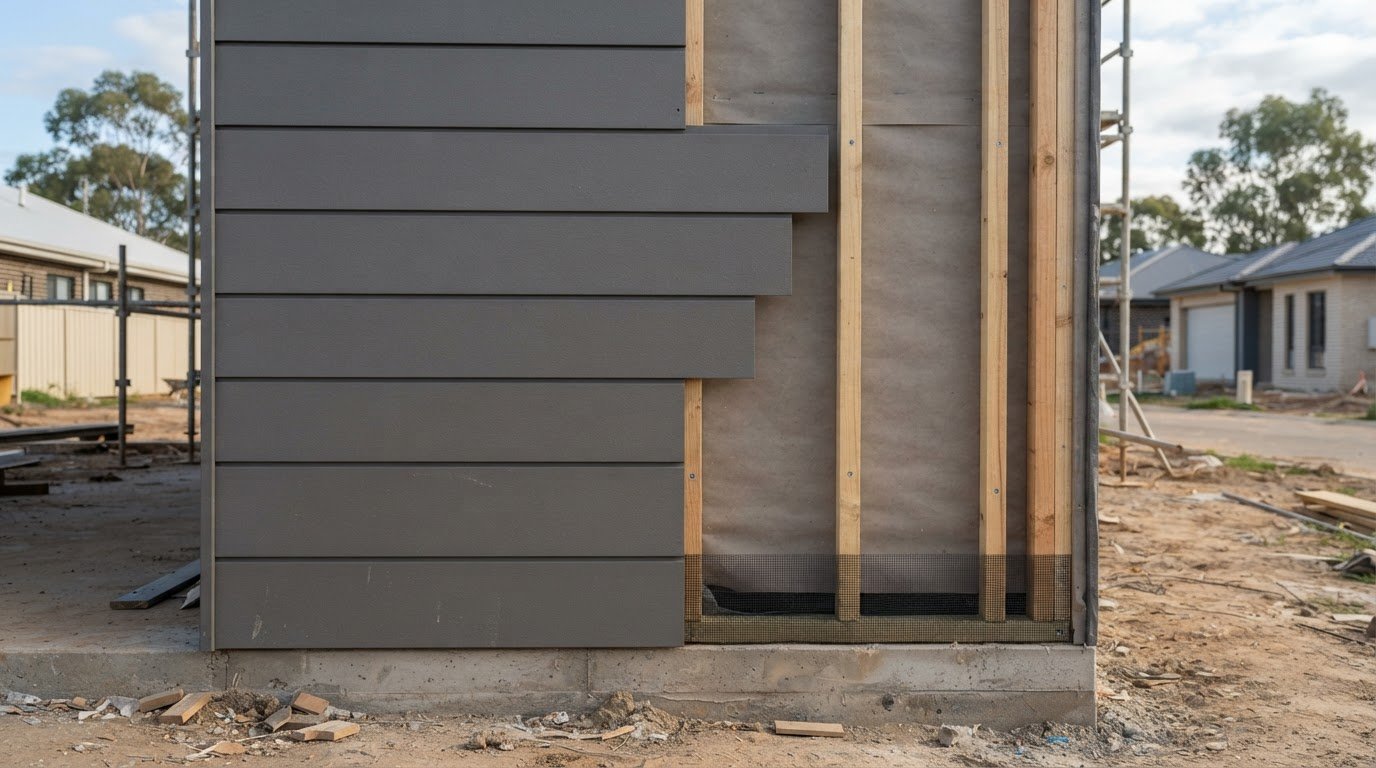
Yes, installing composite cladding over existing brickwork is a common and effective way to modernise an older home’s facade. This process typically involves fixing a timber or metal batten system to the brickwork first, which creates a level surface and a necessary ventilation cavity. This rainscreen approach not only transforms the building's aesthetic but also improves the thermal performance and moisture management of the structure without requiring a full demolition of the original walls.
Will composite cladding fade in the direct Australian sun?
Premium composite cladding is specifically engineered with high UV stability to resist the harsh Australian sun. Unlike natural timber, which silver-greys within months, high-end ranges like Ressisto use advanced co-extrusion technology. This protective outer layer contains UV inhibitors that shield the core material from solar radiation. While any material exposed to the elements may experience very minor shifts over decades, the colour retention of capped composites is vastly superior to organic alternatives.
Is composite cladding more expensive than traditional timber?
While the initial purchase price of low maintenance exterior cladding is often higher than entry-level timber, it is significantly more cost-effective over its lifespan. When you calculate the recurring expenses of professional painters, high-quality oils, and the labour required every 12 to 18 months for timber, composite pays for itself within a few years. You are essentially trading a lower upfront cost for a lifetime of freedom from maintenance expenses and demanding weekend chores.
How long does premium composite cladding typically last?
Premium composite cladding systems are designed to last between 25 and 50 years when installed according to manufacturer specifications. This longevity is due to the blend of recycled wood fibres and high-density polymers, which creates a board that won't rot, warp, or succumb to termite damage. Because the material is engineered for durability, it maintains its structural integrity and aesthetic appeal far longer than traditional softwoods or poorly maintained hardwoods, making it a stable long-term investment for your home.
Comments