
Modern Facade Cladding Ideas Australia: The 2026 Architectural Design Guide
Your vision of a weathered timber facade shouldn't be overshadowed by the reality of constant maintenance and the relentless Australian sun. While the natural warmth of wood is a staple of local design, the practicalities of UV fading and strict fire safety regulations often turn a beautiful project into a long-term burden. You want a home that retains its architectural integrity without requiring a paintbrush every second summer.
We understand that choosing the right materials involves more than just aesthetics; it's about navigating the complexities of the National Construction Code and ensuring your investment is protected. This 2026 guide to modern facade cladding ideas australia reveals how engineered composite systems provide the perfect solution. You'll discover how high-performance materials like Ressisto 144 Fineline offer a durable, BAL-rated alternative to traditional timber. We will explore the latest design trends, from vertical profiles to mixed-material textures, while explaining how these systems simplify the procurement process. By the end, you'll have a clear path toward a pristine, compliant facade that's built to endure our unique environment.
Table of Contents
The Evolution of Composite Cladding for Australian Facades
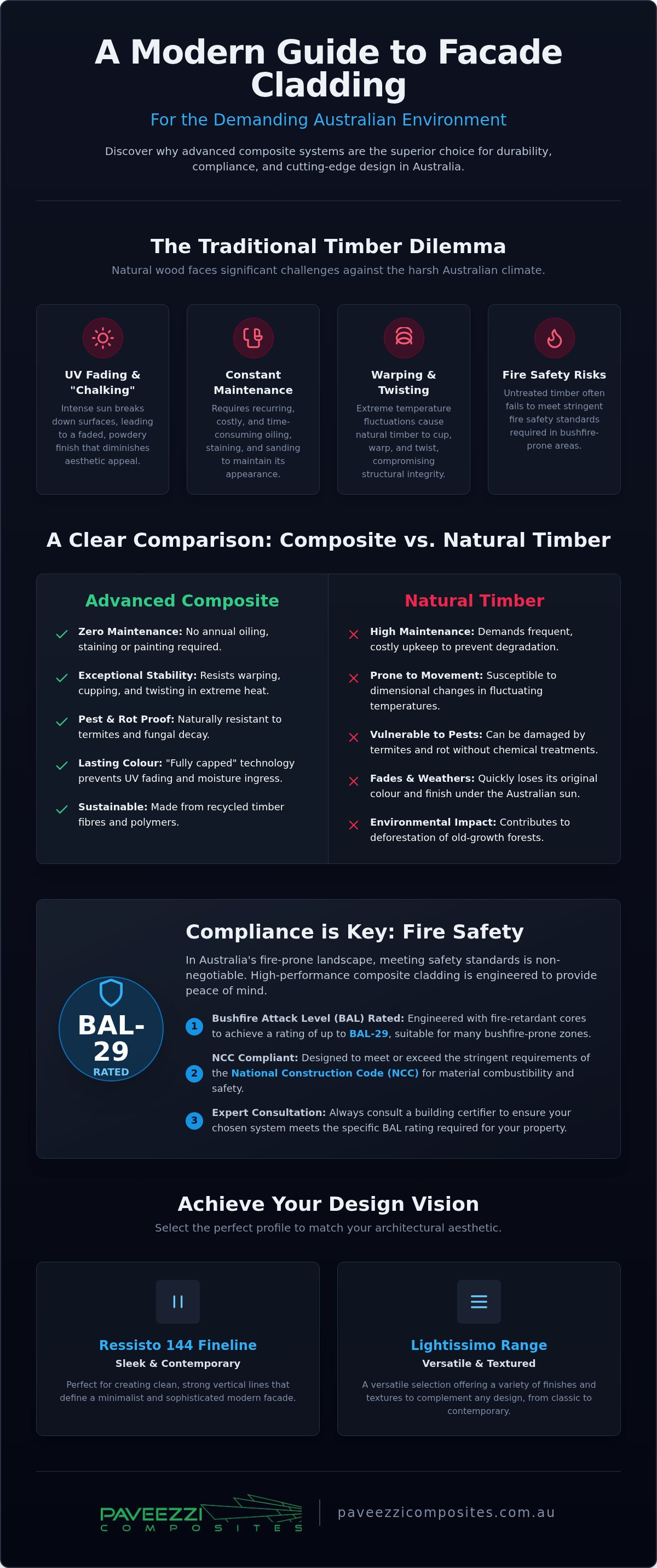
The fundamental concept of Cladding in construction has shifted from simple weatherproofing to a sophisticated architectural statement. In the past, Australian homeowners were largely restricted to natural timber or masonry. Today, modern architectural composite cladding has emerged as a superior fusion of recycled timber fibres and advanced polymers. This engineered material provides a consistent, high-end finish that natural wood simply cannot maintain over time. It's a direct response to the growing demand for modern facade cladding ideas australia that combine luxury aesthetics with industrial-grade resilience.
Our climate is famously unforgiving. Many basic cladding options eventually suffer from "chalking," a process where intense UV radiation breaks down the surface into a fine, unsightly powder. High-performance systems solve this through meticulous engineering and UV-stable additives. By utilising "fully capped" boards, the composite core is entirely encased in a protective polymer shield. This meticulous production standard prevents moisture ingress and ensures the colour remains vibrant, even under the harshest summer sun.
Why Composite Outperforms Traditional Timber
Natural timber is undeniably beautiful, yet it's incredibly demanding. The life-cycle costs of a wood facade include the recurring expense and effort of oiling, staining, and sanding. Composite systems remove this burden entirely. They offer exceptional dimensional stability, which means they won't warp, cup, or twist during a 40-degree heatwave. In humid coastal environments, where salt spray and moisture are constant, these materials provide several practical advantages:
Zero requirement for annual oiling or staining.
Natural resistance to termites and fungal decay.
Superior stability to prevent warping in extreme temperature fluctuations.
A pristine look that lasts for decades, not just seasons.
Sustainable Building with Eco-Friendly Materials
Modern design isn't just about the visual result; it's about the integrity of the materials used. Many architects now choose composites because they repurpose waste materials that would otherwise end up in landfill. By combining recycled fibres and polymers, these systems reduce the pressure on old-growth forests. There is also a significant health and environmental benefit to consider. Unlike some treated timbers, high-quality composites don't require toxic chemical coatings to maintain their durability. This is one reason why sustainable building materials australia are prioritised in contemporary residential and commercial projects alike. It's a way to build for the future while respecting the landscape we inhabit.
Meeting Compliance: BAL Ratings and Fire Safety
Safety isn't just a checkbox; it's the foundation of any project in our fire-prone landscape. When exploring modern facade cladding ideas australia, compliance with the National Construction Code (NCC) is your most critical benchmark. The current standards, including NCC 2022 Amendment 2, place a heavy emphasis on material combustibility and safety. However, with the NCC 2025 transition already underway in many states as of May 2026, staying ahead of these regulatory shifts is essential. For a deeper look at material performance, the Australian government guide to cladding systems provides essential context on thermal and fire resistance.
Understanding BAL Ratings for Your Project
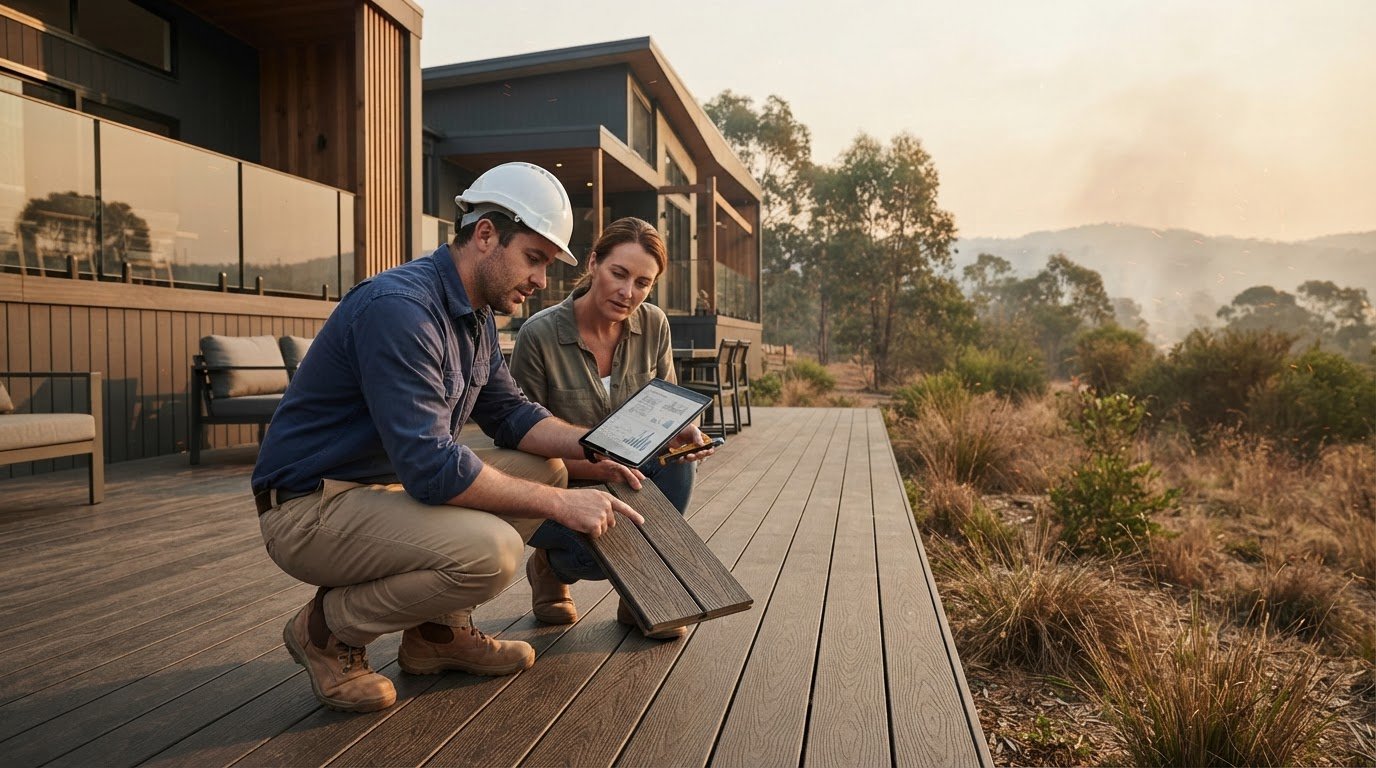
Bushfire Attack Level (BAL) ratings measure a building's potential exposure to ember attack, radiant heat, and direct flame contact. While natural timber often struggles to meet higher safety tiers without expensive treatments, high-quality composite systems like Ressisto 144 Fineline and the Lightissimo range are engineered with fire-retardant cores to achieve ratings up to BAL-29. This level of protection is vital for homes situated near bushland or in designated fire zones. We always suggest consulting a qualified building certifier early in the design phase to ensure your chosen facade system meets the specific requirements of your site.
Weathering and Structural Integrity
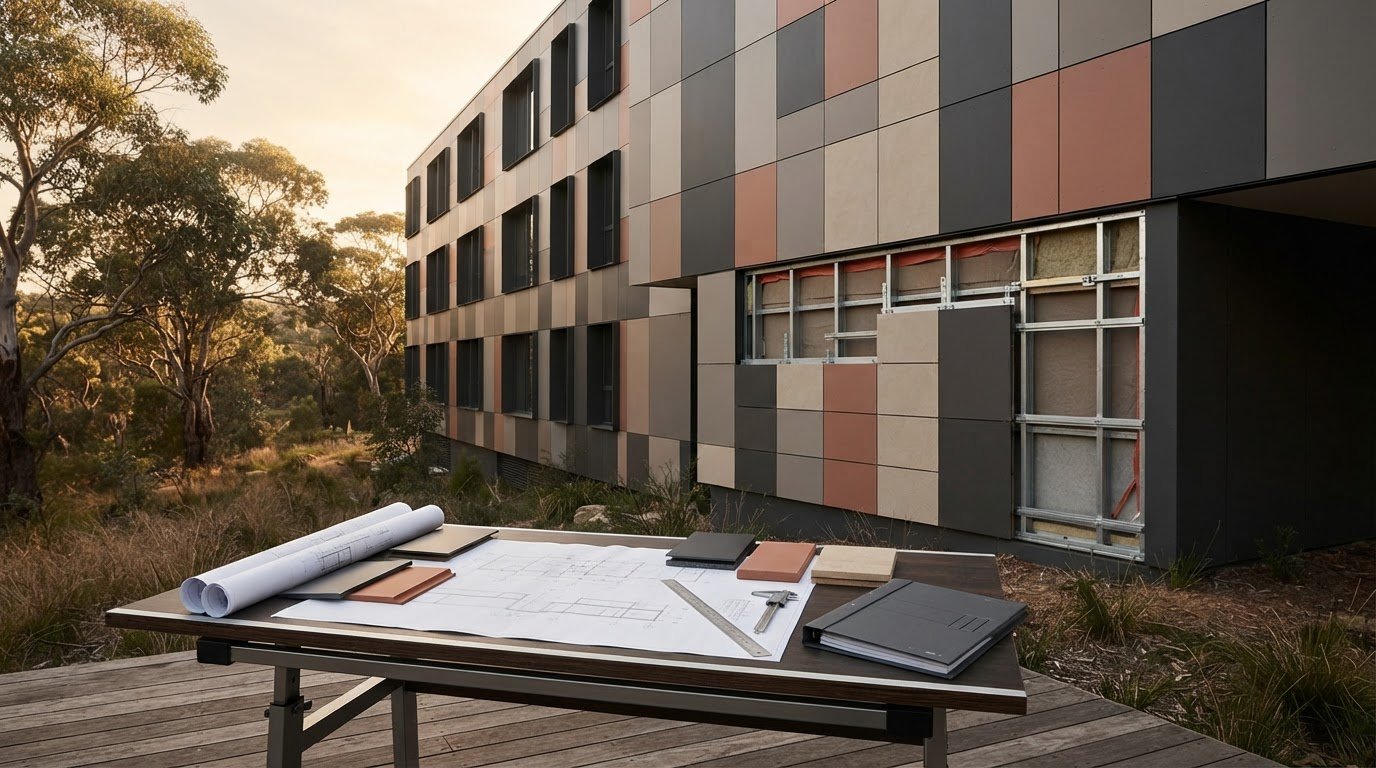
In our climate, structural integrity is directly linked to how a material handles heat. Engineered boards must be installed with specific thermal expansion gaps to accommodate the material's natural movement when temperatures soar. This prevents the buckling or warping often seen in inferior products. The 2026 standards for architectural facades also place a greater focus on condensation management, requiring mandatory cavities behind external cladding in certain climate zones. A robust polymer shield doesn't just provide colour; it protects the internal core from moisture ingress, ensuring these modern facade cladding ideas australia remain stable and secure for decades. If you're unsure about the specific requirements for your site, our team can help you find the right composite solution for your architectural goals.
Architectural Profiles: Fineline vs Lightissimo Aesthetics
While compliance provides the essential framework for a build, the architectural profile defines its character. When exploring modern facade cladding ideas australia, designers often look beyond simple timber substitutes to find materials that offer genuine depth and shadow. The choice of profile determines how light interacts with the building surface throughout the day. Whether you're aiming for a minimalist residential feature or a bold commercial exterior, selecting the right geometry is paramount. Ensuring your material choice aligns with Building Code of Australia compliance allows you to focus on these aesthetic decisions with total confidence.
The Aesthetic of Ressisto 144 Fineline
For those seeking a sharp, contemporary edge, Cladding Ressisto 144 Fineline is the industry benchmark. This profile is engineered to create clean, recessed shadow lines that elongate a facade, whether installed vertically or horizontally. Its colour palette is specifically curated to complement the Australian landscape, featuring muted earth tones and deep charcoals that sit comfortably alongside native eucalyptus and local stone. The Fineline profile is particularly effective on large-scale feature walls where its consistent geometry provides a sense of order and sophisticated modernism. It's a favourite for architects who want the warmth of a wood-grain texture without the rustic irregularities of natural timber.
Lightissimo: Versatility in Modern Design
Not every part of a facade requires the same structural weight. The Lightissimo 202 and 400 series offer a specialised solution for eaves, soffits, and areas where a lighter panel is required for ease of handling or specific structural constraints. Using these lightweight panels allows for a cohesive exterior look, ensuring that the underside of balconies or roof overhangs matches the primary cladding perfectly. This creates a seamless "wrapped" effect that is a hallmark of high-end architectural design. For a deeper technical dive into these systems, our architectural composite cladding resources provide further insights into modern applications.
The visual impact of your facade is also heavily influenced by texture. Choosing between a brushed finish, which offers an organic and tactile feel, and an extra matte finish, which provides a flat and ultra-modern look, can completely change the building's presence. The use of castellations creates a multi-dimensional surface that adds significant depth and visual interest to otherwise flat planes. If you're ready to elevate your project's exterior, you can view our full range of architectural profiles to find the perfect match for your vision.
Selecting and Sourcing Your Facade System
Selecting the right system is the final step in bringing your modern facade cladding ideas australia to life. For professional builders and architects, the "supply-only" model is often the preferred route. It allows for greater oversight of material quality and integrates seamlessly into the existing project management workflow. As a family-run Australian business since 2010, we've found that this direct relationship ensures the integrity of the materials delivered to site. It provides a level of reliability and meticulous oversight that large-scale industrial suppliers often lack, positioning us as a stable ally in the construction space.
The Importance of Finishing Touches
A facade is only as good as its weakest joint. While the boards themselves provide the bulk of the visual impact, it's the accessories that ensure long-term performance and weatherproofing. Ressisto Nosing & Edging Options are specifically designed to provide a professional finish at corners and transitions, preventing moisture from compromising the internal structure. For projects requiring perfectly level facades or raised systems, using Rhino pedestals provides the necessary structural support and precision. The entire Ressisto accessory range is colour-matched to our primary cladding profiles, ensuring that every detail contributes to a seamless, high-end architectural look.
Ordering and National Delivery
Before placing a large order, we always encourage requesting samples to verify how a specific colour interacts with the local light at your site. A shade that looks like deep charcoal in one climate might appear differently under the intense glare of another. Once you're ready to proceed, consider this checklist for a smooth procurement process:
Calculate total square meterage and add a 10% wastage factor for cuts and corners.
Verify the required quantities of matching nosing and edging profiles for a waterproof seal.
Consult with your builder regarding the specific pedestal requirements for your sub-structure.
Engage with your supplier early, especially for large-scale projects, to secure stock from a single production batch for colour consistency.
Our national supply network ensures that whether your project is coastal or inland, you receive the same high-level performance and manufacturing integrity. This reliable procurement process, backed by over a decade of specialist expertise, gives you the peace of mind that your vision for modern facade cladding ideas australia will be realised with precision. By focusing on a supply-only model, we ensure that the focus remains entirely on the quality of the material delivered to your door.
Building Your Future-Proof Australian Facade
Creating a contemporary home requires a balance between bold architectural vision and the practical realities of our environment. Your choice shouldn't be a compromise between beauty and safety. We've explored how shifting from traditional timber to engineered composite systems effectively eliminates the burden of maintenance while ensuring your project meets strict 2026 fire safety standards. Whether you choose the sharp, recessed shadow lines of the Fineline profile or the lightweight versatility of the Lightissimo series, your selection must be backed by technical integrity and compliant performance.
As a family-run Australian business since 2010, Paveezzi Composites remains committed to providing builders and architects with the premium materials needed to execute modern facade cladding ideas australia with precision. Our national supply capability ensures that meticulous quality control is maintained from our warehouse to your site. By selecting a supply-only model and utilising matching accessories like nosing and edging, you secure a finish that's as durable as it is beautiful. Ready to elevate your next project with a system designed for longevity? Explore the Ressisto 144 Fineline Cladding Range and discover the difference that specialist expertise makes to your build.
Frequently Asked Questions
Does composite cladding fade in the Australian sun?
High-performance composite systems are specifically engineered with UV-stable polymers to resist the harsh Australian sun. While almost any material exposed to direct sunlight will experience very minor colour shifts over decades, these boards are designed to avoid the significant fading or "chalking" common in older products. This ensures your modern facade cladding ideas australia remain vibrant without the constant need for restaining or painting that natural timber requires to maintain its original appearance.
What BAL rating is required for composite cladding in bushfire zones?
The required rating depends on your specific property's risk level, but many premium composite systems are tested to achieve up to BAL-29. This level of fire resistance is suitable for many bushfire-prone areas across the country. Always verify a product's certification against the current National Construction Code (NCC) standards. Consulting with a qualified building certifier is the most reliable way to confirm that your chosen facade material meets the local safety requirements for your build.
Is composite cladding more expensive than real timber?
While the initial material purchase for composite cladding can be higher than some raw timbers, the total life-cycle cost is significantly lower. You don't have to factor in the recurring expenses of professional sanding, oiling, or staining every few years. When you consider the longevity of the material and the absence of maintenance costs, high-performance composites represent a more economical long-term investment for a pristine architectural facade that doesn't degrade or rot over time.
Can I install composite cladding both vertically and horizontally?
Yes, modern architectural profiles like Ressisto 144 Fineline are designed for both vertical and horizontal installation. Vertical cladding is a dominant trend in current design, providing a sense of height and a clean, contemporary look. Horizontal applications offer a more traditional, grounded aesthetic. This versatility allows architects to use the same high-performance material to create different visual textures or to highlight specific architectural features across a single residential or commercial project.
Do Paveezzi Composites offer installation services?
We don't provide direct installation services as we are specialist material suppliers. By focusing on a supply-only model, we maintain meticulous quality control over the products delivered to your site nationwide. This approach is preferred by professional builders and architects who have their own trusted teams for onsite execution. We provide detailed technical resources and support to ensure that your installation team has everything required to achieve a seamless and compliant architectural finish.
How do I clean and maintain my composite facade?
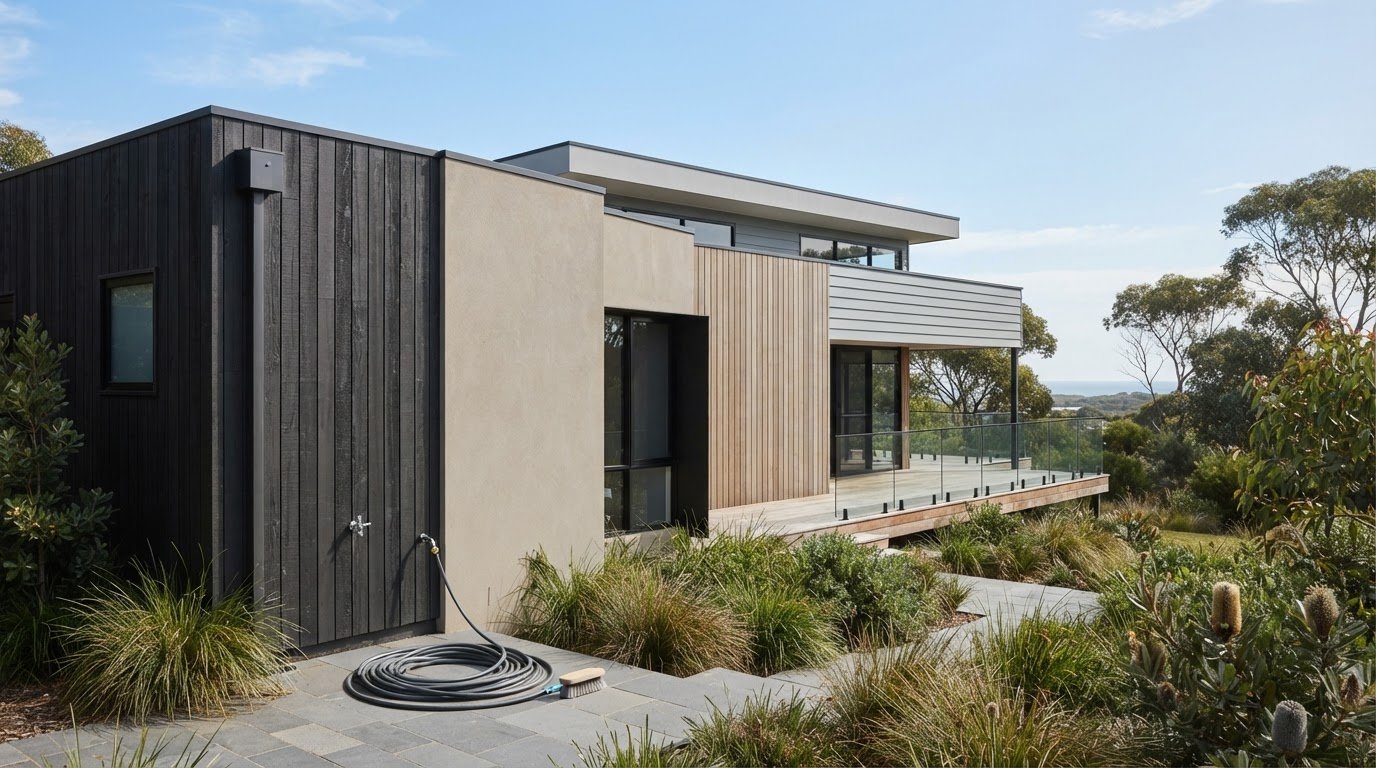
Maintenance is remarkably simple and only requires an occasional wash with a soft brush, warm water, and mild detergent. Unlike natural wood, there's no need for chemical strippers, oils, or sealants to protect the boards from moisture or UV damage. This low-maintenance nature is a key reason why these systems are favoured for modern Australian facades. Regular cleaning helps remove environmental dust or salt spray, ensuring the polymer shield continues to perform at its peak for years.
Comments