
Moisture Resistant Decking: 2026 Australian Homeowner Guide
Your outdoor living area should be a sanctuary for weekend barbeques and quiet mornings, not a permanent addition to your household chore list. For many Australians, the dream of a classic timber deck quickly becomes a losing battle against the elements; however, investing in high-quality moisture resistant decking can change that narrative for good. We understand the frustration of watching a premium surface splinter, warp, or succumb to stubborn mould in those damp, shaded alfresco zones.
It is exhausting to maintain the relentless cycle of sanding and oiling just to keep rot at bay. This 2026 guide promises to help you reclaim your time by identifying high-performance composite solutions that defy the harsh Australian climate. You will discover how to achieve a beautiful, low-maintenance space that remains structurally sound for over 20 years without the threat of termites or decay. We will also examine the technical engineering of protective capping and the importance of sub-frame ventilation in ensuring your deck stays safe and slip-resistant for the long haul.
Table of Contents
Why Traditional Timber Fails in Australian Wet Zones
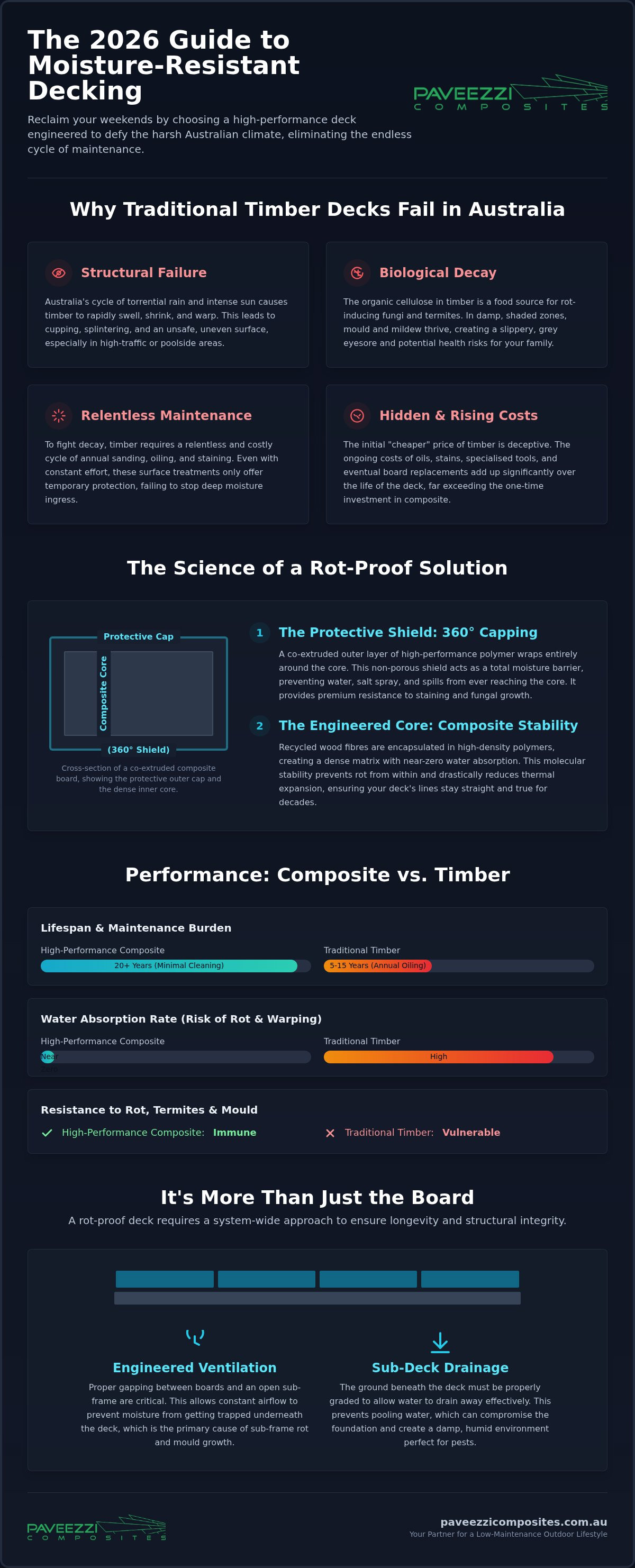
In the context of Australian outdoor design, moisture resistant decking refers to materials specifically engineered to inhibit water absorption and prevent fungal decay. While traditional timber has long been the standard, it remains fundamentally vulnerable due to its organic cellulose structure. This cellulose is a primary food source for rot-inducing fungi and wood-boring pests. Even treated timber eventually succumbs to the elements as chemical preservatives leach out over time, leaving the core exposed to the brutal Australian climate. It's a losing game against nature.
Many homeowners overlook the hidden costs of "cheap" timber. Beyond the initial purchase, there is the relentless expense of oils, stains, and eventual board replacements. In high-moisture areas like pool surrounds or garden-level platforms, timber often becomes a safety hazard as it splinters and warps. Wood-plastic composites (WPCs) solve these issues by encapsulating wood fibres in high-density polymers, creating a barrier that moisture simply cannot penetrate. This engineering ensures that moisture resistant decking remains structural where raw wood fails.
The Role of High Humidity and Tropical Storms
Australia's weather patterns often involve torrential summer downpours followed by intense UV exposure. This cycle causes timber to swell and shrink rapidly, leading to significant structural warping and cupping. Damp wood also creates an ideal environment for termite activity, as these pests are naturally drawn to softened, moist fibres. Surface treatments like oils or varnishes offer only a temporary facade; they don't stop the deep-seated moisture ingress that destroys a deck from the inside out. For a truly durable solution, homeowners are increasingly turning to composite decking systems that ignore the humidity entirely.
Mould and Mildew: The Shaded Deck Dilemma
Shaded alfresco areas and south-facing decks often become permanent damp zones with little sunlight to dry out the surface. These environments are perfect breeding grounds for mould and mildew spores, which can turn a beautiful deck into a slippery, grey eyesore within a single season. Beyond the aesthetic damage, persistent mould poses health risks to families and pets. Non-porous surfaces prevent mould from taking root in the material, ensuring the deck remains clean and safe with minimal effort.
The Science of Moisture Resistance: Capping vs. Core
Understanding why moisture resistant decking outperforms traditional timber requires a look beneath the surface. At its foundation, premium composite material is an engineered marriage of recycled wood fibres and high-density polymers. This process encapsulates every individual fibre in a plastic matrix, significantly reducing the material's ability to absorb water. While a standard timber board might see moisture content fluctuate wildly with the seasons, a high-quality composite maintains an absorption rate of nearly zero. This molecular stability is what prevents the internal rot discussed in our previous section.
The long-term durability of WPCs is largely determined by the density of this core. A denser core provides the structural integrity needed to resist the heavy foot traffic of a busy Australian household. However, the core is only one half of the protection equation. To truly defy the elements, the board requires a "shield" that prevents moisture from reaching those internal fibres in the first place.
Capped vs. Uncapped Boards
A "cap" is a co-extruded outer layer of high-performance polymer that wraps around the core during manufacturing. This layer acts as a total moisture barrier, preventing rain, pool splashes, and humidity from penetrating the board. In coastal environments where salt spray is a constant factor, 360-degree capping is essential for longevity. We prioritise this level of protection in our Ressisto range, ensuring that every side of the board is shielded from fungal growth and staining. It's a meticulous approach to manufacturing that guarantees a consistent aesthetic for decades.
Thermal Expansion and Moisture
Many homeowners worry about boards "moving" or warping over time. Traditional timber expands as it soaks up humidity, but a moisture-resistant core drastically reduces this internal pressure. This stability allows you to maintain tight, uniform gaps and straight lines across your entire outdoor area. By choosing a product from the Paveezzi Composites Decking Range, you are investing in a system designed to stay exactly where it's installed. This predictable performance is vital for complex architectural designs or multi-level alfresco spaces. If you're ready to see how these engineered standards translate to your backyard, you can explore our full range of high-density solutions to find the perfect fit for your home.
Best Applications for High-Moisture Environments
Selecting the right material is only the first step; the true success of your project depends on matching the specific finish to its environment. While all high-density composites offer protection, a pool surround requires a different engineering priority than a shaded garden walkway. For example, ground-level decks often face the constant threat of rising damp and restricted airflow, making moisture resistant decking an absolute necessity to prevent the structural failure seen in timber. Compliance with the National Construction Code (NCC) is also critical in these zones to ensure your installation meets Australian safety and durability benchmarks.
Commercial applications and public walkways present another challenge entirely. These high-traffic areas demand a surface that can withstand thousands of footsteps while remaining impervious to rain and humidity. Whether you are designing a coastal boardwalk or a backyard retreat, the goal is a surface that remains structural and beautiful without the maintenance burden of traditional wood. It's about choosing a product that works as hard as you do.
Poolside Safety: The Brushed Finish Advantage
Safety is paramount when water is involved. Smooth surfaces become treacherous when wet, which is why texture is a vital consideration for any pool project. We recommend the Ressisto 143 Brushed for its superior grip and tactile feel underfoot. A high slip-rating is essential for Australian pool compliance, providing peace of mind for families with active children. This brushed texture mimics the natural grain of timber while offering the advanced moisture protection of a capped composite.
Coastal Aesthetics with Extra Matte Finishes
Beachfront living brings the unique challenge of salt-laden air and high humidity, which can quickly degrade inferior materials. Homeowners in these areas often seek a sophisticated, high-end look that avoids the artificial glare of some plastic-based products. The Ressisto 138 Extra Matte provides a refined, contemporary aesthetic that stands up to harsh salt spray. It balances premium style with the no-nonsense durability required for the toughest coastal conditions. If you're planning a project in a high-moisture zone, you can explore our full range of specialised decking solutions to find the right finish for your home.
Engineering a Rot-Proof System: Installation and Accessories
Achieving a truly rot-proof outdoor space requires looking beyond the boards themselves. While high-performance moisture resistant decking provides the surface protection you need, the underlying engineering determines the lifespan of the entire structure. We advocate for a "system" approach; this ensures that moisture is managed from the substrate up to the finishing nosing. Without proper drainage and airflow, even the most durable materials can face unnecessary stress from the ground up.
Sub-frame ventilation is the often-overlooked secret to preventing stagnant moisture and the structural decay that can plague traditional builds. If water is allowed to pool beneath your deck, it creates a humid microclimate that encourages mould and compromises the sub-structure. By integrating smart accessories and precise installation techniques, you move from simply laying boards to building a high-performance architectural feature that survives the toughest Australian winters.
Managing Drainage with Rhino Pedestals
Elevation is your best defence against rising damp and poor substrate drainage. Using Rhino Adjustable Pedestals allows you to elevate the deck frame above damp concrete or soil, creating a clear void for water runoff. This constant airflow is especially critical for garden-level installations where boards sit close to the earth. These pedestals also include self-levelling features, which simplify the process of creating a perfectly level surface while maintaining the necessary fall for drainage on uneven ground. It's a professional solution that removes the guesswork from sub-deck protection.
The Importance of Proper Gapping
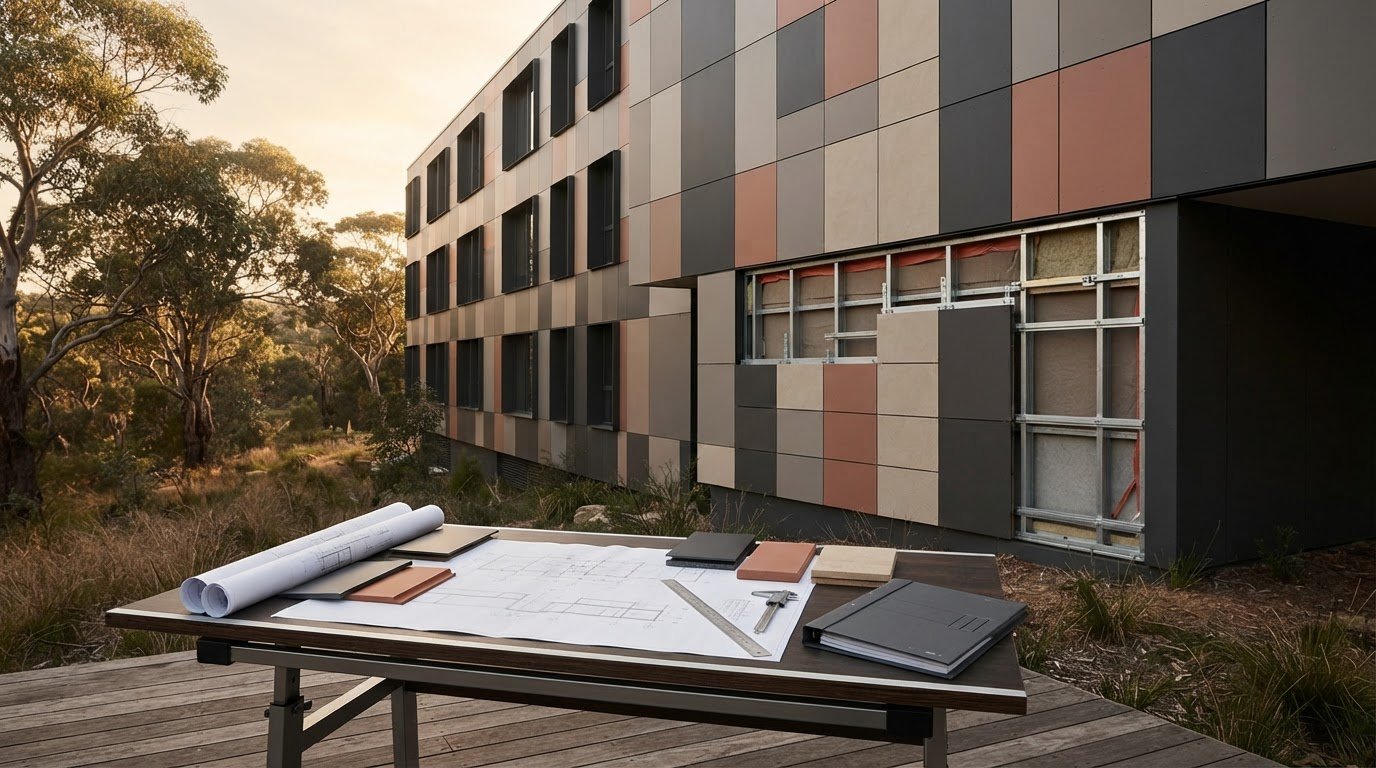
Airflow must continue through the surface of the deck to keep the system dry. Following standard installation rules for composite gapping ensures that rain and cleaning water don't become trapped between boards. We suggest using hidden fasteners for several reasons. They provide a clean, fastener-free aesthetic and eliminate the need to pierce the protective capping with surface screws. This keeps the moisture barrier of your moisture resistant decking entirely intact. For those looking to apply these moisture-smart principles to walls and facades, our Architectural Composite Cladding Guide explores vertical moisture management in detail.
Finally, consider the role of nosing and edging. These finishing touches do more than just hide the board ends for a polished look; they seal the perimeter of the system. By combining high-density boards with engineered pedestals and proper gapping, you create a sanctuary that remains structural and beautiful for over 20 years.
Secure Your Vision for the Future
Transitioning from a high-maintenance timber deck to a high-performance outdoor space is more than just an aesthetic choice; it's an investment in your lifestyle and your home's long-term value. We've explored how the right combination of high-density cores and protective capping can eliminate the cycle of rot and mould that plagues traditional wood. By choosing moisture resistant decking, you are ensuring that your pool surround or coastal alfresco area remains a safe, beautiful retreat for decades to come.
As an Australian family-run business, we take pride in supplying the premium Ressisto and Riviera series, both of which are meticulously engineered for the harshest Australian climates. We understand that a deck is only as strong as the system supporting it, which is why we prioritise smart installation solutions like sub-frame ventilation and adjustable pedestals. You don't have to settle for splintering boards or constant oiling. Explore our range of moisture-resistant composite decking and discover how our expertise can help you build a space that truly lasts.
Frequently Asked Questions
Is composite decking completely waterproof?
While no building material is entirely waterproof in every scenario, premium capped composite decking is engineered to be virtually impermeable to water. The high-density polymer shield prevents moisture from reaching the internal wood fibres; this stops the internal swelling and rot that typically destroys traditional timber. It's a significant advancement in durability for the Australian climate.
Can I install moisture resistant decking directly on the ground?
Direct ground contact is not recommended because every decking system requires adequate sub-frame ventilation to remain structural over time. Without a gap for airflow, moisture becomes trapped beneath the boards, which can lead to sub-structure decay and stagnant water issues. Using adjustable pedestals is the most effective way to elevate your deck while ensuring proper drainage on ground-level sites.
Does moisture resistant decking get slippery when wet?
Slip resistance depends entirely on the specific surface texture of the board you choose. While some smooth finishes can be slick, our brushed textures are specifically designed to provide superior grip in wet conditions. For pool surrounds and high-moisture zones, choosing a product with a high slip-rating ensures family safety without compromising on the material's moisture-fighting properties.
How do I clean mould off a composite deck in a shaded area?
You can usually clean surface mould using a soft-bristle brush and warm, soapy water. Unlike timber, where mould roots deep into the organic fibres, the protective capping on high-quality moisture resistant decking prevents spores from taking hold. Regular sweeping to remove organic debris like leaves will stop mould from finding a food source in those damp, shaded corners.
Is a moisture resistant deck better for poolside areas than tiles?
Many homeowners prefer composite decking over tiles because it often stays cooler underfoot and provides better natural slip resistance in splash zones. High-performance composite also eliminates common tile frustrations like cracked grout or loose pavers caused by ground movement. It offers a seamless, warm aesthetic that integrates perfectly with modern Australian outdoor living spaces.
Will salt water damage my composite decking boards?
Salt water won't damage premium capped composite boards because the polymer shield is non-reactive to salt minerals. This makes it an ideal choice for beachfront properties where salt spray and high humidity quickly corrode traditional timber fasteners and rot the wood. The boards will maintain their structural integrity and colour even in the most demanding coastal environments.
Comments