
Non-Combustible Adjustable Pedestals Australia: The 2026 Compliance Guide
In 2026, the margin for error on Australian high-rise balconies has effectively vanished. Following the adoption of the NCC 2025, choosing the right non-combustible adjustable pedestals Australia has become a mandatory structural decision rather than a simple design preference. You've likely felt the weight of these shifting regulations, perhaps worrying if your sub-frame materials will pass the rigorous AS 1530.1 testing now required for Type A and B buildings. It's a complex landscape to navigate, especially when you're also wrestling with uneven substrates and the harsh realities of our local climate.
We understand that your reputation rests on both safety and precision. This guide will help you master the technical and regulatory requirements for fire-rated supports, giving you the clarity needed to ensure every decking project meets the latest safety standards. We'll break down the transition to 100 per cent non-combustible steel systems like the RHINO NC range, explaining how to achieve a perfectly level, stable outdoor surface that stands the test of time. From understanding height variables to securing final project sign-off, you'll find the practical insights required to build with total confidence and integrity.
Table of Contents
Understanding Non-Combustible Pedestal Regulations in Australia
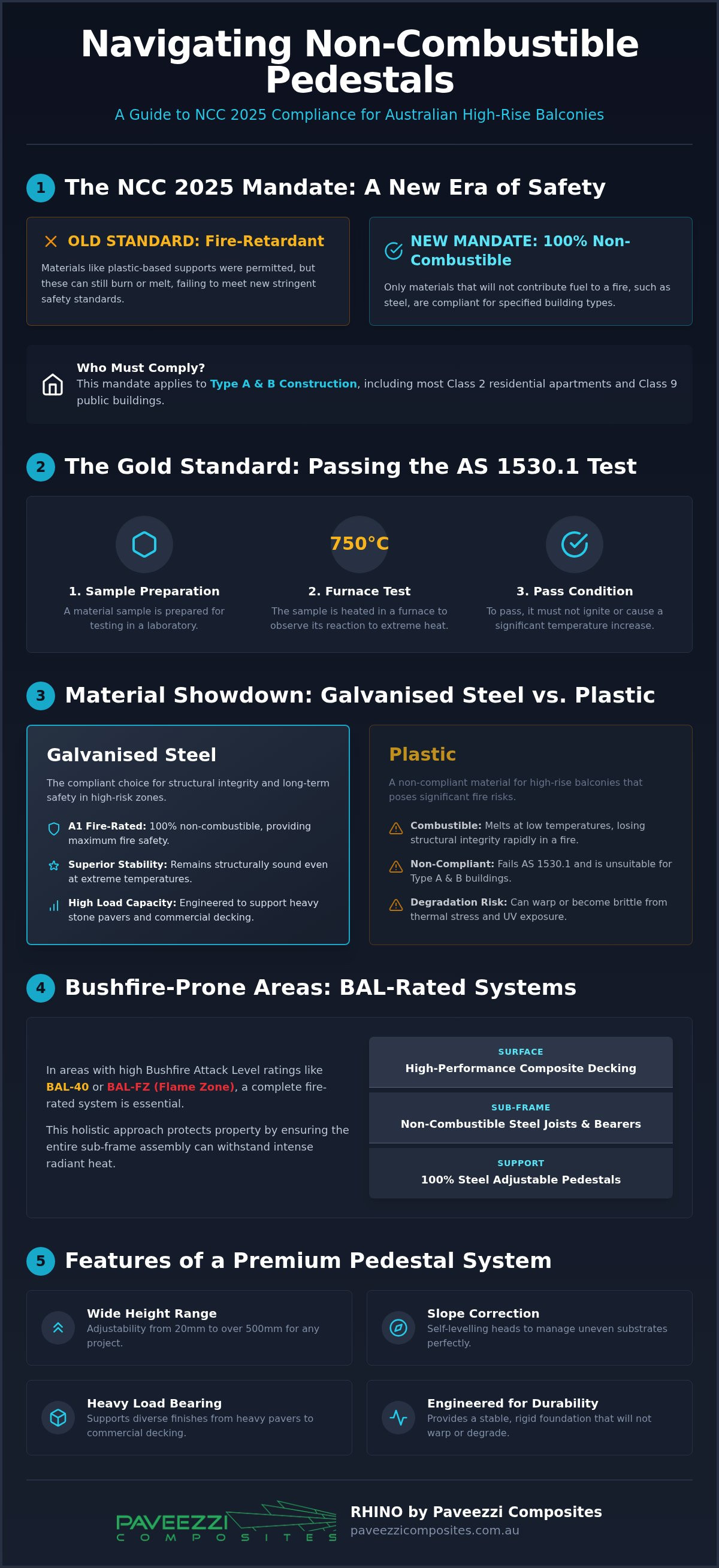
The landscape of Australian construction changed significantly with the adoption of the NCC 2025 in May 2026. It's no longer enough for a product to simply resist flames. For high-rise balconies and external wall assemblies, the requirement is now absolute non-combustibility. While many older projects relied on various fire-retardant materials, these plastic-based supports often fail to meet the stringent standards now in place for Type A and B construction. True safety comes from using non-combustible adjustable pedestals Australia, typically engineered from high-grade steel or aluminium. These materials don't just slow down a fire; they won't contribute fuel to it at all.
AS 1530.1 and the Australian Building Code
The AS 1530.1 standard is the definitive benchmark for non-combustibility in our local industry. This rigorous test involves placing a material sample into a vertical tube furnace at 750 degrees Celsius to observe its reaction. If the material doesn't flame or cause a significant temperature rise, it earns its non-combustible status. Under the current NCC, buildings classified as Type A or Type B construction, which include most Class 2 residential apartments and Class 9 public buildings, must use these certified components. When sourcing your supports, always ask for a valid Australian test certificate. A reputable supplier will provide this documentation without hesitation to ensure your project meets the latest compliance requirements.
BAL Ratings and Bushfire-Prone Areas
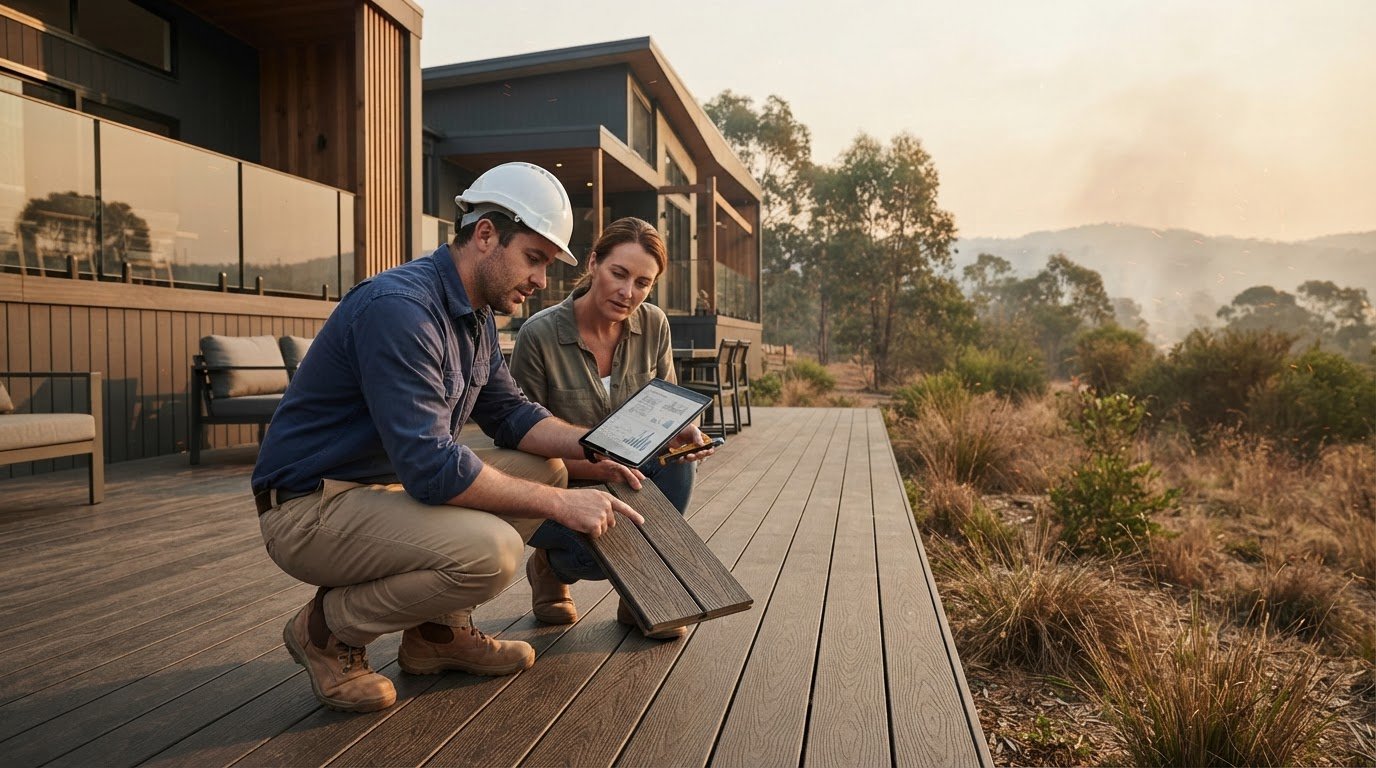
Fire safety isn't just a concern for the city skyline. In regional areas, homeowners must navigate the complexities of Bushfire Attack Level (BAL) ratings to protect their assets. Integrating non-combustible adjustable pedestals Australia into your bushfire-prone build isn't just a safety choice; it's a structural necessity for long-term durability. For projects in BAL-40 or BAL-FZ (Flame Zone) areas, the sub-frame is just as vital as the surface. It's about creating a holistic, fire-rated system that can withstand intense radiant heat. By pairing steel pedestals with high-performance composite decking, you build a structure that protects both the property and its inhabitants. This no-nonsense approach to engineering ensures your outdoor space remains a safe sanctuary, even in the most challenging Australian environments.
Key Features of Premium Non-Combustible Pedestal Systems
Selecting the right hardware for a high-rise project involves more than just checking a box for compliance. The physical engineering of your sub-frame determines the project's long-term success and safety. Premium non-combustible adjustable pedestals Australia are designed to survive where traditional materials fail. While plastic options might seem convenient for low-rise residential work, they cannot match the performance of galvanised steel or aluminium in high-risk zones. These metals provide a stable, rigid foundation that won't warp or degrade when exposed to the elements or extreme thermal stress.
Performance standards for these systems are overseen by the Australian Building Codes Board through the National Construction Code (NCC), which prioritises non-combustible materials for high-occupancy structures. Beyond fire safety, these systems must manage the immense weight of heavy stone pavers or commercial decking across a vast height range. Whether you're solving a tight 20mm threshold challenge or elevating a terrace by 500mm, the structural integrity must remain absolute. In our harsh coastal environments, high-quality galvanised coatings are essential to prevent corrosion and ensure the system lasts as long as the building it supports.
Galvanised Steel vs. Plastic Pedestals
The most striking difference between these materials is their reaction to heat. Plastic pedestals, even those with fire-retardant additives, have a relatively low melting point and can lose structural integrity quickly during a fire event. In contrast, galvanised steel remains stable at temperatures that would liquefy polypropylene. This makes steel the gold standard for commercial life-cycle value. A1 fire-rated steel supports provide an immutable foundation that ensures the deck remains structurally sound even under extreme thermal conditions. If you're planning a project that demands this level of engineering, exploring our range of sub-frame solutions is a great place to start.
Self-Levelling Heads and Slope Correction
Most substrates aren't perfectly flat. They're designed with falls to ensure proper water drainage. RHINO self-levelling pedestals use intuitive head technology to compensate for these slopes up to 5 per cent automatically. This creates a perfectly level surface for your tiles or boards without the need for manual shims or complex adjustments. It saves significant installation time on-site. A level deck doesn't just look better; it ensures uniform drainage and prevents the "lippage" that can create trip hazards on commercial walkways.
Installation Guide: Integrating Pedestals with Sub-Frames
Precision during the installation phase is what ensures your sub-frame remains fully compliant with the Australian Standard for non-combustibility. It starts with a clean, stable substrate. You must verify that your waterproofing membrane is intact and free of debris before calculating the finished floor height. This calculation is the most critical step; it dictates the exact range required for your non-combustible adjustable pedestals Australia. Once your heights are confirmed, you can set out your grid. This layout must strictly follow your joist span tables to ensure the final deck can handle the intended commercial or residential load without any structural deflection.
Following a methodical process saves time and reduces the risk of costly rework. Once the grid is established, you can begin integrating the structural components. Follow these essential steps for a stable build:
Substrate Preparation: Clear the area and confirm that all drainage falls are functioning as designed.
Grid Layout: Mark out pedestal positions based on the specific span requirements of your chosen joists.
Joist Integration: Secure your joists into the pedestal head attachments, ensuring they are seated firmly and locked in place.
Levelling and Locking: Adjust each pedestal to reach the target height. Lock the thread to prevent any future movement.
Final Surface: Install your pavers or composite boards according to the manufacturer's layout plan.
The Aluminium Sub-Frame Advantage
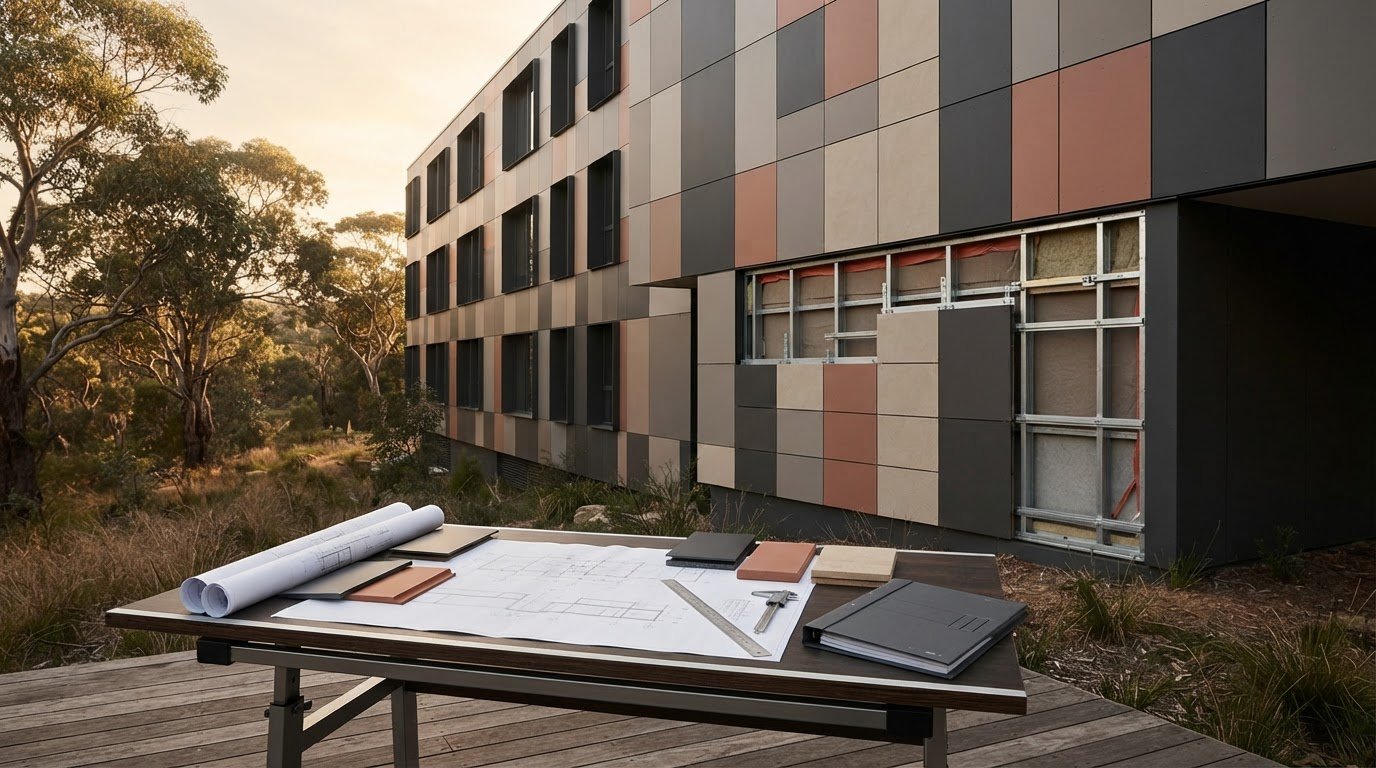
Aluminium joists are the logical partner for non-combustible supports. They won't rot, warp, or burn. In the intense Australian sun, managing thermal expansion and contraction is vital for the longevity of your deck. Aluminium provides the necessary stability and engineering precision that timber simply cannot match in a fire-rated environment. For a cohesive look, many developers pair these systems with Architectural Composite Cladding to ensure whole-of-building fire safety and design consistency.
Low Threshold and Ultra-Low Height Solutions
Modern apartment design often leaves very little room between the concrete slab and the door sill. Achieving a compliant finish with clearances as low as 23mm can be difficult for standard systems. Our RHINO NC range includes ultra-low accessories specifically engineered for these tight spaces. They provide the same fire-rated security as their taller counterparts without compromising on adjustability or strength. If you're tackling a high-rise project with challenging clearances, you can view our full technical range to find the right fit for your specific threshold requirements.
Why Choose RHINO by Paveezzi Composites for Your Next Project?
Selecting the right partner for your sub-frame engineering is a decision that impacts the safety and longevity of the entire build. RHINO NC represents the benchmark for non-combustible adjustable pedestals Australia, offering a level of security that goes beyond mere compliance. Our system is engineered from 100 per cent non-combustible steel, designed specifically to withstand our unique climate while meeting the most rigorous fire safety standards. It's about providing peace of mind for developers and homeowners alike, ensuring that the foundation of your outdoor space is as fire-secure as the building itself.
The versatility of the RHINO range is a significant advantage for complex projects. While we've discussed the importance of compliant decking in earlier sections, these supports are equally adept at managing heavy stone pavers, porcelain tiles, and even synthetic turf. This adaptability allows for design consistency across different zones of a single project, from penthouse terraces to ground-floor communal areas. You get a stable, level finish regardless of the surface material chosen, backed by a system that won't warp, rot, or burn.
The Paveezzi Composites Heritage of Innovation
Paveezzi Composites has been at the forefront of composite and sub-frame innovation since 2010. As an Australian family-run business with over 15 years of expertise, we take a great deal of pride in our heritage as a trusted pioneer. We don't believe in aggressive sales tactics; instead, we focus on a no-nonsense approach to technical reliability and manufacturing integrity. We source and supply only high-performance materials that meet our exacting standards, positioning ourselves as a stable and knowledgeable ally for your construction needs.
Resources for Architects and Specifiers
We understand that precision starts on the drawing board. To support architects and specifiers in their quest for full regulatory compliance, we offer a comprehensive suite of technical drawings and CAD files to streamline the planning process. If you need site-specific advice or detailed documentation for your next firm project, you can easily request a consultation or resource pack through our website. Our team at Paveezzi Composites is ready to assist with national supply and logistics, ensuring your non-combustible adjustable pedestals Australia arrive on-site exactly when they're needed to keep your project on schedule.
Elevating Your Standards for a Safer Australian Future
Mastering the shift to the NCC 2025 isn't just about meeting a legal requirement; it's about protecting the long-term integrity of your build and the safety of its occupants. By choosing non-combustible adjustable pedestals Australia, you're investing in a structural foundation that has been rigorously tested to AS 1530.1 standards. These 100 per cent steel systems solve the complex challenges of modern high-rise balconies, providing a level of reliability and peace of mind that flammable alternatives simply cannot match.
As a family-owned Australian business with over 15 years of expertise, we're proud to have our range specified in major national commercial projects across the country. Our commitment to quiet excellence and no-nonsense technical support ensures you have a dedicated partner who understands the local landscape as well as you do. You're now equipped with the technical insights to navigate these regulatory changes with complete confidence and precision.
Explore the RHINO Non-Combustible Range today to ensure your next project stands as a benchmark for safety and quality. We're here to help you build a future that is both beautiful and secure.
Frequently Asked Questions
Are non-combustible pedestals mandatory for all Australian balconies?
Non-combustible pedestals are mandatory for buildings required to be of Type A or Type B construction under the NCC 2025. This generally includes high-rise residential apartments, commercial offices, and public buildings where fire safety is a critical regulatory priority. While Class 1 residential homes don't always require them, many homeowners choose non-combustible adjustable pedestals Australia for the superior durability and peace of mind they offer in bushfire-prone regions.
What is the difference between fire-rated and non-combustible pedestals?
The primary difference is how the material reacts to extreme heat during the AS 1530.1 furnace test. Fire-rated or fire-retardant pedestals are typically made of plastic with chemical additives that slow the spread of flames, yet they can still melt or warp under stress. True non-combustible pedestals are made from materials like galvanised steel that won't ignite, won't contribute fuel to a fire, and will maintain their structural integrity at much higher temperatures.
Can I use non-combustible pedestals with timber joists?
You can technically use them together, but doing so will likely compromise the fire-compliance status of the entire sub-frame assembly. For high-rise projects or builds in high-risk zones, we recommend using aluminium joists to ensure every component of the support system is non-combustible. This holistic approach ensures your project meets the latest safety standards while avoiding the long-term issues of rot and moisture damage associated with timber.
How much weight can a RHINO NC adjustable pedestal support?
RHINO NC steel pedestals are engineered to manage the immense weight of heavy natural stone pavers and high-traffic commercial decking. These systems provide exceptional compression strength and stability, far exceeding the load-bearing capacity of traditional plastic supports. This makes them the preferred choice for public infrastructure and premium residential terraces where a solid, "no-bounce" feel is essential for the finished surface.
What is the minimum height achievable with a non-combustible pedestal system?
The RHINO NC range provides ultra-low height solutions starting from 25mm, specifically designed to solve the threshold challenges of modern apartment balconies. The system is highly versatile and can be adjusted up to 490mm to suit various project requirements. This wide range ensures that builders can achieve a perfectly level finish even when dealing with significant substrate falls or minimal clearance areas.
Do these pedestals require fixing to the substrate or are they free-standing?
Most installations are free-standing, as the weight of the pavers or the secured sub-frame provides enough gravity-held stability to keep the system in place. This is often preferred because it avoids puncturing the waterproofing membrane with mechanical fixings. However, if your project's engineering specifications or high-wind load requirements demand it, the pedestals can be fixed to the substrate for additional lateral security.
Comments