
Stain-Resistant Composite Decking: Australian Entertaining
Imagine hosting a summer lunch where a dropped glass of Shiraz or a splash of grease from the BBQ doesn't lead to a frantic search for the scrubbing brush. For most Australian homeowners, the dream of a beautiful outdoor area is often dampened by the reality of timber maintenance. You likely agree that spending your precious weekends sanding and oiling a deck, only to watch it fade under the intense UV index, is a cycle you'd rather break. It's frustrating to see a premium space compromised by a single accidental spill.
This article shows you how stain resistant composite decking, powered by modern co-extrusion technology, provides a permanent solution to these common headaches. You'll learn how the Paveezzi Ressisto series uses a 360-degree protective shield to repel stains and resist the harshest weather conditions. We will examine the engineering that allows for a luxury, extra-matte aesthetic without the high-maintenance demands of traditional wood. By the end, you'll understand how to achieve a deck that remains pristine and ready for entertaining, year after year.
Table of Contents
What is Stain Resistant Composite Decking? The Capped Advantage
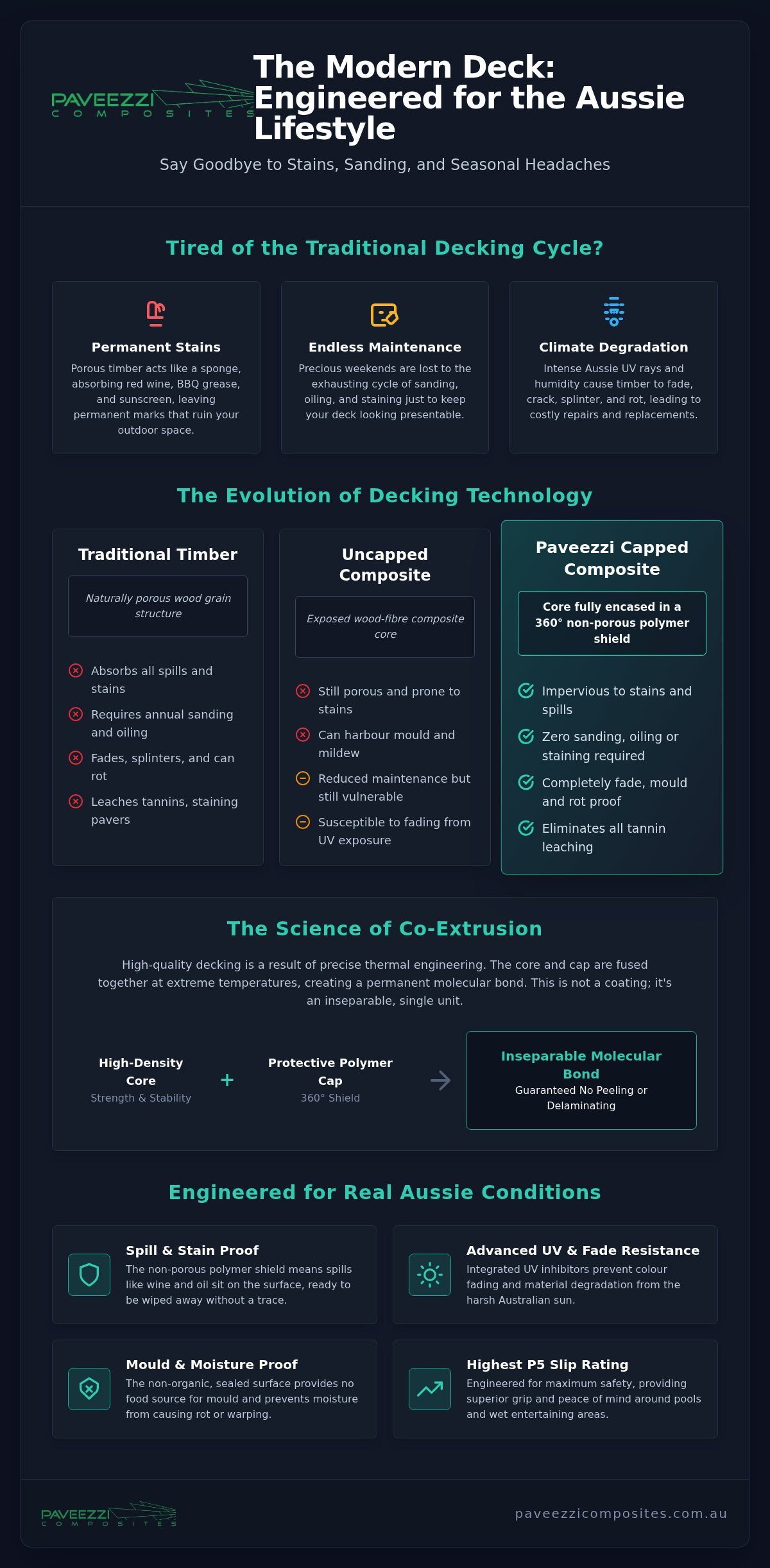
Modern outdoor design has moved beyond the high-maintenance demands of the past. Wood-plastic composites (WPCs) have undergone a significant transformation, evolving from simple recycled boards to sophisticated, engineered systems. At the heart of this evolution is the "cap", a high-performance polymer shield that wraps the internal core. This innovation is what defines true stain resistant composite decking, providing a non-porous surface that refuses to absorb the substances that typically ruin a timber deck. It's a technical solution to a very practical problem.
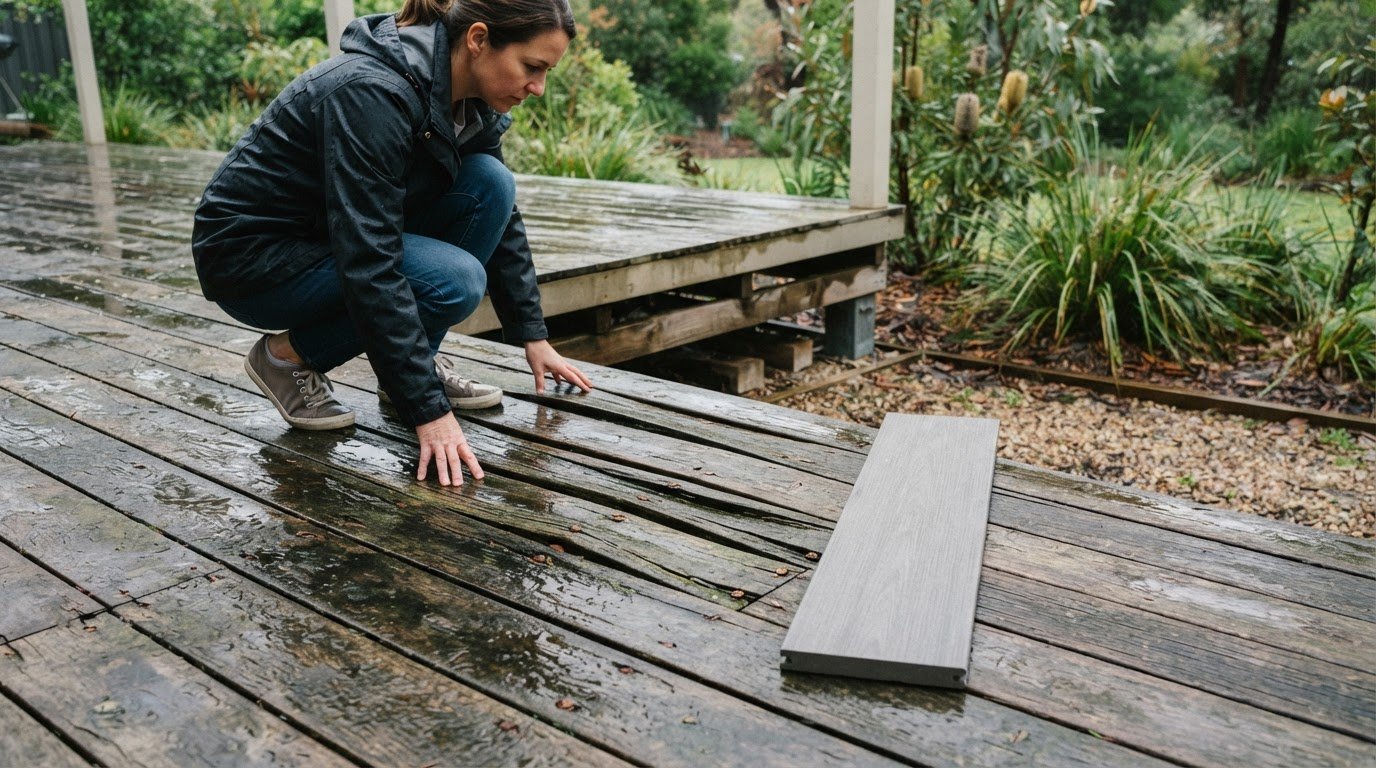
While traditional hardwoods like Spotted Gum or Merbau look stunning initially, they are naturally porous. They act like a series of microscopic straws, pulling in moisture, oils, and tannins. Early generations of composite materials often suffered from similar issues because they lacked a protective outer layer. In contrast, Paveezzi products offer a no-oiling reality. You can say goodbye to the annual labour of sanding and staining, replacing those exhausting chores with a simple wash-down. It's about reclaiming your time without sacrificing the aesthetic of a premium outdoor space.
Capped vs. Uncapped: Why the Shield Matters
The difference between capped and uncapped boards is fundamental to long-term performance. An uncapped board is essentially exposed; it acts like a sponge for BBQ grease, sunscreen, and red wine spills. Once these liquids penetrate the core, the stain is often permanent. A capped board features a physical barrier that prevents these elements from ever reaching the timber-fibre centre. This protection translates to significant long-term cost savings. You won't need to invest in expensive chemical cleaners or specialised oils to keep the surface looking fresh, as the shield does the heavy lifting for you.
The Australian Climate Factor
Our local conditions are notoriously unforgiving. In Australia, high UV levels don't just cause colours to fade; they can actually bake surface spills into inferior materials, making them nearly impossible to remove. Moisture resistance is equally critical. By sealing the core, the cap prevents the internal dampness that leads to mould-based staining and structural rot. This focus on resilience is central to Paveezzi's commitment to durability. By choosing high-quality stain resistant composite decking, you're investing in a surface designed to withstand the intense Aussie sun and seasonal humidity without losing its sophisticated finish.
The Science of Co-Extrusion: How Your Deck Defends Itself
The resilience of modern decking isn't accidental; it's a result of precise thermal engineering. High-quality stain resistant composite decking relies on a manufacturing process known as co-extrusion. During the manufacturing of WPC, the internal core and the external protective cap are extruded simultaneously at extreme temperatures. This high-heat environment creates a permanent molecular bond, ensuring the two layers become one inseparable unit. Unlike painted or coated alternatives, this shield won't peel, flake, or delaminate, even when subjected to the expansion and contraction caused by the Australian climate.
Within this polymer cap, a sophisticated blend of antioxidants and UV inhibitors works to maintain the board's integrity. These additives aren't just surface-level treatments; they're integrated into the material to neutralise the degrading effects of oxygen and intense sunlight. For homeowners with pool areas, this engineering provides a double benefit. You get the peace of mind that comes with a P5 slip rating, the highest classification for slip resistance, alongside a surface that won't be ruined by chlorinated water or salt spray. It's a robust defence system designed for the way we live outdoors.
Preventing Tannin Leaching and Mould
One of the most common frustrations with traditional timber is "bleeding," where natural tannins leach out and stain surrounding pavers or pool coping. Because the core of a capped board is fully enclosed, this messy process is entirely eliminated. Furthermore, the non-organic surface of the cap provides no food source for organic growth, which prevents mould spores from taking root in the damp. Co-extrusion is the fusion of a protective polymer layer with a high-density core. This barrier ensures your entertaining space remains hygienic and visually consistent without the need for harsh bleach treatments.
Engineered for High-Traffic Australian Spaces
Australian backyards are high-traffic zones where heavy outdoor furniture, pets, and children put surfaces to the test. The protective shield is specifically engineered for scratch resistance, allowing you to move chairs and tables without the constant fear of gouging the boards. This level of "commercial grade" performance has become the new benchmark for residential projects, ensuring the deck looks as good in five years as it did on day one. To better understand the technical specifications behind these materials, you can explore our technical resources. If you're ready to start planning your project, feel free to browse our full range of architectural-grade decking solutions.
The Aussie Entertaining Test: Managing Real-World Spills
There's a specific kind of anxiety that comes with hosting the first big BBQ on a brand-new deck. You've invested in a premium outdoor space, and the last thing you want is a permanent reminder of a dropped sausage or a knocked-over glass of red wine. This concern is entirely valid. Traditional timber is notoriously unforgiving; once oil or pigment hits those porous fibres, the damage is often irreversible. However, the engineering behind high-quality stain resistant composite decking is designed specifically to handle these real-world moments without the stress.
Because the polymer cap is non-porous, liquids sit on the surface rather than soaking into the core. This allows for a 'wipe-away' cleaning experience that feels more like cleaning a kitchen benchtop than maintaining a structural floor. For poolside installations, this barrier is equally effective against the constant splash of chlorinated or salt water. While timber might bleach or warp when exposed to pool chemicals, a capped composite board remains chemically inert. It maintains its colour and structural integrity, ensuring your pool surround looks pristine through every summer season.
The BBQ Grease Challenge
Hot grease is often the biggest threat to an outdoor area. On a standard hardwood deck, a splash of oil creates a dark, permanent blemish that no amount of scrubbing can fully remove. The Ressisto cap is engineered to repel these lipids. If a spill occurs, your first response should be simple: use warm, soapy water and a soft cloth. This basic protocol is usually all that's required to lift oily residues before they have a chance to settle. For those who want extra peace of mind during a large gathering, placing a dedicated grill mat under the BBQ provides a secondary layer of protection for your investment.
Organic Stains: Leaves, Sap, and Wildlife
The Australian landscape presents its own unique set of challenges. Eucalyptus leaves are high in acidic tannins that can leave stubborn ghosting on many surfaces, while bird droppings and fruit bat mess are a reality for many suburban backyards. On capped boards, these organic materials can't find a foothold. Most of these messes will simply wash away with the next rain or a quick hose-down. To keep your space in peak condition, you can read our blog for more maintenance tips. If you're ready to upgrade to a surface that handles the rigours of local life, explore our full range of durable decking boards.
Choosing Your Finish: Paveezzi’s Premium Ressisto Range
The evolution of outdoor materials has reached a point where performance no longer requires aesthetic compromise. The Ressisto series represents the pinnacle of Paveezzi’s engineering efforts, combining the technical "360° Armour" shield with a finish that captures the authentic warmth of natural timber. As a family-run business with over 15 years of experience, we have focused on providing architectural-grade materials that meet the specific demands of the Australian climate. This range is designed for those who seek a sophisticated outdoor space where stain resistant composite decking acts as a foundation for years of worry-free entertaining.
Choosing the right finish is about more than just colour; it is about how the material interacts with light and touch. While early composites often had a plastic-like sheen, modern manufacturing allows for textures that are indistinguishable from seasoned hardwood. Whether you are designing a sleek urban balcony or a sprawling coastal terrace, the finish you select will define the character of your home. We recommend ordering samples to experience these textures firsthand, as the tactile quality of the boards is best appreciated in person under natural light.
Ressisto 138 Extra Matte vs. Ressisto 143 Brushed
The Ressisto 138 Extra Matte is a favourite among architects for its sophisticated, low-sheen appearance. This finish minimises light reflection, providing a modern, understated look that complements contemporary Australian architecture. For those who prefer a more traditional aesthetic, the Ressisto 143 Brushed offers a tactile, organic feel that mimics the grain of natural wood. Despite their different surface profiles, both options utilise the same high-performance capping technology. This ensures that whether you choose the smooth matte or the textured brushed finish, your deck remains a true stain resistant composite decking solution that repels oils and spills with ease.
Planning Your Project with Paveezzi
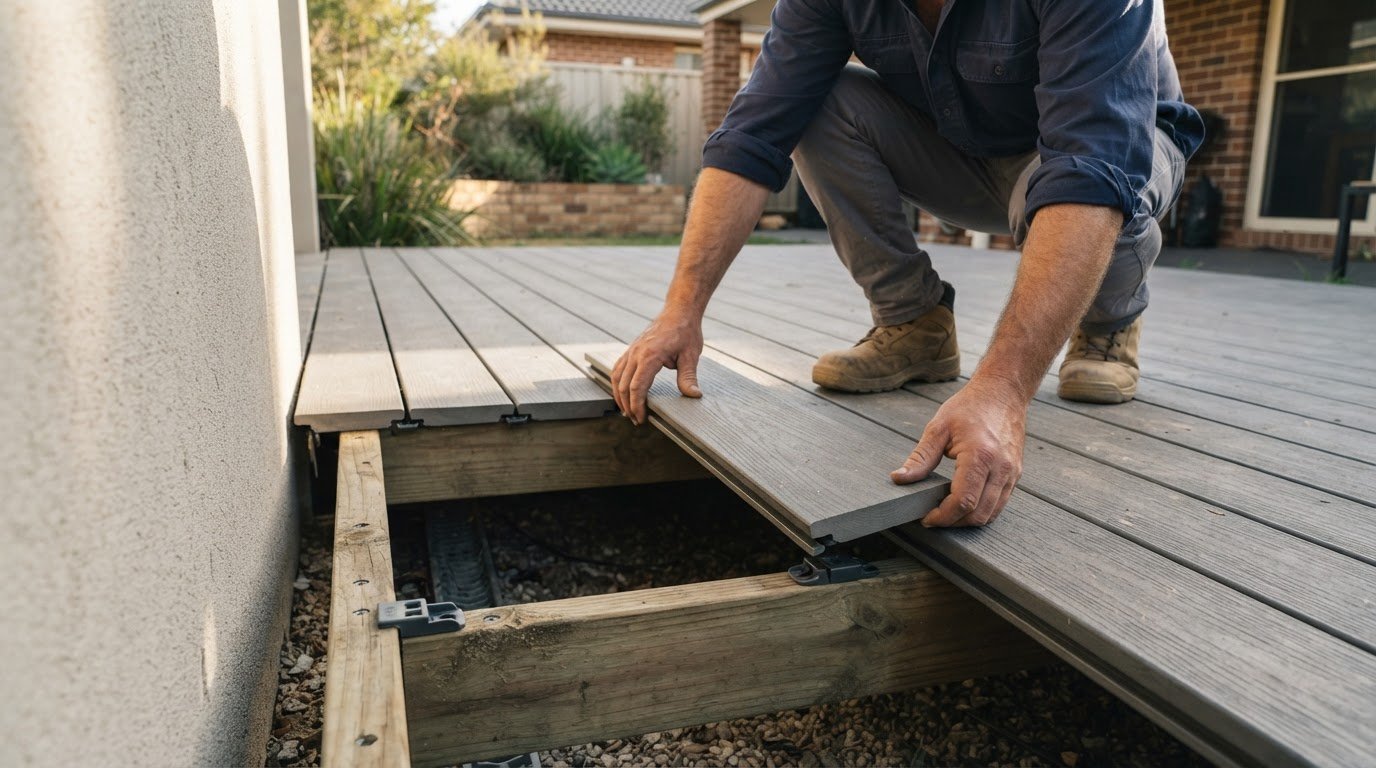
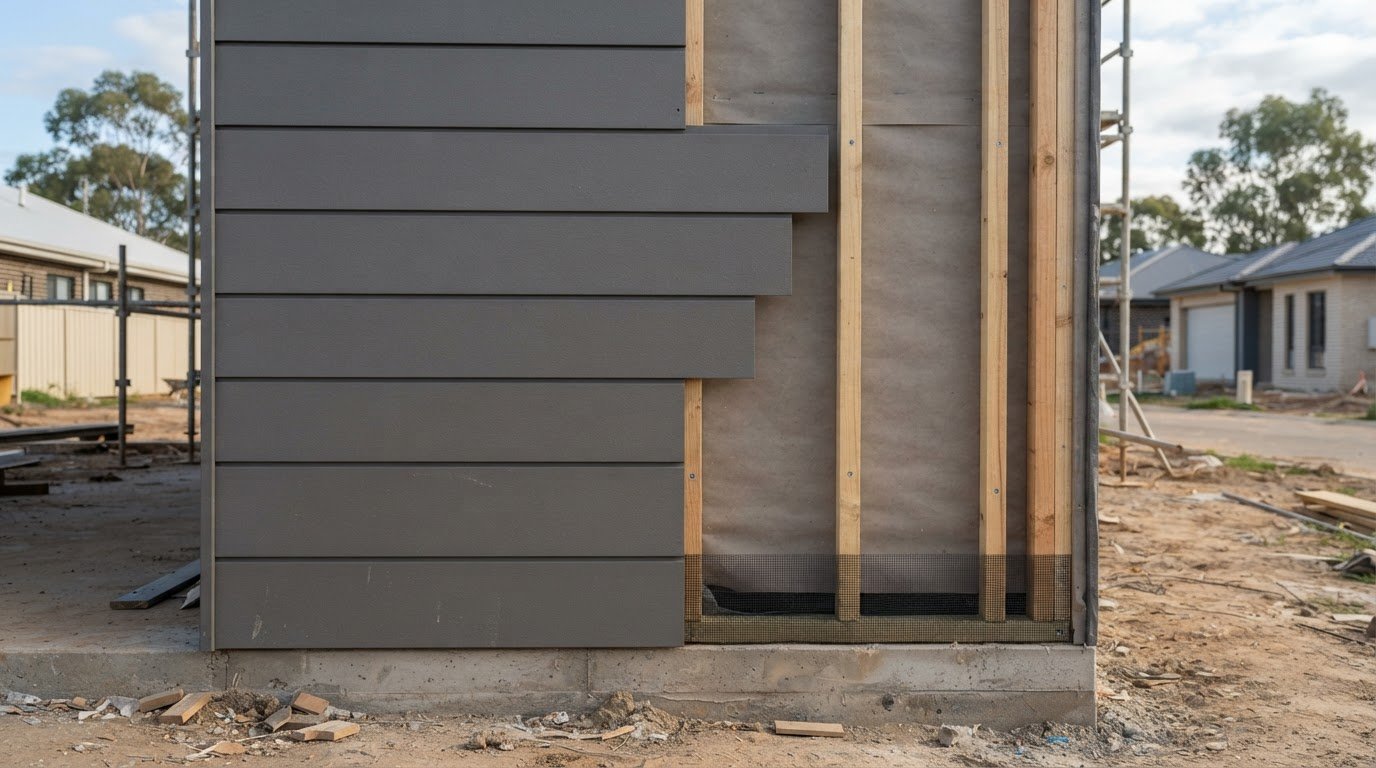
Paveezzi operates as a specialist supplier of premium materials, focusing entirely on product integrity and manufacturing excellence. We don't provide direct installation services; instead, we partner with discerning homeowners, builders, and architects to ensure the highest quality outcome for every project. This supply-focused model allows us to maintain rigorous oversight of our Ressisto and Lightissimo ranges. We encourage you to consult with your design professional about incorporating our architectural cladding and decking into your plans. If you're ready to see the Paveezzi difference for yourself, you can contact our team for a quote or samples to begin your outdoor transformation.
Create a Lasting Foundation for Your Australian Lifestyle
Investing in your outdoor area should result in years of enjoyment, not a lifetime of maintenance. We have explored how the 360-degree shield of the architectural-grade Ressisto series prevents stubborn spills from becoming permanent eyesores. By choosing stain resistant composite decking, you are opting for a surface that withstands the intense local UV index and the rigours of real-world entertaining. It is a technical solution that allows you to focus on hosting rather than cleaning.
As an Australian family-owned and operated business with over 15 years of experience, Paveezzi remains dedicated to providing materials that endure. Our advanced UV-stable polymer capping ensures your deck stays a vibrant, sophisticated centrepiece for your home, regardless of the season. It is time to stop sanding and start socialising on a surface built for the long term. Your ideal outdoor sanctuary is within reach, and we are here to help you select the perfect finish for your next project.
Secure Your Samples of Australia's Most Durable Composite Decking
Frequently Asked Questions
Is composite decking really 100% stain proof?
While no outdoor material is entirely indestructible if spills are left indefinitely, stain resistant composite decking with a high-quality polymer cap is exceptionally resilient. The non-porous shield prevents liquids from penetrating the core, meaning most accidents stay on the surface rather than soaking in. If you attend to spills like red wine or coffee within a reasonable timeframe, they won't leave a permanent mark, unlike traditional timber which absorbs pigments almost instantly.
How do I clean grease and oil spills off my composite deck?
Grease and oil should be removed as soon as possible using a simple solution of warm water and a mild liquid dish soap. You don't need harsh degreasers or high-pressure washers; a soft-bristled brush or cloth is usually sufficient to lift the residue. For stubborn oily spots, repeating the soapy wash will break down the lipids without damaging the protective cap. This straightforward protocol keeps your entertaining area looking pristine with minimal effort.
Will sunscreen or insect repellent damage the surface of my deck?
Sunscreen and insect repellents contain active chemicals that can potentially react with the polymer cap if left to bake under the intense Australian sun. It's best to avoid spraying these products directly over the deck boards to prevent any clouding of the finish. If a spill occurs, simply wipe the area with a damp cloth and a bit of soap. This prevents any chemical buildup that might dull the surface or create a slippery residue over time.
Do I ever need to sand or seal a stain resistant composite deck?
You should never sand or seal a capped composite deck, as doing so will permanently damage the protective polymer shield. One of the primary benefits of the Ressisto range is that it arrives ready for use and stays that way without annual labour. Sanding would expose the internal wood-plastic core to the elements, compromising its moisture and stain resistance. Instead, a regular wash with a garden hose is all that's required to maintain the board's integrity.
How does the Australian sun affect the colour and stain resistance over time?
The Australian sun is notoriously harsh, but advanced UV inhibitors integrated into the polymer cap help maintain both colour and performance. These inhibitors neutralise the degrading effects of radiation, ensuring the boards don't become brittle or porous over time. Because the shield remains intact, the stain resistant composite decking continues to repel liquids effectively even after years of exposure to high UV levels, unlike timber which cracks and absorbs more stains as it ages.
What should I do if my deck gets scratched or scuffed?
Minor scuffs and scratches from moving furniture often blend into the deck's texture over time through natural weathering. For more noticeable marks, you can sometimes use a soft-bristled brush to gently blend the scratch or wait for the material to settle. It's important to remember that these boards are engineered for high-traffic use, so they're significantly more durable than softwoods. Avoiding the use of metal shovels or sharp-edged furniture legs will keep the surface looking its best for longer.
Comments