
Sustainable Building Materials Australia: The 2026 Guide to Eco-Friendly Construction
The most sustainable material for your next project isn't necessarily the one that grows in an old-growth forest; it's the one you never have to replace. In a climate as unforgiving as ours, the "green" choice often fails under the weight of intense UV exposure and strict fire safety requirements, leaving homeowners caught between environmental ideals and practical reality. You've likely felt the frustration of navigating greenwashing while searching for eco friendly decking australia that won't fade, rot, or warp within a few short seasons.
We understand that a truly sustainable build must offer total life-cycle value, where premium engineering meets environmental responsibility. This 2026 guide reveals how to achieve a striking, modern aesthetic using high-performance materials designed specifically for Australian conditions. We will break down the latest NCC 2025 standards, explore fire-rated composite innovations, and show you how to reduce your carbon footprint without sacrificing the architectural beauty of your home. It's time to build for the future with quiet confidence and lasting quality.
Table of Contents
What Defines Sustainable Building Materials in Australia in 2026?
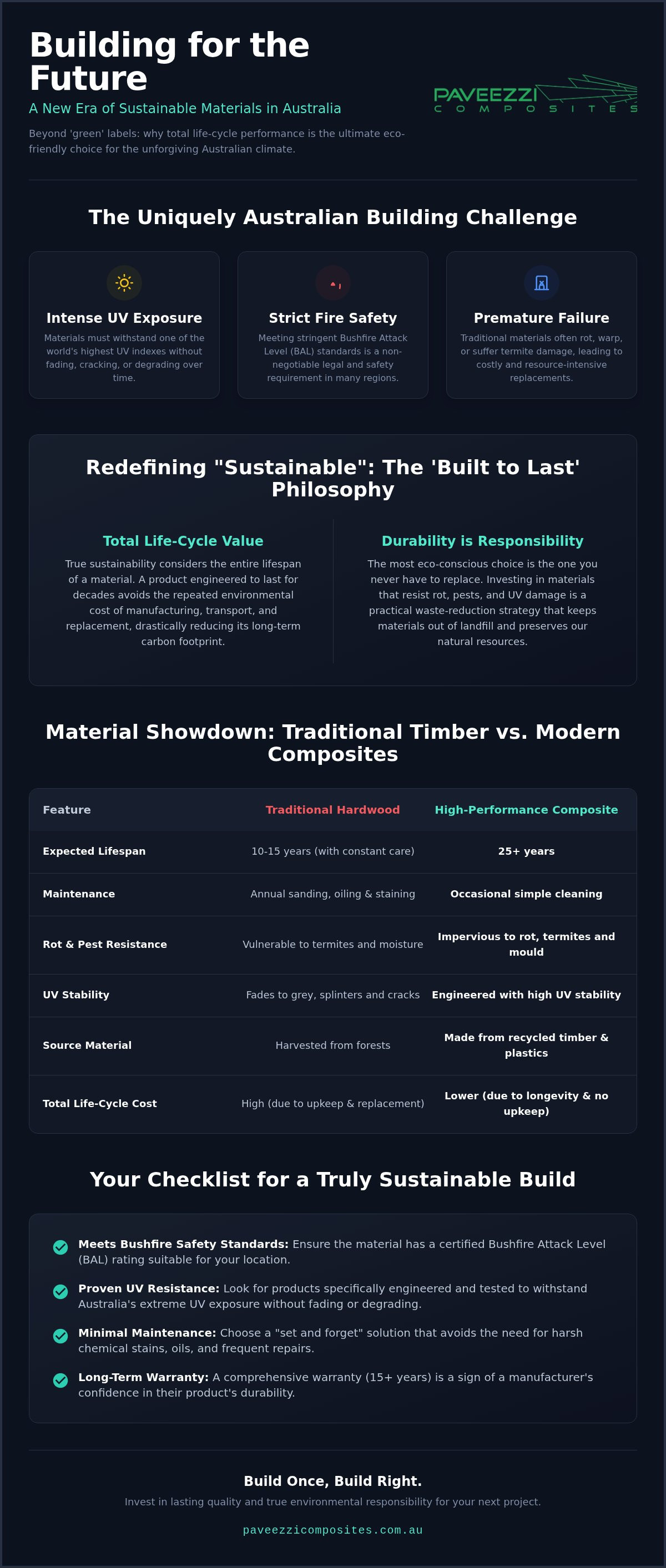
Sustainable building materials are those that minimise environmental harm through production, use, and longevity. In the current construction landscape, the definition of "green" has evolved beyond simple labels. It's no longer enough to just include recycled content; we now evaluate materials based on their total life-cycle performance. This shift reflects a broader commitment to Green building standards in Australia, which prioritises products that reduce our reliance on virgin timber and high-carbon concrete. By embracing a circular economy, the industry ensures that resources are kept in use for as long as possible, significantly lowering the 18-20% of national greenhouse gas emissions attributed to the construction sector.
Embodied Energy vs. Operational Efficiency
Every building product carries a hidden carbon cost known as embodied energy. This includes the power consumed during raw material extraction, manufacturing, and transport across the vast Australian continent. High-performance eco friendly decking australia options from Paveezzi Composites, such as their Ressisto series, address this by offering exceptional longevity. These materials aren't just about what goes into the board; they're about how the board performs over decades. For instance, advanced composite cladding can improve the thermal performance of a residential facade. This helps regulate internal temperatures and reduces the energy required for cooling. Additionally, using lightweight materials like Paveezzi Composites' Lightissimo cladding reduces the overall structural load. This often allows for smaller, less carbon-intensive concrete footings, further shrinking the project's footprint.
The Built to Last Philosophy
Durability is frequently the most overlooked factor in sustainable design. If a material is marketed as eco-friendly but requires replacement every decade due to rot or termite damage, its environmental credentials vanish. The environmental cost of harvesting, processing, and transporting replacement timber is immense. Choosing materials engineered to resist moisture and the intense Aussie UV index is a practical waste-reduction strategy. We believe that true sustainability is found in products that don't end up in a skip bin. By selecting high-performance composites, you're investing in a "built to last" philosophy. This approach minimises long-term maintenance costs and ensures the architectural beauty of the build remains intact without the need for harsh chemical stains or frequent repairs. Reliability is the ultimate form of environmental responsibility.
The Rise of High-Performance Composite Cladding and Decking
The evolution of building technology has transformed how we perceive recycled products. While early iterations often felt industrial or artificial, modern engineering has bridged the gap between eco-friendly manufacturing and high-end architectural aesthetics. Today, advanced materials offer both environmental integrity and long-term performance, setting new benchmarks for sustainable construction. High-performance eco friendly decking australia now utilises a precise blend of recycled HDPE and reclaimed timber fibres. This combination creates a non-rot board that withstands the elements without the plastic-like sheen of the past. Instead, we see sophisticated finishes like the Ressisto 143 Brushed or the 138 Extra Matte, which provide the tactile depth and natural beauty of authentic wood.
Timber Alternatives: Protecting Australia’s Old-Growth Forests
Harvesting slow-growing Australian hardwoods for residential use places immense pressure on our native ecosystems. Every square metre of timber decking often represents decades of growth that cannot be quickly replaced. By choosing architectural composite cladding, you achieve the warmth and texture of timber without the environmental toll of deforestation. The "set and forget" nature of these products is a significant advantage. Unlike traditional timber, which requires annual sanding and oiling with chemical-heavy products, premium composites maintain their integrity through a simple cleaning routine. It's a choice that respects both the landscape and your time.
Engineering for the Australian Landscape
Our unique climate demands materials that can handle extreme UV levels and rapid temperature shifts. UV-stable engineering is the cornerstone of high-performance eco friendly decking australia in 2026. Premium ranges like the Riviera series are specifically designed to handle these fluctuations without warping or losing structural integrity. For public spaces and poolside areas, slip resistance is a non-negotiable safety standard. Our products meet rigorous AS 4586 ratings, ensuring that sustainable choices are also safe ones for every family. To see how these engineered solutions can elevate your next project, you can explore our range of sustainable finishes.
Selecting Sustainable Materials for the Australian Climate
Choosing the right exterior finishes requires a careful balance between environmental ethics and rigorous safety standards. It's about ensuring every component is fit-for-purpose under the National Construction Code while maintaining a healthy living environment. When evaluating eco friendly decking australia, look for low-VOC (Volatile Organic Compound) materials that won't off-gas harmful chemicals into your outdoor entertaining areas. A truly sustainable selection checklist should include:
Verification of recycled content and ethical supply chains.
Compliance with Australian slip-resistance standards (AS 4586).
Resistance to termites and fungal decay without toxic chemical treatments.
Appropriate BAL ratings for your specific project location.
Fire Safety and BAL Ratings
In our landscape, fire resistance is a non-negotiable pillar of sustainable building. A material that can't survive a bushfire event isn't sustainable; it's a liability that may eventually require complete replacement. For projects in areas rated BAL-29 and beyond, selecting tested fire-rated composites is essential. This safety-first approach extends to the subframe and support systems. Utilising non-combustible adjustable pedestals for raised decking ensures the entire structure meets modern safety benchmarks. These engineered solutions provide a stable, fire-safe foundation for high-performance facades and outdoor spaces.
Low Maintenance as a Waste Reduction Strategy
We often overlook the environmental cost of the chemicals required to keep traditional materials looking their best. Over a 25-year period, the volume of stains, oils, and paints used on a timber deck creates a significant chemical footprint. Many of these products contain solvents that are harmful to the local ecosystem. By contrast, premium composite decking eliminates this cycle of maintenance. Choosing sustainable alternatives to wood reduces long-term maintenance costs and prevents gallons of chemical waste from entering our waterways. This "set and forget" durability provides a superior return on investment for commercial and residential projects alike. To find the perfect balance of safety and sustainability, view our full range of Australian-engineered composites.
Achieving Architectural Excellence with Eco-Conscious Composites
Sustainability shouldn't mean compromising on vision. Integrating eco-conscious materials into contemporary Australian design palettes allows for a seamless blend of ethics and aesthetics. Wide-board decking and vertical cladding create clean, rhythmic lines. They define modern facades. By playing with shadow lines and varied textures, architects can introduce depth and character to a project. These small details, combined with professional finishing touches like Ressisto Nosing & Edging Options, ensure the final result looks as premium as it performs. It's a balance of beauty and responsibility.
Modern Facade Trends: The Fineline Aesthetic
The Fineline look is currently leading architectural preferences for its sleek, vertical profile. Products like the Ressisto 144 Fineline offer a sophisticated alternative to traditional timber slats, providing consistent spacing and a refined shadow gap. You can enhance visual interest by mixing textures across a single facade. Pairing the tactile, organic feel of Ressisto 143 Brushed with the subtle elegance of an extra matte finish creates a layered, custom appearance. This versatility ensures that eco friendly decking australia remains a top choice for high-end residential and commercial builds alike.
Planning Your Sustainable Build
Successful projects begin with thorough research and reliable partners. Consulting with a family-run Australian business provides the peace of mind that comes from decades of local expertise. Our team acts as a supportive guide, helping you navigate material compatibility and technical requirements. For architects and developers, sourcing detailed specifications from our resource centre is a vital step in the documentation process. We always recommend requesting physical samples. Seeing how the light interacts with different colours on your specific site is the only way to guarantee the perfect architectural outcome. It's about precision, integrity, and a shared commitment to excellence.
Building for a Greener Australian Future
Selecting the right materials is about more than just checking a box; it's about investing in the longevity of our landscape and the safety of our homes. We have explored how modern engineering allows for the creation of eco friendly decking australia that thrives under intense UV and meets strict fire safety standards. By choosing high-performance composites over rare old-growth timbers, you're reducing long-term maintenance waste and protecting native ecosystems for generations to come.
Since 2010, our Australian-owned, family-run business has remained dedicated to providing solutions that don't force a choice between architectural beauty and environmental integrity. Our Ressisto and Lightissimo series are engineered specifically for the rugged Australian climate, offering a refined finish that stands the test of time. Whether you're an architect detailing a commercial facade or a homeowner planning a private retreat, we're here to help you build with quiet confidence. It's time to create spaces that respect our environment while elevating our standard of living.
Explore our range of sustainable architectural composites and discover how your next project can set a new standard for excellence.
Frequently Asked Questions
What are the most sustainable building materials for the Australian climate?
Sustainable choices in 2026 prioritise durability and life-cycle performance over simple labels. Recycled composite decking, eco-concrete, and responsibly sourced timber alternatives are leading the way. These materials resist the intense Australian UV index and moisture, ensuring they don't require frequent replacement. By selecting products with high-performance architectural finishes, you reduce the demand for virgin resources and minimise the total environmental impact of your construction project over several decades.
Is composite decking more eco-friendly than natural timber?
Composite solutions are often more sustainable because they prevent the harvesting of rare old-growth forests. High-quality eco friendly decking australia uses a blend of recycled HDPE and reclaimed timber fibres, diverting waste from landfills. Unlike natural timber, these boards don't require toxic chemical oils or stains to maintain their integrity. This set and forget approach significantly reduces the chemical runoff and resource consumption associated with traditional deck maintenance over a 25-year lifespan.
Do sustainable building materials meet Australian fire safety standards?
Yes, but you must verify specific certifications for your project's location. Modern sustainable materials are rigorously tested to meet Australian Bushfire Attack Level (BAL) ratings. For instance, our Ressisto range is engineered for fire resistance in bushfire-prone areas. It's also vital to use non-combustible accessories, such as our RHINO adjustable pedestals. This holistic approach ensures your eco-conscious build remains fully compliant with the latest National Construction Code safety standards.
How long do sustainable composite materials last compared to traditional timber?
Premium composite decking is designed to last 25 to 30 years without the structural degradation common in organic materials. Traditional timber often begins to rot, warp, or suffer termite damage within a decade, especially in harsh coastal or tropical environments. The superior longevity of composite materials is a vital waste-reduction strategy. It ensures that the resources used in your build remain functional for twice the lifespan of traditional hardwood alternatives.
What is embodied energy and why does it matter for my Aussie build?
Embodied energy refers to the total carbon footprint created during the extraction, production, and transport of building products. In Australia, transport energy is a major factor due to our geographical scale. Choosing durable, high-performance materials ensures that this initial energy expenditure is amortised over a much longer period. A product that lasts 30 years has a significantly lower annual carbon impact than a "natural" material that requires replacement every 10 years.
Are sustainable building materials more expensive to purchase upfront?
Upfront supply costs for premium sustainable materials can be higher than basic treated pine or low-grade hardwoods. However, the total cost of ownership is usually much lower. When you eliminate the recurring expenses of sanding, oiling, and eventual replacement, eco friendly decking australia provides a superior return on investment. You're paying for engineering excellence that removes the financial and environmental burden of constant maintenance, making it a smarter long-term financial decision.
Comments