
Vertical Composite Cladding Cost Australia: 2026 Price and Value Guide
Choosing a facade based solely on the price per board is like buying a car without considering the engine; it looks great on the surface, but it won't survive the journey. It's frustrating to browse for vertical composite cladding cost australia only to find vague estimates that ignore the reality of sub-frames, specialised fixings, and the brutal Australian sun. You want a premium look that lasts, not a budget shortcut that fades within three summers. We understand that clarity is just as important as the quality of the timber-alternative itself.
This guide breaks down exactly what you're paying for, from the raw material grades to the essential components that keep your facade secure. We'll explore the critical differences between 'supply-only' and 'installed' budgets, ensuring you have a realistic framework for your 2026 project. We also compare architectural grades like the Ressisto 144 Fineline against standard options, helping you identify the hidden expenses that often catch homeowners off guard. By the end, you'll have the confidence to invest in a facade that balances aesthetic appeal with long-term engineering integrity.
Table of Contents
Vertical Cladding Costs in Australia: 2026 Price Drivers
The demand for vertical facades has surged across Australia, driven by a desire for clean, architectural lines that draw the eye upward. Choosing this orientation is more than a trend; it's a structural decision that impacts your Cladding (construction) project from the ground up. This shift requires careful planning, as vertical layouts often change how materials are calculated and ordered compared to traditional horizontal styles.
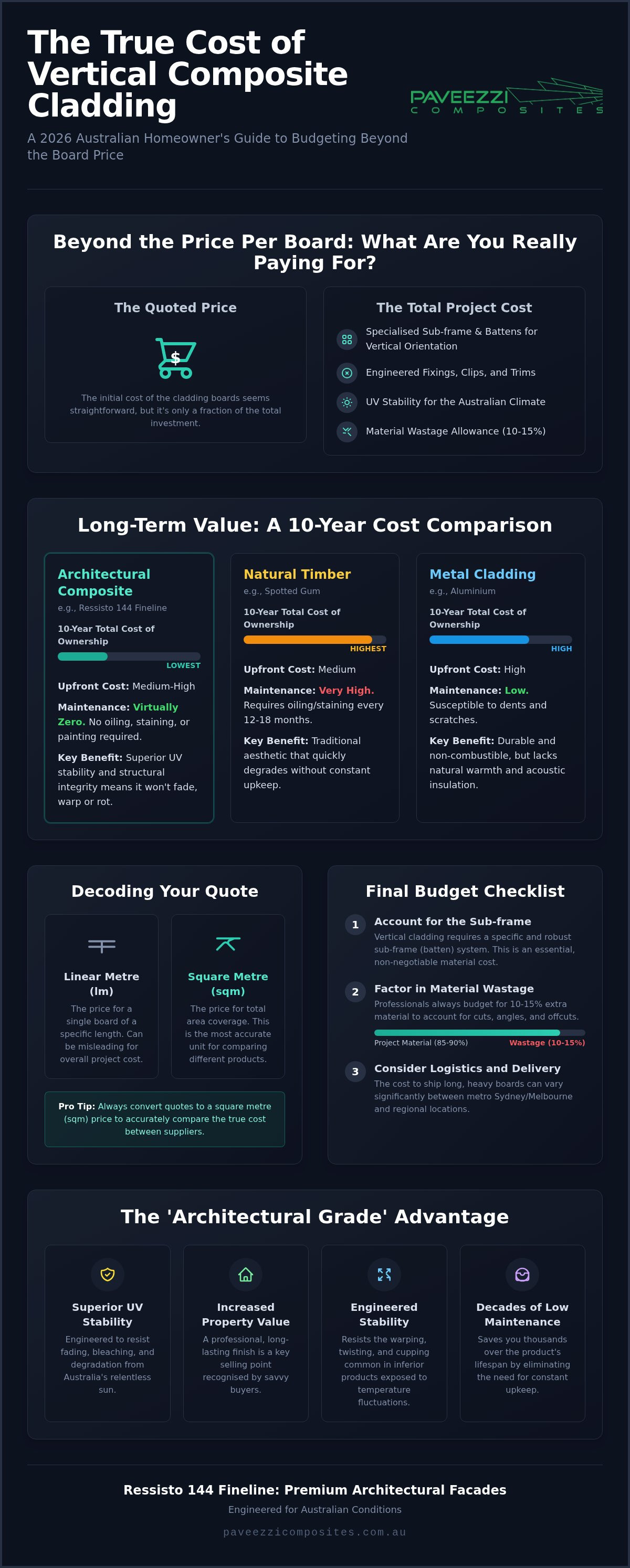
When researching the vertical composite cladding cost australia, you'll encounter two different pricing units: square metre (sqm) and linear metre (lm). It's vital to convert these correctly to avoid budget blowouts. While linear metre pricing reflects the cost of a single board length, square metre pricing gives you the total coverage cost. Architectural-grade composites, such as our Ressisto 144 Fineline, sit in the premium value bracket because they are engineered to withstand extreme UV exposure while maintaining their structural integrity for decades.
Material Comparison: Composite vs. Timber vs. Metal
While natural timbers like Spotted Gum offer an attractive upfront price, the total cost of ownership tells a different story. Timber requires regular oiling and staining every 12 to 18 months to prevent grey-out and rot. These maintenance costs, both in materials and labour, quickly eclipse the initial investment. Metal cladding is another alternative; yet it often lacks the natural warmth and acoustic benefits of a high-quality composite. Our Ressisto range provides the tactile beauty of timber without the relentless maintenance schedule, making it a sensible long-term financial choice.
Geography and Logistics: National Supply Factors
Your location plays a significant role in your total supply budget. Delivering long, heavy cladding boards to regional areas involves different logistics than metro Sydney or Melbourne. We focus on a national supply model to ensure consistent board quality across the country. It's a common mistake to opt for cheap imports to save on shipping. However, these products frequently fail under the harsh Australian sun. Choosing a local supplier means your material is specifically designed for our climate, reducing the risk of expensive replacements due to UV-related warping or fading.
The Long-Term Value of Architectural Composite: Beyond the Initial Price Tag
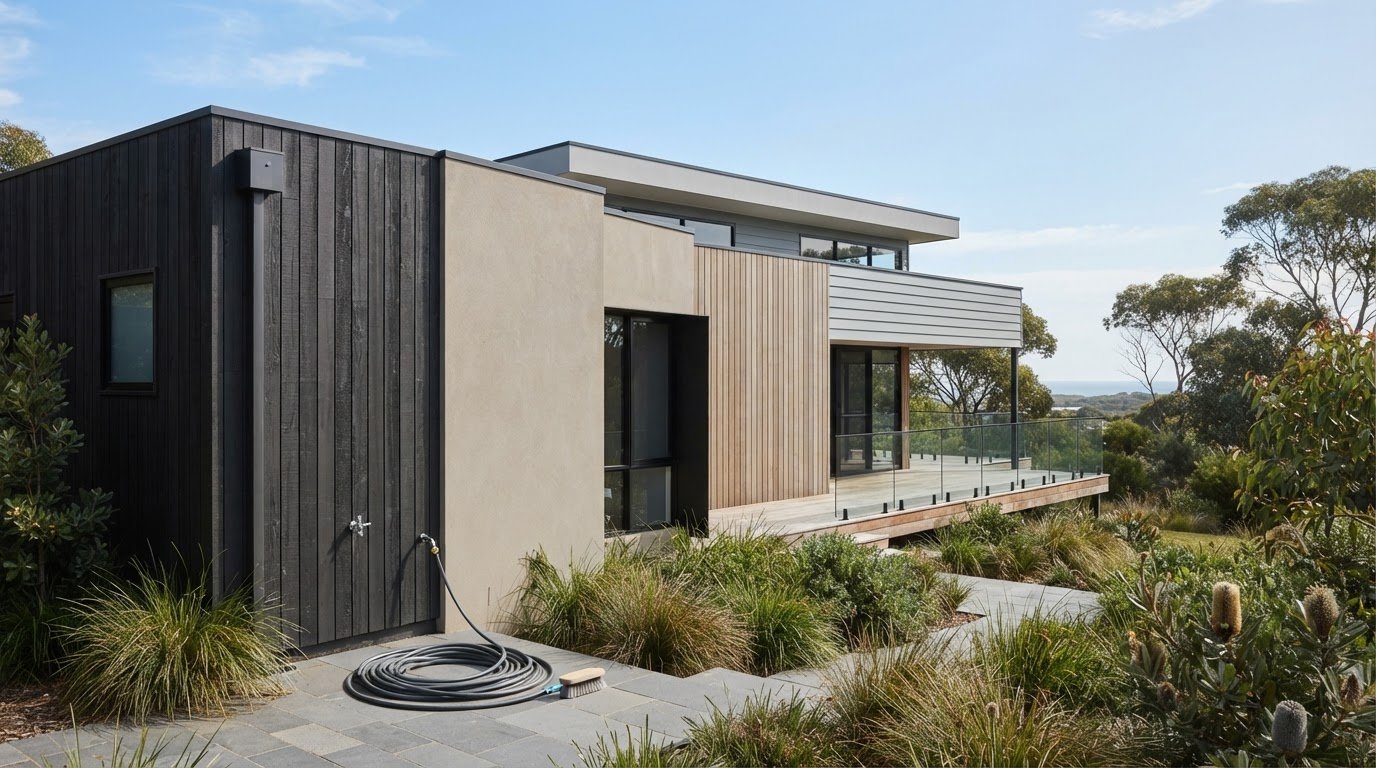
Defining 'architectural grade' involves looking past the surface. While retail-level composites might suffice for a small garden fence, a full facade requires a material engineered for structural stability. Investing in a high-calibre material significantly boosts your home's resale value, as savvy buyers recognise the difference between a fading DIY job and a professional finish. When evaluating the vertical composite cladding cost australia, remember that you aren't just buying boards; you're buying a decade of maintenance-free living.
The Australian sun is relentless. UV stability is the hallmark of a premium facade. Without it, boards warp and colours bleach within years. Recent Australian Bureau of Statistics data highlights the rising costs of building materials, making it even more vital to choose a product that doesn't require replacement in five years. You save thousands on labour, oils, and stains over a ten-year period. Premium finishes like 'brushed' or 'extra matte' textures add a tactile depth that mimics natural timber while providing superior protection against the elements.
Ressisto 144 Fineline: The Engineering Behind the Price
The composition of our Ressisto 144 Fineline boards is designed specifically to resist the typical warping seen in inferior products. The Fineline profile creates seamless vertical shadows that define modern Australian architecture. It's an engineered solution that ensures every shadow line remains straight and true, regardless of temperature fluctuations. If you're looking for premium cladding options that combine style with substance, this profile is the industry benchmark.
Bushfire Ratings and Compliance (BAL)
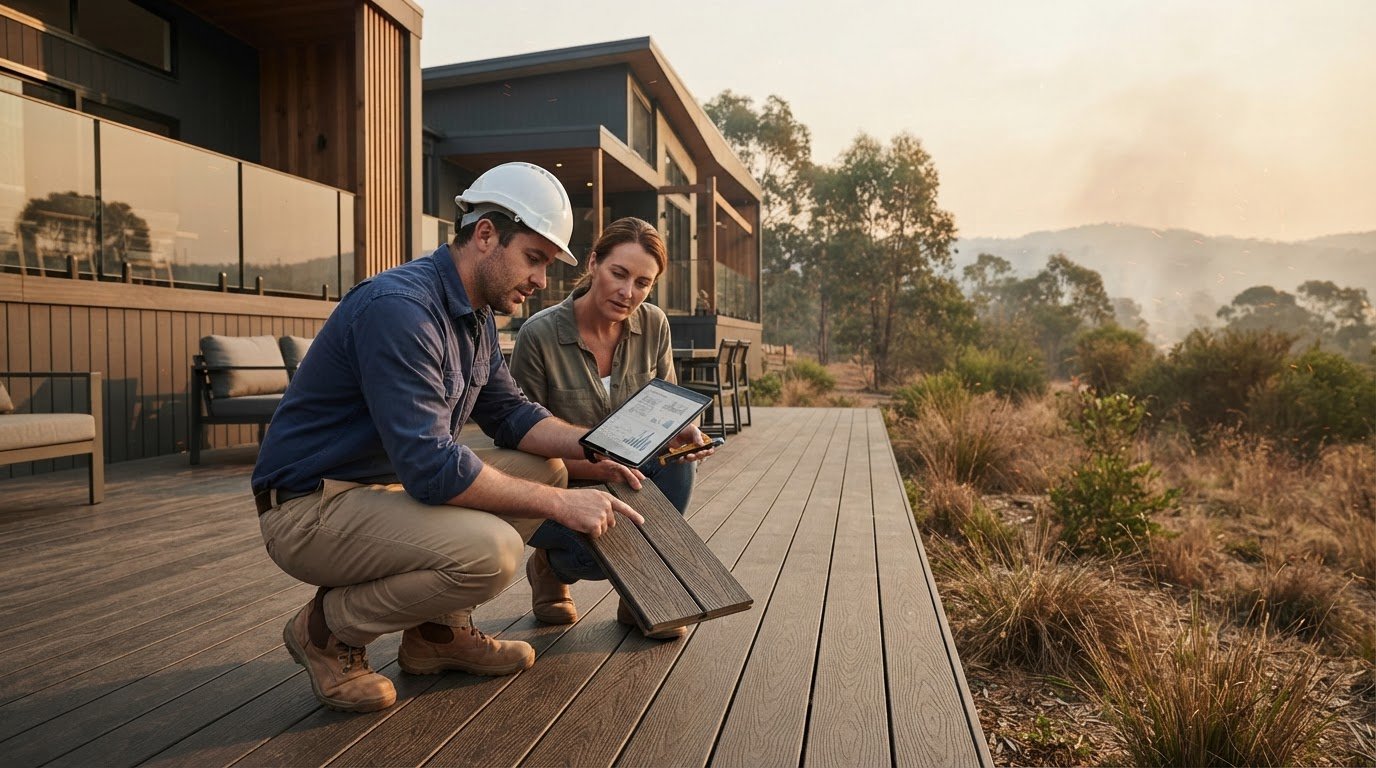
Compliance isn't optional in many Australian regions. Bushfire Attack Level (BAL) ratings influence your material choice and, subsequently, your total project cost. Investing in materials that meet AS 3959 standards is a non-negotiable requirement for many new builds. High-performance architectural facades provide more than just compliance; they offer the peace of mind that your home is protected by materials designed for our unique environment. Choosing a compliant board ensures your project meets local council regulations from day one and avoids the risk of costly retrofitting later.
Budgeting for Your Vertical Project: Battens, Wastage, and Installation Logistics
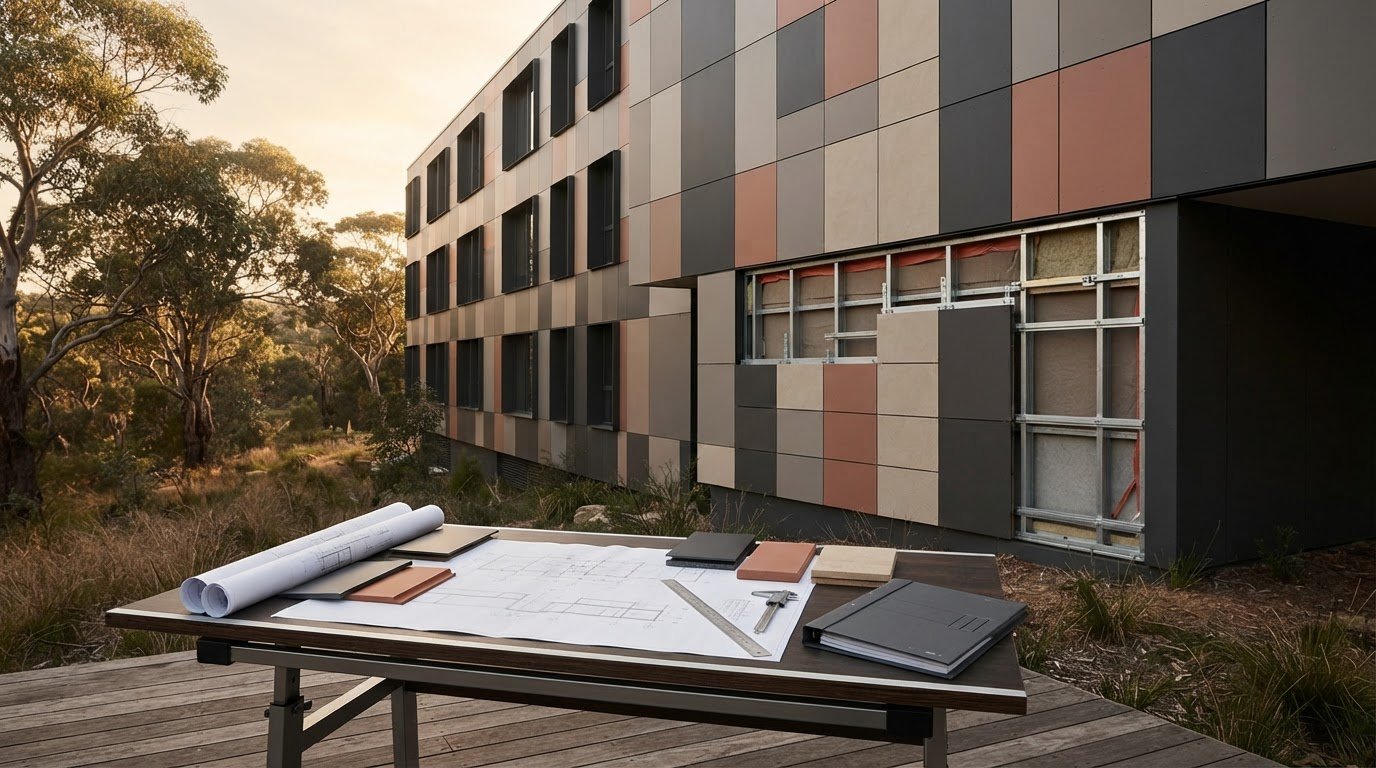
Planning a vertical facade requires a shift in perspective. Unlike horizontal layouts where boards sit across vertical studs, vertical cladding demands a horizontal sub-frame. This structural necessity ensures the boards are properly supported, but it also adds a layer of complexity to your initial budget. When calculating the vertical composite cladding cost australia, you must look behind the boards to the engineering that holds them in place.
Because we operate on a supply-only model, we focus on providing the highest quality components for your builder to work with. A successful project relies on clear communication between the supplier and the installer regarding the specific needs of a vertical layout. This includes everything from the primary boards to the specialised fixings that keep the lines perfectly straight.
The Vertical Sub-Frame: Horizontal Battening Costs
To keep vertical boards secure, you must install horizontal battens. These battens act as the primary support system, and their spacing, often referred to as centres, dictates the quantity of material required. Tight centres provide maximum stability and essential air-flow, which is vital for preventing moisture buildup behind the facade. For complex projects involving uneven surfaces or raised elevations, using high-quality pedestals or sub-frames can streamline the levelling process. While these components represent an additional line item, they are an investment in the long-term structural integrity of your home.
Wastage and Cutting: The 'Vertical Tax'
Vertical designs often incur what industry veterans call a 'vertical tax' in the form of material wastage. Because boards are cut to specific heights, you'll likely face more off-cuts around windows, doors, and rooflines than you would with a horizontal layout. We recommend ordering an additional 10-15% of material to account for these cuts. Planning your board lengths carefully before ordering helps minimise spend. This ensures you achieve that seamless architectural look without unnecessary surplus. Using a consistent architectural range like Ressisto makes matching these boards much simpler during the cutting phase.
Beyond the boards, don't forget to budget for specialised accessories like nosing, edging, and trims. These components provide the professional finish that defines a premium project. If you're ready to start your project, you can browse our architectural cladding collection to begin building your material list.
Selecting the Right Profile: Why Ressisto 144 Fineline Redefines Modern Facades
The choice of profile determines the final character of your project. While standard wide-board cladding is a functional choice, it often lacks the visual complexity required for a truly premium facade. The Ressisto 144 Fineline redefines this space by using deep shadow lines to create a sophisticated architectural rhythm. As we move into 2026, the trend has shifted decisively toward these textured facades that play with natural light throughout the day. When you calculate the vertical composite cladding cost australia, you're investing in this enduring aesthetic appeal as much as the raw material itself.
Ressisto vs. Lightissimo: Choosing Your Aesthetic
Selecting between profiles depends on the architectural era of your home. The Ressisto Lightissimo 202 offers a broader face that beautifully complements Mid-Century Modern designs or larger commercial surfaces. In contrast, the Fineline series is the premier choice for Ultra-Contemporary residential builds where precision is paramount. We always suggest ordering samples to see how the colours react to the specific light conditions at your site, as the Australian sun can change the appearance of a finish from morning to dusk.
Final Checklist for Your Cladding Investment
Before you finalise your supply order, run through this essential checklist to ensure your budget is watertight. Accurate planning at this stage prevents the frustration of mid-project delays or unexpected shipping costs for small top-up orders.
Material Grade: Confirm you've selected an architectural-grade composite like Ressisto for UV stability.
Sub-frame Components: Factor in the horizontal battens and specialised fixings required for vertical layouts.
Wastage Allowance: Ensure you've added 10-15% for cuts around windows and doors.
Accessories: Include nosing and edging options for a professional finish.
At Paveezzi, our family-run heritage means we take a no-nonsense approach to quality. We aren't just shipping boards; we're providing the engineering expertise to help you achieve a flawless result. You're never just a number to us. If you're ready to move from planning to production, contact Paveezzi for a straight-up quote on your cladding supply and let's get your project underway.
Building Your Future-Proof Facade
Investing in a premium facade is a long-term commitment to both engineering integrity and aesthetic longevity. We've explored how a vertical orientation demands more than just a style choice; it requires a strategic approach to sub-frames and precise wastage calculations. By choosing architectural-grade materials like the Ressisto 144 Fineline, you ensure your project meets strict BAL requirements while standing firm against the harsh Australian sun. This proactive planning protects your investment from the common pitfalls of fading and warping that often plague inferior, retail-grade products.
Navigating the vertical composite cladding cost australia doesn't have to be a guessing game. As an Australian family-owned and operated business, we pride ourselves on providing the "no-nonsense" quality and UV-stable, low-maintenance solutions your project deserves. We're here to help you move beyond vague estimates and into a reality where your home's exterior remains as striking in a decade as it is on day one. Your vision for a modern, textured facade is within reach when you partner with a supplier that values performance as much as you do.
Take the next step toward a sophisticated architectural finish. Explore the Ressisto 144 Fineline range and request a quote today to begin your journey with a trusted industry pioneer.
Frequently Asked Questions
How much does vertical composite cladding cost per square metre in Australia?
Industry averages for high-quality boards typically range from $80 to $160 per square metre for materials. When you factor in professional labour and the necessary sub-frame components, the total installed vertical composite cladding cost australia generally sits between $140 and $280 per square metre. These figures fluctuate based on the complexity of your facade and the specific architectural grade of the composite selected for your project's unique requirements.
Is vertical cladding more expensive to install than horizontal cladding?
Vertical installation often carries a higher labour and material cost due to the requirement for a horizontal sub-frame. Unlike horizontal layouts that fix directly to vertical studs, vertical boards need horizontal battens to ensure structural stability and proper air-flow. This added complexity, combined with a higher wastage rate for cuts around windows and doors, means you should budget for a slight premium compared to traditional horizontal cladding projects.
Does Paveezzi Composites offer installation services for their cladding?
Paveezzi Composites operates exclusively on a supply-only model to focus on providing premium architectural materials across Australia. We don't provide direct installation services; instead, we partner with homeowners and builders by delivering high-performance products like the Ressisto 144 Fineline directly to your site. This allows you to select a local installer who understands your specific council requirements while we ensure you have the best possible materials for the job.
How does the cost of Ressisto 144 Fineline compare to natural timber over time?
While natural timber might appear cheaper upfront, the long-term cost of ownership is significantly higher than architectural composites like Ressisto 144 Fineline. Timber requires regular oiling, staining, and sanding every year or two to prevent rot and UV damage. These ongoing material and labour costs quickly add up. Over a ten-year period, the "set and forget" nature of our UV-stable composite boards offers a far better financial return and saves countless hours of maintenance.
What are the hidden costs I should budget for when buying composite cladding?
Beyond the boards themselves, you must budget for essential components that are often overlooked in initial quotes. These include horizontal battens for the sub-frame, specialised starter clips, and hidden fixings. You should also account for finishing trims, nosing, and edging for corners, alongside a 10-15% wastage allowance for vertical cuts. Accounting for these items early ensures your total vertical composite cladding cost australia remains transparent and within your planned project budget.
Can I use Ressisto cladding in bushfire-prone areas (BAL rated zones)?
Most of our composite cladding products are suitable for use in areas rated up to BAL-29 when installed according to Australian Standard AS 3959. However, for properties in high-risk zones classified as BAL-40 or BAL-FZ (Flame Zone), non-combustible materials are legally required by the National Construction Code. We always recommend verifying your specific site requirements with your local council or a qualified building surveyor before finalising your material selection to ensure full compliance.
Comments