
Wood Plastic Composite Decking Review: An Australian Buyer’s 2026 Guide
Why do so many homeowners invest thousands in a new deck only to watch it warp, fade, or splinter before the first few summers are even over? It's a common frustration across Australia, where the promise of a low-maintenance outdoor lifestyle often clashes with the reality of our extreme UV levels. You likely want the rich, organic texture of natural timber without the soul-crushing cycle of annual staining and oiling. We understand that choosing the right material feels like a gamble when quality varies so wildly between brands.
This comprehensive wood plastic composite decking review is designed to remove that uncertainty by decoding the technical specs that actually matter for our climate. You'll discover how to identify high-performing boards that resist rot and termites while maintaining their colour for decades. We'll examine what truly defines "premium" in the 2026 market, from the aesthetic superiority of extra matte finishes to the engineering integrity required to meet local safety standards. By the end, you'll have the confidence to choose a surface that looks like authentic wood but behaves like a modern marvel.
Table of Contents
Beyond the Hype: A Realistic Wood Plastic Composite Decking Review
Australian homeowners are increasingly weary of the endless cycle of sanding and staining. This exhaustion has led many to seek a more permanent solution for their outdoor spaces. Wood-plastic composites (WPCs) offer that alternative, blending recycled timber fibres with high-density polymers to create a board that mimics the warmth of wood without its inherent weaknesses. Any honest wood plastic composite decking review must acknowledge this shift from traditional hardwoods toward engineered longevity.
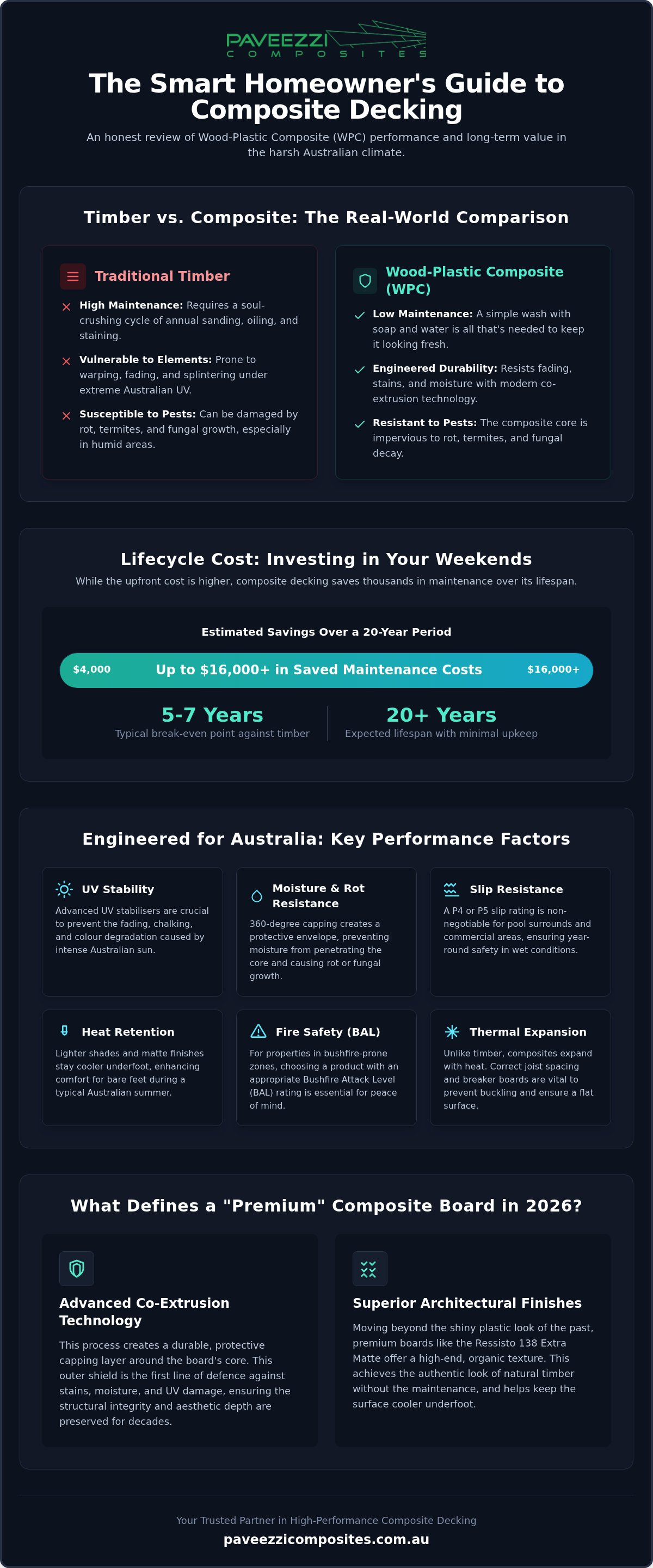
The question of value often takes centre stage. Is the higher upfront cost justified? While the initial price tag is higher than treated pine, the long-term maths tells a different story. Research indicates the break-even point against timber typically occurs within five to seven years. Over a twenty-year period, the savings on oils, stains, and repairs can range from $4,000 to $16,000 depending on the size of the deck. It's an investment in your weekends as much as your property.
The Material Science: Timber vs Plastic Ratios
The secret to a stable board lies in the precise ratio of wood flour to high-density polyethylene (HDPE). Early iterations of WPC often looked like shiny plastic and suffered from significant expansion issues. Modern boards have moved past this through co-extrusion technology. This process creates a protective capping layer that shields the core from moisture, stains, and the harsh Australian sun. At Paveezzi, we ensure a premium finish through meticulous production standards that prioritise structural integrity and aesthetic depth. We've moved far beyond the plastic look of the past.
Maintenance Realities: What "Low Maintenance" Actually Means
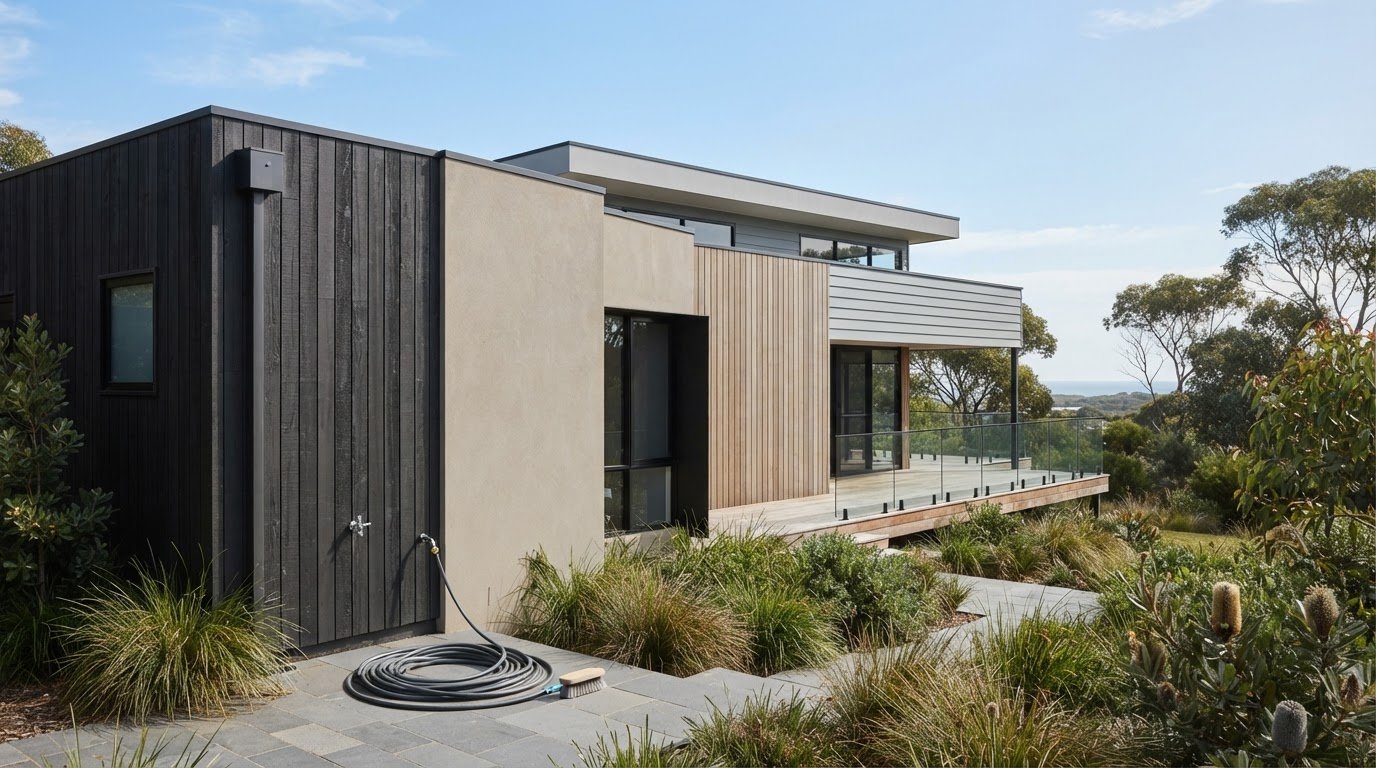
We believe in transparency regarding the term low maintenance. It doesn't mean no maintenance. Your deck will still collect dust, pollen, and the occasional spill. However, the difference in effort is profound. A simple wash with soap and water is usually all that's required to keep the surface looking fresh. This stands in stark contrast to the aggressive sanding and annual oiling demanded by spotted gum or merbau. For those seeking maximum durability, the Ressisto 143 Brushed series provides a robust surface that handles heavy foot traffic while retaining its textured, organic appeal. A well-constructed wood plastic composite decking review should always highlight that while you save on labour, a basic cleaning routine remains essential for longevity.
Performance Benchmarks: Reviewing WPC for the Australian Climate
Australia's environment is notoriously unforgiving. When conducting a wood plastic composite decking review, one must look beyond aesthetics to evaluate how materials withstand extreme UV radiation and fluctuating humidity. High-quality boards are engineered with advanced UV stabilisers that prevent the chalking and fading common in entry-level products. This stability ensures your outdoor area retains its architectural intent for decades rather than just a few seasons.
Safety standards are equally critical. For pool surrounds or commercial ramps, a P4 or P5 slip resistance rating is non-negotiable to ensure year-round safety. Additionally, for those building in regional areas, understanding Bushfire Attack Level (BAL) ratings is essential. Many premium WPC options are designed to meet specific fire safety requirements, providing peace of mind in bushfire-prone zones.
Thermal expansion is another factor often overlooked. Unlike timber, which expands with moisture, composite boards expand and contract with temperature changes. A detailed wood plastic composite decking review should always emphasise the importance of correct joist spacing and the use of breaker boards to manage this movement. Getting these technical details right prevents buckling and ensures the deck stays flat and true.
Heat Retention and Underfoot Comfort
A common concern involves heat absorption, particularly with darker boards. While all outdoor surfaces heat up in direct sun, board density and colour choice play significant roles. Lighter shades and matte finishes tend to stay cooler underfoot than dark, glossy alternatives. Choosing a board with high thermal performance ensures your deck remains a comfortable space for bare feet even during a standard Australian summer.
Moisture and Rot Resistance
WPC shines in coastal and humid environments where traditional timber often fails. The key is 360-degree capping. This protective envelope prevents the internal core from absorbing moisture, which is the primary cause of internal rot and fungal growth. To further enhance longevity, proper sub-frame ventilation is vital. Utilising Rhino Pedestals allows for superior airflow and drainage beneath the boards, protecting the entire structure from stagnant moisture. If you are planning a project that requires this level of engineering integrity, you can explore our full range of climate-ready solutions.
The Selection Framework: How to Evaluate Composite Decking Reviews
Sifting through the noise of online feedback is the first step in making an informed decision. A reliable wood plastic composite decking review must be specific about the material's "generation". Many negative experiences found on social media stem from outdated, first-generation boards that were uncapped and prone to staining. Modern, co-extruded composites are a different beast entirely. We suggest prioritising reviews from Australian-based testers. Our local UV levels and humidity cycles are unique; a product that thrives in a mild European climate may struggle to maintain its integrity under the Australian sun.
It's also vital to distinguish between "DIY-friendly" marketing and professional-grade durability. While ease of installation is a benefit, it shouldn't come at the cost of core density or capping thickness. We always encourage homeowners to conduct their own "Sample Test" before committing to a large order. Request physical samples and put them through their paces. Leave them in direct sunlight to check heat retention, try to scratch the surface with a coin, and pour coffee or wine on them to see how the capping handles real-world spills. This hands-on approach provides the most accurate review possible.
Aesthetics: Brushed vs Extra Matte Finishes
The visual appeal of your deck is subjective, but current architectural trends favour sophisticated, low-sheen surfaces. The Ressisto 138 Extra Matte is a prime example of this shift, offering a non-reflective finish that looks remarkably like seasoned timber. If you prefer a more tactile experience, a brushed finish provides an authentic grain feel that also enhances slip resistance. For modern, large-scale projects, wide boards like the Riviera 190 are becoming the standard, creating a clean, expansive look that minimises visible joins and aligns with contemporary design principles.
The Importance of Finishing Accessories
A common oversight in any standard wood plastic composite decking review is the lack of focus on finishing details. A premium deck isn't just about the boards; it's about how the system handles edges and transitions. Nosing and edging options are essential for stairs and exposed perimeters to hide the board's internal profile. Without matching fascia boards, the overall look can feel unfinished or "plastic". You should always evaluate the complete range of decking accessories to ensure your project achieves a seamless, professional architectural finish. If you're ready to see the difference in person, order a sample pack from our team today.
The Paveezzi Standard: Why Ressisto and Riviera Lead the Market
Since 2010, Paveezzi Composites has operated as a family-run business with a singular focus on quality. We've seen the Australian market flooded with varying grades of material, yet we remain a trusted pioneer by refusing to compromise on engineering standards. Our Ressisto and Riviera series aren't just alternatives to timber; they are high-end architectural solutions. Any professional wood plastic composite decking review from a seasoned developer will highlight that the consistency of our boards is what sets them apart. We take immense pride in our heritage and the steadfast reliability we offer to every partner.
Choosing a national supplier provides a level of technical security that general retailers cannot match. We possess a deep understanding of how our polymers and fibres interact with local environmental stressors. This oversight ensures that whether you're working on a coastal residential balcony or a large-scale commercial boardwalk, the material performs exactly as promised. Our commitment to excellence has made us a stable ally for architects who require both aesthetic superiority and long-term structural integrity.
Engineering for Architectural Excellence
The Ressisto series is designed to bridge the gap between organic beauty and commercial-grade performance. It offers a sophisticated finish that satisfies the most demanding design briefs while maintaining the durability required for high-traffic areas. We support major projects across the country through a methodical supply chain and rigorous quality control. You can learn more about Paveezzi and our history of innovation to understand why we remain at the forefront of the industry. We don't just provide boards; we provide peace of mind.
Your Next Steps: From Research to Reality
While reading a wood plastic composite decking review is an essential part of your research, we believe in the power of the "Sample Test". We invite you to order physical samples to experience the textures of our brushed and extra matte finishes firsthand. Consulting with a specialist supplier allows you to ask the technical questions that matter for your specific site conditions. Our team acts as supportive guides to help you move from the planning phase to a finished deck that requires zero staining. Visit the Paveezzi homepage to explore our full range and take the first step toward a more resilient outdoor lifestyle.
Investing in a Maintenance-Free Australian Lifestyle
Building a deck is a significant investment in your home's value and your daily quality of life. By looking past marketing hype and focusing on engineering integrity, you ensure your outdoor space remains a sanctuary rather than a constant maintenance chore. A thorough wood plastic composite decking review reveals that success lies in the details; high-density capping, UV stability, and the right finishing accessories are what truly matter. These elements transform a simple platform into a sophisticated architectural feature that handles the harsh sun with ease.
As an Australian family-run business since 2010, Paveezzi is proud to offer the national market premium materials like our Ressisto and Riviera collections. We provide the technical expertise and reliable supply needed for both residential sanctuaries and complex commercial builds. We've seen the industry evolve, and we remain dedicated to helping you choose a surface that offers lasting beauty and steadfast reliability. Your vision for a stunning, low-maintenance outdoor area is within reach.
Ready to transform your backyard?Explore the Paveezzi range today and discover how our premium boards can elevate your next project. We look forward to helping you build something extraordinary.
Frequently Asked Questions
Is wood plastic composite decking better than real timber?
Wood plastic composite is often considered superior for modern lifestyles because it eliminates the intensive maintenance associated with traditional hardwoods. While timber requires annual sanding and oiling to prevent splintering, a premium WPC board remains structurally stable without such labour. It provides a consistent aesthetic that resists rot and termites. This makes it an ideal choice for the harsh Australian environment. You gain the warmth of natural wood with the durability of high-density polymers.
Does composite decking fade in the Australian sun?
Modern capped composites are specifically engineered to resist the extreme UV levels found across Australia. While early generations of WPC were prone to fading, current co-extruded boards like our Ressisto range contain advanced stabilisers that lock in the pigment. You might notice a very slight initial weathering, but the boards won't turn grey like untreated timber. This colour-fastness is a primary reason why any wood plastic composite decking review prioritises capped technology.
How much more does composite decking cost compared to timber?
The initial purchase price for composite boards is typically higher than treated pine or standard hardwoods. However, the total lifecycle cost tells a different story. When you factor in the expense of oils, stains, and the labour required for timber upkeep, most homeowners reach a break-even point within five to seven years. Over twenty years, the savings on maintenance materials alone can be substantial. This makes WPC a financially sound long-term investment for your property.
Can I install composite decking myself or do I need a professional?
You can certainly install composite decking as a DIY project if you have basic carpentry skills and the right tools. The boards are manufactured to consistent dimensions and often use hidden fastening systems, which simplifies the process compared to working with warped timber. However, a professional installer brings precision that ensures perfect gaps and joist alignment. While Paveezzi provides the premium materials and technical advice, we don't offer direct installation services for our clients.
Is composite decking slippery when wet?
High-quality composite boards are designed with safety in mind and often carry P4 or P5 slip resistance ratings. This makes them suitable for wet areas like pool surrounds or commercial ramps. Textures such as the Ressisto 143 Brushed finish provide extra traction underfoot. Unlike timber, which can become dangerously slippery when algae grows on its surface, WPC's moisture resistance helps prevent the biological build-up that often causes slips and falls on outdoor surfaces.
What is the lifespan of a high-quality WPC deck in Australia?
A premium WPC deck can last between 20 and 30 years in the Australian climate when installed correctly. Because the core is protected by a 360-degree capping layer, the boards are shielded from the moisture and fungal decay that eventually destroys timber structures. Most industry professionals and every wood plastic composite decking review will confirm that the longevity of the sub-frame is just as vital as the boards themselves for achieving this impressive lifespan.

Comments