
Architectural Composite Cladding: The Definitive 2026 Australian Design Guide
Selecting a facade material based solely on its visual appeal is a risk that modern Australian building standards simply won't allow you to take. You likely want the warm, organic aesthetic of natural timber, yet the reality of constant oiling, staining, and shifting BAL requirements can feel like an exhausting trade-off. It's a common frustration to see a beautiful design compromised by high maintenance or "plastic-looking" alternatives that fail to deliver on quality. This is where high-performance architectural composite cladding steps in to bridge the gap between uncompromising style and rigid technical compliance.
In this guide, we'll help you master the essentials of specifying cladding that withstands the harsh Australian climate while meeting the latest NCC 2025 standards. We'll explore everything from navigating the updated AS 3959:2025 bushfire regulations during this current dual-code transition to achieving a seamless, modern aesthetic with precision-engineered profiles like the Ressisto 144 Fineline. You'll gain the confidence to deliver a maintenance-free facade that looks as natural as the day it was installed.
Key Takeaways
Navigate the dual-code period between NCC 2022 and NCC 2025 so your project's always compliant with current Australian building laws.
Learn how to specify architectural composite cladding to achieve a premium timber aesthetic without the endless cycle of maintenance.
Understand the critical role of rear-ventilation and thermal expansion management in protecting your facade against Melbourne's volatile climate.
Get to grips with the latest AS 3959 bushfire safety standards to ensure your material choice isn't compromised on safety or style.
Explore how different board profiles and orientations can radically change the visual scale and modern feel of your design.
Table of Contents
Understanding the Evolution of Architectural Composite Cladding in Australia
Technical Standards: BAL Ratings, NCC Compliance, and Safety
Architectural Profiles: Textures, Finishes, and Visual Impact
Planning and Installation: Designing for the Melbourne Climate
Why Paveezzi Ressisto is the Choice for Modern Australian Facades
Understanding the Evolution of Architectural Composite Cladding in Australia
Architectural composite cladding represents a sophisticated leap in building science, moving beyond the limitations of raw timber to provide a high-density blend of recycled wood fibres and polymers. For decades, Australian designers relied on native hardwoods to achieve an organic aesthetic, but the reality of our harsh climate often turned those design dreams into a heavy maintenance burden. Understanding Cladding and its fundamental role in protecting a building's envelope is essential for any modern project. The industry has matured significantly; by 2026, the shift toward "Generation 2" capped composites has effectively resolved early industry issues regarding fading and moisture absorption. These materials don't just mimic nature. They're a deliberate choice for sustainable building, repurposing industrial waste into high-performance facade systems that stand the test of time.
The Problem with Traditional Timber Facades
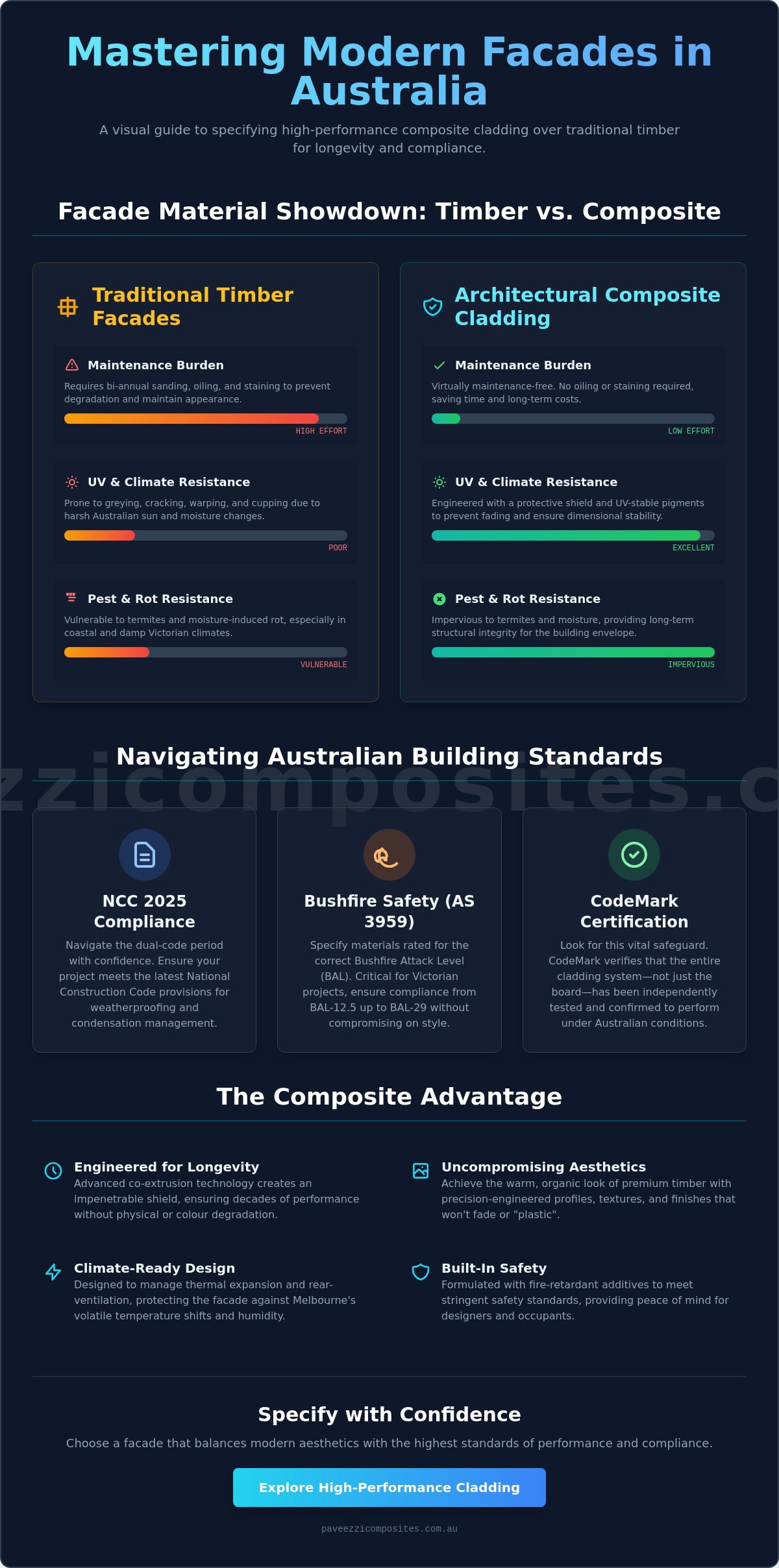
The Australian sun is famously unforgiving. Our high UV index acts as a constant catalyst for the chemical breakdown of natural cellulose in timber, leading to greyed-out boards and deep surface cracking within just a few seasons. For many Melbourne homeowners and commercial developers, the initial charm of a timber facade is quickly replaced by maintenance fatigue. Bi-annual sanding and oiling are often required just to keep the material looking presentable and structurally sound. In coastal areas of Victoria, the risks are even higher. Moisture-induced rot and the ever-present threat of termites add layers of structural vulnerability that can compromise the entire building envelope. Timber is undeniably beautiful, but it's increasingly impractical for the modern pace of life.
The Composite Solution: Engineering for Longevity
Modern engineering has provided a definitive answer to these historical pain points. Through advanced co-extrusion technology, a protective outer "shield" is fused to the composite core during manufacturing, creating an impenetrable barrier against driving rain and harsh UV rays. This process ensures exceptional dimensional stability. Where a traditional hardwood board like Spotted Gum might warp, twist, or cup as it loses moisture, architectural composite cladding remains straight and true. The 2026 formulations utilise advanced UV-stable pigments to lock in colour fastness for decades without the need for toxic sealants. It's a stable, reliable approach to design. High-level performance is finally balanced with the natural beauty architects crave.
Technical Standards: BAL Ratings, NCC Compliance, and Safety
As of June 2026, the Australian building industry is operating within a complex dual-code environment. With the National Construction Code (NCC) 2025 published on 1 February 2026 and the transition period officially commencing on 1 May 2026, architects and builders must be meticulous in their documentation. Specifying architectural composite cladding now requires a clear understanding of whether a project falls under the 2022 or 2025 provisions, particularly regarding weatherproofing and condensation management. This transition isn't just a matter of paperwork. It's about ensuring that every facade system meets the latest safety benchmarks, including the updated AS 1530.1:2024 combustibility tests. Relying on outdated certifications can lead to significant delays during the building permit stage.
Safety remains the cornerstone of modern facade design. Following high-profile incidents, there's been a definitive shift toward materials with fire-retardant additives and non-combustible cores. For those managing larger projects, reviewing the NSW Government Cladding Safety Standards provides a clear perspective on the rigorous oversight now expected across the country. CodeMark certification serves as a vital safeguard here. It tells your building surveyor that the entire cladding system, not just the board, has been independently verified to perform under Australian conditions. It's a level of transparency that builds trust between the developer and the end user.
Demystifying Bushfire Attack Levels (BAL)
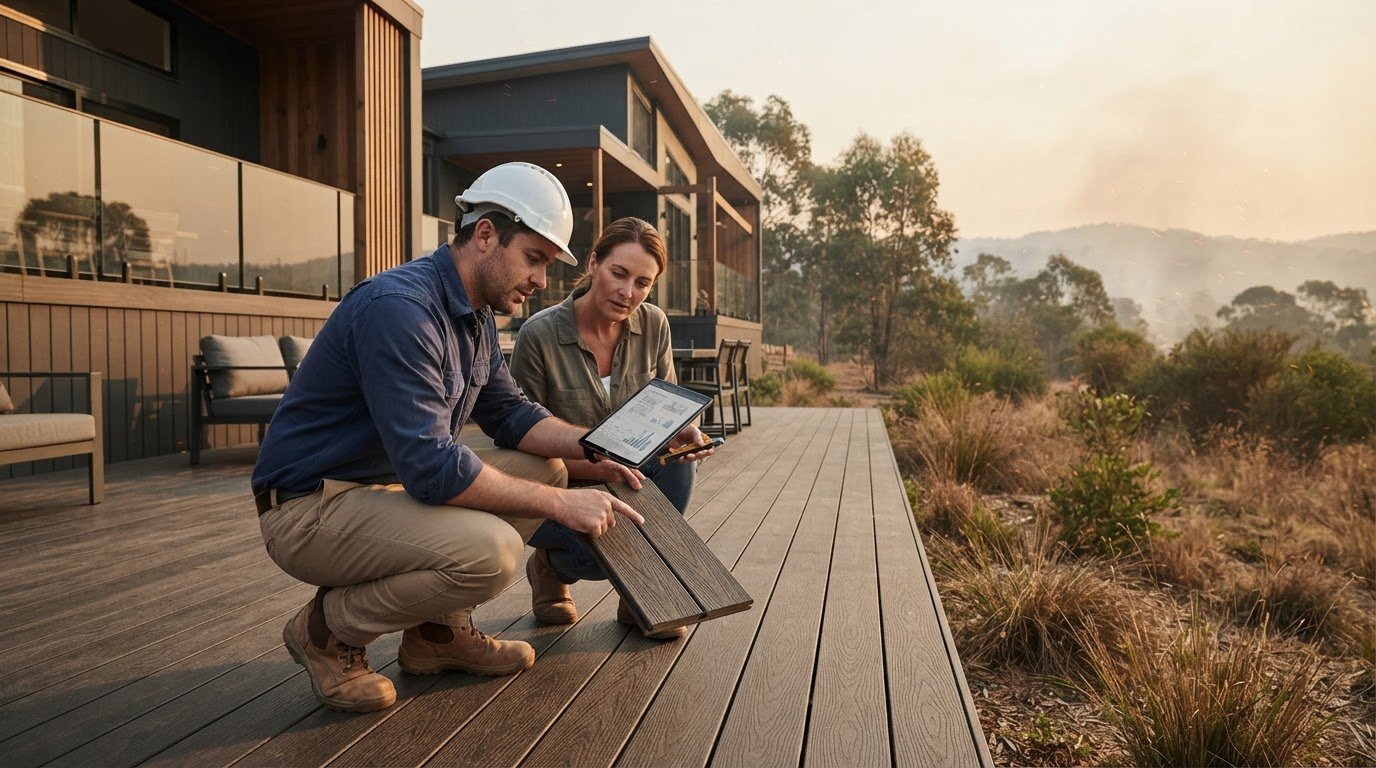
Navigating AS 3959:2018 is a daily reality for Victorian designers. Identifying whether your site requires BAL-12.5 or the more stringent BAL-29 rating is the first step in any material selection. A significant change occurred on 1 May 2026 when the Victorian Government removed Regulation 157. This means sites assessed as BAL-Low no longer need to meet BAL-12.5 requirements, providing more flexibility for suburban projects. Our Ressisto systems are engineered to meet these specific fire standards, ensuring that a high-end timber look doesn't compromise your insurance or compliance status. If you're unsure which profile fits your site's rating, you can view our technical specifications to find a tested solution.
Structural Integrity and Wind Loading
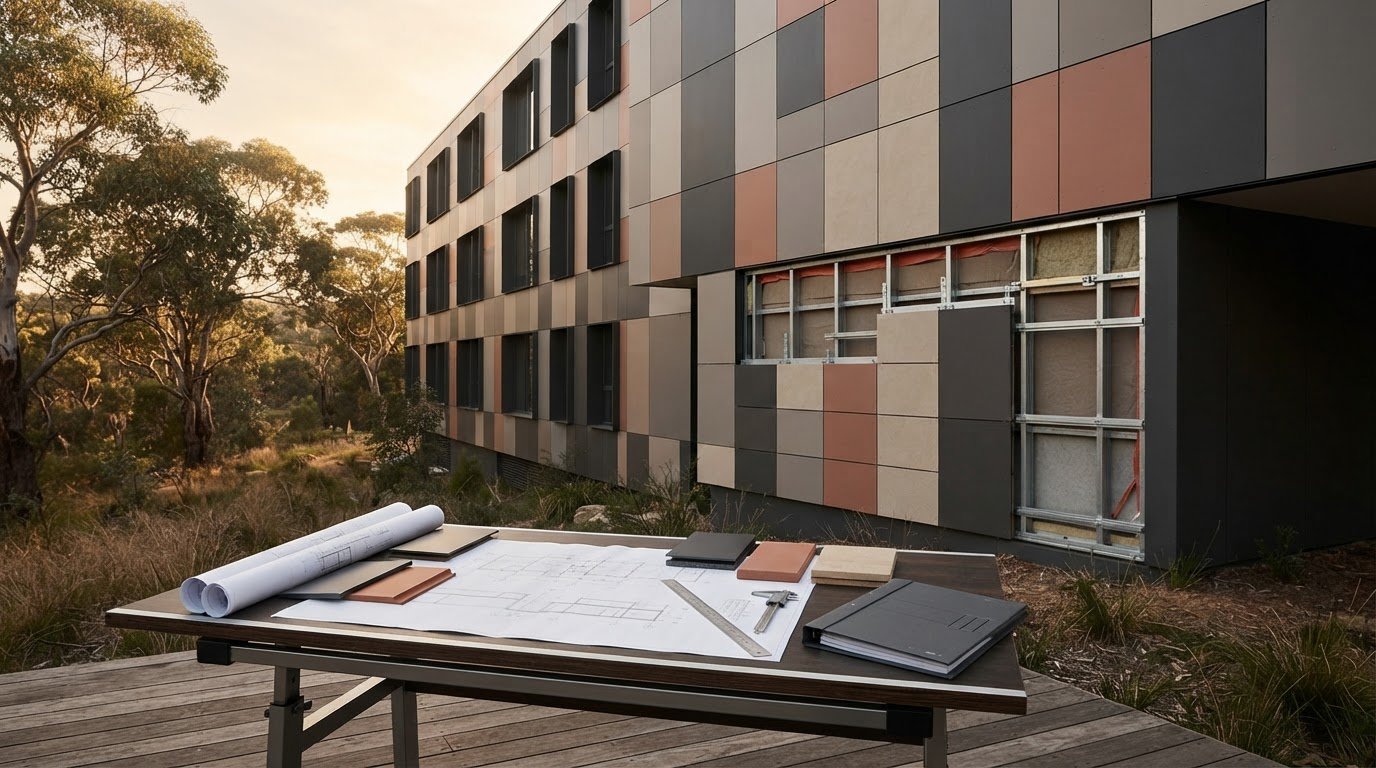
Melbourne's weather is notoriously volatile, making wind load calculations critical for multi-storey residential facades. The strength of a cladding system isn't just in the material itself, but in the sub-frame spacing and fixing methods used. High-performance options like the Cladding Ressisto Lightissimo 202 offer an exceptional strength-to-weight ratio. This "lightweight" nature is a deliberate engineering choice, reducing the dead load on the building structure while maintaining the rigidity needed to resist high-velocity gusts. Proper moisture management through drained and ventilated cavities ensures these systems remain stable for decades, even as they "breathe" through Melbourne's 40-degree temperature swings.
Architectural Profiles: Textures, Finishes, and Visual Impact
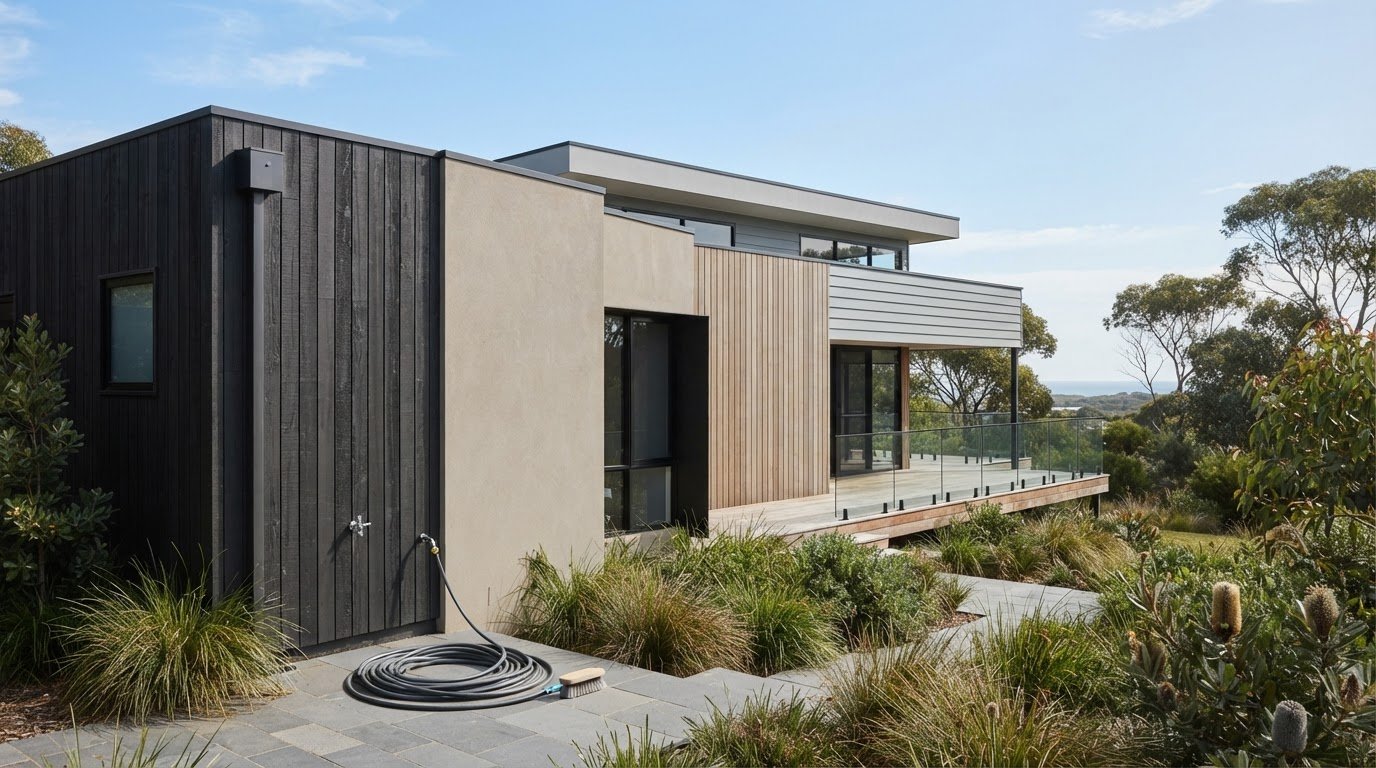
The visual impact of a facade is defined by the deliberate interplay between shadow, light, and geometry. Choosing the right architectural composite cladding profile is about more than just colour; it's about how the lines direct the eye and define the building's silhouette. Vertical installations have become a hallmark of modern Australian design, creating a sense of soaring height and precision that suits urban infill projects. Conversely, horizontal orientation offers a grounded, expansive feel that remains popular for coastal residential builds. While the National Construction Code (NCC) dictates the underlying performance requirements, the profile determines the architectural soul of the project.
Texture is the final element that bridges the gap between a "plastic" look and a premium finish. In 2026, the trend has shifted toward lower reflectivity to better integrate buildings into their natural surroundings. Selecting a matte finish reduces harsh glare in bright afternoon sun, providing a contemporary, understated elegance. For those seeking a more tactile experience, brushed textures offer a subtle grain that diffuses light beautifully. These choices allow designers to manipulate how a building responds to its site throughout the day, ensuring the facade remains dynamic and engaging.
The Fineline Aesthetic: Minimalism in Modern Design
Minimalism continues to dominate the Melbourne design landscape, and the Cladding Ressisto 144 Fineline is the preferred choice for achieving this look. It creates a sophisticated rhythm through repetitive, narrow-groove patterns that add depth without overwhelming the building's form. This profile is particularly effective for contemporary extensions where clean lines are paramount. Because these systems utilise hidden fixing methods, the result is a fastener-free, seamless facade that looks effortless. It's a precision-engineered solution that replaces the clunky, visible screws of the past with a refined, architectural finish.
Lightissimo: The Premium Wood Alternative
Lightissimo profiles, specifically the 202 and 195 variants, are designed for large-scale commercial and high-end residential applications where visual weight is a key consideration. These profiles provide deep shadow lines and a robust presence, yet they remain remarkably easy to handle during installation. In 2026, the sensory experience of a facade is just as important as its durability; the texture must feel authentic to the touch. By customising the installation with Ressisto Nosing and Edging options, architects can achieve a "wrapped" feel. This ensures that corners and transitions look solid and intentional, rather than like thin veneers.
Planning and Installation: Designing for the Melbourne Climate
Melbourne's weather is a unique beast. Designing a facade here requires a deep respect for the thermal stresses that architectural composite cladding must endure. It's not uncommon to witness a 25-degree temperature shift in a single afternoon. This volatility causes materials to expand and contract at a rate that would buckle poorly specified systems. Successful planning begins with acknowledging that these boards need room to breathe. On north-facing walls, where solar exposure is at its peak, the surface temperature of a dark board can far exceed the ambient air temperature. Managing this energy is essential for the long-term performance of the building envelope.
While Paveezzi focuses on the meticulous production and supply of high-performance materials, the success of a project relies on precise specification. Every site in Victoria has its own microclimate, from the salt-heavy winds of the coast to the frost-prone valleys of the Dandenongs. Architects must account for these variables during the early design phase. Choosing the right orientation and ensuring the sub-frame is engineered for local wind loads will prevent costly remedial work later. It's a methodical approach that pays dividends in both aesthetics and structural integrity.
The Importance of Rear Ventilation
The "chimney effect" is your best ally against heat buildup. By creating a clear cavity behind the composite panels, you allow hot air to rise and escape, drawing cooler air in from the bottom. This constant airflow is particularly vital in humid Victorian coastal areas. Without it, heat becomes trapped, which can lead to structural degradation over time. More importantly, correct system design prevents interstitial condensation. This is a critical focus of the NCC 2025 updates, as moisture trapped within the wall assembly can lead to mould and rot within the timber frame. Specifying a minimum batten thickness of 20mm to 35mm ensures this drainage plane remains unobstructed.
Expansion Gaps and Joint Detailing
Longitudinal expansion is a scientific reality of high-density composites. In a standard 5.4-metre board, a 5mm gap at the butt joints isn't just a suggestion; it's a technical requirement. Neglecting this detail often leads to "tented" joints or warped boards. We recommend using Ressisto nosing and edging options to conceal these necessary gaps elegantly. These dedicated trim profiles provide a clean, finished look that mitred corners often struggle to maintain over time as the material moves. It's about engineering the movement into the design rather than trying to fight it. You can explore our full range of profiles and accessories to see how our systems are designed for the rigours of the Victorian environment.
Why Paveezzi Ressisto is the Choice for Modern Australian Facades
Choosing the right facade material is a decision that defines a building's legacy for decades. At Paveezzi, we've spent over a decade refining the science of facades specifically for the Victorian capital. Since our founding in 2010, we've remained a dedicated, family-run operation. This heritage informs our "no-nonsense" approach to quality and our steadfast reliability as a project partner. Our 2026 Ressisto range isn't just another product on the market; it's a precision-engineered solution that exceeds standard industry specifications. We've taken the lessons learned from a decade of Melbourne's weather cycles to create architectural composite cladding that truly stands the test of time.
Our business model is built on supply-only expertise. We don't compete with installers; instead, we empower architects, developers, and builders with the technical data and high-performance materials they need to succeed. This partnership approach ensures that every specification is backed by our deep understanding of manufacturing integrity. Sustainability is also at the core of our philosophy. By utilising high-density recycled wood fibres and advanced polymers, we contribute to a circular building economy. It's a commitment to excellence that ensures your project looks premium while remaining environmentally conscious.
A Family-Run Melbourne Legacy
Being a "trusted pioneer" in the Melbourne composite space means we offer more than just boards. We offer peace of mind. Our local presence allows us to provide rapid support for technical queries, whether you're navigating the complexities of the NCC 2025 transition or need physical samples for a client presentation. We've seen the industry evolve since 2010, and we've stayed ahead of the curve by focusing on quiet confidence and long-term performance. When you work with us, you're partnering with a team that takes immense pride in every facade that bears the Ressisto name.
Next Steps for Your Project
The best way to appreciate the sensory experience of our range is to see it in person. Whether you're drawn to the minimalist rhythm of the Cladding Ressisto 144 Fineline or the robust profile of the Lightissimo 202, we're ready to help. Our team can provide the necessary BAL-rating compliance documentation and technical drawings to ensure your design meets every Australian standard. Don't leave your facade to chance. Take the next step toward a maintenance-free, high-performance exterior that captures the natural beauty of timber without the compromise.
Future-Proofing Your Facade Design
Specifying a facade that balances technical rigour with high-end aesthetics is no longer a matter of guesswork. By mastering the dual-code transition of the NCC 2025 and understanding the nuances of BAL-rated systems, you ensure your project remains compliant and secure. Selecting the right architectural composite cladding is about more than just a colour choice; it's an investment in a precision-engineered system designed specifically to handle Melbourne's volatile climate and thermal expansion. You've now got the tools to move beyond maintenance-heavy timber without losing that organic, architectural soul.
At Paveezzi, we've been pioneering Australian composites since 2010. As a family-run Melbourne business, we provide the local technical support and high-performance materials needed to bring complex designs to life. We're passionate problem solvers who believe in manufacturing integrity and the circular building economy. You don't have to compromise on the warmth of natural textures to achieve long-term durability and safety. Our team is here to help you navigate the specific demands of your site with confidence and clarity.
Ready to elevate your next project with a maintenance-free, premium finish? View the Ressisto Architectural Cladding Range and discover the difference that a decade of expertise makes. Your vision deserves a facade that's as resilient as it is beautiful.
Frequently Asked Questions
Is architectural composite cladding actually fire-resistant in Australia?
Yes, modern composite systems are engineered with fire-retardant additives to meet stringent Australian safety standards. To ensure compliance, you must select a product that has been tested to AS 1530.1 or AS 3959 for your specific Bushfire Attack Level (BAL). High-performance cores are designed to resist ignition and reduce flame spread, providing a safer alternative to traditional timber in many residential and commercial applications.
How does composite cladding handle the extreme Melbourne heat and UV?
Advanced co-extrusion technology creates an impenetrable outer shield that protects the core from the intense Australian UV index. This "Generation 2" capping prevents the material from becoming brittle or cracking under the sun's heat. Because Melbourne is prone to rapid temperature swings, these systems are also designed to manage thermal expansion through specific installation methods and expansion gaps, ensuring the boards remain straight and true.
Can I install Ressisto cladding myself or do I need a specialist?
Installation should ideally be handled by a qualified builder or specialist contractor to ensure the facade meets local building codes and warranty requirements. While the hidden fixing systems are designed for precision, factors like moisture management, rear ventilation, and correct expansion gapping require professional oversight. Paveezzi focuses exclusively on the supply of high-end materials, so we recommend consulting with a professional specifier for your project's installation phase.
Does composite cladding fade over time like natural timber?
Unlike natural hardwood, which begins to grey and silver within months of exposure, high-quality architectural composite cladding is engineered for exceptional colour fastness. The UV-stable pigments used in our 2026 formulations are fused into the protective cap during manufacturing. This means your facade will maintain its original depth and richness for decades without the need for periodic oiling, staining, or painting.
What is the difference between Shadowline and Fineline cladding profiles?
The primary difference lies in the visual rhythm and the width of the recessed groove between the boards. A Shadowline profile typically features a wider board with a deep, traditional recessed joint that creates bold shadows. In contrast, the Ressisto 144 Fineline utilizes narrow, repetitive grooves to create a minimalist, contemporary texture. Fineline profiles are increasingly popular in modern Melbourne designs for their ability to add sophisticated detail without overwhelming the building's form.
How do I clean and maintain my composite facade in a coastal area?
Maintenance is remarkably simple, requiring only a periodic wash with warm, soapy water and a soft brush to remove salt spray and dust. In coastal Victorian regions, we recommend rinsing the facade every few months to prevent salt buildup, which can dull the finish over time. You'll never need to sand, seal, or apply toxic oils, making it an ideal choice for high-exposure environments where timber would quickly degrade.
What warranty is typically provided for architectural composite cladding in 2026?
In the current 2026 market, premium composite systems typically carry comprehensive warranties ranging from 10 to 25 years. These warranties generally cover structural integrity, significant fading, and resistance to rot or termite damage. It's essential to review the manufacturer’s documentation to ensure the installation follows the specified guidelines, as correct fixing is usually a prerequisite for maintaining full warranty coverage.
Is architectural composite cladding more expensive than traditional timber?
While the initial purchase price of architectural composite cladding is often higher than raw timber, the total lifecycle cost is significantly lower. When you factor in the cost of professional oiling and sanding every 12 to 18 months, composite systems often pay for themselves within the first five years. You're investing in a "set and forget" solution that eliminates the ongoing labour and material expenses associated with maintaining natural hardwood facades.
Comments