
Extra Matte Decking Finish: The Sophisticated Choice for Modern Australian Homes
- info512916
- Jun 23
- 10 min read
Why does the classic Australian dream of a sun-drenched deck often end in a squinting match against blinding glare and a surface that feels more like plastic than timber? It's a common frustration. Homeowners often invest in outdoor living only to find the midday sun turning their sanctuary into a reflective mirror. Choosing an extra matte decking finish is no longer just a niche aesthetic preference; it's a sophisticated response to our harsh light and a desire for materials that feel grounded and authentic.
We know you want a space that looks like an architectural feature rather than a maintenance chore. You likely crave the organic texture of natural wood but dread the endless cycle of sanding and oiling required to keep it looking fresh. In this guide, you'll discover why a low-gloss, high-performance surface is the ultimate solution for low-glare, high-luxury living. We'll explore how modern engineering allows for a deck that feels natural underfoot and meets the latest AS 4586 slip resistance standards while maintaining a premium aesthetic that stands the test of time.
Table of Contents
What is an Extra Matte Decking Finish and Why is it Trending?
Paveezzi Composites extra matte decking finish is defined by its low-lustre surface that intentionally absorbs light rather than reflecting it back at the viewer. For years, the Australian market was dominated by high-gloss stains or early-generation composites that carried a distinct "plastic sheen." These older materials often felt artificial under the harsh midday sun. Today, the trend has shifted toward "organic minimalism." Modern homeowners and architects are prioritising muted textures that mimic the soft, raw appearance of timber without the high-maintenance baggage. It's move toward authenticity.
The psychological impact of these surfaces shouldn't be underestimated. Matte textures create a calmer, more grounded outdoor environment. While a glossy surface feels energetic and perhaps a bit clinical, a matte finish invites you to relax. It feels permanent. This aesthetic evolution is partly due to advancements in the wood finishing process and composite engineering, allowing for ultra-low-sheen architectural boards that look sophisticated from every angle.
The Science of Light Reflectance Value (LRV)
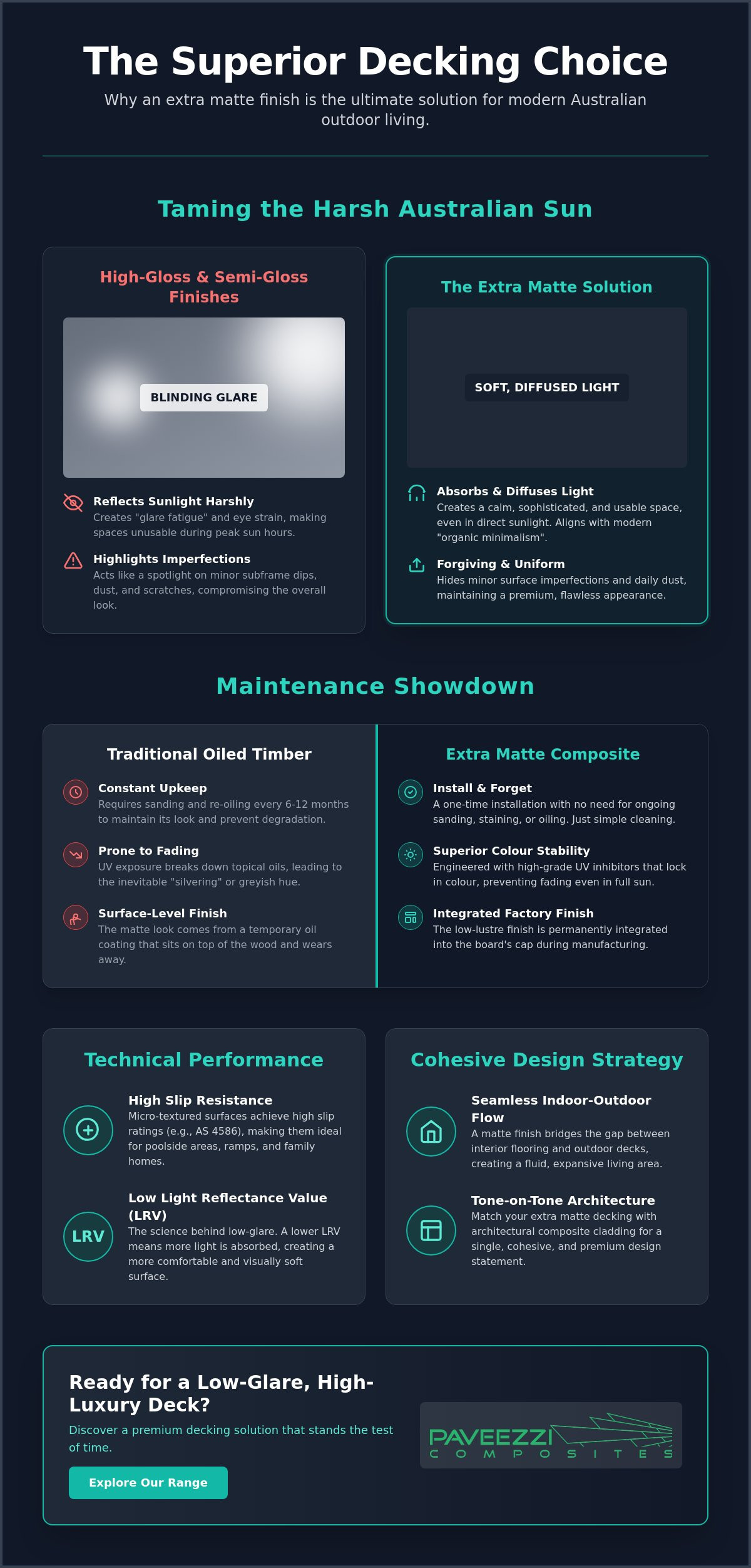
In the context of our climate, Light Reflectance Value (LRV) measures the percentage of light a surface reflects versus how much it absorbs. For north-facing backyards, high reflectivity leads to significant eye strain and "glare fatigue." An extra matte decking finish excels here by diffusing sunlight across its micro-textured surface. Beyond comfort, these finishes are incredibly practical for family life. They tend to hide minor surface scratches and daily dust far better than their glossy counterparts, which often highlight every footprint. LRV is a numerical scale used by designers to determine how much visible light a colour or material reflects, serving as a critical metric for managing heat and glare in outdoor spaces.
Matte vs. Gloss: The Visual Hierarchy
Gloss finishes have a frustrating habit of acting like a spotlight on imperfections. If there's a slight dip in your subframe levelling, a shiny board will catch the light and broadcast that flaw. In contrast, matte textures provide a uniform, forgiving appearance. This is particularly effective in smaller courtyards or balconies where a non-reflective surface can make the area feel more expansive and open. By removing the visual "noise" of reflections, the eye focuses on the depth of the colour and the grain pattern.
This seamlessness is why designers frequently use matte finishes to bridge the gap between interior flooring and outdoor decks. It creates a fluid transition that doesn't "break" at the sliding door. To achieve a truly cohesive look, many are now pairing their Decking Ressisto 138 Extra Matte with matching architectural composite cladding. This "tone-on-tone" approach ensures the entire building envelope feels like a single, well-considered design statement.
Extra Matte Composite vs. Oiled Timber: The Maintenance Showdown
When choosing between natural timber and modern alternatives, the maintenance reality is often the deciding factor. Traditional timber requires a topical oil to achieve a muted look. This approach is temporary. Over time, UV exposure breaks down these oils, leading to the inevitable "silvering" or greyish hue that many homeowners try to avoid. A scientific review of wood finish durability highlights that exterior finishes must battle moisture and ultraviolet light constantly. Achieving a long-lasting extra matte decking finish on timber is difficult, as these oils typically require re-application every six to twelve months to prevent structural degradation.
Choosing a engineered Decking Ressisto 138 Extra Matte board changes this dynamic entirely. Instead of a surface coating that sits on top, the finish is integrated into the board's cap during manufacturing. This creates a permanent aesthetic. From an environmental perspective, a one-time composite installation eliminates the repeated use of chemical strippers and solvent-based stains that eventually wash into the garden soil.
The "Fading" Myth: Colour Stability in Australia
Many believe that all outdoor materials fade equally. This is a myth. Premium composite boards are engineered with high-grade UV inhibitors that lock in the colour, protecting the extra matte decking finish even in full Australian sun. Timber oils, by contrast, lose their lustre as they dry out. As the oil flakes away, the wood beneath is left vulnerable. With composite, you aren't just buying a look; you're investing in structural stability that doesn't rely on a bi-annual staining schedule.
Cleaning and Care for Low-Lustre Surfaces
Maintenance for these sophisticated boards is remarkably straightforward. Forget the heavy-duty sanding or chemical stripping required for timber. A simple wash with soap and water is usually enough to keep the surface looking pristine. The brushed, micro-textured surface of these matte boards doesn't just look good; it actually aids in stain resistance by preventing liquids from pooling on the surface. For more detailed tips, you can explore our guide on composite decking maintenance. If you're ready to upgrade your outdoor lifestyle, you can view our full range of durable solutions.
Technical Performance: Safety, Slip Resistance, and Durability
The engineering behind an extra matte decking finish involves more than just aesthetic refinement. It's a functional upgrade that directly impacts the safety and longevity of your outdoor space. While glossy surfaces can become dangerously slick when wet, the micro-textured surface of a matte board creates essential friction. This texture is achieved through a meticulous embossing process during the manufacturing of capped composite, where the protective outer layer is pressed to mimic natural wood grain without the smooth, slippery film found on traditional coatings.
This structural composition allows for deep, realistic embossing that stays intact for decades. Unlike timber, where a matte look is achieved with a thin oil that eventually wears down to bare wood, the matte profile of a capped composite board is permanent. It provides a consistent tactile experience that doesn't degrade with heavy foot traffic or intense weather exposure.
Slip Ratings and Poolside Safety
In Australia, pedestrian surface safety is governed by the AS 4586 standard. For areas frequently exposed to water, such as pool surrounds or steep ramps, a P5 slip rating is the gold standard for risk mitigation. This is particularly relevant considering that falls, trips, and slips accounted for 21.8% of serious workers' compensation claims in Australia between 2023 and 2024. The "Pendulum Test" used in these standards measures the friction between a wet surface and a standard rubber slider. A matte finish excels here because it doesn't rely on a topical grit that wears away; the grip is part of the board's DNA. To ensure a consistent safety profile across your entire project, we recommend integrating Ressisto Bullnose Options for stairs and transitions. This maintains uniform slip resistance where it's needed most.
Durability in Harsh Environments
Australian decks face extreme conditions, from tropical humidity to intense UV radiation. One significant advantage of a high-quality matte composite is its inherent resistance to mould and algae. Traditional timber oils, especially those with a matte profile, often trap moisture and organic matter, leading to unsightly black spots and slippery surfaces. The capped nature of modern composite prevents this penetration. Heat retention is also managed effectively. While it's a common misconception that matte surfaces are hotter, the lack of a reflective coating often makes them more comfortable underfoot than high-gloss alternatives that trap heat in a thick resin layer.
Safety also extends to fire protection. In bushfire-prone regions, choosing materials with a verified BAL rating is a legal requirement under AS 3959 to ensure your home is resilient against ember attacks. If you're planning a high-traffic commercial space or a family home, you can explore our full range of safety-first decking solutions.
Design Guide: Styling Your Extra Matte Deck
Selecting the right aesthetic for your outdoor area requires a balance between architectural intent and the natural landscape. When specifying an extra matte decking finish, the colour choice sets the entire mood. Cool greys offer a crisp, contemporary edge that suits coastal builds or industrial-style homes in Melbourne or Sydney. Conversely, research for 2026 indicates a strong shift toward rich, earthy tones. These shades ground a property, making the deck feel like a natural extension of the garden. Choosing a matte finish ensures these colours look rich and saturated without the distracting glare of a gloss coating.
A major design shift we're seeing is the "Tone-on-Tone" trend. This involves matching your decking with architectural composite cladding to create a seamless building envelope. By using similar textures and hues across both horizontal and vertical planes, you eliminate visual clutter. This approach makes even modest alfresco areas feel more expansive. To further enhance this sense of scale, consider using wide-profile boards. Planks with a wider face reduce the number of visible joins, allowing the subtle texture of the matte surface to take centre stage.
Furniture selection is equally critical. The understated nature of matte decking pairs beautifully with raw materials. Think natural stone coffee tables or powder-coated aluminium dining sets. These materials share a tactile quality that complements the deck rather than competing with it for attention.
Complementing Modern Facades
Modern Australian architecture often features heavy use of concrete, steel, and glass. While these materials are striking, they can feel cold. Integrating a matte surface, such as the Cladding Ressisto 144 Fineline, helps to soften these hard edges. The low-lustre finish provides a visual warmth that balances the reflective nature of large glass panels. Lighting also plays a role here. Unlike glossy boards that create harsh "hot-spots" under outdoor LEDs, an extra matte decking finish diffuses light softly, creating a sophisticated evening ambience.
Creating the Ultimate Entertaining Space
Zoning your outdoor area can be achieved through a clever mix of textures. You might use a Decking Ressisto 143 Brushed board for high-traffic walkways and transition into an extra matte finish for the primary lounge area. This subtle shift in tactile feel defines different "rooms" without the need for physical barriers. Because an extra matte surface feels more like interior flooring, it creates a genuine indoor-outdoor flow that is perfect for alfresco dining.
Ready to see the texture for yourself? Contact Paveezzi Composites for a sample of our Ressisto 138 Extra Matte and feel the difference that a premium architectural finish makes to your home.
Elevate Your Outdoor Living with Architectural Precision
Choosing a deck that balances aesthetic luxury with technical performance is essential for the modern Australian lifestyle. We've explored how a low-lustre surface significantly reduces eye strain by absorbing harsh sunlight, while factory-engineered materials effectively eliminate the exhausting cycle of seasonal maintenance. Safety remains paramount. The micro-textured grip of these boards provides peace of mind for families, particularly when navigating wet poolside areas or stairs.
Investing in an extra matte decking finish is about more than just following current architectural trends; it's a long-term commitment to a space that feels natural and remains durable. Since 2010, our family-run Australian business has focused on delivering high-performance architectural grade materials. These solutions are specialised for the Australian climate to ensure your investment stands the test of time. We're here to help you solve common industry pain points with quiet confidence and reliability.
Explore the Ressisto 138 Extra Matte Collection today to find the perfect foundation for your next project. Your dream outdoor sanctuary is closer than you think.
Frequently Asked Questions
Is an extra matte decking finish harder to clean than gloss?
No, an extra matte decking finish is often more forgiving than high-gloss alternatives because it doesn't highlight every footprint or speck of dust. While glossy surfaces act like a mirror for debris and minor scratches, the micro-textured surface of a matte board effectively masks daily wear and tear. You'll only need a simple wash with soap and water to keep the surface looking pristine and sophisticated.
Does matte composite decking get hotter than traditional timber?
Composite decking can retain more heat than natural timber; however, the lack of a thick, reflective resin coating often makes matte boards more comfortable underfoot than high-gloss composite. High-sheen finishes can trap heat in their top layer, whereas a matte surface diffuses energy more effectively. Choosing lighter, earthy colours in a matte finish further reduces heat absorption during the peak of the Australian summer.
Can I apply a matte oil to a composite deck to change its look?
You shouldn't apply oils, stains, or paints to a composite deck as these products won't bond to the non-porous capped surface. The beauty of a factory-engineered extra matte decking finish is that the colour and texture are permanent. Attempting to apply a topical oil will only result in a sticky, peeling mess that ruins the board's architectural appeal and compromises its inherent slip resistance.
What is the best slip rating for a matte deck around a pool?
For pool surrounds, stairs, and ramps, a P5 slip rating is the gold standard recommended under Australian safety standards. This rating ensures the surface provides maximum grip even when wet. Because a matte finish relies on integrated micro-texturing rather than a smooth, slippery film, it naturally achieves these high safety benchmarks while maintaining a premium, low-lustre appearance that feels secure underfoot.
Will the matte finish wear off over time in high-traffic areas?
Unlike traditional timber where a matte look is achieved with a thin oil that eventually wears away to bare wood, the matte profile of a capped composite board is permanent. It's embossed directly into the protective outer layer during the manufacturing process. This means the low-sheen aesthetic and tactile texture will remain consistent even in high-traffic commercial settings or busy family homes for decades.
How does an extra matte finish help with glare in full sun?
An extra matte finish works by absorbing and diffusing sunlight instead of reflecting it back into your eyes. This significantly reduces the blinding glare often associated with glossy decks in north-facing backyards. By lowering the Light Reflectance Value (LRV), the surface creates a calmer and more comfortable outdoor environment that minimises eye strain, making your deck usable even during the brightest parts of the day.


Comments