
The Complete Checklist for Choosing a Decking Pedestal System in Australia
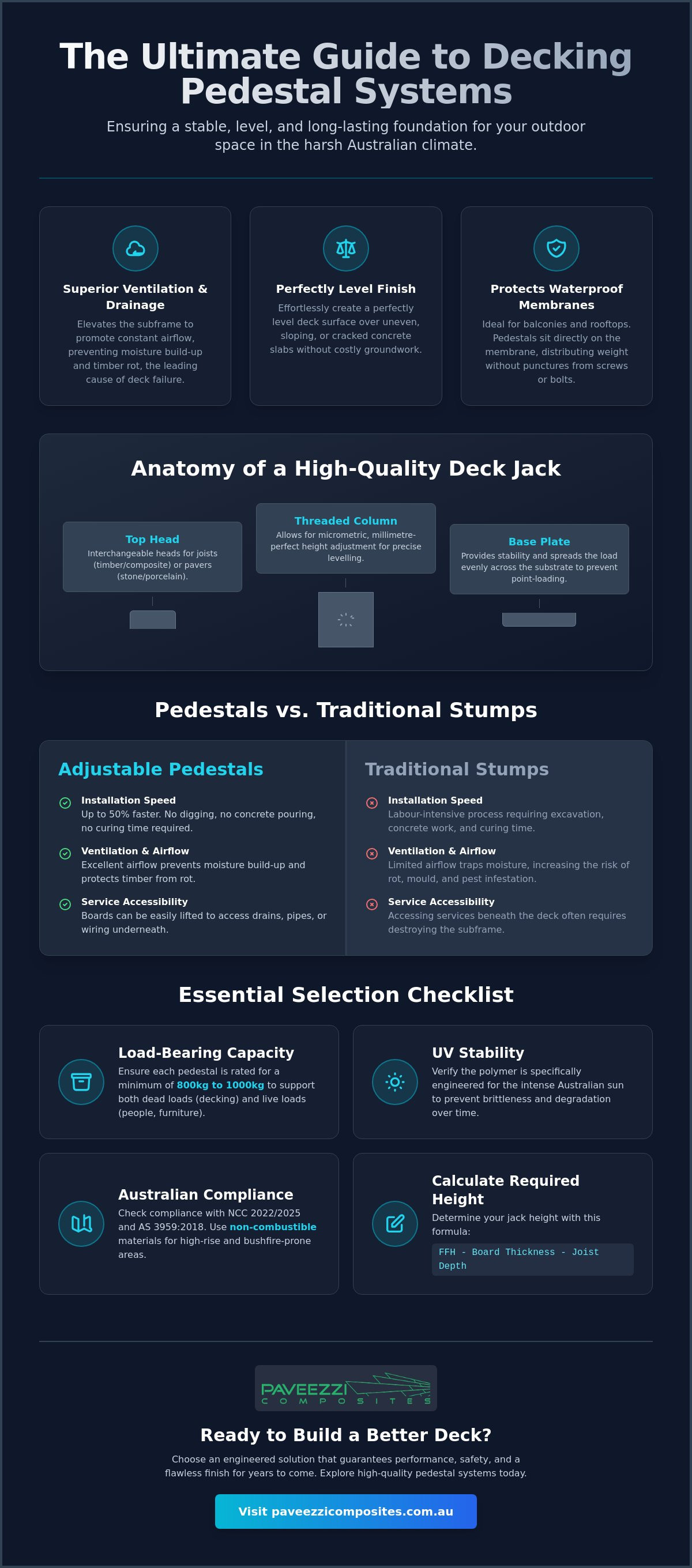
What if the most critical component of your new outdoor space isn't the timber you walk on, but the invisible support structure beneath it? In our harsh climate, a high quality decking RHINO by PAVEEZZI system Australia wide serves as a vital ventilation and drainage strategy just as much as it provides structural stability. You likely understand the frustration of trying to achieve a perfectly level finish on an uneven concrete slab or the nagging worry about timber rot in a damp subframe. It's a common challenge that requires a precise, engineered solution rather than a makeshift fix.
We've designed this checklist to help you master the technical requirements and compliance standards necessary to ensure your deck foundation remains safe and built to last. You'll learn how to navigate the complexities of the National Construction Code 2022 and the upcoming 2025 updates, alongside mandatory bushfire safety standards like AS 3959:2018 and Non-combustible standsrd AS 1530.1 .
We'll preview the essential differences between non-combustible adjustable pedestals for high-rise balconies and self-levelling systems designed for complex gradients. By the end of this guide, you'll have the clarity needed to select a system that delivers both aesthetic perfection and long-term peace of mind.
Table of Contents
What is a Paveezzi Decking and/or Paving Ajustable Pedestal System and Why Use One in Australia?
A decking pedestal system Australia wide is fundamentally a floating subframe solution designed to support decking boards or pavers without the need for permanent, fixed foundations like concrete footings or timber stumps. By utilising these adjustable "deck jacks" or "pods," builders can achieve a perfectly level surface over uneven, sloping, or cracked concrete slabs. This technology is a specific application of adapted for the rigours of outdoor environments. In our local climate, where high humidity and intense rainfall can lead to timber rot in ground-level subframes, pedestals offer a vital barrier. They elevate the structure and allow water to drain freely away from the substrate.
On balconies and rooftops, these systems play an even more critical role. Traditional mechanical fixings can puncture waterproof membranes, leading to catastrophic structural damage over time. Pedestals sit directly on the membrane without the need for screws or bolts, distributing the deck's weight evenly across a broad base plate. This protects the building's integrity while providing a stable, level floor for outdoor living. It is a sophisticated approach to engineering that prioritises long-term performance over quick, temporary fixes.
The Anatomy of a High-Quality Deck Jack
A reliable pedestal consists of three primary components. The base plate provides essential stability, spreading the load across the substrate to prevent point-loading. Above this sits the threaded column; this is where micrometric adjustment allows for millimetre-perfect levelling with a simple turn of the hand or key. Finally, the top head is swapped depending on your material. Joist cradles are used for timber or composite subframes, while paver heads are used for stone or porcelain tiles. Choosing a robust system like RHINO Adjustable Pedestals ensures these components withstand the weight of heavy furniture and high foot traffic.
Pedestals vs. Traditional Stumps: A Comparison
The efficiency of pedestals often outweighs traditional timber or steel stumps, particularly regarding labour. Installation speed can be increased by up to 50% because there is no digging, no concrete pouring, and no waiting for footings to cure. Beyond speed, the ventilation benefits are significant. Constant airflow beneath the deck prevents moisture build-up, which is the leading cause of "cupping" in composite decking boards. Furthermore, if you ever need to clear a drain or inspect a service pipe, the boards can be easily lifted and replaced without destroying the subframe.
The Essential Selection Checklist: Finding the Right System
Selecting the right decking pedestal system requires a methodical approach that looks beyond the surface. You must ensure the foundation is engineered to withstand our unique environmental pressures. A high-quality system should be rated for a load-bearing capacity of at least 800kg to 1000kg per unit. This rating ensures the structure handles the dead load of the boards alongside the live load of guests and heavy furniture. UV stability is non-negotiable; you should verify that the polymer is engineered specifically for the intense Australian sun to prevent brittleness over time. If your project sits near a salt-water pool or in a coastal zone, chemical resistance is essential. Finally, always check that the cradle width is perfectly compatible with your chosen composite decking joists to ensure a secure, rattle-free fit.
Step 1: Calculate Your Required Height Clearance
Measuring your Finished Floor Height (FFH) is the first practical step in your planning. This is the total distance from the top of your slab or substrate to the intended height of the final deck or paver surface. You'll need to subtract the thickness of your chosen boards, such as the Ressisto 143 Brushed profile, and the depth of the supporting joists to determine your required pedestal height. If you're dealing with deep voids, look for systems that utilise extenders. These provide the flexibility to reach significant heights while maintaining the structural integrity of the threaded column.
Step 2: Evaluate Environmental Factors
Environmental factors often dictate your material choice. High-corrosion coastal zones demand high-grade polypropylene or zinc-nickel powder coating components that won't degrade in salty air. For residential balconies where noise transfer to the floor below is a concern, anti-vibration pads are a smart addition. They dampen the sound of footsteps, which is a small detail that makes a massive difference in high-density living. If you're planning for heavy features like spas or large planter boxes, your layout must be adjusted to increase pedestal density across those specific areas. You can view our full range of decking accessories and supports to find the ideal match for your site conditions.
Australian Compliance: Fire Ratings and Slope Correction
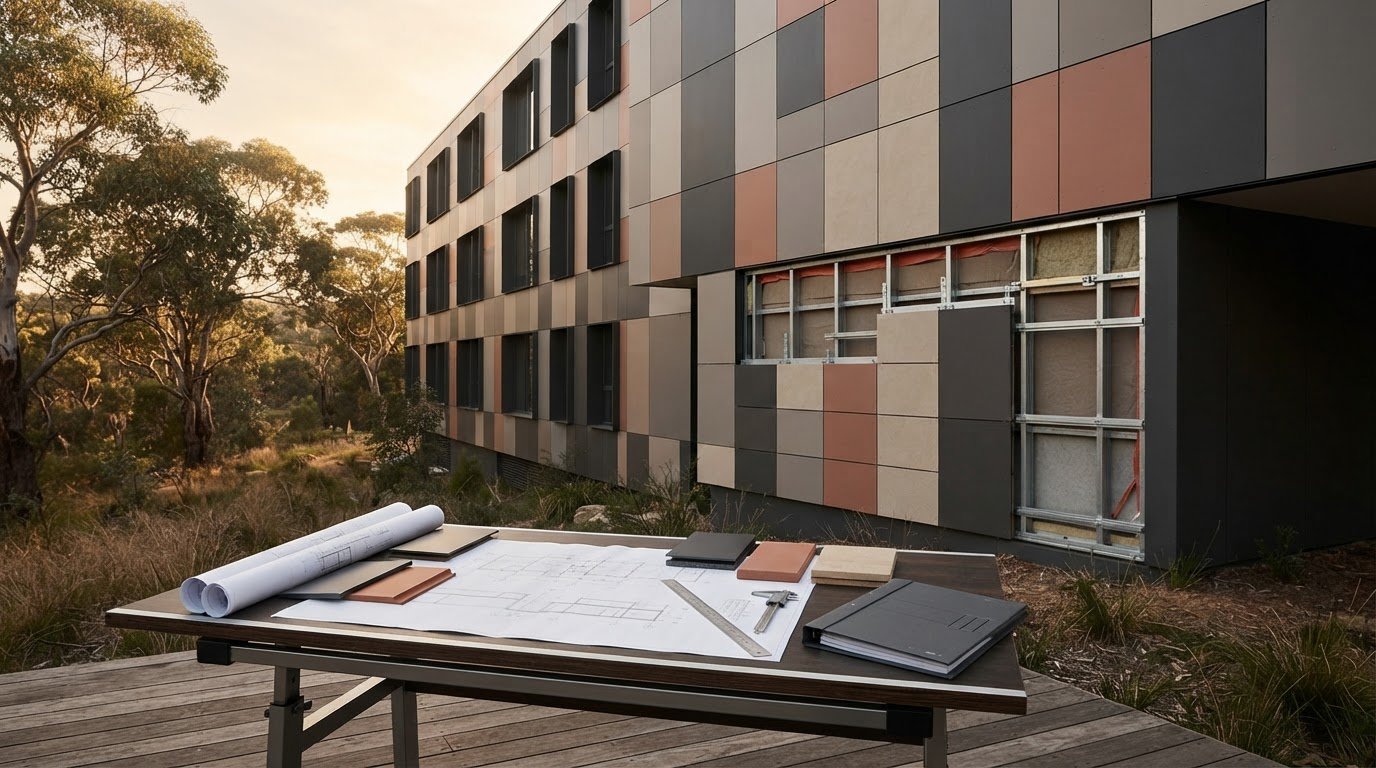
Building a deck in Australia isn't just about the finish; it's about meeting the stringent National Construction Code (NCC) standards. For any project involving a decking pedestal system Australia wide, understanding your building's classification is the first step toward compliance. The NCC 2022 has tightened regulations regarding materials used on external walls and attachments, which includes balconies. You can't simply choose a support based on height alone. You must consider the fire risk and the structural slope of the substrate to ensure the final installation is both legal and safe.
Non-Combustible Adjustable Pedestals for High-Rise Safety
There's a vital distinction between fire-retardant polymers and truly non-combustible materials. Paveezzi Composites have both.
RHINO by PAVEEZZI fire rated as per AS 1530.3 and RHINO NC fully non combustible as per AS 1530.1
Not many plastic pedestals include additives to slow flame spread as PAVEEZZI COMPOSITES ones, they often fall short of the non-combustibility requirements for Class 2-9 buildings. For high-rise residential balconies or commercial rooftops, specifying Non-combustible Adjustable pedestals made from steel or is often mandatory. These systems are tested under the AS 1530.1 standard to ensure they won't contribute to fuel load in the event of a fire. It's a non-negotiable safety feature that protects both the occupants and the building's structural integrity.
Self-Levelling Heads and Slope Compensation
Most concrete slabs are purposefully engineered with a fall to prevent water ponding. This creates a challenge for installers who need a perfectly level walking surface. High-quality RHINO by PAVEEZZI Self-Levelling pedestals feature heads that automatically compensate for gradients up to 5%. This mechanism ensures that the load from the deck remains vertical through the centre of the pedestal. It reduces lateral stress on the joist system. By maintaining this vertical alignment, you prevent the shifting that can occur with fixed-head jacks on steep slopes.
Protecting your waterproofing membrane is equally critical. A poorly chosen pedestal can bite into the membrane or trap debris that leads to rot. Ensuring your system features a smooth, broad base plate is essential for maintaining your building's waterproofing warranty. It allows for natural drainage and airflow, which we previously identified as the best defence against moisture damage. If you're managing a commercial project with specific FIRE OR BAL ratings, you can view our compliant non-combustible pedestal range here
Or visit our website
www.paveezzicomposites.com.au/rhino-pedestals
Planning Your Build: Installation and Maintenance Tips
A successful installation of a decking pedestal system Australia wide begins with a precise layout plan. You should always identify the highest point of your concrete slab or substrate first. By starting your grid from this peak, you ensure the jacks are set to their minimum height where clearance is tightest, allowing the system to expand as the slab falls away. This methodical approach prevents the common error of running out of vertical space halfway through the build. Once the highest point is established, use a laser level to set the height of the remaining pedestals across the entire area.
Spacing guidelines are determined by your intended use and the joist material. For most residential applications, a pedestal interval of 400mm to 450mm is standard. Commercial projects, however, often require a tighter grid to support higher foot traffic and heavier furniture. When it comes to securing the base, most balcony projects utilise a "loose lay" method to protect the waterproof membrane. On ground-level slabs where wind uplift or lateral movement is a concern, you might choose to mechanically fix the base plates to the substrate. Before laying your final boards, conduct a thorough "walk-through" of the joist subframe. Any audible clatter or physical bounce suggests a jack requires a final micrometric adjustment to ensure a solid, silent foundation.
Integrating with RHINO Pedestal Systems
Architects frequently specify Rhino Adjustable Pedestals because they offer the precision required for high-end finishes. These supports allow for a seamless transition from the structural foundation to premium boards like our Ressisto 138 Extra Matte range. For complex balcony designs featuring multiple drainage falls, the Rhino Self-Levelling range is invaluable. It automatically corrects the angle of the joist cradle, ensuring the subframe remains perfectly flat even when the slab beneath it is not.
Long-Term Performance and Care
One of the greatest advantages of a pedestal-supported deck is the reduced maintenance requirement compared to traditional timber stumps. Because the subframe is elevated and ventilated, the risk of moisture-related rot is virtually eliminated. Your primary task for long-term care involves periodic inspections of the drainage points. Ensure that the gaps between your boards remain clear of organic debris like leaves or soil, which can obstruct water flow to the drains below. For those seeking further aesthetic guidance on creating a world-class outdoor space, our guide on Luxury Composite Decking Australia provides extensive architectural inspiration and technical resources.
Securing Your Outdoor Investment with Precision Engineering
Selecting a decking pedestal system is a decision that impacts the safety and longevity of your project for decades. We've explored the necessity of meeting the National Construction Code's rigorous standards, particularly regarding non-combustible requirements for commercial developments and high-rise balconies. By prioritising technical specifications like load-bearing capacity and self-levelling heads, you ensure your deck remains level and stable against the shifting pressures of the environment. Quality matters. It's the difference between a temporary fix and a permanent architectural asset.
Our RHINO systems are meticulously tested to Australian load-bearing standards, providing the steadfast reliability that leading architects demand for national commercial projects. Whether you require non-combustible options for a city rooftop or adjustable supports for a coastal backyard, our range offers a solution built on integrity and engineering excellence. We invite you to explore our range of RHINO Pedestal Systems and request a quote today to begin your build with confidence. Your vision for a perfectly level, high-performance outdoor space is well within reach, and we're here to support you every step of the way.
Frequently Asked Questions
Can I use a pedestal system on a dirt or grass surface?
No, you cannot install a pedestal system directly onto soft dirt or grass. These supports require a stable, non-compressible foundation like a concrete slab or a bed of compacted road base topped with concrete pavers. Placing them on soft ground leads to uneven sinking over time, which compromises the structural integrity and level finish of your deck. A solid substrate is essential for long-term performance.
How many pedestals do I need per square metre of decking?
Most residential projects require between 4 and 6 pedestals per square metre. This figure varies based on your joist spacing and the specific load-bearing requirements of your decking boards. If you're planning for heavy features like spas or large stone planters, you'll need to increase the density of your decking pedestal system Australia wide to ensure the foundation remains stable under the additional weight.
Are adjustable pedestals safe for high-rise balconies in Australia?
Adjustable pedestals are safe for high-rise balconies provided they meet the National Construction Code (NCC) standards for non-combustibility. For buildings classified as Class 2 to 9, you must specify non-combustible systems made from steel rather than standard polymer. These materials are tested under AS 1530.1 to ensure they don't contribute to fire spread, making them a mandatory choice for high-density residential and commercial towers.
Can I use pedestals with timber joists or only aluminium?
You can use pedestals with both timber and aluminium joists. Most high-quality deck jacks feature universal cradles designed to secure various joist widths. While timber is a common choice for residential builds, aluminium joists are increasingly popular in Australia. They offer superior fire resistance and won't warp or rot in high-moisture environments, providing a more durable partner for your pedestal system.
Do pedestals need to be bolted down to the concrete slab?
Pedestals don't usually need to be bolted down. They're designed as a "loose lay" system, which is particularly beneficial on balconies where puncturing the waterproof membrane must be avoided. The weight of the completed subframe and decking boards creates a "gravity-held" structure that remains perfectly stable. Mechanical fixing is generally only considered in specific commercial applications or regions with extreme wind uplift requirements.
What is the maximum height an adjustable pedestal system can reach?
Standard adjustable pedestals typically cover heights from 20mm up to 1400mm. For deeper voids, extension couplers can be added to reach heights exceeding 700mm. It's vital to check the manufacturer's load-bearing specifications at these extreme heights. As the pedestal extends, the weight capacity must remain sufficient to support the intended use of the deck without any structural deflection.
Comments