
Residential Wall Cladding Australia: Design Examples and Material Guide for 2026
- info512916
- Jun 18
- 12 min read
The most expensive mistake you can make with a modern build isn't choosing the wrong colour; it's choosing a material that wasn't engineered for the 2026 Australian environment. We understand the frustration of seeing a stunning facade fade, rot, or warp after just a few seasons under the intense Southern Cross. It's often exhausting to decipher technical jargon about fire ratings and the new NCC 2025 mandates while you're simply trying to build a beautiful, safe home for your family.
You'll discover how the latest innovations in residential wall cladding australia merge architectural sophistication with industrial-grade durability to protect your investment. This guide provides the clarity you need to design and build with absolute confidence. We'll explore the design potential of high-performance profiles like the Ressisto and Lightissimo series, explain the critical transition to mandatory ventilated cavities in specific climate zones, and show you how to achieve a zero-maintenance finish that looks spectacular for decades without a single drop of paint.
Key Takeaways
Understand how modern facade design has evolved from simple weatherproofing to a defining architectural statement through strategic material "zoning" and vertical profiles.
Learn why selecting high-performance residential wall cladding australia is essential for resisting extreme UV and humidity without the intensive maintenance required by traditional timber.
Gain clarity on the latest NCC 2025 compliance standards, specifically regarding moisture management and thermal performance to help reduce annual household cooling costs.
Explore how specialised composite solutions, such as the Ressisto 144 Fineline, achieve a premium architectural shadow-line effect while maintaining long-term structural integrity.
Table of Contents
The Role of Residential Wall Cladding in Australian Architecture
Think of the building envelope as more than just a shield. It's the face your home presents to the street and the primary barrier against our often unforgiving climate. In 2026, the conversation around residential wall cladding australia has matured significantly. We've moved well beyond the era of simple weatherproofing. Today, Cladding (construction) serves as the defining architectural character of a residence, transforming standard builds into high-end "designer" homes through the clever use of texture, shadow, and form. It's the "skin" of the structure, and its performance is just as critical as its appearance.
Modern homeowners are no longer just looking at the sticker price when selecting materials. There's a clear shift toward evaluating lifecycle costs. While some traditional materials might seem cheaper at the point of purchase, the hidden debt of ongoing maintenance soon adds up. A facade that requires professional painting or oiling every two years is a burden most families want to avoid. Instead, the focus has turned to materials that offer long-term performance and aesthetic stability without the constant upkeep. It's about making a choice today that your future self will thank you for.
Aesthetic vs. Functional Requirements
A well-designed facade performs vital work behind the scenes. It's a key player in managing thermal mass and energy efficiency. By acting as a protective layer, it works alongside the building's insulation to keep internal temperatures stable during a blistering January heatwave. Weatherproofing is equally vital; the material must remain stable whether it's facing corrosive coastal salt spray or the dry, intense heat of the inland. Balancing your desired colour palette with the practicalities of UV exposure is a sophisticated task. High-performance systems are engineered to resist fading, ensuring that the deep, rich tones you choose today don't wash out after a few seasons in the sun.
The 2026 Shift Toward High-Performance Composites
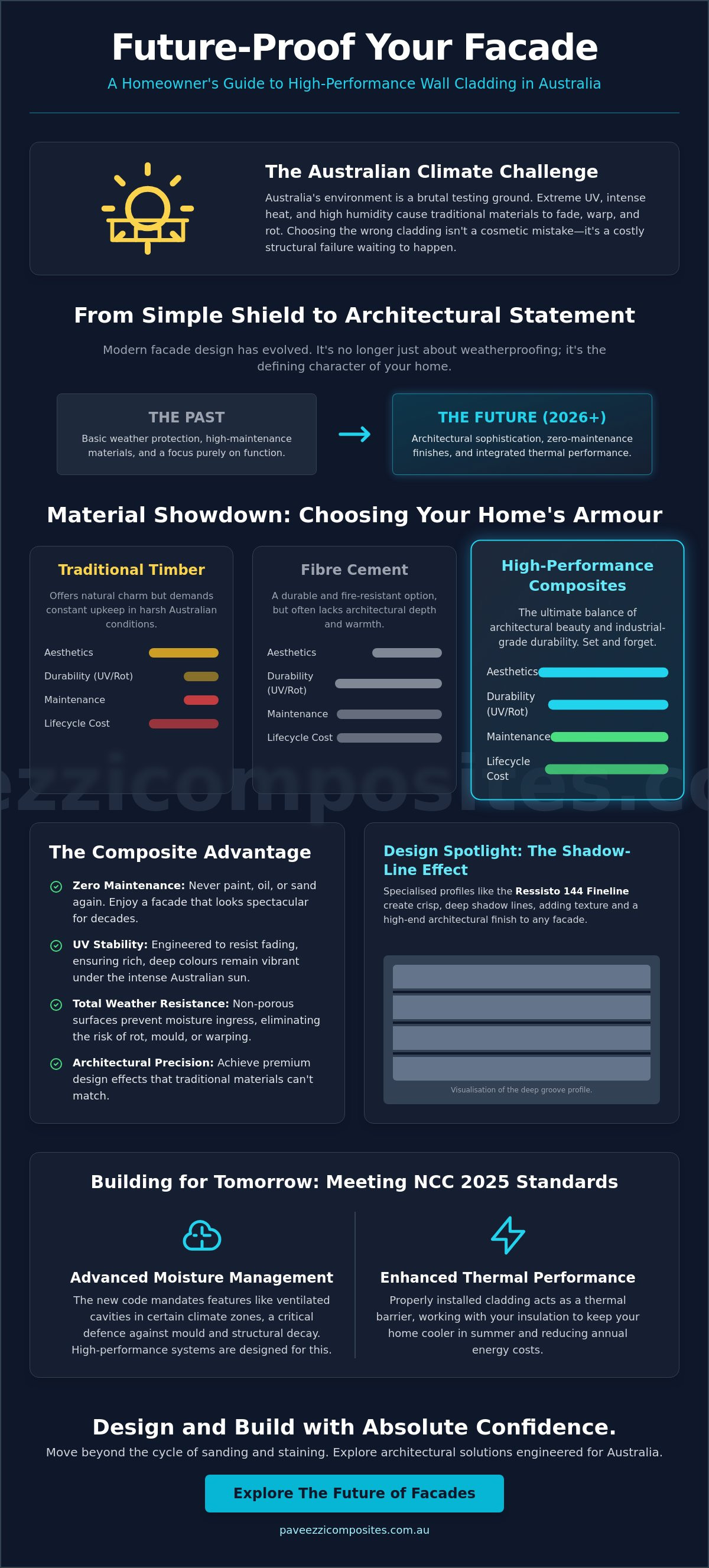
Traditional timber has a timeless appeal, but for many busy Australian families, the maintenance requirements have become impractical. The reality of sanding and re-oiling a double-storey home is often enough to steer people toward smarter alternatives. This has led to a surge in the popularity of high-performance composites that mimic the organic grain and warmth of natural wood. Profiles like the **Ressisto 144 Fineline, Ressisto Castellated 160 &195 ** and the Lightissimo range have become staples in contemporary residential design. These systems provide the precise shadow lines and architectural depth that designers crave, yet they offer the structural integrity of modern engineering. They don't warp, they don't rot, and they don't require a paintbrush to stay beautiful.
Choosing the Right Material for the Australian Climate
Selecting the right material for residential wall cladding australia requires a realistic appraisal of your local micro-climate. Australia's environment is a brutal testing ground. We face some of the highest UV indices on the planet alongside rapid humidity cycles that can cause inferior materials to buckle or degrade within years. While natural timber provides an undeniable organic charm, it is also highly susceptible to the grey-out effect and splintering that occurs when UV radiation breaks down lignin in the wood fibres. For many, the dream of a timber facade quickly turns into a cycle of annual sanding and re-oiling that feels more like a second job than a design choice.
Fibre cement has long been the default alternative for those seeking durability. It's a stable, reliable substrate that resists fire and rot, yet it often falls short in the "tactile" department. On a large residential scale, fiber cement can appear flat or industrial, lacking the architectural depth and warmth that modern homeowners crave. This is where architectural composites have changed the game. By combining the aesthetic richness of wood with the resilience of engineered polymers, these materials offer a "set and forget" solution. They maintain their color and structural integrity without the need for chemical treatments or paint. If you're ready to move beyond the cycle of sanding and staining, exploring the latest profiles at paveezzicomposites.com.au can help you find a balance between beauty and resilience.
Weather Resistance: UV, Moisture, and Rot
The science of UV stability is what prevents dark, modern architectural tones from turning into a chalky grey over time. High-performance composites are engineered with non-porous surfaces that effectively lock out moisture. This is vital for preventing rot and mould, particularly in humid coastal regions where salt spray can be highly corrosive. For those seeking a comprehensive overview of how different substrates interact with the environment, the Australian Government guide to cladding systems offers an excellent technical baseline. Choosing a non-porous material also provides a natural deterrent against termites, removing another layer of anxiety for Australian property owners.
The Maintenance Reality: Timber vs. Composite
It's helpful to look at the 10-year maintenance schedule when comparing materials. A natural timber facade will likely require professional treatment at least five to seven times over a decade to maintain its original look. When you calculate the "hidden cost" of these materials, including labour, scaffolding, and premium oils, the initial savings of timber often vanish. In contrast, modern composite surfaces require nothing more than a periodic wash with simple soapy water to remove dust and salt. This ease of care ensures your home remains a source of pride rather than a source of weekend chores.
Design Examples: Modern Facade Styles for 2026
Architecture in 2026 has moved away from the monolithic, single-material approach. Instead, designers are using cladding to highlight specific "zones" or architectural features, creating depth where there was once a flat plane. This strategic use of residential wall cladding australia allows homeowners to direct the eye, perhaps framing a grand entryway or defining the upper storey of a dual-occupancy build. By treating the facade as a series of interconnected textures rather than a single surface, you can achieve a level of sophistication previously reserved for bespoke architectural commissions.
Vertical orientation has emerged as the dominant trend for 2026. This isn't just a stylistic choice; it's a clever response to the increasingly narrow blocks found in our suburban centres. Vertical lines create an immediate sense of height, making a modest home feel grand and soaring. When paired with hidden fixings, the result is a seamless, fastener-free finish that looks incredibly high-end. It's a clean, clinical look that still feels warm and inviting.
The Vertical Fineline Look
The "Fineline" profile, such as the Ressisto 144, has become a favorite for modern Australian entryways and feature sections. These slim, vertical profiles create a sharp, contemporary aesthetic that works perfectly for narrow blocks. The shallow grooves between the panels create dynamic shadow lines that shift throughout the day as the sun moves across the sky. This adds a sense of movement and life to the building that flat render simply cannot replicate. Because these systems use hidden fixings, the architectural integrity of the line remains uninterrupted from ground to gutter.
Mixed Material Palettes and Feature Walls
A truly modern facade often relies on a mixed material palette. We see incredible results when homeowners pair natural stone or smooth render with the warmth of composite cladding. Use cladding to "frame" large windows or to define the garage area, creating a clear visual hierarchy. This approach is particularly effective when you integrate your wall materials with your ground-level surfaces. For example, matching your facade with poolside composite decking creates a cohesive outdoor flow that makes the entire property feel like a single, well-considered space.
When planning these creative applications, always ensure your material selection meets the latest Building Code of Australia compliance standards. Lightweight panels are an excellent choice for garage doors, upper stogeys because they provide this high-end look without requiring the heavy structural support of traditional brick or stone. This keeps your build efficient and ensures the structural load remains well within safety limits while delivering a premium aesthetic.
Key Performance Factors for Residential Projects
Beyond the visual appeal we've explored, the selection of residential wall cladding australia must be grounded in rigorous performance engineering. A facade isn't just a decorative layer. It's a high-functioning system that must comply with stringent Australian building standards to ensure long-term safety and structural integrity. In 2026, high-performance materials are expected to do more than just look good; they must actively contribute to the building's efficiency. Thermal performance is now a primary driver in material selection, as the right cladding system can significantly reduce household cooling costs during our increasingly intense summer months.
The weight of the material is another practical factor that often gets overlooked in the early design phase. Heavier materials like traditional brick or thick stone veneer require more robust structural support and more intensive labour to install. In contrast, modern lightweight composites allow for a faster installation process, which can help keep your project on schedule and reduce overall site costs. It's about finding that sweet spot where architectural ambition meets engineering reality.
Bushfire Safety and BAL Ratings
For many Australian suburbs, particularly those near bushland or urban-fringe areas, Bushfire Attack Level (BAL) ratings are a mandatory consideration. You need to understand your site's specific requirements before you fall in love with a particular aesthetic. Safety in these zones isn't just about the panels; it's about the entire wall assembly. This includes the use of non-combustible accessories, such as RHINO NC (Non-combustible) Ajustable pedestals to ensure that every component of the system meets the necessary safety thresholds. Always verify that your chosen cladding has been tested to meet the specific BAL-rating criteria for your location (if Needed).
Thermal Efficiency and Acoustic Insulation
The way modern cladding is installed creates a vital air gap known as a rainscreen system. This gap acts as a natural thermal buffer, preventing direct heat transfer from the sun-drenched exterior panels into the structural wall of your home. Beyond temperature control, thick composite panels provide excellent acoustic insulation, which is a major benefit for families living in busy suburban environments. By integrating these high-performance systems, modern cladding helps your home achieve a 7-star energy rating by significantly reducing the reliance on artificial heating and cooling.
If you're looking for a system that balances these technical requirements with high-end architectural appeal, you can view our full range of high-performance cladding solutions to see how we solve these common engineering challenges.
Elevating Your Home with Paveezzi’s Architectural Solutions
At Paveezzi COMPOSITES, we believe that high-performance materials should never come at the cost of architectural vision. As a family-run Australian business, we occupy a unique space in the market for residential wall cladding australia. While large corporations often focus on volume, our priority remains the technical oversight and meticulous production required for premium outcomes. We understand the specific stresses our climate places on a building's exterior. This local expertise allows us to provide solutions that are not only beautiful but also engineered to endure. We don't just supply materials; we partner with you to ensure your home's facade remains a source of pride for decades.
Our focus on high-end finishes ensures that every project achieves a bespoke feel. From the tactile appeal of brushed textures to the understated elegance of extra matte options, our ranges are designed to complement the diverse landscape of Australian architecture. We take pride in our heritage as a dedicated partner to architects and homeowners alike. This commitment to excellence is reflected in every profile we offer, providing the quiet confidence that comes from using world-class engineering on your own doorstep.
The Ressisto Collections Advantage
The Ressisto Collections has become the preferred choice for architectural composite cladding projects across the country. This isn't by accident. The profile is specifically engineered to create a sophisticated play of light and shadow, giving flat or ribbed walls a sense of rhythmic movement. Technically, our unique composite blend ensures long-term facade stability. It resists the warping and expansion that can plague inferior products during rapid temperature shifts. The result is a crisp, permanent shadow-line effect that defines the modern Australian home without the maintenance debt of natural timber.
Sourcing Premium Supply for Your Build
Choosing a supplier is about more than just placing an order. It's about finding a partner who understands the national building landscape and the nuances of the latest NCC updates. Whether you're looking for the refined look of the Ressisto 144 or the versatility of Ressisto Castellated or the Lightissimo range, we support your project through every stage of product selection. We provide the technical guidance necessary to ensure your build is compliant, durable, and visually striking. For those working on larger scale residential developments or mixed-use projects, we invite you to explore our full range of commercial exterior cladding australia to see how our systems perform at scale. Our goal is to simplify the complex, replacing technical confusion with clear, actionable solutions for your next build.
Building Your Vision for 2026 and Beyond
Your home is a long-term investment that deserves more than a temporary aesthetic fix. By choosing materials that align with the rigorous demands of our environment, you're securing both the structural health and the future value of your property. We've explored how the right selection of residential wall cladding australia can eliminate the burden of annual maintenance while delivering the sharp, modern lines that define contemporary architectural trends. It's about finding that perfect balance between high-end design and industrial-grade durability.
As a family-run Australian business since 2010, Paveezzi provides the specialised oversight and technical expertise needed to navigate complex building standards. Our profiles, including the Ressisto Castellated 160, Ressisto Castellated 195 WIDE, Ressisto Fineline 144 and new LIGHTISSIMO Collection profiles , are engineered for 2026 architectural standards to ensure your facade remains as striking as the day it was installed. We're passionate about helping you translate your design concepts into a reality that stands the test of time. Explore our premium range of Residential Cladding and request a sample today to feel the difference for yourself. We look forward to helping you protect and elevate your home.
Common Questions About Architectural Cladding
Is composite cladding suitable for the extreme Australian sun?
Yes, high-performance composites are specifically engineered to withstand our intense UV index. Unlike natural timber, which often bleaches and cracks under direct heat, these materials contain advanced UV stabilisers that lock in the colour and maintain structural integrity. This ensures your facade remains vibrant and stable without the warping or "grey-out" effect common in traditional wood products.
Does residential wall cladding require a professional installer?
We strongly recommend engaging a qualified builder or specialist trade for the installation of residential wall cladding australia. Professional installation is essential to ensure compliance with the latest NCC 2025 standards, particularly regarding moisture management and ventilated wall cavities. A skilled installer ensures the sub-structure is correctly configured to allow for proper drainage and long-term performance of the building envelope.
How does the cost of composite cladding compare to natural timber over time?
While the initial purchase price of different materials varies, composite cladding is significantly more cost-effective over its lifecycle. Natural timber carries a heavy "maintenance debt" through the ongoing costs of sanding, oiling, and professional painting every few years. Composite systems eliminate these expenses entirely, providing a premium look that requires zero financial reinvestment to stay in peak condition.
Can I use composite cladding in a bushfire-prone (BAL) area?
You can use composite systems in bushfire zones provided the specific material and its installation assembly meet the BAL rating for your site. It is critical to look at the entire system, including non-combustible accessories like our RHINO Adjustable Pedestals, to ensure the facade meets safety thresholds. Always consult your local council or building certifier to confirm the specific requirements for your property's BAL level.
What is the best way to clean and maintain my exterior cladding?
Maintaining a modern composite facade is remarkably simple and requires no specialised chemicals or oils. A periodic wash with warm soapy water and a soft-bristled brush is usually enough to remove dust, salt spray, or surface debris. This low-effort approach keeps the material looking fresh and prevents the buildup of grime that can dull the architectural finish over time.
Is vertical cladding more difficult to install than horizontal?
Vertical installation is not necessarily more difficult, but it does require a different sub-structure configuration. The battens must be arranged to support the vertical orientation while still allowing for the mandatory drainage and ventilation behind the panels. While the process is straightforward for qualified trades, it requires careful planning of the starting points and corner junctions to achieve a perfectly symmetrical, high-end finish.
What is the difference between Ressisto Fineline 144 and standard cladding?
The Ressisto Fineline 144 is a specialized architectural profile designed to create deep, sharp shadow lines. Standard cladding often has a flatter appearance, whereas the Fineline profile provides a sophisticated vertical texture that adds significant depth to a facade. This design is engineered for those seeking a premium "designer" aesthetic that creates a dynamic play of light and shadow throughout the day.
Can I mix different types of cladding on the same house facade?
Mixing materials is a dominant trend for residential wall cladding australia in 2026. Combining different textures, such as pairing a warm wood-look composite with natural stone or smooth render, allows you to define specific architectural "zones" and increase street appeal. This approach breaks up the visual mass of the building and creates a more sophisticated, multi-layered aesthetic that feels truly bespoke.


Comments