
Selecting Exterior Cladding for Melbourne Projects
That stunning timber facade you've envisioned for your new build might actually be your home's most vulnerable point. While natural wood offers undeniable warmth, the reality of exterior cladding Melbourne projects often involves a battle against warping in damp winters and silvering under intense UV exposure. It's a common frustration for homeowners who want a premium look but find themselves tethered to a relentless schedule of oiling and maintenance. We believe your home should be a source of pride, not a list of chores; that starts with choosing materials engineered for performance.
You'll discover how to select high-performance, low-maintenance cladding that withstands our unpredictable climate while elevating your architectural appeal. This article breaks down the essential considerations for 2026, including the latest National Construction Code (NCC) updates and the intricacies of Bushfire Attack Level (BAL) compliance. We'll explore why modern engineered solutions are replacing traditional materials and how you can achieve a sophisticated, contemporary aesthetic that remains beautiful for decades. By the end, you'll have the technical insight to choose a facade that balances meticulous production with natural beauty.
Key Takeaways
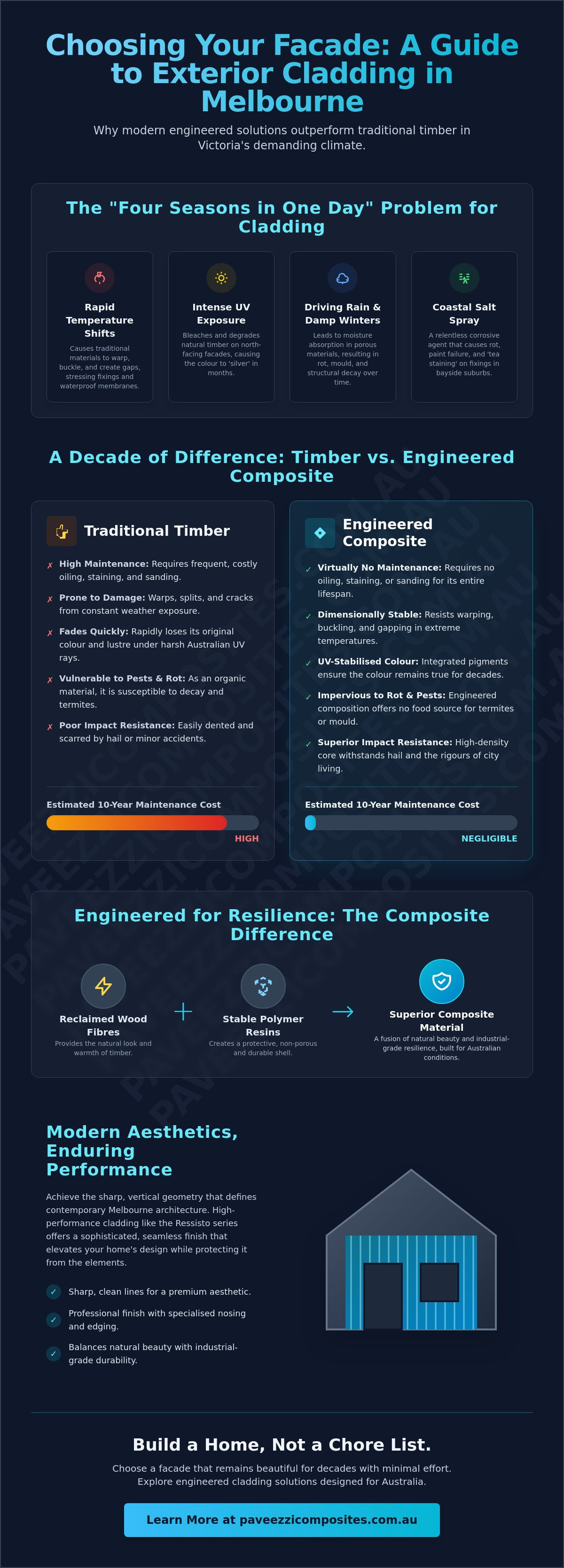
Learn to identify materials that remain stable under Melbourne's rapid temperature shifts, preventing common issues like expansion and contraction.
Discover the engineering differences between wood fibres and polymer resins that allow composite facades to outperform traditional timber over a ten-year cycle.
Compare the aesthetic warmth and industrial durability of various facade systems to find the perfect exterior cladding Melbourne projects require for longevity.
Explore how to use specific profiles, such as the Ressisto 144 Fineline, to create the sharp vertical geometry defining modern Victorian home design.
Understand the importance of professional finishing with specialised nosing and edging to achieve a seamless, high-end architectural result.
Table of Contents
Selecting Exterior Cladding for Melbournes "Four Seasons" Climate
Melbourne's weather is famously volatile. A scorching north-westerly wind can be followed instantly by a southerly buster, bringing driving rain and a sharp 15-degree temperature drop. For any project involving exterior cladding Melbourne residents must prioritise materials that stay dimensionally stable under extreme duress. Rapid thermal cycling causes many materials to buckle or gap, which puts immense stress on fixings and waterproof membranes. Choosing a product that handles these shifts is the difference between a lifetime of beauty and a decade of repairs.
Thermal Stability and the "Four Seasons" Factor
High-performance materials are defined by their low coefficient of thermal expansion. While traditional timber or basic plastics might warp as they heat up, Paveezzi's engineered composites are designed to maintain their structural integrity even during those punishing 40-degree summer days. We achieve this through meticulous manufacturing that balances wood fibres with stable polymer resins. It's also vital to consider the role of ventilation. Correctly designed cladding in construction creates a rear-ventilated cavity. This gap allows condensation to escape. It prevents the moisture build-up that leads to internal mould during our damp, grey winters. UV stability is equally critical. North-facing facades in Victoria endure relentless solar radiation that can bleach natural timber in months. Our materials are UV-stabilised to ensure the colour you choose on day one is the colour that remains for years to come.
Coastal Considerations for Port Phillip Bay Homes
Building in suburbs like St Kilda, Brighton, or Black Rock introduces the added complexity of salt spray. Salt is a relentless corrosive agent. It finds its way into the pores of traditional weatherboards, leading to rot and paint failure within just a few years. Choosing a non-porous composite surface is a smarter move for bay-side exterior cladding Melbourne projects. These materials don't absorb moisture or salt. This means the facade stays pristine without the need for constant repainting or oiling. Local building regulations often dictate specific material choices for coastal zones to ensure longevity. You'll also need to ensure that all cladding fixings and accessories meet high corrosion resistance standards. This prevents "tea staining" or structural failure. Our Ressisto series is engineered to thrive in these harsh maritime environments, providing a no-nonsense solution for homeowners who value both style and substance.
The Science of Resilience: Why Composite Cladding Outperforms Timber
While natural timber has long been the default choice for Victorian homes, its organic nature is its primary weakness. Wood is hygroscopic. It absorbs moisture from the damp morning air and releases it under the afternoon sun. This constant movement leads to the warping, splitting, and eventual decay that many homeowners dread. Modern exterior cladding Melbourne solutions have evolved to address these biological failures through advanced material science. By fusing reclaimed wood fibres with high-grade polymer resins, we create a material that possesses the warmth of timber but the steadfast reliability of an engineered product.
The financial advantage is just as compelling as the structural one. Over a ten-year period, the cost of oiling and staining a traditional timber facade adds up to thousands of dollars in materials and labour. Composite cladding requires no such intervention. It doesn't rot, and it certainly doesn't require annual sanding. Beyond maintenance, resilience in an urban environment is paramount. Melbourne's sudden hailstorms can leave soft timber cladding dented and scarred. Engineered composites offer superior impact resistance, ensuring your home's facade remains pristine regardless of the weather or the rigours of city living.
Material Engineering: The Ressisto Difference
Our commitment to excellence is best exemplified in the Ressisto 144 Fineline Cladding. This profile features a high-density core that provides exceptional dimensional stability. We use colour-fast pigments that are integrated throughout the material, not just applied to the surface. This prevents the unsightly fading often seen in cheaper alternatives. To achieve a realistic aesthetic, we offer brushed and extra matte finishes that mimic the tactile grain of natural wood. These textures catch the light beautifully, providing architectural depth without the structural vulnerabilities of raw timber. It's a precise balance of engineering and art.
Environmental and Sustainability Credentials
Sustainability is more than a buzzword; it's a core tenet of our manufacturing philosophy. Modern composite production utilises recycled materials, diverting waste from landfills while creating a product that lasts significantly longer than traditional alternatives. This longevity is perhaps the greatest sustainability factor. A facade that doesn't need replacing every fifteen years has a much lower environmental footprint. Additionally, our products are designed with low VOC emissions in mind, contributing to healthier living environments for your family. When planning your project, it's wise to consult the Victorian building regulations for cladding to ensure your material choices meet the latest safety and performance standards. If you're ready to see the difference for yourself, you can explore our full range at paveezzicomposites.com.au to find the right fit for your home.
Comparing Facade Systems: Composite vs. Traditional Materials
Selecting the right system for exterior cladding Melbourne projects requires a pragmatic look at more than just the initial purchase price. It involves weighing the sensory appeal of natural materials against the cold efficiency of industrial products. While timber remains a traditional favourite, its long-term viability in our volatile climate is often questioned by architects who prioritise longevity. Fibre cement is another common contender; it is praised for its durability but often criticised for its industrial, painted appearance that lacks the organic warmth of wood. Modern composite systems have emerged as the superior middle ground, bridging the gap between natural aesthetics and high-level engineering.
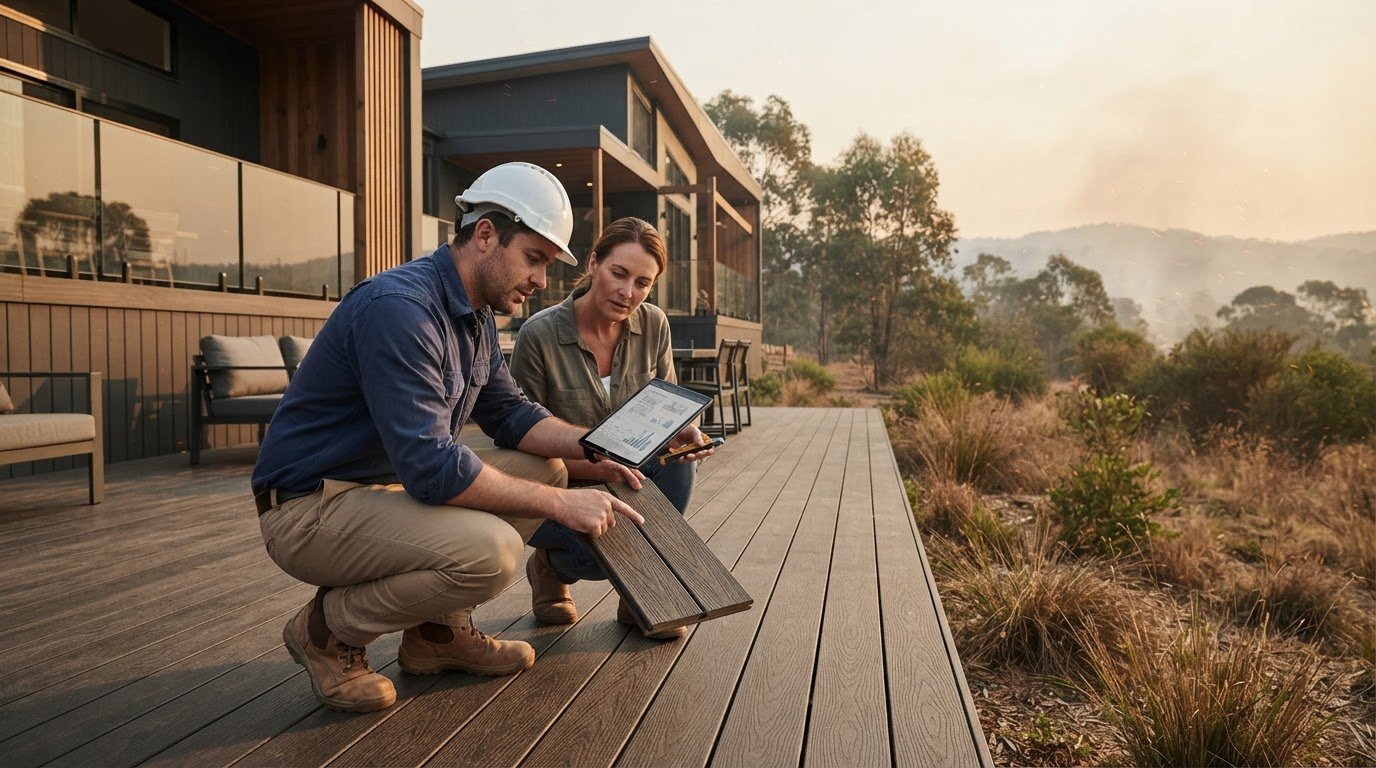
Safety is equally paramount, particularly in Melbourne's urban-fringe areas like Eltham or Warrandyte. Understanding Bushfire Attack Level (BAL) ratings is essential for any homeowner in these zones. According to the Australian government guide to cladding systems, the material you choose must act as a primary shield against ember attack and radiant heat. While some timber species require expensive fire-retardant treatments to meet these standards, high-density composites are often engineered with inherent fire-resistant properties, providing peace of mind without compromising on design.
Aesthetics and Tactile Quality
A major drawback of fibre cement is its tactile nature. Even when textured, it feels like cold masonry. Composite cladding provides a much more authentic timber feel, replicating the grain and warmth of wood without the risk of splinters or rot. For a truly seamless architectural finish, we recommend systems that utilise hidden fastening clips. This removes the need for visible screws or nails, allowing the clean lines of the profile to take centre stage. For those seeking design inspiration, our Architectural Composite Cladding guide offers a comprehensive look at how these systems can be integrated into various contemporary styles.
Installation Efficiency and Long-Term Value
Installation costs can quickly blow out a project budget. Traditional materials like weatherboards or stone often require specialised labour and lengthy on-site finishing. Lightweight panels, such as our Cladding Ressisto Lightissimo 202, simplify the process significantly. These boards are easier to handle on-site, reducing the physical strain on trades and speeding up the build. Our tongue-and-groove systems further improve efficiency by ensuring a perfect fit every time, which reduces labour hours. For property investors, the Total Cost of Ownership (TCO) is the most critical metric. When you factor in the lack of repainting and the extended lifespan of the material, composite cladding offers a far better return on investment than "pre-finished" timber that inevitably requires maintenance within five years.
Architectural Styles: Matching Cladding to Melbourne Suburbs
Melbourne's architectural identity is a diverse tapestry of heritage charm and bold, contemporary innovation. From the leafy, established streets of Kew to the gritty, industrial conversions of Brunswick, the choice of exterior cladding Melbourne homeowners select defines the character of their streetscape. Selecting a facade isn't just a technical decision; it's an aesthetic one that must respect the local vernacular while introducing modern performance. We see our role as helping you navigate these stylistic nuances to ensure your project feels grounded in its environment.
In many inner-city developments, the trend toward modern minimalism is undeniable. Architects are increasingly specifying the Ressisto 144 Fineline to achieve sharp, vertical geometry. This profile creates a rhythmic shadow line that adds sophistication to flat surfaces, providing a clean and uncompromising look. Conversely, heritage renovations require a more nuanced touch. Blending composite textures with traditional Victorian brickwork allows for a seamless transition between the old and the new. It's about creating a dialogue between the tactile history of the original build and the high-performance standards of today's engineering.
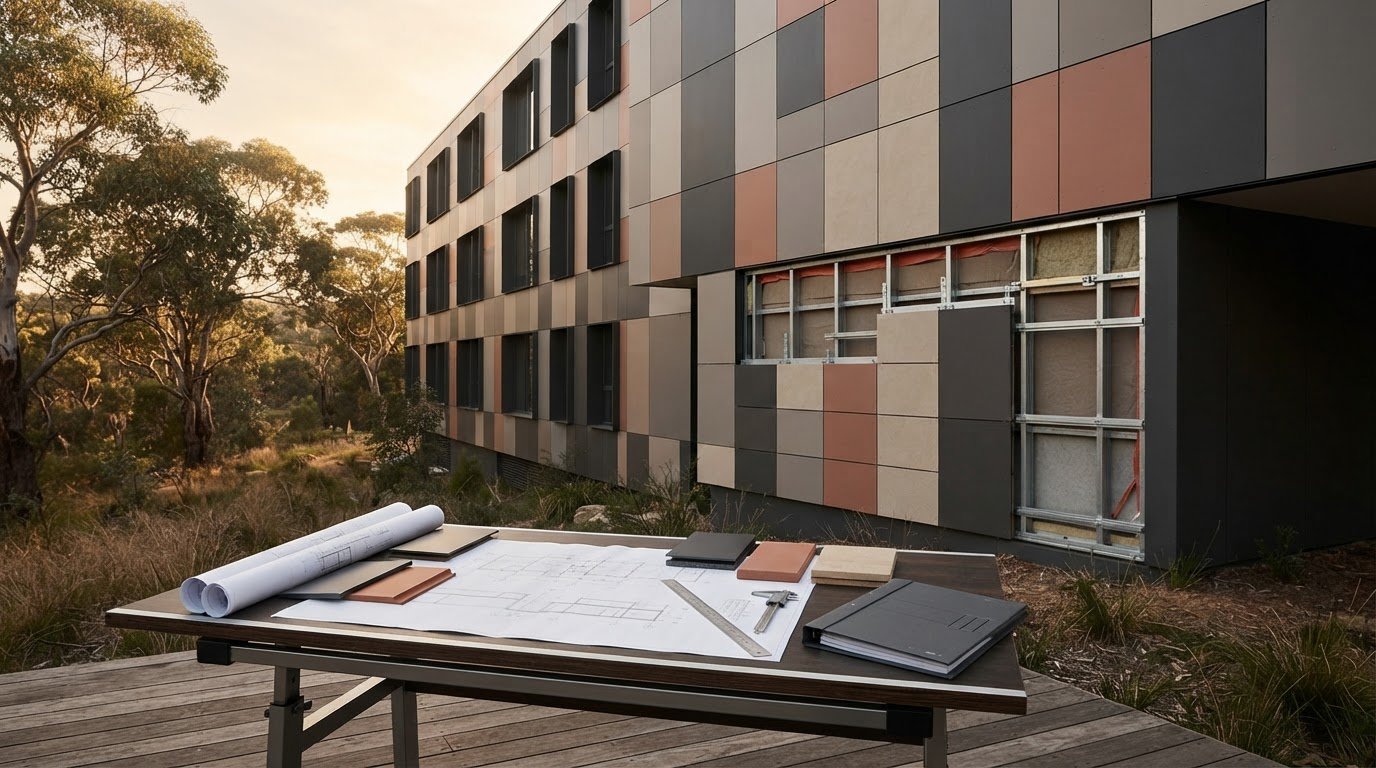
We are also observing the rise of the "mixed media" facade. Combining natural stone, smooth render, and composite cladding creates a visual richness that single-material designs often lack. This layering of textures provides architectural depth and can be used to highlight specific structural features. If you are looking to refine your home's aesthetic with a premium finish, you can view our architectural cladding range here to find the perfect profile for your suburb.
Vertical vs. Horizontal: Defining the Silhouette
The orientation of your cladding significantly alters the perceived proportions of your home. Vertical cladding is an excellent tool for creating an illusion of height, making it a popular choice for narrow inner-city blocks where verticality adds a sense of grandeur. On the other hand, horizontal applications evoke a traditional "weatherboard" coastal aesthetic, perfect for the relaxed vibes of the Mornington Peninsula. For those seeking a seamless, expansive look, our Lightissimo 202 panels offer the versatility to be installed in either direction, allowing for complete creative control over the final silhouette.
Colour Trends for 2026 Melbourne Homes
Colour choice is heavily influenced by Melbourne's unique light conditions, which can range from bright, harsh sun to moody, overcast greys. For 2026, we are seeing a strong preference for the charred timber look, often referred to as Sugi Ban style, particularly in modern inner-city builds. In the eastern suburbs, warm oaks and teaks remain the go-to for mid-century modern renovations, providing a timeless warmth that complements established gardens. Meanwhile, cool greys and extra matte finishes are being used to complement industrial-style architecture, offering a sophisticated alternative to traditional metallic or concrete surfaces.
Elevating Your Facade with Paveezzi’s Ressisto Series
Choosing the right materials is only half the journey. The final execution depends on the precision of the profiles and the integrity of the supply chain. At Paveezzi, we specialise in providing high-performance exterior cladding Melbourne professionals trust for its uncompromising quality. Our Ressisto series represents the pinnacle of our engineering efforts, offering a range of profiles that cater to both intimate residential builds and expansive commercial facades. As a family-run operation, we take immense pride in our role as a dedicated partner; we ensure every board that leaves our facility meets our rigorous standards for durability and aesthetic excellence. We aren't just suppliers. We are passionate problem solvers invested in your project's success.
Specialised Profiles for Custom Designs
The Cladding Ressisto 144 Fineline is a standout for those seeking a modern architectural edge. Its unique shadow lines create a sense of depth that simple weatherboards cannot replicate. For larger projects, the Cladding Ressisto Lightissimo 400 and 195 ranges provide the necessary scale without sacrificing the refined texture of natural timber. These profiles are engineered to be lightweight yet incredibly robust, simplifying the handling process for your build team. We understand that the beauty of a facade is often in the details. This is why we offer specialised Ressisto Nosing & Edging Options along with custom corner trims. These accessories ensure a professional finish, hiding raw edges and providing the structural protection required for long-term performance. It is this meticulous attention to detail that defines our reputation as a trusted pioneer in the composite space.
The Path to a Maintenance-Free Facade
Planning your Victorian project requires a clear roadmap from concept to completion. While we are a supply-only business, we remain deeply involved in the technical oversight of our products to support architects and builders across Melbourne. The first step toward a maintenance-free future is ordering samples to experience the tactile quality of our brushed and matte finishes firsthand. You can feel the density and see the colour-fast pigments that set our materials apart. Once you have selected your profile, our team can provide a detailed quote tailored to your specific site requirements. Preparing your site for delivery is straightforward, and we coordinate closely with your team to ensure a smooth transition. While we don't provide direct installation services, we recommend engaging a registered Victorian building practitioner who understands the nuances of composite systems. This ensures your new facade is installed to the highest standard, allowing you to enjoy the enduring beauty of your home for decades.
Building for a Resilient Melbourne Future
Your home's facade is its first line of defence against the elements and its most significant architectural statement. We've explored how modern engineering allows you to capture the warmth of natural timber without the burden of constant maintenance. By prioritising thermal stability and moisture resistance, you ensure your project remains a source of pride rather than a weekend chore. Choosing the right exterior cladding Melbourne requires a balance of technical insight and aesthetic vision; it's about building for longevity in a city that demands excellence.
As an Australian family-owned and operated business since 2010, we are dedicated to providing the technical oversight your build deserves. Our specialised architectural profiles, including the Ressisto and Lightissimo ranges, are meticulously engineered for high UV and moisture resistance. We invite you to view the full Ressisto Cladding range and request a sample for your Melbourne project to experience our quality firsthand. Let's work together to create a facade that stands the test of time and weather. Your dream home is closer than you think.
Frequently Asked Questions
What is the best exterior cladding for Melbourne weather?
High-performance composite is widely considered the most resilient choice for exterior cladding Melbourne projects. Its engineered stability prevents the warping and splitting common in natural timber during our rapid temperature shifts. Unlike traditional wood, these materials don't absorb moisture during damp Victorian winters, ensuring the facade remains structurally sound and aesthetically pleasing regardless of the season.
Is composite cladding more expensive than timber in Victoria?
While the initial purchase price of composite can be higher than budget softwoods, it is almost always more affordable when you calculate the total cost of ownership. You won't spend money on oils, stains, or professional painters every two years. Over a decade, the savings on maintenance materials and labour typically far outweigh the slightly higher upfront investment.
Does exterior composite cladding fade in the Australian sun?
Premium composite cladding is designed to be UV-stable and won't bleach or silver in the same way as natural wood. We integrate colour-fast pigments directly into the material core during the manufacturing process. This ensures that your home's exterior maintains its rich, original hue even when exposed to the intense solar radiation common in south-eastern Australia.
Do I need a specific BAL rating for cladding in Melbourne suburbs?
Yes, many properties in Melbourne's urban-fringe areas are subject to a Bushfire Management Overlay (BMO) that dictates specific material requirements. Depending on your location, you may need a product rated for BAL-12.5, BAL-19, or higher. It is essential to check your property's specific requirements with a building surveyor to ensure your exterior cladding Melbourne choice complies with the National Construction Code.
Can I install Paveezzi composite cladding over existing brickwork?
You can certainly install our cladding over existing brickwork by using a batten system. This involves fixing timber or steel battens to the masonry first, which creates the essential ventilation cavity required for moisture management. This method is an excellent way to modernise an older brick home without the need for a full demolition or expensive rendering.
How do I clean and maintain my composite facade?
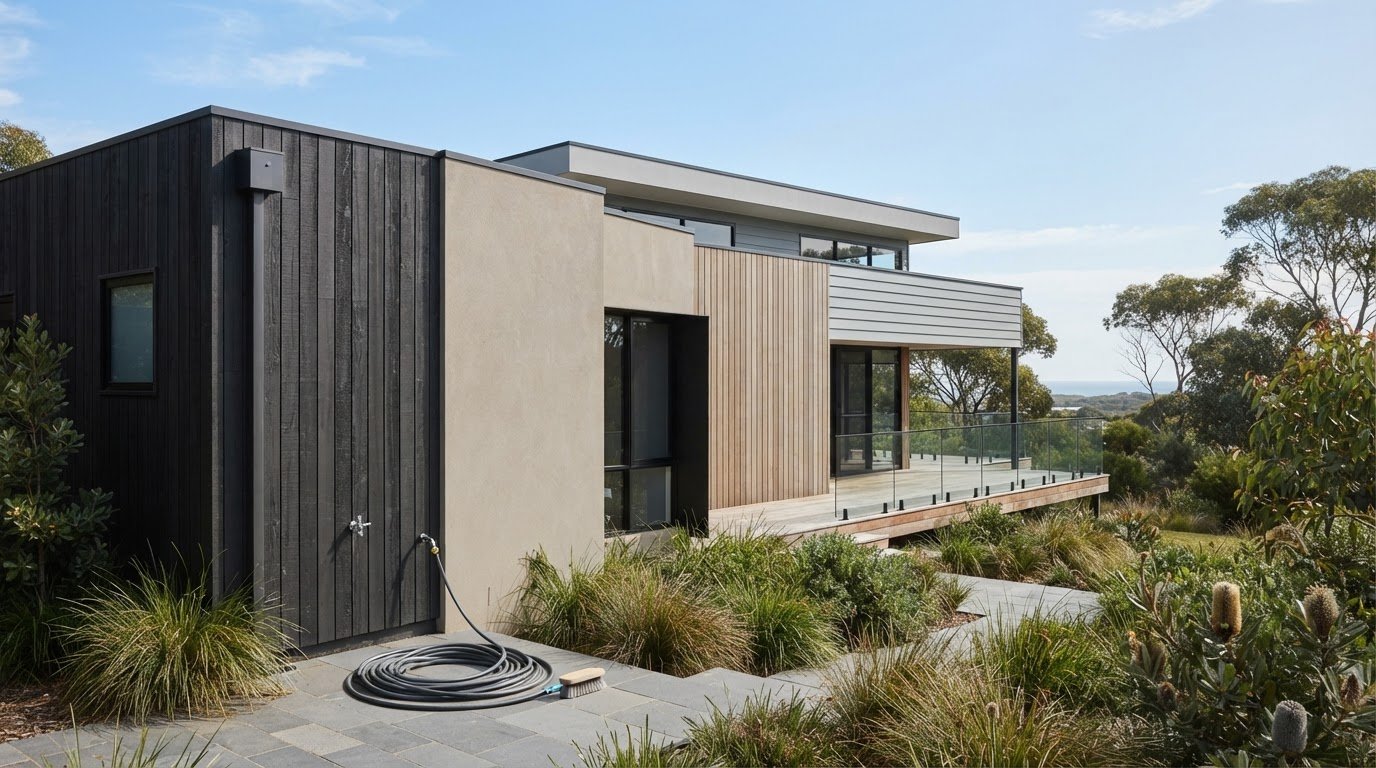
Maintenance is remarkably simple and only requires an occasional wash with warm soapy water and a soft-bristled brush. This process removes urban dust, cobwebs, or salt spray without the need for harsh chemicals. Because the material is non-porous and pre-finished, you will never need to sand, oil, or repaint the boards to keep them looking new.
Is composite cladding fire-resistant for Australian standards?
High-quality composite materials are engineered to meet stringent Australian fire safety standards, including relevant sections of AS 1530. Our products are designed to be non-combustible or fire-retardant depending on the specific range. Always verify that your chosen cladding meets the specific fire-spread and safety requirements outlined in the 2026 National Construction Code for your building type.
What is the difference between Ressisto Lightissimo and Fineline cladding?
The primary difference lies in the visual profile and board width rather than the material quality. The Ressisto 144 Fineline features narrow, sharp shadow lines that create a contemporary vertical aesthetic. In contrast, the Lightissimo range offers broader panels, such as the 400mm or 195mm versions, which are often preferred for large-scale facades or creating a more expansive, seamless look.
Comments