
Choosing BAL 29 Rated Decking Materials: Safety and Style for Australian Bushfire Zones
What if the deck you built for summer relaxation is actually the biggest risk to your home's safety? For many Australians living in bushfire-prone areas, the search for BAL 29 rated decking materials often feels like a series of compromises. You want the warmth of natural timber, but the reality of strict council regulations and the fear of a "plasticky" finish can be overwhelming. It's a common frustration to feel that safety must come at the expense of architectural beauty, leaving you stuck between compliance and character.
We believe you shouldn't have to choose. This guide will show you how to select high-performance decking that satisfies both the building inspector and your design sensibilities. We'll explore the technical integrity of the Ressisto 138 and 143 series, explaining how these advanced composites offer a sophisticated, timber-like finish without the high maintenance of traditional wood. You'll also learn why a holistic approach, including non-combustible sub-structures like our Rhino pedestals, is essential for a truly secure and council-approved outdoor area that stands the test of time and the heat of the Australian sun.
Table of Contents
Understanding BAL 29 Requirements for Australian Decking
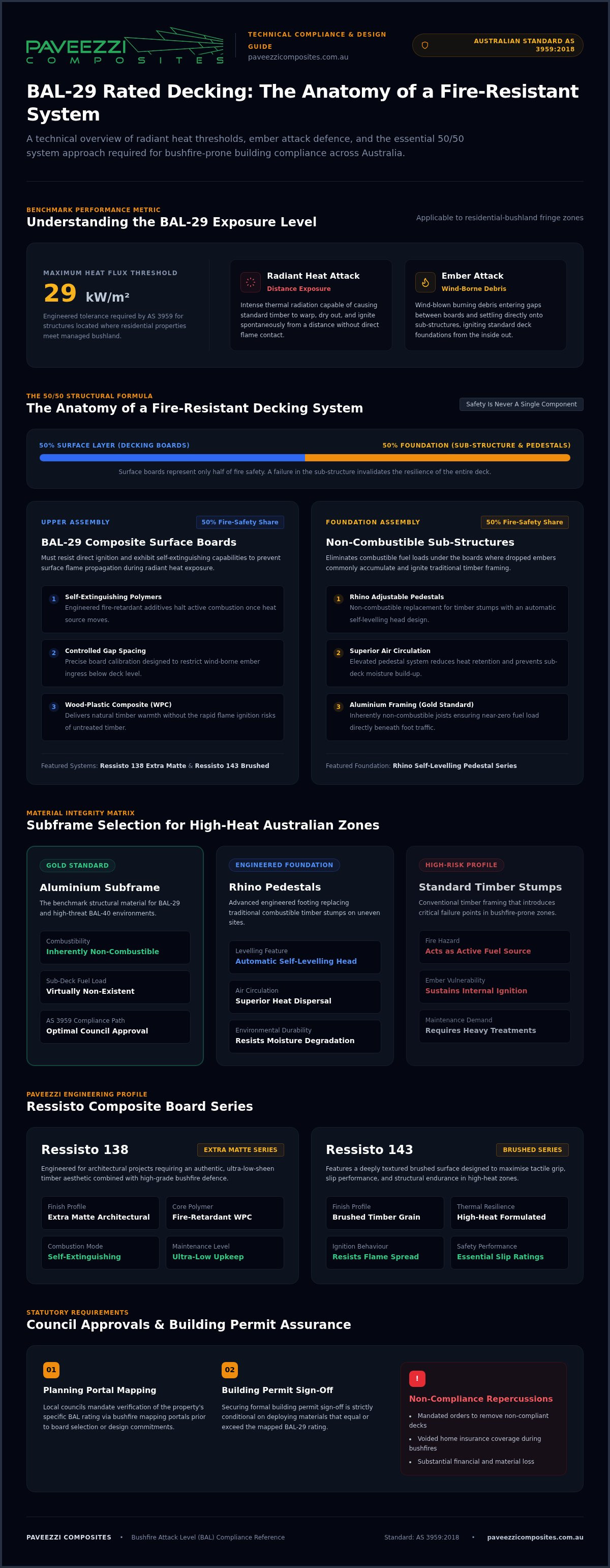
Building in a bushfire-prone area requires a shift in how we view outdoor design. In Australia, the Bushfire Attack Level (BAL) system provides a framework for safety, with BAL-29 representing a significant threshold. This rating indicates that a building is at risk of increased radiant heat levels and potential ember attack. Specifically, BAL 29 rated decking materials must be engineered to withstand a heat flux of up to 29kW/m². This isn't just a lower version of higher ratings; it's a specific performance "sweet spot" for homes situated on the suburban fringe where residential gardens meet managed bushland.
The primary guide for these requirements is Australian Standard AS 3959. This document dictates how residential construction should be managed to improve a home's resilience against bushfire. While traditional timber was once the default, many homeowners now find that natural wood requires chemical treatments or specific species that still struggle to meet these rigorous benchmarks. This has led to the rise of advanced wood-plastic composite materials, which combine the aesthetic warmth of timber with the technical integrity of fire-retardant polymers.
Radiant Heat vs Ember Attack: What Your Deck Faces
Your deck faces two distinct threats during a fire event. Radiant heat can cause materials to ignite or warp from a distance, while ember attack involves wind-borne burning debris landing on or under your structure. Embers often find their way into the gaps between boards or settle on the sub-structure, igniting the deck from the inside out. Standard timber often fails here because it can sustain a flame once ignited. High-quality BAL 29 rated decking materials, such as our Ressisto 138 Extra Matte range, are designed to resist ignition and self-extinguish, providing a critical layer of defence for your home's perimeter.
Council Compliance and Your Building Permit
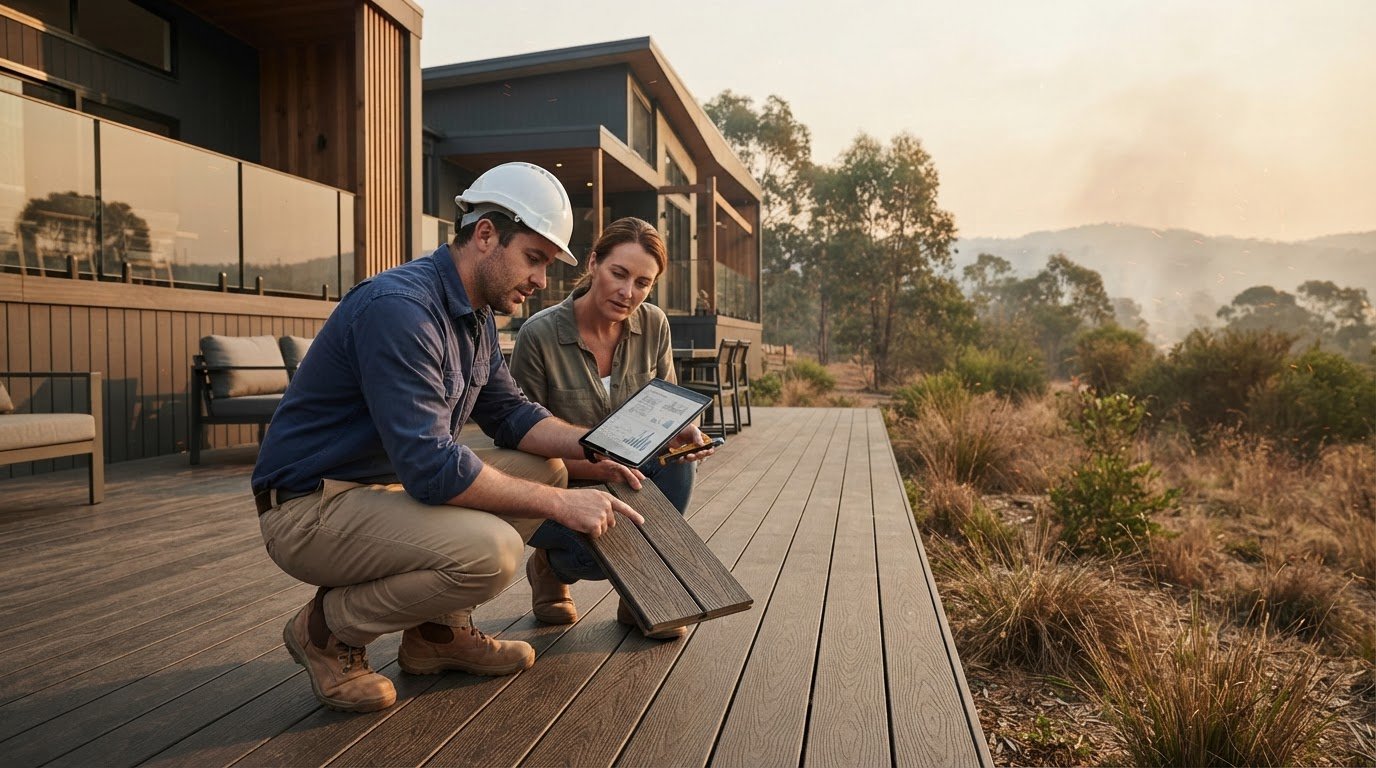
Before you commit to a design or purchase any boards, you must verify your property's specific BAL rating. Most local councils provide access to bushfire mapping through their planning portals. Securing a building permit depends entirely on using materials that match or exceed your site's rating. Using non-compliant decking in a BAL-29 zone isn't just a safety risk; it can lead to expensive orders to remove the structure and may void your home insurance. Choosing a council-approved solution like the Ressisto 143 Brushed series ensures your project moves through the approval process smoothly while maintaining the architectural integrity of your outdoor space.
The Anatomy of a Fire-Resistant Decking System
Safety in a bushfire zone is never about a single component; it's about how the entire assembly performs under pressure. While the surface boards are the most visible part of your project, they represent only 50% of the fire-safety equation. A "System Approach" treats the deck as a unified structure, where BAL 29 rated decking materials work alongside non-combustible foundations to create a secure perimeter. Proper gap spacing and joist protection are essential details that prevent wind-borne embers from finding a home within the subframe. By adhering to the AS 3959:2018 construction standard, you ensure that every element, from the board to the base, is engineered for resilience.
Non-Combustible Adjustable Pedestals
Achieving a perfectly level finish on uneven ground often requires complex engineering, but Rhino adjustable pedestals simplify this process while enhancing safety. These pedestals provide a stable, non-combustible alternative to traditional timber stumps, which can become a significant fuel source in a fire event. The self-levelling head design is a preferred choice for modern architectural projects, as it automatically corrects slopes and ensures a flat surface for your BAL 29 rated decking materials. This elevated system also facilitates superior air circulation, reducing heat retention and moisture build-up beneath the boards, which is a common cause of material degradation in the harsh Australian climate.
Subframe Selection: Aluminium vs Fire-Retardant Timber
Choosing the right subframe is a critical decision for any homeowner in a high-risk zone. While fire-retardant timber offers some protection, aluminium is widely considered the gold standard for BAL-29 and BAL-40 environments. It is inherently non-combustible, ensuring that the fuel load directly beneath your feet is virtually non-existent. This choice eliminates the risk of a fire spreading through the foundation of your outdoor entertaining space. Beyond safety, an aluminium subframe offers a lifetime of reliability; it won't rot, rust, or warp, providing a maintenance-free foundation that protects your investment. You can view our integrated systems to understand how a well-planned subframe supports a sophisticated, timber-like finish.
Essential Selection Criteria for BAL 29 Composite Materials
Selecting BAL 29 rated decking materials involves looking far beneath the surface finish. It's not just about the label; it's about the technical chemistry of the board. High-performance composites utilise fire-retardant additives integrated directly into the polymer matrix during manufacturing. This ensures the material doesn't just resist flames but actively self-extinguishes if ignited. When planning your build, consulting your local fire authority's building requirements is a vital first step to ensure your material choices align with the latest statutory safety expectations for your specific site.
Australian outdoor living often revolves around the pool or an open-air alfresco area. For these spaces, a P5 or R11 slip rating is non-negotiable for family safety, especially when surfaces are wet. Combined with superior UV stability, these boards maintain their structural integrity and deep colour even under the most intense summer heat. Unlike traditional timber that frequently cracks, splinters, or bleaches, premium BAL 29 rated decking materials are engineered to thrive in our unique climate without losing their tactile appeal.
Aesthetic Finishes: Brushed vs Extra Matte
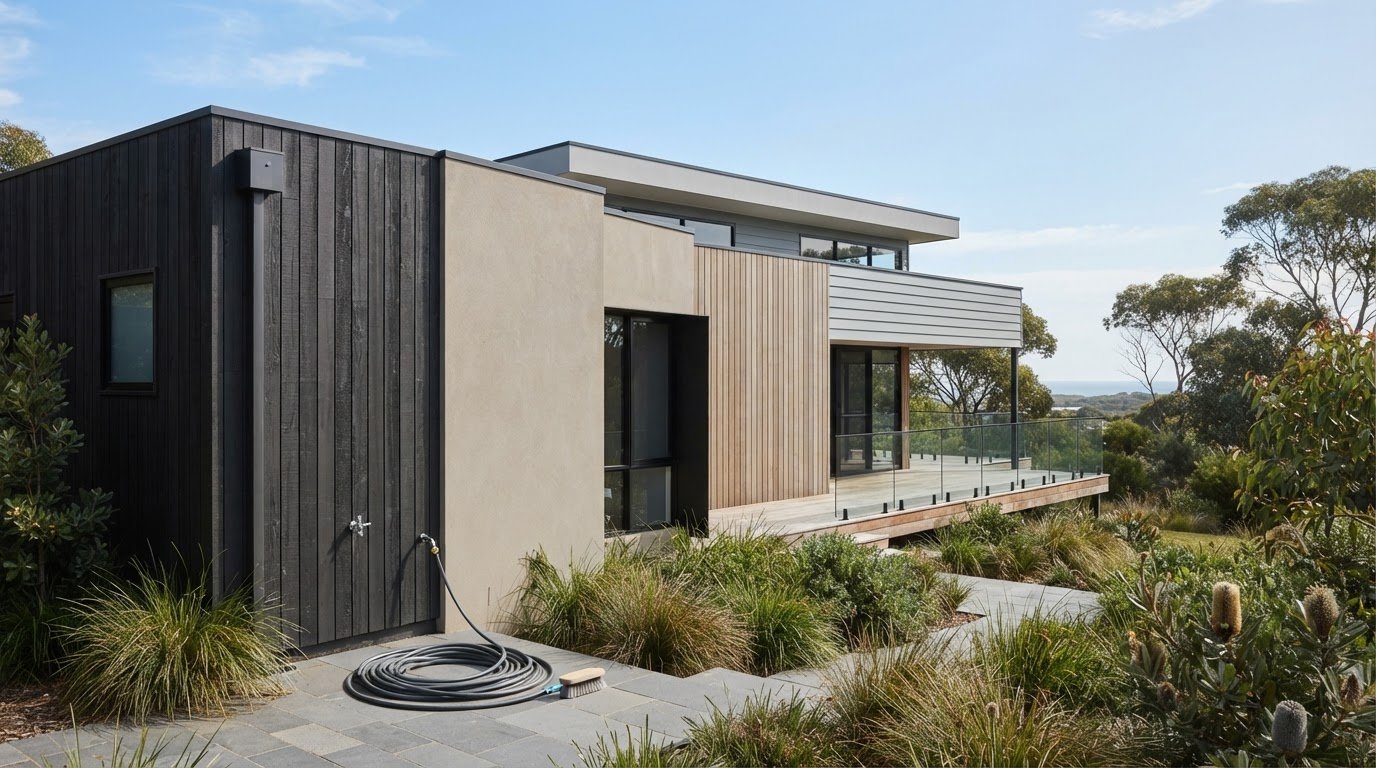
The modern Australian facade demands a sophisticated touch that moves away from the shiny, artificial look of early-generation composites. Our Ressisto 138 Extra Matte range offers a refined, non-reflective surface that provides a high-end architectural finish. If you prefer a more traditional aesthetic, the Ressisto 143 Brushed series provides an authentic timber texture that feels natural underfoot. We've curated these colours to complement the muted greens and earthy tones of the Australian natural landscape, ensuring your deck feels like a seamless extension of your home's environment.
Durability and Maintenance in Bushfire Zones
Safety and maintenance are deeply linked in fire-prone areas. Traditional wood decks require regular oiling or staining with petroleum-based products, which can actually increase the fuel load of your home's perimeter. Choosing low-maintenance composite solutions removes this risk entirely. These boards are inherently resistant to rot, termites, and warping, even in humid coastal conditions. While the initial investment in premium materials is higher, the long-term ROI is found in the lack of expensive upkeep and the peace of mind that comes from a council-approved structure. Explore our full range of composite solutions to find the perfect match for your next project.
Achieving Architectural Excellence with Paveezzi Solutions
Safety shouldn't be a constraint on your design vision. In luxury residential projects, the trend is moving toward wide board profiles that create a sense of scale and grandeur. While many products on the market focus purely on utility, our BAL 29 rated decking materials are developed with an eye for architectural integrity. We understand that a high-end home requires materials that perform under extreme conditions while maintaining a premium, timber-like aesthetic. By choosing a unified system, you ensure that every detail, from the broad expanses of the deck to the subtle transitions at the edges, reflects a commitment to quality and safety.
Integrated Design: Decking and Cladding
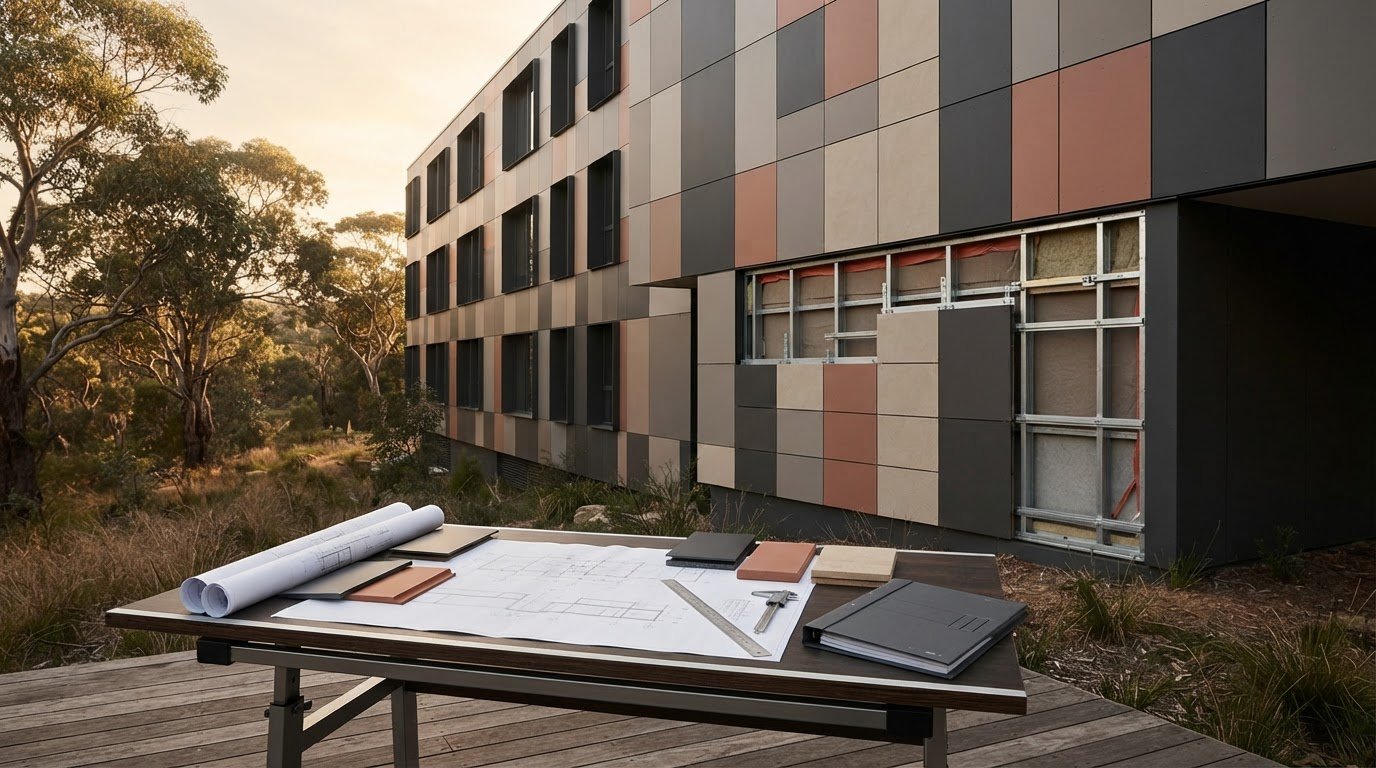
A truly sophisticated outdoor space relies on visual continuity between horizontal and vertical planes. Creating a seamless transition is simple when you pair our decking with architectural composite cladding. For instance, the Ressisto 144 Fineline cladding offers a sleek, modern texture that complements the refined finish of our floorboards. To complete the professional look, we offer specialised nosing and edging options. These accessories allow for safe, polished stair finishes that maintain a consistent colour palette across all external surfaces, ensuring your project feels like a deliberate, architecturally designed whole.
The Paveezzi Composites Advantage
Our position as a trusted pioneer in the composite industry is built on a foundation of engineering excellence and family values. Since 2010, Paveezzi Composites has focused on providing high-performance materials specifically designed to thrive in the Australian climate. Our about us story reflects this dedication to reliability and long-term performance. We don't just supply boards; we provide a complete system supported by technical expertise. When you're ready to secure your home, we recommend that you explore our full BAL-rated range today. While we don't provide direct installation services, we're here to help you understand the material requirements to ensure your chosen builder delivers a council-approved result that increases your property value.
Elevating Your Outdoor Living with Confidence
Building a deck in a bushfire-prone area doesn't mean you have to compromise on your architectural vision or settle for a subpar finish. We've explored how a systemic approach, combining the technical integrity of BAL 29 rated decking materials with non-combustible sub-structures, creates a truly resilient outdoor space. By choosing high-performance composites like the Ressisto series, you achieve a sophisticated, timber-like aesthetic while meeting the rigorous safety standards required for Australian homes. It's about peace of mind and long-term property value.
As an Australian family-owned and operated pioneer since 2010, Paveezzi Composites is dedicated to providing specialised fire-retardant technology for residential and commercial projects nationwide. Our commitment to excellence ensures that every project we support is built to withstand the unique challenges of our climate. We invite you to take the next step in your project planning by viewing our curated collections of premium finishes and engineering solutions.
Your dream deck is within reach. We look forward to helping you create a safe, beautiful, and enduring outdoor sanctuary for your family.
Frequently Asked Questions
Can I use any composite decking in a BAL 29 zone?
No, you cannot use standard composite decking unless it has been specifically tested and certified to meet the radiant heat flux requirements of AS 3959. Many entry-level products lack the necessary fire-retardant additives to prevent ignition from embers or intense heat. It's essential to verify that your chosen BAL 29 rated decking materials have a valid certificate of compliance before beginning construction to ensure your home meets local council safety standards.
Do I need a special subframe for BAL 29 rated decking?
A compliant subframe is a critical part of the fire-safety system. While certain regulations allow for specific fire-retardant timbers, aluminium is the preferred choice for its inherent non-combustibility and long-term reliability. Using non-combustible adjustable pedestals, such as our Rhino range, further reduces the fuel load beneath your entertaining space. This holistic approach ensures that the foundation of your outdoor area is just as resilient and safe as the surface boards you walk on.
Does BAL 29 rated decking look different from standard composite?
Modern fire-rated composites are indistinguishable from high-end standard boards in terms of aesthetic appeal. Our Ressisto range features sophisticated brushed and extra matte finishes that mimic the natural texture and depth of real timber. You don't have to settle for a shiny or "plasticky" look to achieve safety compliance. These materials provide the perfect balance of architectural beauty and technical performance, enhancing your property's value without compromising on your home's unique style.
Is BAL 29 decking more expensive than traditional timber?
The initial investment for premium BAL 29 rated decking materials is typically higher than standard pressure-treated timber. However, the long-term ROI is significant when you consider the total cost of ownership. Composite decks don't require the expensive annual sanding, oiling, or staining that traditional wood demands to remain fire-safe. Over a decade, the savings on maintenance materials and labour, combined with the material's resistance to rot and termites, often make it the more economical choice.
How do I maintain a fire-rated composite deck?
Maintenance is remarkably straightforward compared to natural wood. You simply need to keep the gaps between boards clear of leaves and debris, which can act as tinder during a bushfire event. Regular cleaning with mild soapy water and a soft brush is usually sufficient to maintain the finish. Because these boards are engineered with UV stability and moisture resistance, you never need to apply flammable stains or chemical sealants that could compromise the deck's fire rating.
What is the difference between BAL 29 and BAL 40 decking materials?
The primary difference lies in the heat flux threshold the material must withstand. BAL 29 materials are tested to resist up to 29kW/m², whereas BAL 40 requires resistance to a higher threshold of 40kW/m². While BAL 29 is the most common requirement for suburban fringe areas, BAL 40 is reserved for sites at higher risk of direct flame contact. It's vital to use a product rated for your specific zone to ensure council compliance and home safety.
Comments