
Composite Cladding for Facades: 2026 Australian Guide
What if your home's exterior could retain the soul and warmth of natural timber without ever requiring a tin of oil or a weekend on a ladder? It's a question many Australian homeowners and architects are asking as the maintenance demands of traditional wood become increasingly difficult to manage. We all appreciate the striking aesthetic of a timber-lined exterior, yet the reality of our harsh UV environment and shifting fire safety standards often makes natural wood a high-risk investment. Choosing composite cladding for facades allows you to capture that premium architectural look while ensuring your project remains resilient against the elements for decades.
In this 2026 guide, you'll discover how advanced engineering has transformed composite systems into a superior, BAL-rated alternative that simplifies compliance under the NCC 2025. We'll examine the meticulous production of the Ressisto and Lightissimo ranges, focusing on long-term durability and fire safety. From understanding specific Bushfire Attack Level requirements to streamlining your procurement process, this article provides the clarity you need to design a facade that stays pristine without the headache.
Table of Contents
The Evolution of Composite Cladding for Australian Facades
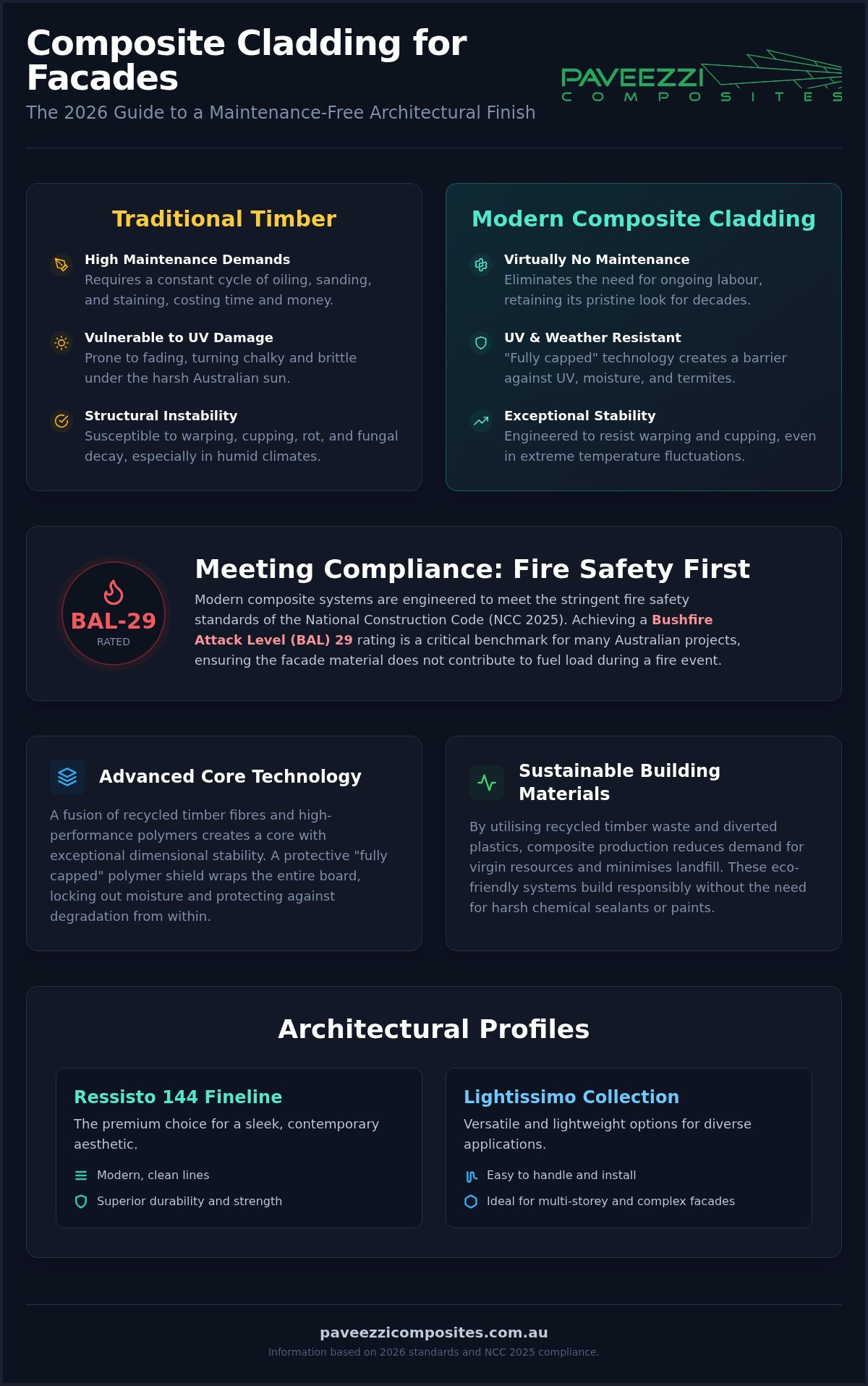
The concept of Cladding (construction) has undergone a radical transformation across the Australian landscape. What was once a simple choice between timber or brick is now a sophisticated engineering decision. Modern composite cladding for facades represents a fusion of recycled timber fibres and high-performance polymers, designed to solve the age-old problem of external degradation. While natural timber offers undeniable warmth, its vulnerability to our extreme UV environment often leads to a cycle of fading and structural failure that most property owners simply don't have the time to manage.
UV stability is the cornerstone of a successful facade in Australia. Without it, boards quickly lose their lustre, turning chalky and brittle. To combat this, industry leaders have moved toward "fully capped" technology. This protective outer layer wraps around the entire board, creating a barrier that moisture and termites cannot penetrate. It's a meticulous approach to manufacturing that ensures the core remains stable, regardless of the humidity or heat. This evolution means you no longer have to choose between the beauty of wood and the longevity of a synthetic material.
Why Composite Outperforms Traditional Timber
Natural timber is beautiful, but it's demanding. The life-cycle costs of annual oiling, sanding, and staining add up, both in dollars and hours. In humid coastal regions, wood is often a target for rot and fungal decay. Composite systems eliminate these risks entirely. They provide exceptional dimensional stability, meaning they won't warp or cup when the temperature spikes. It's a reliable alternative that delivers a pristine architectural look with none of the traditional upkeep. You get a consistent finish that stays true to its original colour for years.
Sustainable Building with Eco-Friendly Composites
Modern manufacturing focuses heavily on environmental integrity. By utilising recycled timber waste and diverted plastics, composite production reduces the demand for virgin resources. These products don't require the harsh chemical sealants or paints that natural timber needs to survive outdoors. As sustainable building materials australia wide become a priority for developers, these eco-friendly systems offer a way to build responsibly. You get the aesthetic of wood with a conscience, backed by decades of research into material longevity.
Meeting Compliance: BAL Ratings and Fire Safety
Safety isn't just about peace of mind; it's a legal imperative for any modern construction project. When selecting composite cladding for facades, the primary focus must be on meeting the rigorous Building Code of Australia (BCA) requirements. With the adoption of the NCC 2025 across many states, builders and architects face stricter oversight regarding external wall materials. It's essential to verify that your chosen system is not just aesthetic, but fully compliant with fire safety standards. This ensures the building remains resilient against the unique threats posed by our landscape, from urban heat islands to rural fire fronts.
Understanding BAL Ratings for Your Project
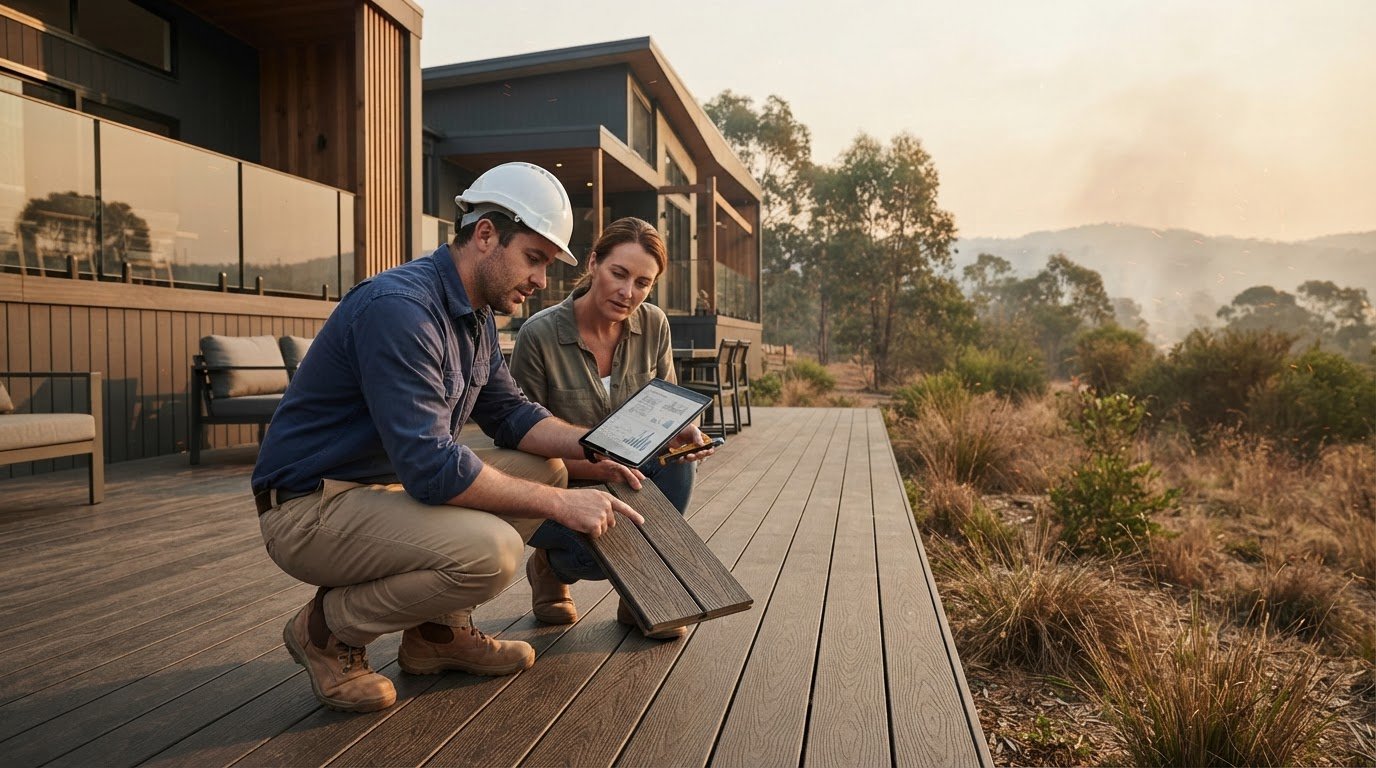
Bushfire Attack Level (BAL) ratings measure a building's potential exposure to ember attack, radiant heat, and direct flame. For many Australian residential projects, achieving a BAL-29 rating is the critical benchmark. High-quality composite systems utilize advanced fire-retardant core technology to meet these demands. This engineering prevents the material from contributing to fuel load during an event. Before you commit to procurement, always request a current certificate of compliance from the manufacturer. Consulting with a professional building certifier early in the design phase ensures your facade meets local council requirements without the need for costly last-minute revisions. It's about building with foresight.
Weathering and Structural Integrity
Compliance extends beyond fire safety to long-term structural performance. The 2026 standards for architectural facades place a heavy emphasis on managed thermal expansion. In our extreme climate, boards will naturally move as temperatures fluctuate. Designing with specific expansion gaps allows the system to breathe without warping or cupping. A superior polymer shield is equally vital. It protects the core from moisture buildup and internal rot, which are common points of failure in inferior products. This dual focus on fire resistance and weatherproofing is what distinguishes a premium architectural system from a basic timber substitute. If you are looking for a reliable partner to help navigate these technical specifications, you can explore our range of high-performance composite solutions designed specifically for the Australian climate.
Architectural Profiles: Fineline vs Lightissimo
Choosing the right profile is where a project truly comes to life. While durability and safety are the foundation, the visual impact of composite cladding for facades defines the character of a building. Modern architects no longer settle for flat, uninspired surfaces. Instead, they use shadow lines and castellations to create depth and texture, allowing light and shadow to play across the building throughout the day. Whether you prefer a rugged, brushed texture or a sophisticated extra matte finish, these profiles ensure your facade looks as good from the street as it does on a technical drawing. It's about creating a rhythmic visual flow that guides the eye across the structure.
The Aesthetic of Ressisto 144 Fineline
The Cladding Ressisto 144 Fineline is designed for those who value precision. Its sleek, contemporary profile creates clean vertical or horizontal lines that instantly modernise a structure. This range is particularly effective on residential feature walls where a high-end architectural finish is required, yet it remains robust enough for large-scale commercial applications. The colour palette is carefully curated to complement the muted tones of the Australian landscape, ensuring your project feels grounded and intentional. It's a meticulous design that balances bold shadow gaps with a refined surface finish, providing a sense of depth that traditional timber often lacks after years of weathering.
Lightissimo: Versatility in Design
For projects where weight or specific panel dimensions are a factor, the Lightissimo 202 and 400 series offer an adaptable alternative. These lightweight panels are ideal for detailed applications like eaves and soffits, allowing you to wrap an entire building in a cohesive aesthetic without adding unnecessary structural load. This versatility ensures that every corner of the facade, even the harder-to-reach sections, meets the same high standards for longevity and Building Code of Australia requirements. For those seeking deeper inspiration on how to integrate these profiles into a broader project, our architectural composite cladding guide provides a wealth of design ideas. Achieving a seamless finish across complex geometries is now a straightforward process.
If you're ready to start your next project, explore our full range of premium composite solutions designed for the Australian climate.
Selecting and Sourcing Your Facade System
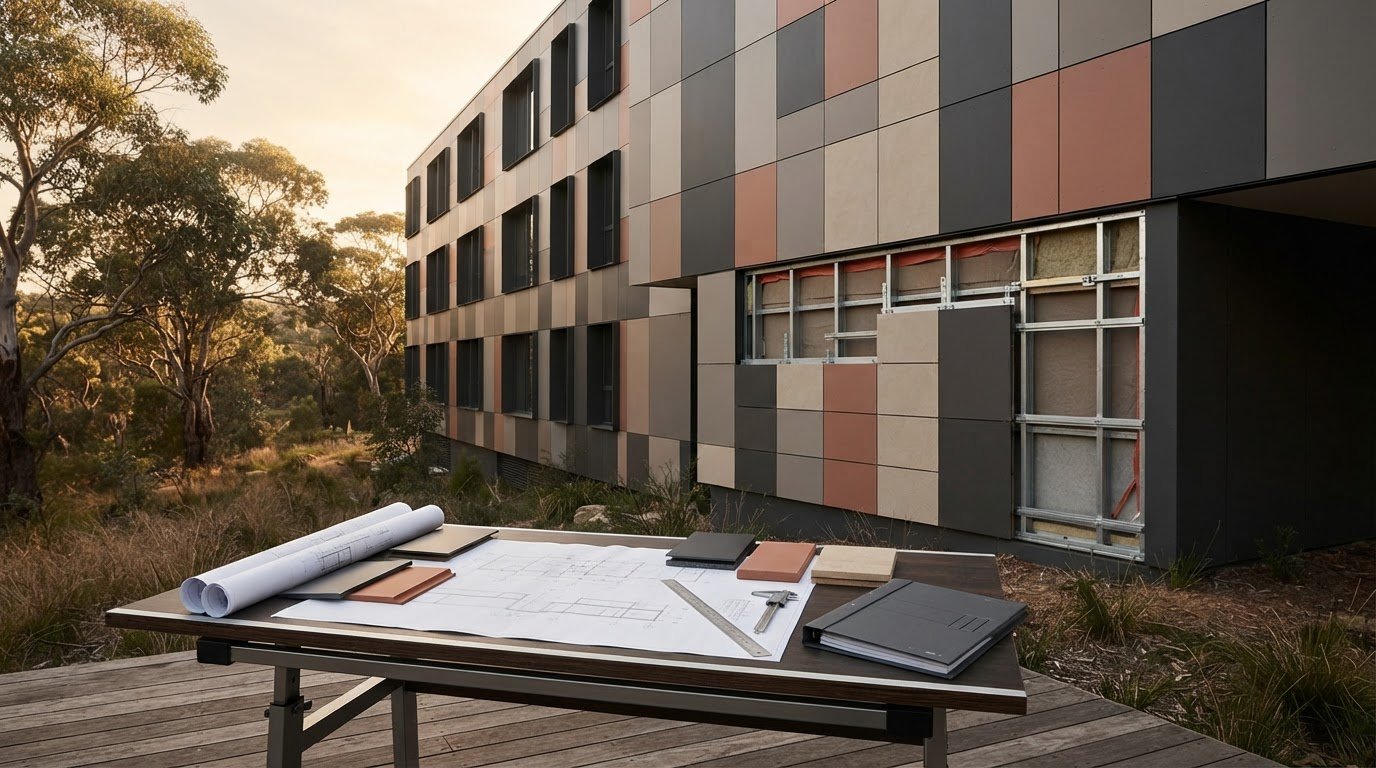
A successful project relies as much on procurement strategy as it does on architectural vision. For professional builders and developers, the supply-only model offers a distinct advantage. It allows for complete control over the installation schedule and site management while ensuring that only premium materials reach the project. Choosing an Australian family-run supplier adds a layer of technical support that global industrial giants often lack. You aren't just buying boards; you're partnering with specialists who understand the nuances of the local building code and the logistical challenges of national delivery. It's about reliability and a shared commitment to excellence.
Before placing an order, it's vital to calculate your requirements accurately. Complex facades with multiple openings or non-standard angles require a methodical approach to minimise delays. We recommend a simple checklist to keep your project on track:
Measure the total facade area in square metres.
Subtract all window and door openings.
Include a 10% wastage factor for standard horizontal runs, or 15% for intricate vertical or diagonal designs.
Identify the total linear metres required for starter strips and finishing trims.
The Importance of Finishing Touches
The difference between a good facade and a great one lies in the details. Utilising the Ressisto accessory range ensures a seamless colour match across the entire structure. Nosing and edging options are critical for achieving a professional, waterproof finish at corners and junctions, preventing moisture ingress that could compromise the substrate. For projects on uneven surfaces, Rhino pedestals provide the necessary adjustability to achieve a perfectly level result. These components are engineered to work as a complete system, ensuring the longevity of your composite cladding for facades.
Ordering and National Delivery
Seeing the product in person is a non-negotiable step in the selection process. Requesting samples allows you to verify the exact colour and texture under the specific lighting conditions of your site. Our national supply network ensures consistency across projects, regardless of where they're located. For large-scale developments, early engagement is the best way to secure stock and align delivery with your construction phases. This proactive approach eliminates the stress of lead times and keeps your project moving forward with confidence. We take pride in being a stable ally in your construction journey.
Designing Your Future-Proof Facade
Choosing composite cladding for facades is a strategic investment in the longevity and safety of your building. The transition from traditional timber to advanced engineered systems isn't just about reducing maintenance; it's about navigating the rigorous demands of the NCC 2025 and ensuring BAL compliance in our unique landscape. By prioritising high-performance materials like the Ressisto and Lightissimo ranges, you can achieve a sophisticated architectural aesthetic that remains resilient against UV exposure and moisture for decades.
Paveezzi Composites remains a dedicated, family-run Australian business committed to providing the technical oversight and reliability your project deserves. Our national supply capability ensures that professional builders and architects have access to meticulous production standards and matching accessories, regardless of the project's scale. When you're ready to elevate your exterior with a system that balances engineering integrity with natural beauty, we're here to guide you through the process.
Explore the Ressisto 144 Fineline Cladding Range and discover the perfect finish for your next project. We look forward to helping you build a facade that stays pristine for years to come.
Frequently Asked Questions
Does composite cladding fade in the Australian sun?
Premium composite cladding for facades is engineered specifically to withstand the harsh Australian UV environment. While all materials experience some minor initial stabilisation, high-quality ranges like Ressisto utilise advanced capping technology to prevent the drastic fading or "greying off" typical of natural timber. This ensures your facade retains its intended colour and architectural impact for decades without the need for constant restaining or painting. It's a reliable, long-term solution for our climate.
What BAL rating is required for composite cladding in bushfire zones?
The required Bushfire Attack Level (BAL) rating depends on your specific property's proximity to vegetation and local terrain. Many residential projects in bushfire-prone areas require a BAL-29 rating or higher to meet building regulations. Our Ressisto 144 Fineline range is designed with fire-retardant properties to assist in meeting these stringent safety standards. Always consult with a qualified building certifier to confirm the exact requirements for your project's location and ensure compliance with the NCC.
Is composite cladding more expensive than real timber?
While the initial purchase price of composite cladding for facades can be higher than budget-grade timber, the total life-cycle cost is significantly lower. You save thousands over the product's lifespan by eliminating the recurring costs of oils, stains, and professional labour. When you factor in the time saved on maintenance and the superior durability against rot and termites, composite systems represent a far more cost-effective and predictable investment for modern property owners.
Can I install composite cladding vertically and horizontally?
Yes, our composite systems offer complete design flexibility and can be installed in both vertical and horizontal orientations. Vertical installation is a popular choice for creating a sense of height and a contemporary, castellated look, while horizontal layouts provide a more traditional, expansive feel. Regardless of the direction you choose, it's essential to follow the specific installation guidelines regarding drainage and thermal expansion gaps to ensure the structural integrity and longevity of the facade.
Do Paveezzi Composites offer installation services?
Paveezzi Composites is a specialist supplier and does not provide direct installation services. We focus our expertise entirely on the meticulous production and national supply of premium composite systems to builders, architects, and developers. This supply-only model allows you to work with your preferred qualified tradespeople while ensuring you receive the highest quality materials directly from an Australian family-run business. We provide comprehensive technical support to assist your chosen installer throughout the project.
How do I clean and maintain my composite facade?
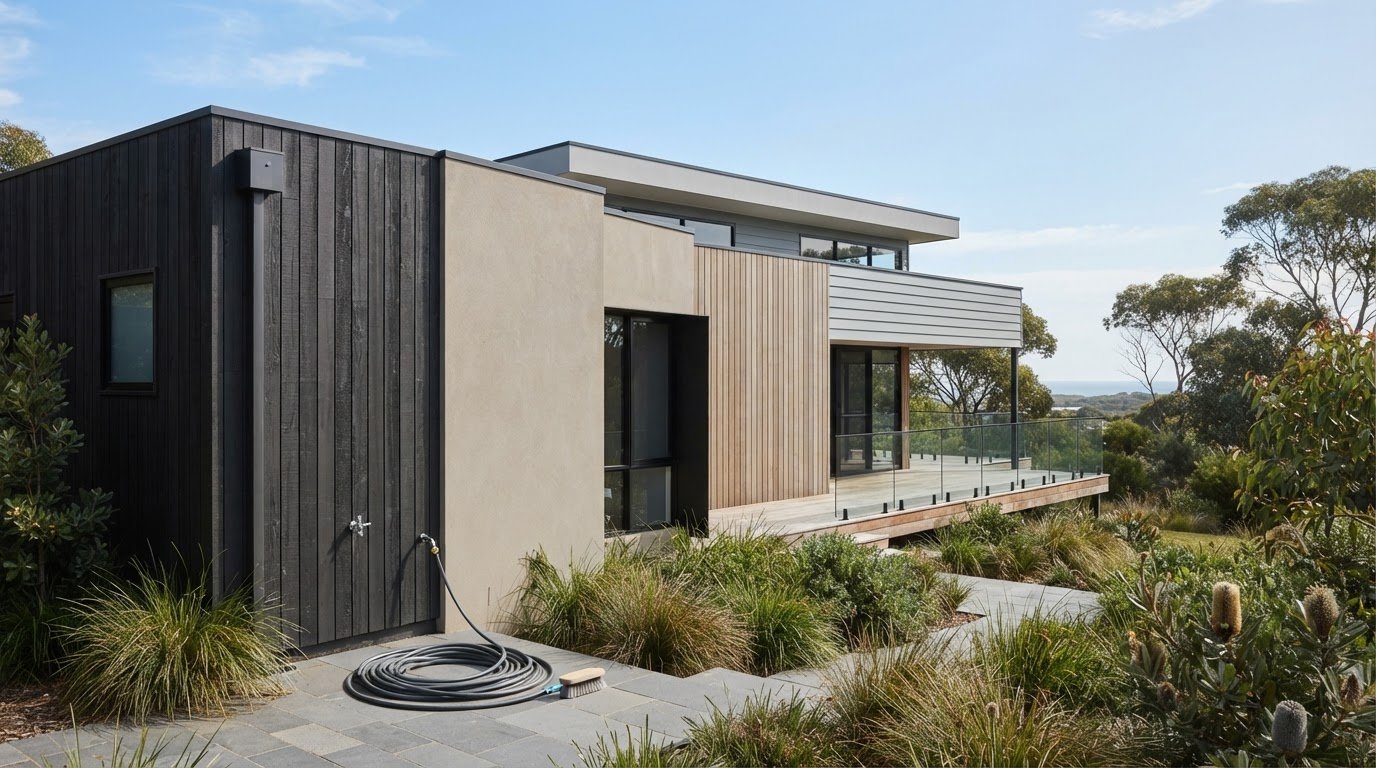
Maintaining your composite facade is straightforward and requires minimal effort compared to natural wood. Regular cleaning with warm, soapy water and a soft-bristle brush is usually sufficient to remove surface dust or environmental residue. You don't need to sand, oil, or paint the boards at any stage. For a more thorough seasonal clean, a low-pressure garden hose can be used to rinse the panels. This simple routine keeps the surface looking pristine and performing at its best.
Comments