
Eco Friendly Cladding Australia: The 2026 Guide to Sustainable Facades
What if the most sustainable cladding for your Australian home isn't actually timber at all? Most homeowners dream of that warm, natural timber aesthetic, yet they understandably dread the reality of sanding, oiling, and the inevitable degradation that comes with our harsh UV exposure. It's exhausting to invest in "green" materials only to find they require a constant cycle of chemical treatments just to survive a single decade. We agree that a beautiful home shouldn't come with a lifetime of maintenance or a hidden environmental cost.
This guide will show you how to navigate the complexities of eco friendly cladding australia in 2026. You'll discover how to choose a high-performance facade that balances genuine sustainability with fire safety and longevity. We will examine the latest NCC 2025 standards, debunk common greenwashing myths, and explain why modern composite solutions like the Ressisto and Lightissimo ranges are now the benchmark for responsible building. From understanding BAL ratings to managing moisture under new regulations, we've provided everything you need to build with confidence.
Table of Contents
Navigating Eco Friendly Cladding Options in Australia
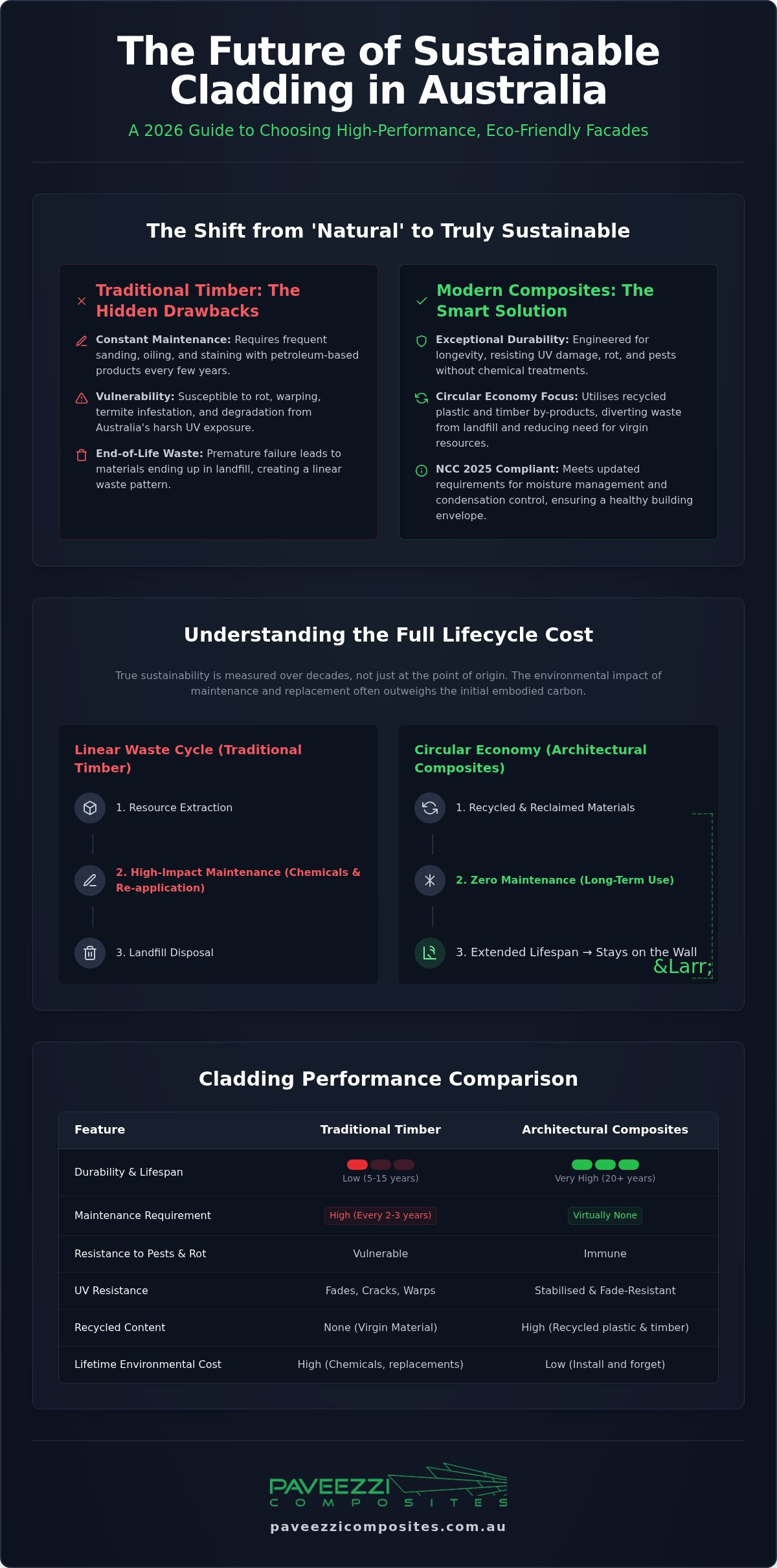
True eco-friendly cladding isn't defined by a single label or a "natural" origin. It represents materials that meticulously minimise environmental harm throughout their entire lifecycle, from the initial extraction to eventual end-of-life disposal. In 2026, the Australian construction sector has firmly embraced circular economy principles, moving beyond simple resource sourcing toward materials that remain functional for decades. While Green building in Australia has traditionally focused on internal insulation, the industry's gaze has shifted to the facade's longevity. Homeowners today typically weigh three main contenders: modified timber, recycled metal, and high-performance composites. However, the tide is turning against traditional timber as resource scarcity and maintenance burdens become increasingly difficult to justify.
The Problem with Traditional Exterior Materials
The aesthetic of natural timber often masks a significant environmental cost. Logging old-growth forests for "natural" facades is increasingly unsustainable, yet the real damage often happens after the build is complete. Traditional wood requires petroleum-based paints or chemical stains every two years to prevent rot and UV damage. This constant maintenance cycle carries a heavy carbon footprint that many homeowners overlook. When these materials prematurely fail due to warping or termite damage, they end up in landfill. This creates a linear waste pattern that high-quality eco friendly cladding australia is designed to break.
Why 2026 is the Year of the Composite Facade
Recent technological leaps in wood-plastic composite (WPC) have redefined the Australian market. Modern solutions now mimic natural grain with startling accuracy while offering total immunity to the elements. These products utilise recycled plastic and timber mill by-products, effectively turning waste streams into high-performance building blocks. Choosing architectural composite cladding is no longer a compromise on style; it's a strategic decision for longevity. By selecting eco friendly cladding australia that resists UV degradation and rot without oils, you're investing in a facade that stays out of the tip and on your walls for the long haul.
Defining True Sustainability: Lifecycle vs. Material Source
Understanding the environmental credentials of cladding requires looking far beyond the initial manufacturing stage. While the industry often fixates on embodied carbon, the true test of eco friendly cladding australia lies in its performance over several decades. High-quality facades act as an additional thermal envelope, providing a protective layer that stabilises internal temperatures. This reduces a home's reliance on energy-intensive heating and cooling systems. When selecting sustainable building materials, it's vital to consider how a product withstands the intense Australian UV index. Materials that become brittle or lose their structural integrity under our sun require premature replacement. This creates a cycle of waste that undermines even the most "natural" material choice.
Embodied Carbon and Recycled Content
Modern composites achieve a lower environmental footprint by redirecting waste from landfills back into the productive supply chain. By blending reclaimed timber fibres with recycled polymers, these products create a closed-loop system that significantly reduces the demand for virgin resources. Sourcing from local Australian suppliers also slashes the carbon emissions associated with international freight and long-distance logistics. Circular construction in the cladding sector is the practice of engineering facades for maximum durability to ensure the resources used today remain in service for generations.
Maintenance-Free Living as an Eco-Choice
The environmental cost of "natural" timber is often hidden in the maintenance shed. Over a 25-year period, a traditional wood facade requires hundreds of litres of oils, stains, and chemical cleaners. Many of these products contain high levels of Volatile Organic Compounds (VOCs) that off-gas into the atmosphere. These chemicals eventually leach into the soil or wash into local waterways during heavy rain. Choosing low maintenance exterior cladding eliminates this toxic cycle entirely. A product with a 20+ year lifespan that requires only an occasional rinse with water is a far more responsible choice for our fragile ecosystem. If you're ready to explore facades that balance architectural aesthetics with environmental integrity, you can browse our full range at Paveezzi Composites.
Selecting Sustainable Cladding for the Australian Climate
Choosing the right eco friendly cladding australia involves more than just picking a colour. It requires a methodical approach to technical specifications that suit our unique environment. Our climate is unforgiving. A facade that works in Europe or North America will often fail here within years due to intense solar radiation and humidity. To ensure your investment stands the test of time, follow this selection process:
Step 1: Verify the Bushfire Attack Level (BAL) rating for your specific site. Safety is non-negotiable in fire-prone regions, and your material choice must comply with local council regulations.
Step 2: Assess the UV resistance of the material. Our sun is brutal. Ensure the product uses high-quality pigments and stabilisers that won't fade or become brittle after a few summers.
Step 3: Look for "Fineline" or "Lightissimo" profiles. These specific designs allow for natural ventilation behind the facade, which is crucial for managing moisture and preventing internal rot.
Step 4: Select a supplier that adheres to commercial exterior cladding australia standards. These rigorous benchmarks ensure residential homes benefit from the same engineering durability as large-scale infrastructure.
Bushfire Safety and Eco-Materials
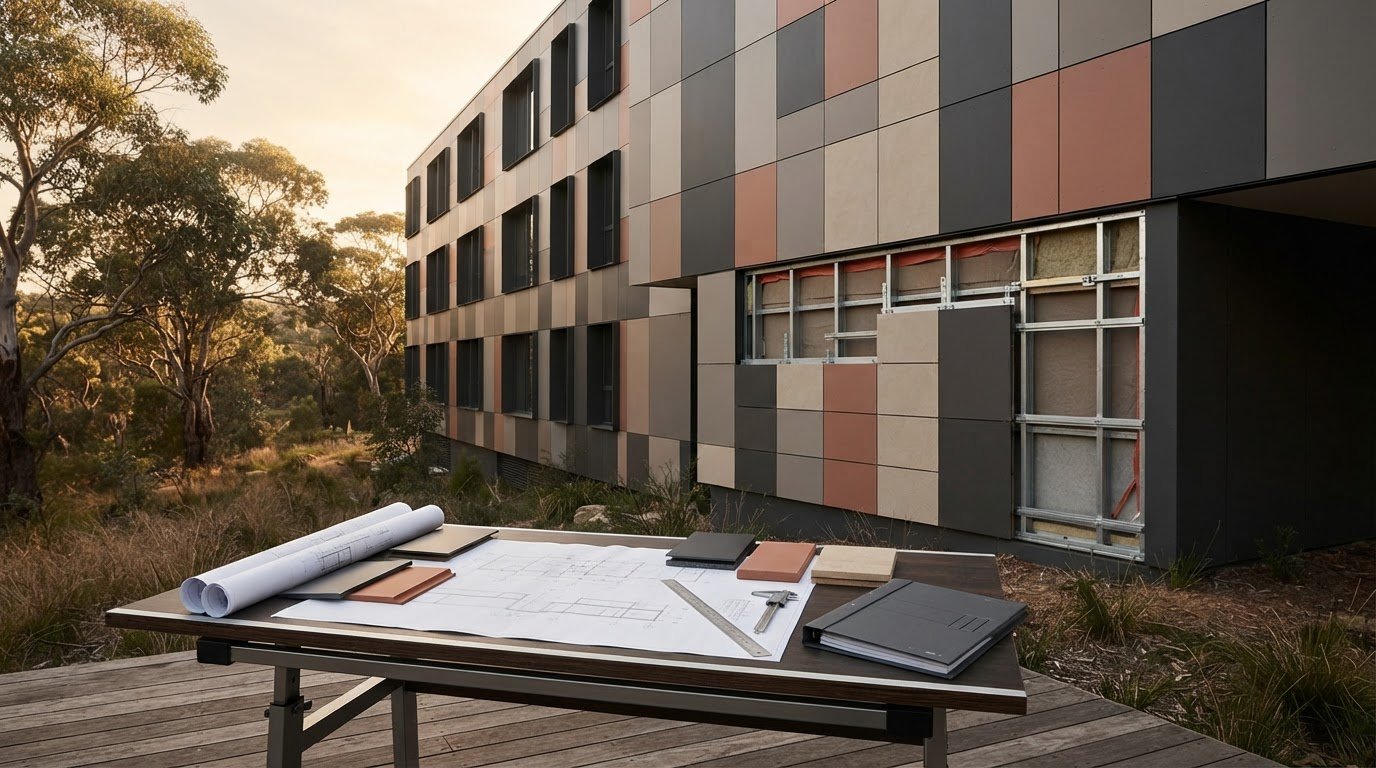
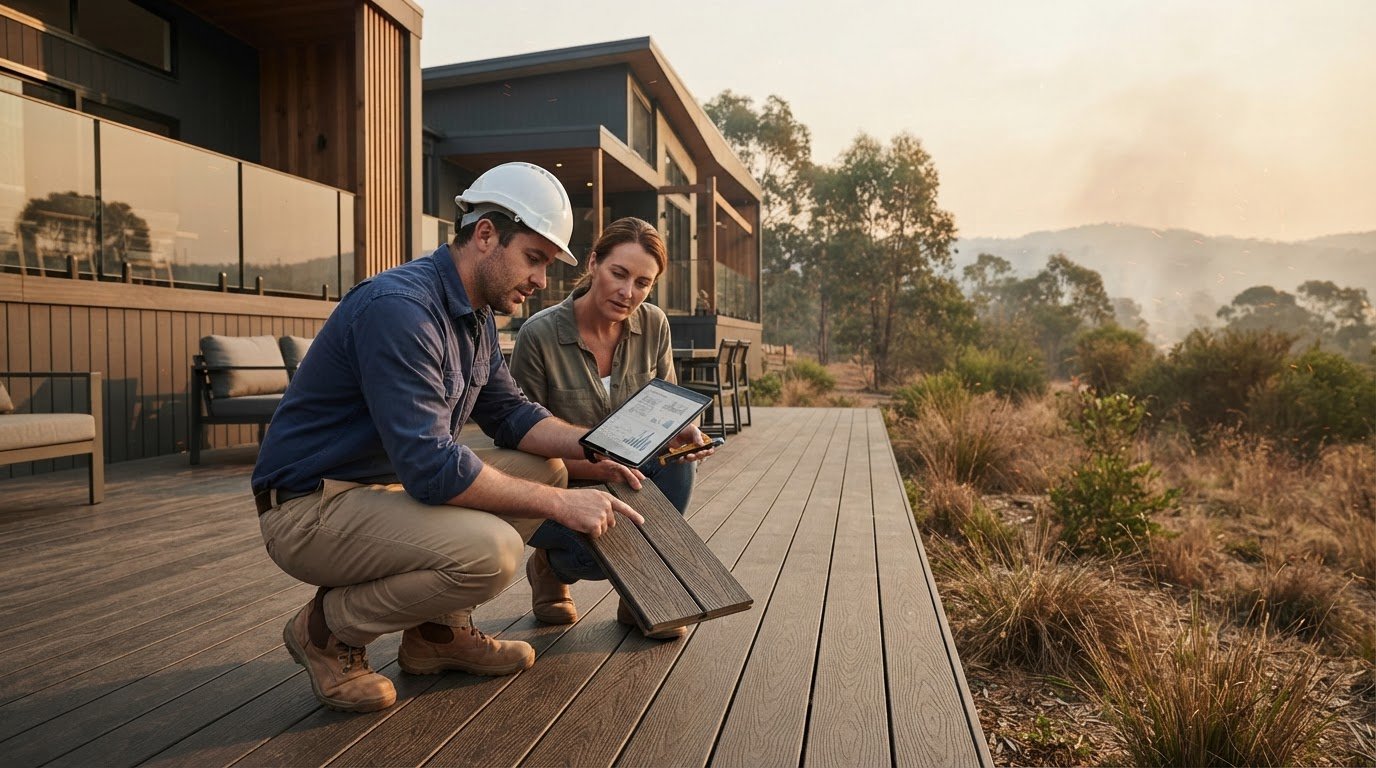
Balancing a "natural" aesthetic with strict fire safety requirements is a common challenge for Australian builders. While raw timber is often restricted in high BAL zones, high-density composites offer a reliable alternative. These materials provide the warmth of wood with significantly improved fire performance due to their dense structural composition. For a truly sustainable system, you must look beyond the boards themselves. Integrating non-combustible pedestals and sub-frames ensures the entire wall assembly meets modern safety expectations. When researching sustainable building materials, always check the technical data sheets for specific fire test results rather than relying on generic marketing claims.
Aesthetics Without Compromise
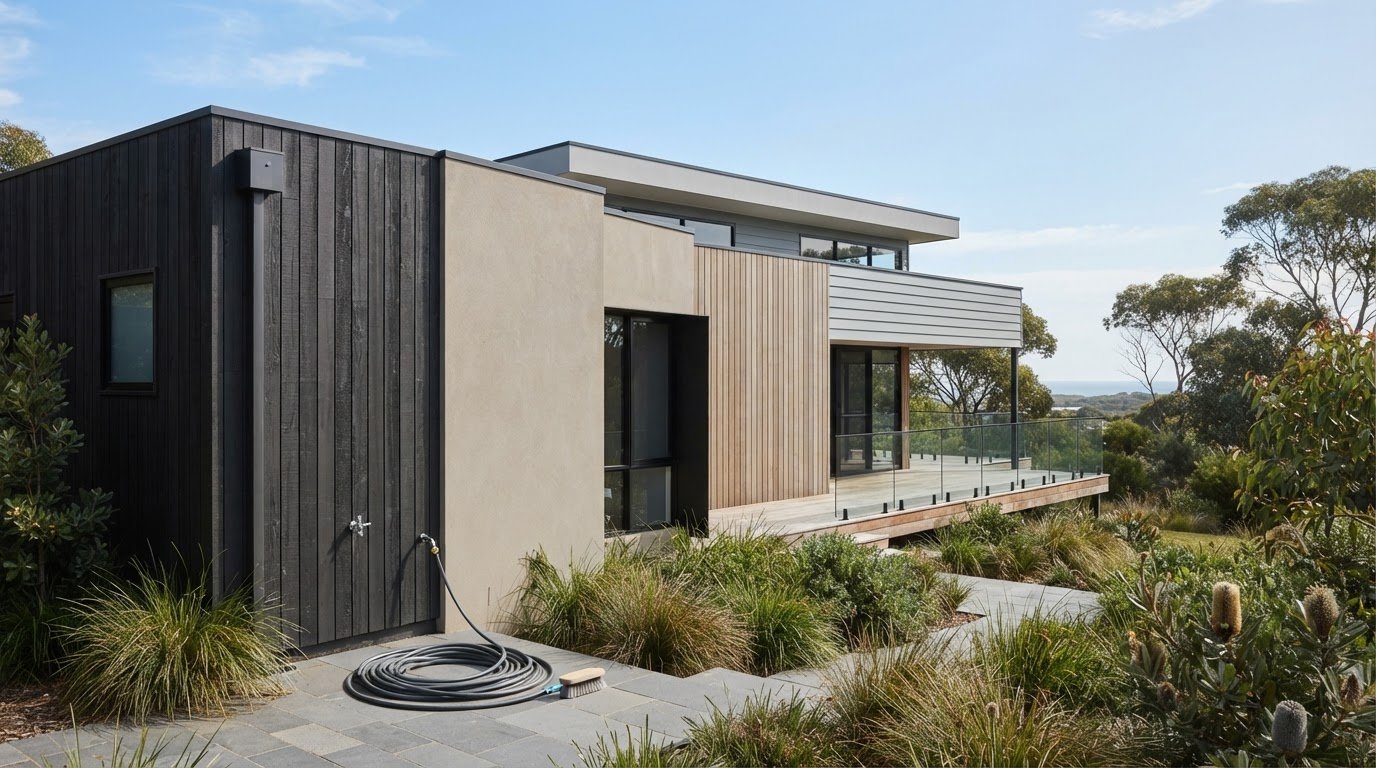
Sustainable design shouldn't mean sacrificing your architectural vision. The "Modern Australian" look is currently defined by sleek, vertical profiles that create shadow and depth. Choosing a vertical fineline profile provides a sophisticated Scandi-inspired finish that works perfectly in both coastal and bushland settings. We recommend selecting earthy tones like eucalypt greys or deep browns to help the building recede into the landscape. Texture also plays a vital role; a brushed or matte finish provides a premium feel that mimics the organic irregularities of real timber without the maintenance. If you're ready to secure a high-performance facade for your next project, you can explore our full range of architectural cladding here.
The Paveezzi Standard: Architectural Composites for a Greener Future
Since 2010, Paveezzi has operated as a family-run Australian pioneer in the composite industry. We've dedicated over a decade to refining materials that provide a bridge between architectural beauty and environmental responsibility. Choosing Cladding Ressisto 144 Fineline represents the pinnacle of this journey. It's a product designed specifically for the rigours of our local climate, offering a sophisticated timber look with a level of durability that traditional wood simply cannot match. The Ressisto range is engineered to resist rot, termites, and moisture penetration; these are the common failure points that often lead to the premature disposal of natural timber facades.
For projects requiring diverse applications, our Lightissimo range offers exceptional versatility for both residential and commercial projects. This collection ensures that high-performance eco friendly cladding australia is accessible regardless of the building's scale or design complexity. By focusing on meticulous production and long-term performance, we help our partners reduce their environmental footprint without sacrificing the visual impact of their facade. It's about providing a steadfast, reliable solution that looks as good in twenty years as it does on the day of installation.
Why Ressisto 144 Fineline is the Eco-Leader
The Ressisto 144 Fineline profile is defined by its ability to create deep, dramatic shadows and clean, modern lines. Unlike traditional timber milling, which often results in significant off-cut waste to achieve such precise architectural profiles, our manufacturing process is highly efficient. This profile isn't just about aesthetics; it's about engineering a smarter way to build. Maintenance is equally straightforward and sustainable. You don't need toxic detergents or chemical-heavy cleaners to keep your facade looking new. A simple rinse with water is all that's required to maintain its integrity. You can find full technical specifications for these profiles in the Paveezzi Cladding range.
Your National Partner for Sustainable Facades
We understand that building a sustainable home requires reliable partners who value integrity as much as you do. Paveezzi provides national supply across Australia, supporting architects and homeowners with a no-nonsense approach to quality. We don't rely on aggressive sales tactics; instead, we let the performance of our composites speak for itself. Our heritage as an established expert allows us to guide you through the selection process with quiet confidence and technical precision. Explore our full range of eco-friendly composite cladding and decking solutions today and see how we can help you build a better, more resilient future.
Building for the Next Generation of Australian Homes
Selecting eco friendly cladding australia is no longer just about the immediate aesthetic; it's a strategic investment in the long-term health of your property and the planet. We've explored how true sustainability emerges from a balance of recycled content, thermal performance, and a "set and forget" maintenance profile that eliminates chemical runoff. By prioritising materials that withstand our harsh UV levels and meet strict BAL safety requirements, you ensure your facade remains a permanent asset rather than a future waste problem. The transition to circular building practices in 2026 demands materials that work as hard as you do.
As a family-run Australian business since 2010, Paveezzi Composites remains dedicated to providing these high-performance solutions through our specialised Ressisto and Lightissimo architectural ranges. We offer national delivery for both residential and commercial projects, ensuring every builder has access to the standards of a trusted pioneer. Your choice today defines the resilience of your home for decades to come. Upgrade to a sustainable, maintenance-free facade with Paveezzi Composites and enjoy the peace of mind that comes with industry-leading durability. We look forward to helping you bring your architectural vision to life.
Frequently Asked Questions
Is composite cladding really more eco-friendly than real timber?
Composite cladding is often more sustainable than timber because it breaks the cycle of chemical maintenance. While timber is a natural resource, it requires frequent applications of petroleum-based oils and stains to prevent rot in our climate. High-quality eco friendly cladding australia uses reclaimed timber fibres and recycled polymers. This creates a durable facade that prevents waste from entering landfills while eliminating the need for toxic VOC-emitting treatments over its multi-decade lifespan.
How long does eco-friendly composite cladding last in the Australian sun?
High-performance composite cladding is engineered to last 20 to 25 years without significant structural degradation. Unlike traditional wood that can warp or become brittle under intense UV exposure, products like the Ressisto range include advanced stabilisers and pigments. These components ensure the boards maintain their architectural integrity and colour depth. This longevity is a core pillar of sustainability; the most eco-friendly choice is the one that doesn't require replacement for decades.
Does sustainable cladding require special maintenance or painting?
No, one of the primary benefits of sustainable composite cladding is that it never requires painting, oiling, or staining. Traditional timber facades demand significant upkeep every two years to remain weather-tight. In contrast, modern architectural composites only need an occasional rinse with water to remove dust and salt spray. This "install and forget" nature saves homeowners thousands in maintenance costs while preventing harmful chemical runoff from entering the local ecosystem and waterways.
Can I use eco-friendly cladding in bushfire-prone areas (BAL zones)?
Yes, you can use eco-friendly cladding in many bushfire-prone areas, provided the specific product meets the required Bushfire Attack Level (BAL) rating for your site. Many high-density composites are designed with fire safety in mind. It's essential to consult the technical data sheets for products like the Ressisto 144 Fineline to ensure compliance with local building codes. For a complete fire-safe system, we recommend using non-combustible adjustable pedestals and metal sub-frames.
What is the most sustainable way to install exterior cladding?
The most sustainable installation method focuses on moisture management and material longevity. Following the NCC 2025 guidelines, you should ensure a minimum 12mm drained and ventilated cavity exists behind the facade. This prevents condensation buildup and protects the building's structural frame from rot. Using durable sub-frame components, such as the Rhino adjustable pedestal range, ensures the entire system lasts as long as the cladding itself. This reduces the need for future remedial work.
How does eco-friendly cladding affect the resale value of an Australian home?
Investing in eco friendly cladding australia typically enhances the resale value of a property by offering a premium, low-maintenance aesthetic. Modern buyers increasingly prioritise energy efficiency and reduced upkeep. A facade that looks like natural timber but requires zero staining is a significant selling point. Additionally, the architectural appeal of vertical profiles like the Fineline range provides a contemporary look that resonates with the current Australian market and suggests high-quality construction standards.
Comments