
Scratch Resistant Composite Decking: A Guide to Durable Australian Outdoor Living
What if the greatest threat to your new outdoor entertaining area isn't the harsh Australian sun, but the innocent scrape of a dragged metal chair leg? It's a common anxiety for homeowners who want to balance beautiful design with everyday utility. You want an outdoor space that welcomes life, yet the fear of permanent gouges from heavy furniture or sharp dog claws often drives skepticism, leaving many to worry that modern materials will look like cheap plastic. Fortunately, advanced manufacturing has delivered high-performance, scratch resistant composite decking that beautifully mimics the deep texture of natural timber without the vulnerability.
We believe an outdoor space should be built for living, not just for looking at. This guide will show you how to choose composite decking that withstands the rigours of Australian life, ensuring your entertaining area retains its premium finish, rich colour, and refined texture for decades. We will examine the protective capping technology and engineering standards that eliminate the need for constant maintenance, giving you complete confidence in your selection.
Table of Contents
The Science Behind Scratch Resistant Composite Decking
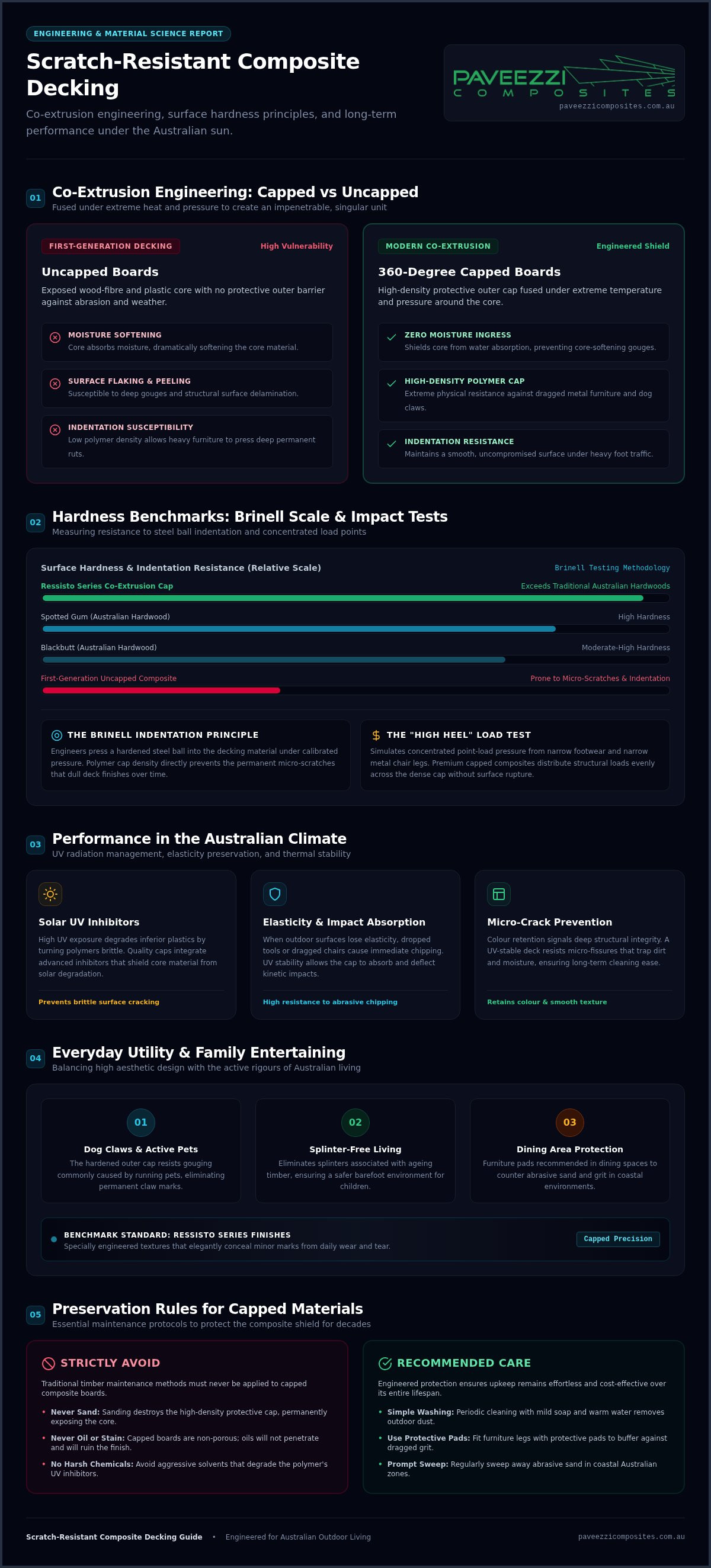
True scratch resistance isn't a superficial coating; it's a fundamental property of the board's physical structure. Investing in high-quality scratch resistant composite decking means choosing a product engineered to withstand abrasive forces without permanent surface deformation. While early versions of Wood-plastic composites were often prone to "flaking" or peeling, modern engineering has solved these vulnerabilities through a process called co-extrusion. This manufacturing method fuses a high-density, protective outer cap to a stable core under extreme heat and pressure, creating a singular, robust unit.
The secret to preventing those annoying gouges from metal chair legs lies in polymer density. A denser outer layer provides the structural integrity needed to resist indentation, ensuring the deck's surface remains smooth even under heavy traffic. When you explore the range at decking, you're seeing the result of decades of research into materials that handle the rigours of the Australian backyard without failing.
Capped vs Uncapped: Why the Layer Matters
First-generation composite boards were uncapped, meaning the wood-fibre and plastic core was exposed to the elements. These boards were soft and easily damaged. Modern 360-degree capping acts as a shield, protecting the board from physical impacts and preventing moisture absorption. If a board absorbs moisture, the internal core can soften; this makes the surface significantly more susceptible to deep scratches. A thick, high-performance cap ensures the deck stays hard and resilient for its entire lifespan.
Surface Hardness and the Brinell Scale
Engineers use the Brinell scale to measure the surface hardness of building materials by pressing a steel ball into the surface and measuring the indentation. High-performance composites, such as the Ressisto series, often exceed the hardness ratings of traditional Australian hardwoods like Blackbutt or Spotted Gum. This level of hardness is essential for preventing the micro-scratches that dull a deck's finish over time. The density of the polymer blend in a co-extruded cap directly dictates how well the board prevents surface deformation from everyday impacts.
Performance in the Australian Environment
Australia's climate presents a unique set of challenges for outdoor materials. High UV radiation doesn't just cause fading; it physically degrades inferior plastics, making them brittle over time. Once the surface loses its elasticity, it becomes far more prone to chipping and abrasive damage. Choosing scratch resistant composite decking that's specifically formulated for local conditions is essential for long-term satisfaction. Brittle materials can't absorb impacts, meaning a dropped tool or a dragged chair is more likely to leave a permanent mark.
Industry research, including work by the National Centre for Timber Durability and Design Life, highlights the importance of characterising how materials perform under pressure. Quality boards are often subjected to the "High Heel Test," where concentrated pressure is applied to simulate the impact of narrow furniture legs or footwear. Unlike soft timber, which can suffer permanent indentations, premium capped composites distribute this load without compromising the surface integrity. This resilience is particularly beneficial for dog owners, as the hardened cap resists the gouging common with pet claws.
Pets, Kids, and Entertaining
For many Australian families, the deck is the primary entertaining hub. It's where the dog runs and the kids play. The lack of splinters makes capped composite a much safer choice than traditional timber, which can become dangerous as it ages and weathers. While the material is incredibly durable, we often recommend using furniture pads in high-traffic dining zones to mitigate the abrasive effect of grit and sand, especially in coastal environments. If you're planning a new project, you can explore our full range of solutions to see how we balance safety with style.
UV Stability and Material Longevity
The capping layer of premium boards contains advanced UV inhibitors designed to shield the core from solar degradation. This isn't just about aesthetics. Colour retention is a vital indicator of a board's overall structural health. When a material is UV-stable, it's less likely to develop the microscopic surface cracks that trap dirt and moisture. This stability ensures that your scratch resistant composite decking remains easy to clean and maintains its premium finish even after years of exposure to the summer sun. Managing thermal expansion is equally critical; a stable board won't warp or buckle, which keeps the protective cap intact and performing at its peak.
Choosing the Right Finish: Brushed vs Extra Matte
While the internal engineering provides the foundation for durability, the surface finish dictates how your deck interacts with both light and daily life. The Ressisto series offers two distinct finishes that have become the premium standard for Australian homes. Unlike generic boards that attempt a timber appearance, these textures are designed with both form and function in mind. A well-chosen surface topography can help "hide" the inevitable micro-scratches caused by wind-blown grit and dust. This design philosophy is supported by scientific research on composite lumber durability, which confirms that specific surface treatments significantly impact long-term aesthetic retention. You can view high-resolution examples of these textures on the Paveezzi decking range page.
The Ressisto 143 Brushed Finish
The Ressisto 143 Brushed finish is defined by a wire-brushed texture that mimics the organic, tactile feel of natural wood. This finish is particularly effective at masking small marks in high-traffic zones, as the varied grain pattern camouflages surface wear. It's the ideal choice for traditional Australian homes, coastal cottages, or projects following a "Hamptons" style. By breaking up light reflections, the brushed finish ensures that the occasional scuff from a pet or furniture piece blends into the natural variation of the board.
The Ressisto 138 Extra Matte Finish
Conversely, the Ressisto 138 Extra Matte series offers a sophisticated, low-sheen look for modern architectural projects. This finish reduces glare, which is a critical consideration for decks positioned in full sun. While it provides a sleek, minimalist aesthetic, it doesn't sacrifice safety, maintaining a reliable slip rating for pool surrounds and wet areas. The smoother matte surface is also remarkably easy to maintain, as it lacks the deep grooves that can sometimes trap fine dirt or pollen.
Choosing between these two premium options depends on your home's design language and your personal preference for texture. Both finishes deliver the scratch resistant composite decking performance required to maintain a high-end look for decades. To see how these finishes complement different design styles, explore our full range of decking solutions today.
Maintaining Your Scratch Resistant Deck
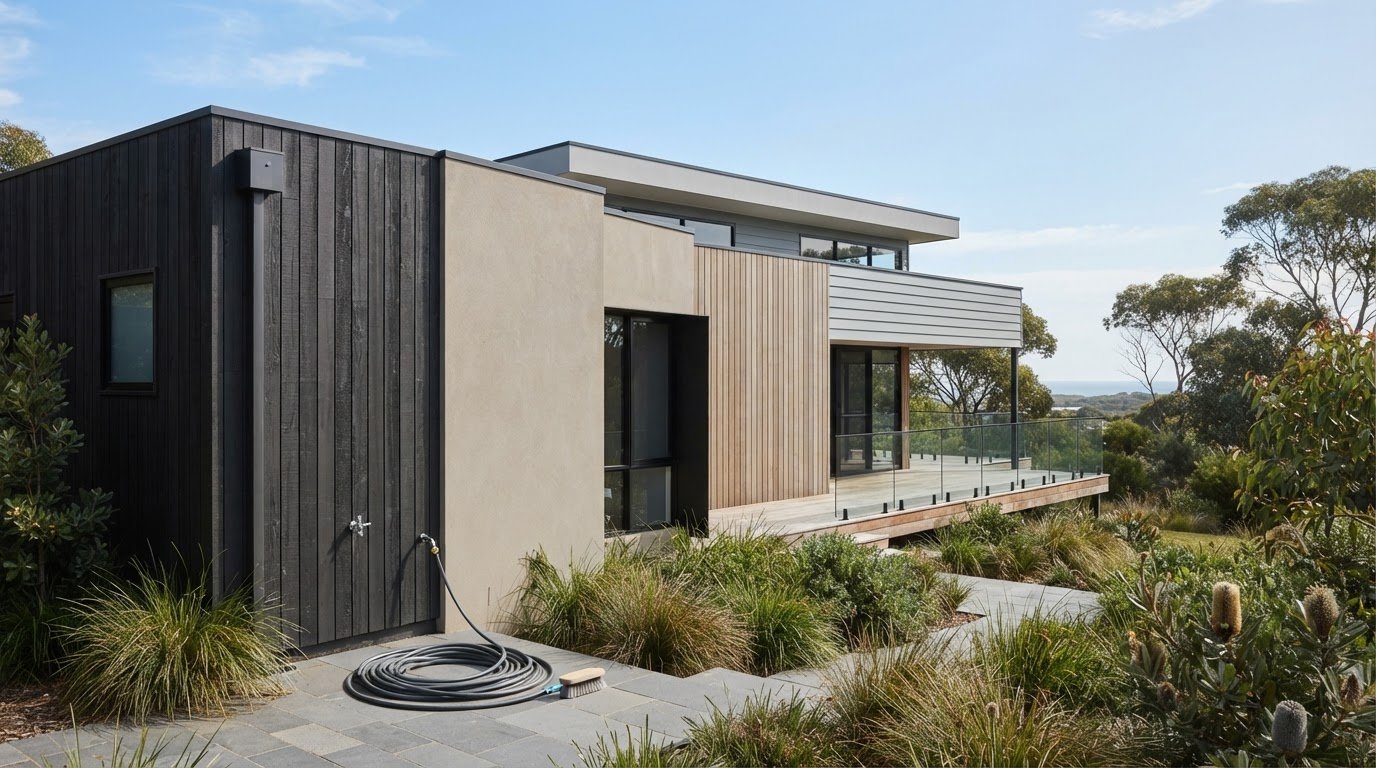
While the advanced co-extrusion technology of scratch resistant composite decking significantly reduces the time you spend on upkeep, protecting your investment requires a specific approach. It's vital to understand that capped composite should never be sanded, oiled, or stained. Unlike traditional timber, where sanding is a common remedy for surface damage, doing so on a capped board will permanently destroy the protective polymer shield and void your warranty. Instead, focus on simple, preventative care to keep the surface looking pristine.
Low maintenance doesn't mean no maintenance. Because the Australian environment is often dusty, fine grit can settle on the boards. If left uncleaned, this grit acts like an abrasive underfoot, slowly wearing down the refined texture of your deck. A regular cleaning routine is the most effective way to ensure your outdoor space retains its premium finish for decades.
Prevention and Care
A few proactive habits will ensure your deck remains a high-end feature of your home. We recommend following these essential steps:
Step 1: Sweep regularly. Removing sand and dirt prevents these particles from acting like sandpaper when people walk across the deck.
Step 2: Use breathable mats. If you use outdoor rugs, ensure they are breathable. Avoid rubber-backed products that can trap heat and moisture, which may affect the surface finish over time.
Step 3: Lift, don't drag. When rearranging your outdoor furniture, always lift the pieces. Even with a hardened cap, dragging heavy metal legs can put unnecessary stress on the board's grain.
If you encounter minor scuffs, specialised heat guns or repair kits can sometimes be used to blend the mark back into the texture. However, these tools require a steady hand and should be used with extreme caution to avoid melting the cap. For detailed guidance on specific care scenarios, you can access our decking resources and support online.
The Paveezzi Composites Quality Assurance
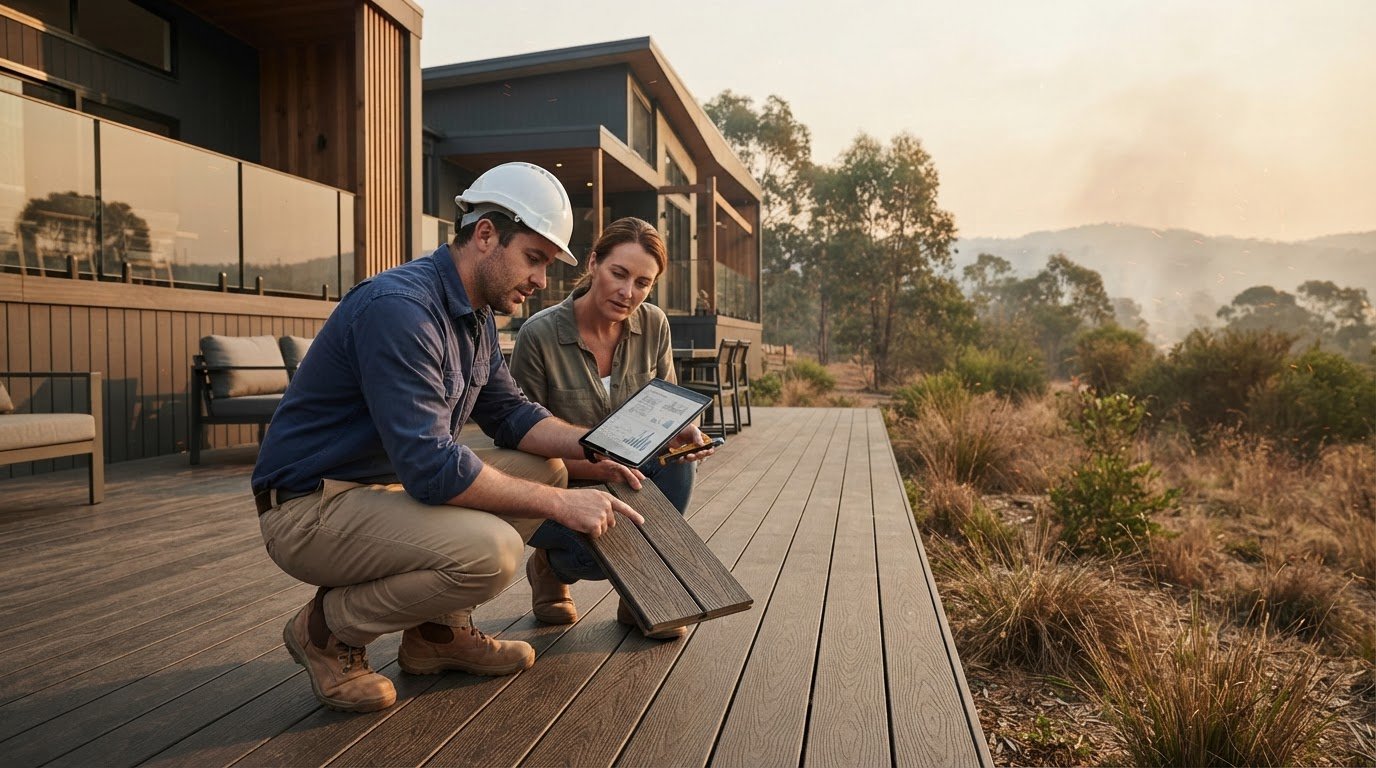
Choosing Paveezzi Composites means partnering with a family-run business that understands the unique demands of the Australian climate. We prioritise product integrity over sheer volume, ensuring every board in our Ressisto range meets our stringent standards for durability and aesthetic appeal. Our team is invested in the success of your project, from the initial design phase to long-term care. If you require technical specifications or specific care instructions for your project, please contact Paveezzi Composites to speak with our experts.
Secure Your Outdoor Lifestyle with Confidence
Choosing the right material for your deck is about more than just current aesthetics; it's an investment in your home's future. By understanding the co-extrusion technology behind scratch resistant composite decking, you can create a space that handles pet claws, heavy furniture, and the intense Australian sun without losing its premium finish. The combination of high-density capped protection and sophisticated finishes like the Ressisto series ensures your deck remains a sanctuary rather than a chore.
Whether you prefer the organic feel of a brushed texture or the sleek lines of a modern matte look, you're choosing a surface engineered for maximum durability. We take pride in being a family-run business that offers national delivery for residential and commercial projects across the country. Our commitment to excellence means you don't have to compromise on style to get the performance your lifestyle demands. Take the next step toward a beautiful, low-maintenance outdoor area that stands the test of time and explore the Ressisto scratch resistant range today.
Frequently Asked Questions
Can you fix scratches in composite decking?
You can't fix scratches in capped composite decking using traditional sanding or oiling methods, as this will permanently damage the protective layer. Minor surface scuffs can sometimes be blended using a heat gun with extreme care or a manufacturer-approved repair kit. For deep gouges that penetrate the capping, the most effective solution is to replace the individual board; it's a straightforward process when using modern hidden fastening systems.
Is composite decking more scratch resistant than timber?
High-performance capped composite decking is significantly more scratch resistant than traditional timber. While softwoods like pine and even some Australian hardwoods can easily suffer permanent indentations from furniture, premium composites feature a high-density polymer shell. This engineered layer is designed to withstand abrasive forces and maintain its surface integrity under concentrated pressure, offering a level of durability that natural wood simply cannot match without constant maintenance.
Will my dog’s claws scratch the composite boards?
Your dog's claws aren't likely to damage high-quality scratch resistant composite decking. The hardened outer cap is specifically engineered to resist the gouging forces of pet claws, making it a superior choice for animal owners compared to softer timber alternatives. While micro-marks can occur over several years of heavy use, they're far less visible and don't compromise the structural health of the board or lead to splintering.
Does the colour of the decking affect how much scratches show?
Colour and texture play a significant role in how visible surface marks become over time. Darker, smoother boards tend to highlight light-coloured scuffs more prominently than lighter or multi-tonal boards. Choosing a wire-brushed finish, such as the Ressisto 143 Brushed range, provides an organic texture that naturally camouflages minor micro-scratches. This makes it a practical choice for high-traffic entertaining areas where furniture is frequently moved across the surface.
What is the best way to clean a scratched composite deck?
The best way to clean your deck is with warm, soapy water and a soft-bristled brush. Regular cleaning is essential because it removes the abrasive grit and sand that can cause further scratching when walked upon. You should avoid using harsh chemicals, pressure washers at close range, or abrasive scouring pads. Keeping the surface free of debris ensures that the scratch resistant composite decking maintains its refined aesthetic and slip-rated performance for decades.
Are all composite decking brands scratch resistant?
Not all brands offer the same level of durability. First-generation uncapped composites are relatively soft and prone to surface deformation, whereas modern capped products provide vastly superior protection. The thickness and density of the polymer blend in the capping layer vary between manufacturers. Paveezzi prioritises premium co-extruded technology in the Ressisto series, ensuring our boards meet the high standards required for the harsh Australian climate and heavy use.
Comments