
Selecting the Best Decking for Bushfire Prone Areas in QLD: A 2026 Buyer’s Guide
Designing a premium outdoor retreat in the Sunshine State shouldn't feel like a compromise between architectural beauty and survival. For many homeowners, sourcing the right decking for bushfire prone areas QLD brings a heavy weight of responsibility and a fair share of confusion regarding building codes. You want a space that invites weekend barbecues and quiet mornings, yet the technical demands of AS 3959 often make it feel as though your only options are industrial, uninspiring materials. It's a genuine worry that the deck you build today might become a vulnerability during the next fire season.
This 2026 buyer’s guide is designed to bridge that gap, showing you how to select composite solutions that satisfy rigorous safety benchmarks without losing that high-end timber aesthetic. We believe that safety and style should coexist through smart engineering and meticulous material choice. We will explore the technical nuances of the Ressisto range, the critical importance of non-combustible sub-structures like Rhino adjustable pedestals, and how to achieve a low-maintenance finish that adds lasting value to your property.
Table of Contents
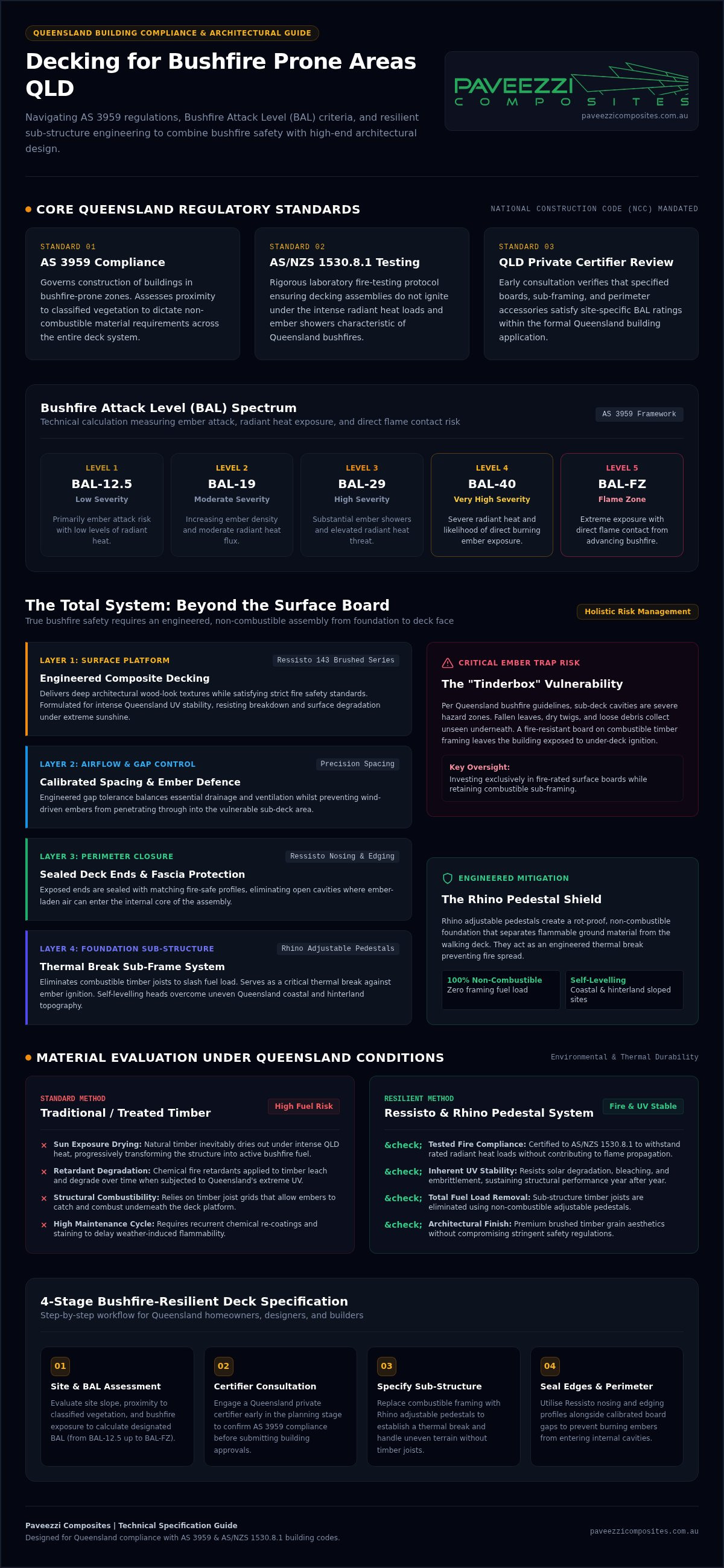
Understanding BAL Ratings and QLD Bushfire Regulations
The safety of your home starts with a clear-eyed understanding of the risks posed by your environment. In Queensland, the National Construction Code mandates that buildings in designated areas must manage the risk of bushfire attack through a standardised assessment. This is known as the Bushfire Attack Level (BAL). It isn't just a bureaucratic label; it's a technical calculation of the potential for ember attack, radiant heat, and direct flame contact. When selecting decking for bushfire prone areas QLD, you must ensure your materials are tested to AS/NZS 1530.8.1 standards. This ensures the product won't ignite under the specific heat loads of your site. Queensland’s unique climate adds another layer of complexity. Intense UV exposure can degrade lower-quality materials, making UV stability just as critical as fire resistance for long-term durability.
The Role of AS 3959 in Your Deck Design
The AS 3959 standard dictates how your deck must be constructed based on its proximity to classified vegetation. If your home sits near bushland, your BAL rating will increase, moving from BAL-12.5 up to BAL-40 or even BAL-FZ (Flame Zone). It's a common mistake to think only the surface boards matter. In reality, the entire system, including the sub-structure, must often meet non-combustible requirements. Traditional timber often fails these tests because it dries out and becomes fuel; even fire-retardant treated timbers can lose their effectiveness over time when exposed to the harsh Australian sun. This makes engineered solutions a far more reliable choice for long-term safety.
Balancing Compliance with Architectural Vision
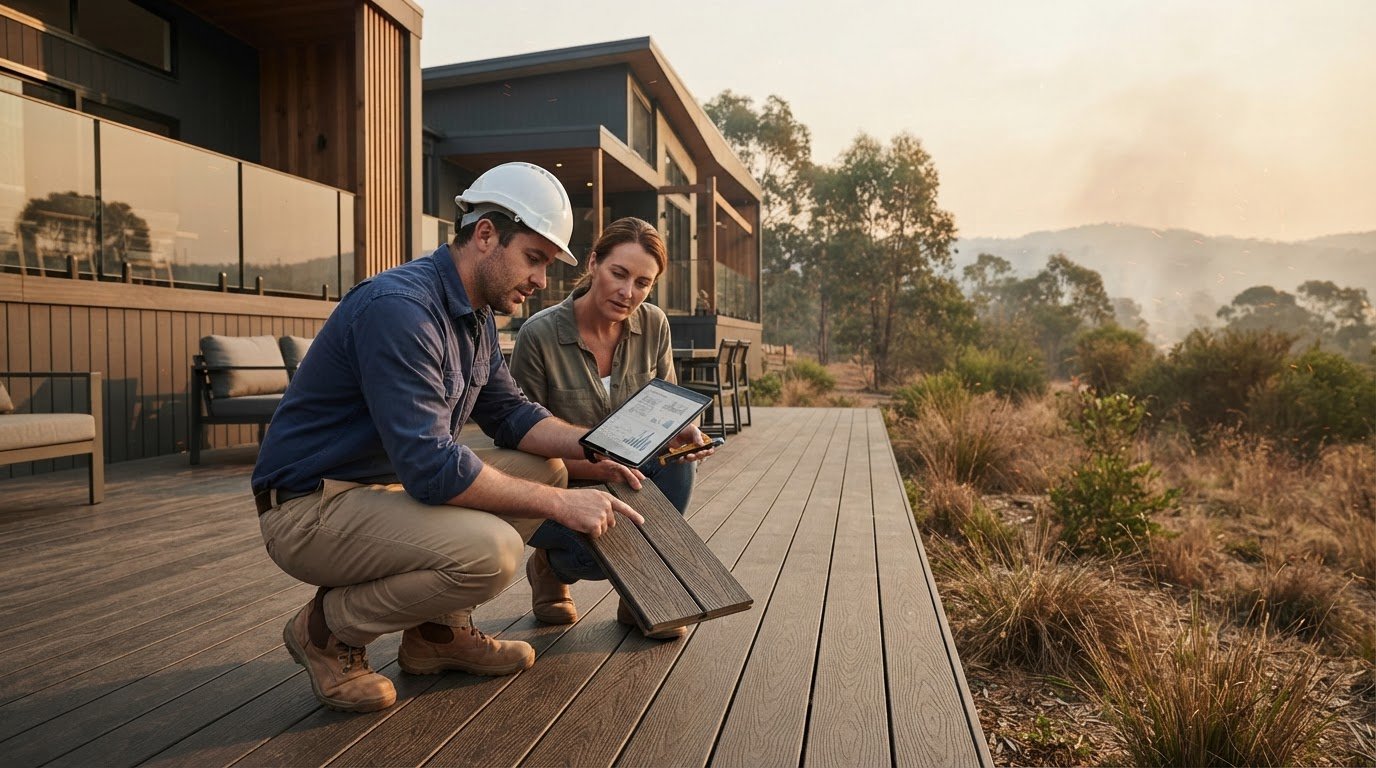
Gone are the days when fire-rated materials looked like grey, industrial plastic. Modern engineering has allowed us to create composite boards, such as the Ressisto 143 Brushed series, which offer deep, wood-look textures while maintaining high safety standards. Achieving this balance requires careful planning and technical oversight. We always recommend consulting with a private certifier early in your QLD building application process. They can confirm if your chosen decking for bushfire prone areas QLD meets the specific BAL requirements for your property, ensuring your architectural vision remains both legal and beautiful. By choosing a system designed for high-exposure environments, you're investing in a space that adds property value without compromising on peace of mind.
The Total System: Beyond the Surface Decking Board
While the aesthetic of your deck is what you see, its resilience is defined by what lies beneath. A common oversight in designing decking for bushfire prone areas QLD is focusing solely on the fire-rating of the boards while ignoring the sub-structure. A fire-resistant board is of little use if the frame supporting it is made of combustible timber. True safety requires a systems-based approach where every component works in unison to repel heat and embers.
The Queensland bushfire planning and construction guidelines highlight that sub-deck spaces are high-risk zones for ember accumulation. Leaves, twigs, and dry debris often gather in these hidden cavities, creating a tinderbox that can ignite during a bushfire event. Non-combustible pedestals act as a critical thermal break that prevents ember-led ignition from spreading through the sub-deck structure during a fire event. By integrating non-combustible accessories, you create a complete fire-safe solution that protects your home from the ground up.
Non-Combustible Adjustable Pedestals
Utilising Rhino adjustable pedestals transforms the safety profile of your outdoor space. These systems allow you to eliminate traditional timber joists entirely, significantly reducing the total fuel load of the structure. Their self-levelling heads are particularly effective for the uneven terrain often found in Queensland's coastal and hinterland regions, ensuring a perfectly level finish without the need for complex timber framing. This engineering-led approach provides a stable, rot-proof, and fire-safe foundation that traditional methods simply cannot match.
Managing Gaps and Ember Guards
Precision is vital for both safety and aesthetics. Correct board spacing is necessary to prevent embers from penetrating the sub-deck area, yet it must allow for adequate drainage and airflow. To finish the installation, using Ressisto Nosing & Edging Options seals exposed deck ends, preventing embers from finding a path into the core of the structure. These accessories provide a seamless architectural finish that doesn't compromise the integrity of your fire-safe design. If you're planning a project and need technical guidance on material compatibility, you can explore our full range of solutions at Paveezzi Composites.
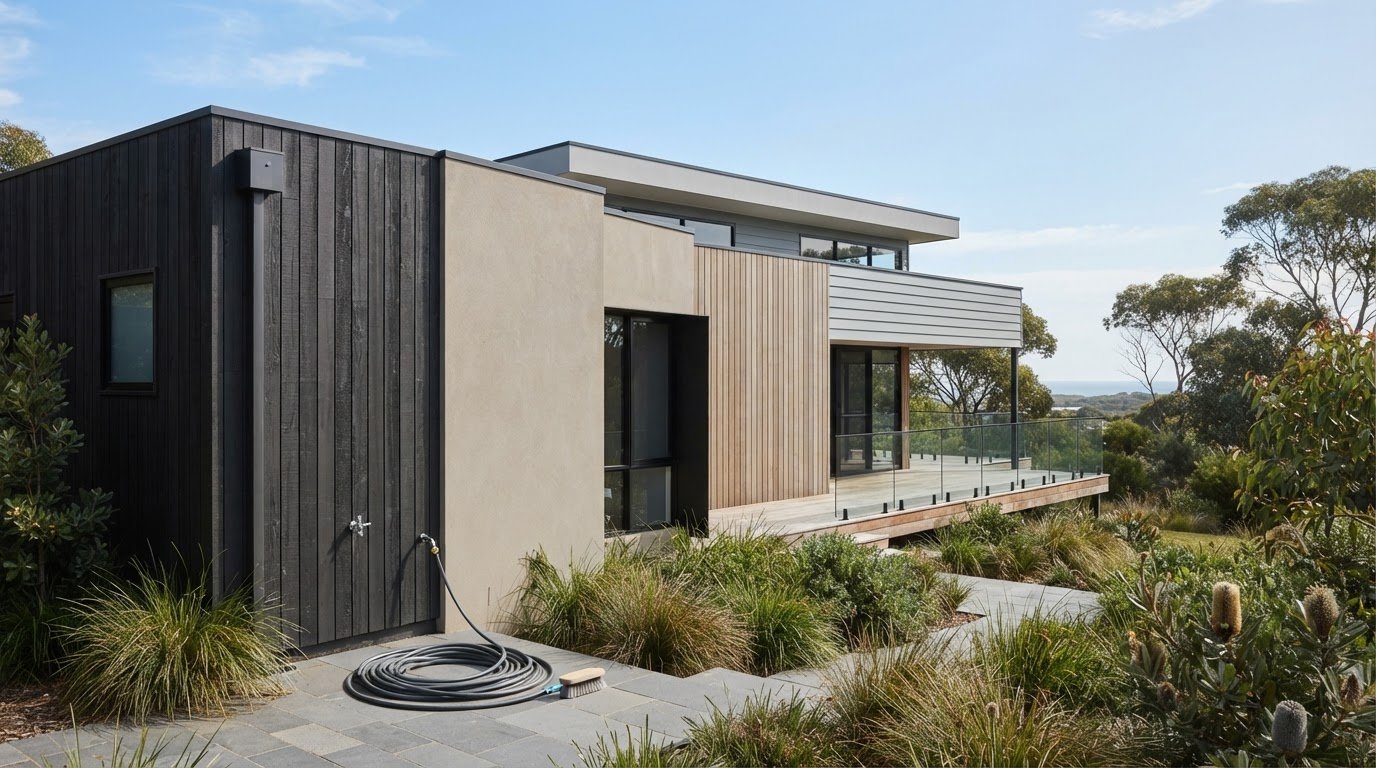
Buying Guide: Comparing Fire-Resistant Finishes for QLD Homes
Choosing the right finish for your home involves more than just picking a colour. In the context of the CSIRO Bushfire Best Practice Guide for floors and subfloors, the physical properties of your material are as important as its fire rating. For decking for bushfire prone areas QLD, capped composite boards are the gold standard. Capping provides an extra layer of protection against ember burns while significantly improving UV resistance. This technology is vital when specifying decking for bushfire prone areas QLD because it ensures the board remains structurally sound under extreme thermal stress. Uncapped alternatives often struggle with the intense Queensland sun, leading to fading and structural degradation over time.
Ressisto 143 Brushed: The Authentic Timber Feel
The Ressisto 143 Brushed series is designed for those who refuse to sacrifice the organic warmth of timber for safety. Its wire-brushed texture provides a tactile surface that mimics natural wood grain beautifully. This finish is exceptionally durable against scratching from pets or heavy outdoor furniture, making it a practical choice for busy family homes. In dustier Queensland regions, the textured surface helps hide fine sediment, though a simple periodic wash is all that's required to maintain its premium appearance.
Ressisto 138 Extra Matte: The Modern Minimalist Choice
For contemporary architectural designs, the Ressisto 138 Extra Matte range offers a sophisticated, low-sheen finish. Matte surfaces are particularly effective in bright, open landscapes because they reduce solar glare, creating a more comfortable environment for your eyes during midday heat. The advanced capping technology used in this series ensures that the matte surface remains easy to clean, resisting oils and tannins that might otherwise stain an inferior product. It's a refined choice that prioritises longevity without the artificial shine of early composite generations.
Selecting a palette that complements the surrounding bushland, such as deep greys or earthy browns, helps your deck feel like a natural extension of the landscape. Heat retention is also a vital consideration; while all materials warm up in the sun, our engineered composites are designed to dissipate heat more effectively than traditional dark timbers. To see how these finishes can transform your outdoor living space, you can view our full product range at Paveezzi Composites.
Building for Resilience: The Paveezzi Supply Advantage
Procuring materials for high-risk zones requires more than a simple transaction. While big-box retailers offer convenience, they often lack the deep technical knowledge required to navigate complex fire regulations, leaving homeowners to decipher building codes on their own. Choosing a specialist supplier means you're partnering with experts who understand the engineering behind every board. We provide the technical oversight necessary to ensure your decking for bushfire prone areas QLD is not just a surface choice, but a compliant, high-performance system. As a family-run operation established in 2010, we've spent over a decade refining our range to withstand the specific demands of the Australian climate.
Expert Resources for QLD Homeowners
Accessing reliable data is the first step toward a successful build. We offer comprehensive Paveezzi resources, including technical data sheets that your certifier or architect will require for BAL compliance. We encourage homeowners to request samples to test against their local soil tones and the unique light of their property. Understanding your warranty is equally vital. Our composite products are backed by rigorous testing, giving you the confidence that your investment will remain stable and vibrant despite the harsh UV and heat cycles common in bushfire-prone landscapes.
Planning Your Outdoor Entertaining Space
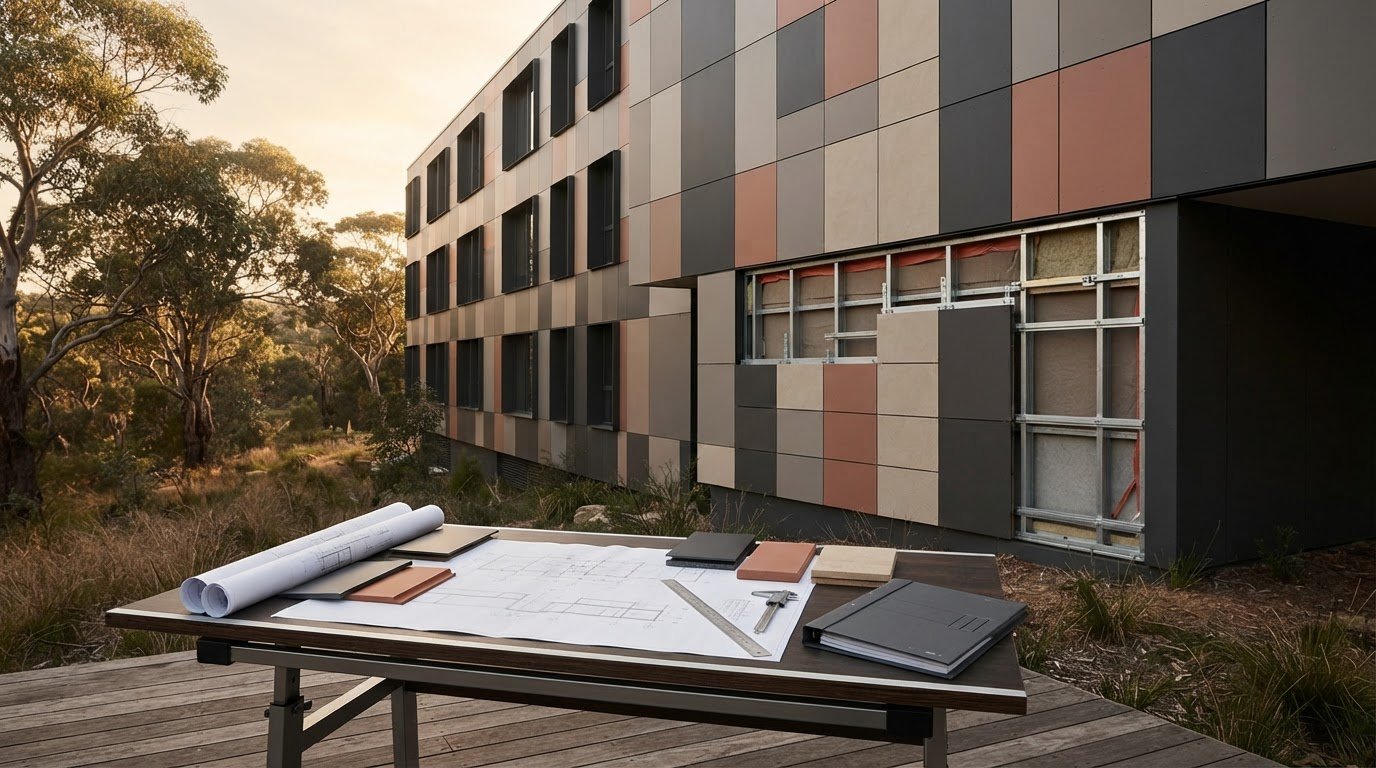
A truly resilient home often integrates multiple fire-safe elements. You can achieve a cohesive, modern facade by pairing your deck with architectural composite cladding, ensuring that the entire exterior of your entertaining space meets high safety standards. Investing in premium fire-rated materials isn't just about safety; it's a strategic move for long-term property value. Insurance providers and future buyers increasingly prioritise resilience, making a compliant deck a significant asset.
As we move through the 2026 building season, securing your supply early is essential to avoid global logistics delays. We specialise in national supply, ensuring that premium materials are available for your independent installer to create a space that is both beautiful and secure. By choosing the right decking for bushfire prone areas QLD now, you ensure your home is prepared for the years ahead with a finish that stands the test of time and temperature.
Secure Your Outdoor Lifestyle for 2026 and Beyond
Building a deck in a bushfire-prone landscape is about more than just meeting a regulatory checklist; it's about creating a lasting sanctuary for your family. True resilience comes from a systems-based approach where premium boards are supported by non-combustible foundations to mitigate ember risks. Selecting the right decking for bushfire prone areas QLD ensures that your home remains both a safe haven and a high-value asset for years to come.
Paveezzi Composites has been a dedicated, family-run Australian business since 2010. We take pride in offering the specialist technical support needed for BAL compliance alongside premium architectural finishes that redefine outdoor luxury. Our commitment to excellence means you don't have to choose between rigorous safety and sophisticated design. It's time to build with confidence and enjoy the peace of mind that comes from superior engineering.
Explore the Ressisto Fire-Resistant Decking Range and start planning your resilient outdoor space today.
Frequently Asked Questions
Is composite decking actually fire-proof in a QLD bushfire?
Composite decking is not fire-proof in an absolute sense, but high-quality fire-rated boards are engineered to be significantly more fire-resistant than traditional timber. These materials are designed to self-extinguish and resist ignition from ember attacks, which are the primary cause of house fires during a bushfire event. When selecting decking for bushfire prone areas QLD, it's vital to choose products tested to AS 1530.8.1 standards to ensure they meet the specific safety requirements of your property's BAL rating.
What is the difference between BAL-29 and BAL-40 decking requirements?
The primary difference lies in the intensity of radiant heat the structure must withstand during a fire. BAL-29 designs for a heat flux of up to 29 kW/m², whereas BAL-40 requires materials to resist up to 40 kW/m² and withstand increased ember exposure. While BAL-29 allows for certain fire-retardant treated timbers, BAL-40 often mandates non-combustible sub-structures and specifically tested composite boards. Ensuring your decking for bushfire prone areas QLD meets these higher thresholds is essential for legal compliance and long-term safety.
Can I install composite decking over a timber sub-frame in a bushfire-prone area?
Your ability to use a timber sub-frame depends entirely on your specific Bushfire Attack Level (BAL) rating and local building approvals. For lower risk categories, timber may be permissible, but higher risk zones typically require non-combustible sub-structures. We recommend using non-combustible adjustable pedestals or metal framing to eliminate the fuel load beneath your deck. This systems-based approach significantly reduces the risk of sub-deck ignition, which remains a common failure point for residential decks during intense fire seasons.
Does fire-rated composite decking get hotter than timber in the QLD sun?
High-density materials like composite decking do absorb heat, but modern engineering has greatly improved their thermal performance for the Australian climate. While dark-coloured boards will naturally feel warmer under the intense Queensland sun, our premium ranges are designed to dissipate heat more effectively than older composite generations. Choosing lighter colours and matte finishes can also help manage surface temperatures. It's a small trade-off for the superior fire resistance and low-maintenance benefits that these engineered materials provide for your home.
How do I maintain my fire-resistant deck to ensure it stays compliant?
Maintenance for fire-rated decks focuses on preventing debris accumulation rather than reapplying chemical treatments or oils. You should regularly clear the gaps between boards and the space beneath the deck to ensure leaves and twigs don't create a fuel source for ember attacks. Unlike timber, which requires periodic staining to remain stable, composite boards only need a simple wash with soapy water to maintain their integrity and keep your fire-resistant system functioning exactly as the manufacturer intended.
Are Paveezzi Ressisto boards certified for use in BAL-40 zones?
The Ressisto range is engineered for high-performance in extreme environments, including bushfire-prone landscapes across Australia. While specific certifications can vary based on product thickness and the overall construction system used, our boards are frequently specified for projects requiring high BAL compliance. We always advise homeowners and architects to review our latest technical data sheets or consult with a private certifier to confirm the exact certification for their specific site. This ensures your project meets all current Australian standards for safety and architectural excellence.
Comments