
WPC Decking Pros and Cons: Is it the Right Choice for Your Australian Home in 2026?
What if the "natural" timber deck you've been dreaming of is actually the biggest burden on your Australian lifestyle in 2026? We all love the look of a fresh Spotted Gum finish; however, the reality often involves a relentless cycle of sanding, oiling, and watching your investment grey under the punishing UV rays. Understanding the WPC decking pros and cons is essential before you commit to a material that might not stand up to our unique climate. It's a common frustration to see a beautiful outdoor space succumb to mould or become too hot to walk on by midday.
You deserve an honest, expert evaluation of wood plastic composite decking to help you decide if it truly outperforms traditional timber for your specific project. We've spent years refining our understanding of architectural-grade materials to solve these exact pain points. In this guide, we'll examine everything from lifecycle costs and heat-mitigation technology to the aesthetic differences between brushed and matte finishes. By the end, you'll know exactly which surface will best serve your home and your family for the next twenty years.
Table of Contents
The Enduring Pros: Why WPC Decking Dominates the Australian Market
The Australian landscape has always been a demanding testing ground for building materials. For many homeowners, the shift toward wood plastic composite (WPC) isn't just about aesthetics; it's a strategic move to combat the high-maintenance reality of traditional timber. When we weigh up WPC decking pros and cons, the "pros" list is anchored by a level of resilience that natural wood simply cannot match. It's a shift from a material that survives the elements to one that is engineered to thrive in them.
Unlike treated pine or even hardy Merbau, premium WPC boards are engineered to resist the primary killers of Australian decks: rot, mould, and termite infestations. These boards don't splinter, making them a safer choice for families with young children or pets. From an environmental perspective, the credentials are equally compelling. High-quality boards often utilise between 90% and 95% recycled content, comprising reclaimed timber fibres and recycled plastics. This diverts significant waste from landfills while providing a consistent, high-performance product.
Maintenance-Free Living: Reclaiming Your Weekends
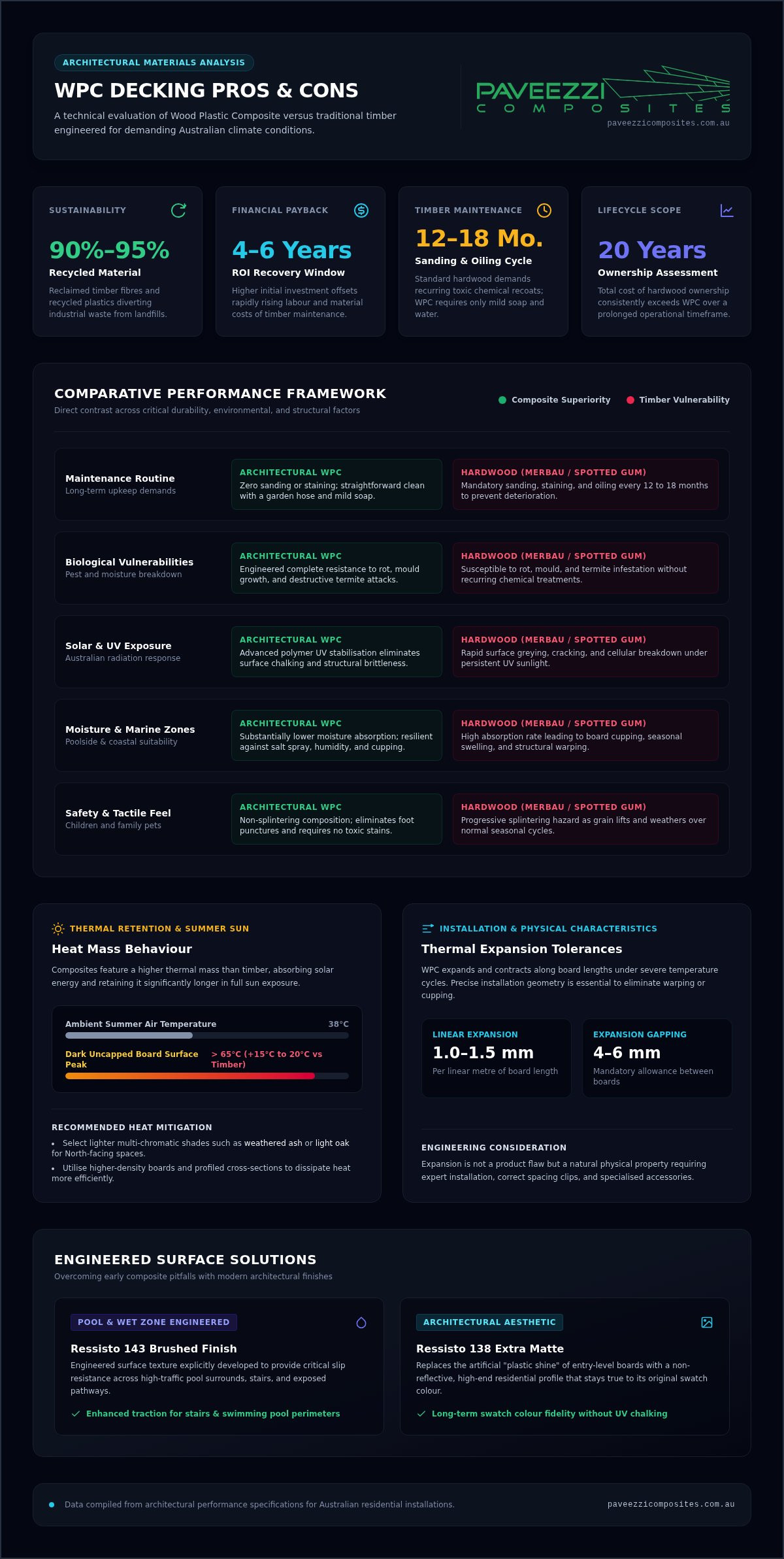
The "hidden cost" of timber is perhaps its most significant drawback. Industry data suggests that over a 20-year lifecycle, the ownership costs for a standard hardwood deck can be significantly higher than WPC due to recurring professional maintenance. Sanding, staining, and oiling every 12 to 18 months isn't just expensive; it's a massive drain on your time. WPC changes the equation entirely. It retains its deep colour and structural integrity without the need for toxic chemical treatments. For most owners, a simple wash with a garden hose and mild soap is all that's required to keep the surface looking pristine. It's about spending your Saturday enjoying the BBQ, not scrubbing the floorboards.
Engineered for the Australian Climate
Our sun is notoriously harsh on exterior surfaces. Older composite products often suffered from "chalking," a powdery breakdown of the surface caused by UV degradation. Modern, architectural-grade WPC decking options solve this through advanced chemical engineering. UV stabilisation in WPC is the key to preventing long-term brittleness by protecting the polymer bonds from solar degradation. This stability, combined with a moisture-absorption rate far lower than timber, makes WPC the ideal candidate for poolside applications and coastal homes where salt spray and humidity are constant factors. It provides a stable, reliable foundation that won't warp or cup when the weather turns.
Navigating the Cons: Addressing Heat, Cost, and Aesthetics
While the benefits are clear, a balanced look at WPC decking pros and cons means addressing the genuine hurdles homeowners face. The most frequent criticisms involve the initial price tag and how the material reacts to our scorching summer sun. It's true that entry-level, first-generation composites often looked like cheap plastic, which left a lasting negative impression on many builders. However, modern architectural ranges have evolved significantly to solve these aesthetic and functional issues.
One technical factor often overlooked is thermal expansion. WPC boards expand and contract along their length at a rate of 1.0 to 1.5 mm per linear metre. This physical reality necessitates precise gapping during installation, often requiring 4 to 6 mm expansion gaps to prevent board cupping or warping. It's not a flaw, but a characteristic that demands expert oversight and the right accessories to manage correctly.
Managing Heat Retention and Foot Comfort
Composite materials possess a higher thermal mass than timber, meaning they absorb and hold heat for longer. In direct sunlight, a dark, uncapped board can reach temperatures 15°C to 20°C higher than natural wood. On a 38°C day, surface temperatures can exceed 65°C, making barefoot walking nearly impossible. To mitigate this, we recommend selecting lighter multi-chromatic shades like weathered ash or light oak for North-facing areas. Higher-density boards and specific profiles can also assist in dissipating heat more efficiently than solid, dark alternatives.
The Reality of Upfront Costs vs. ROI
There's no hiding that WPC requires a higher initial capital investment. Standard Merbau or Spotted Gum might seem cheaper at the checkout, but premium options like the Ressisto 138 Extra Matte offer a different value proposition. When you factor in the rising cost of labour and materials for annual oiling, the investment typically pays for itself within 4 to 6 years. Beyond the immediate savings, a high-quality composite deck adds tangible resale value to Australian properties, as buyers increasingly prioritise low-maintenance outdoor living. If you're planning your project, it's worth exploring how these architectural solutions fit your budget over the long term.
WPC vs. Timber: A Comparative Performance Framework
Choosing between natural wood and composite requires a clear understanding of how each material behaves over decades, not just days. When we look at the WPC decking pros and cons, the performance gap is most evident in the projected lifespan. A well-maintained hardwood deck typically lasts 10 to 15 years before structural issues or surface rot take hold. In contrast, premium WPC is a 25-year-plus commitment. It doesn't just survive; it maintains a level of structural integrity that timber cannot sustain without constant intervention.
Colour consistency remains a primary driver for the shift toward WPC. Natural timber is notorious for "greying off" within months if it isn't oiled religiously. This is a natural reaction to UV exposure, but it's one that many homeowners find frustrating. Composite boards stay true to their original swatch, ensuring the palette you chose during the design phase is the one you enjoy years later. Achieving this sleek, uniform look requires specific hidden fastening systems. These clips create a seamless surface without visible screw heads, which also allows the boards to move naturally during temperature shifts.
The foundation of any successful deck is the sub-frame. Because WPC is denser and heavier than traditional softwoods, it demands a perfectly level and stable substructure. For projects where ground clearance is tight or the site is uneven, we often recommend Rhino adjustable pedestals. These engineered systems solve sub-frame leveling issues instantly, providing the necessary ventilation to prevent humidity trapping beneath the boards.
Aesthetic Evolution: From "Plastic" to "Architectural"
Early composites often had a shiny, synthetic finish that felt out of place in high-end Australian homes. We've spent our history as a family-run operation sourcing finishes that bridge the gap between engineering and natural beauty. You can learn more about our journey on our about us page. Today, our focus is on "extra matte" and brushed textures. These finishes eliminate unnatural reflections, mimicking the deep, organic grain patterns of natural timber while providing superior slip resistance for wet areas.
Fire Safety and BAL Ratings
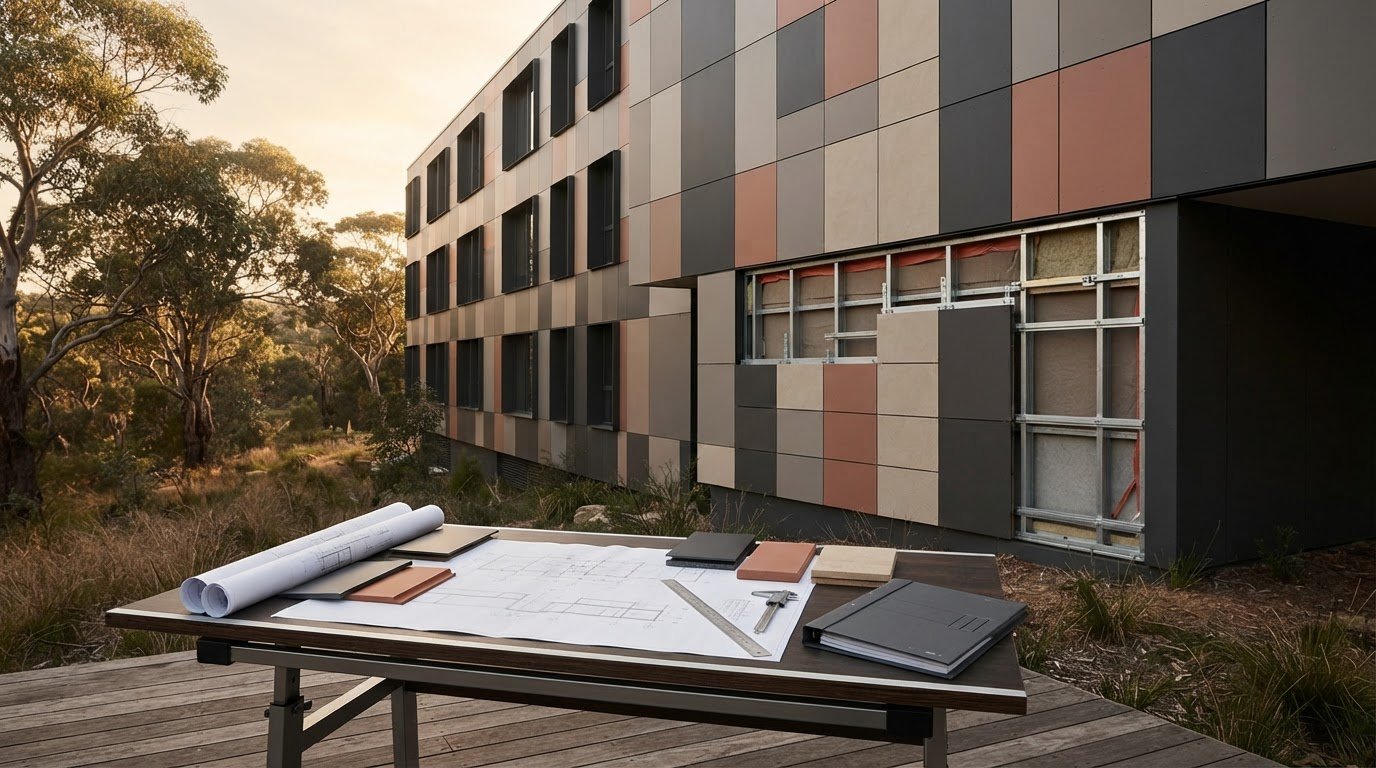
Living in Australia means fire safety is a non-negotiable part of the building process. The National Construction Code sets strict Bushfire Attack Level (BAL) ratings that dictate which materials can be used in specific zones. Many WPC formulations are now engineered with fire-retardant mineral cores, offering significantly better ignition resistance than traditional softwoods. For a cohesive and fire-conscious exterior design, many architects pair our decking with Ressisto 144 Fineline Cladding. This ensures your entire facade meets the rigorous safety standards required for 2026 builds. Explore our full range of architectural decking solutions to find your perfect match.
Selecting Your Surface: How Premium Finishes Solve Common WPC Pitfalls
The final stage of any decking project is the selection of the surface finish, a choice that dictates both the safety and the long-term aesthetic appeal of your home. When evaluating WPC decking pros and cons, many homeowners worry that a composite surface won't provide the necessary traction or will look too synthetic. However, modern engineering has moved far beyond the basic profiles of the past. By selecting a finish tailored to your specific environment, you can effectively eliminate the traditional drawbacks associated with early-generation materials.
For high-traffic zones or areas exposed to the elements, the Decking Ressisto 143 Brushed finish is an exceptional choice. It achieves high slip resistance without sacrificing the sophisticated look of a natural grain. If your project is a high-end residential build where a refined, low-glare appearance is the priority, "Extra Matte" has become the gold standard. It provides a velvety, non-reflective surface that feels contemporary and expensive. For those looking to create a sense of expansive luxury, the Riviera 190 series offers a wider board profile that minimises visible joins and makes smaller alfresco areas feel significantly larger.
A professional result depends on the details. Using Ressisto nosing and edging options ensures that stairs and exposed board ends are capped with the same precision as the main deck. These finishing touches hide the core of the board and provide a clean, architectural edge that DIY timber projects often lack.
Matching the Finish to the Function
Choosing the right texture is a matter of practical utility. A brushed finish is the superior option for pool surrounds or wet areas, as the textured surface provides increased traction underfoot. Conversely, matte finishes are ideal for large, sun-drenched balconies where reducing glare is essential for visual comfort. It is important to understand that the "cons" of early-generation WPC have been engineered out of the Ressisto range, allowing you to focus purely on the design intent of your space.
Creating a Cohesive Architectural Look
In 2026, the most successful Australian designs prioritise a unified facade. You can achieve this by pairing your decking with Architectural Composite Cladding. This creates a seamless indoor-outdoor flow, using consistent tones to blur the lines between your living room and the garden. This psychological connection to the outdoors is a hallmark of modern coastal and suburban architecture. Ultimately, a quality-first approach is the only way to ensure a lasting investment. By selecting premium finishes and matching them to your lifestyle, you ensure your deck remains a source of pride rather than a weekend chore. Explore our full range of architectural solutions to start your transformation.
Transforming Your Outdoor Living Experience
Choosing the right material for your home is a decision that balances immediate aesthetics with decades of performance. While navigating the WPC decking pros and cons, it becomes clear that the value lies in reclaiming your time and ensuring a consistent, high-end finish. You're moving away from the constant cycle of timber maintenance and toward a solution engineered for the Australian climate of 2026. It's about creating a space that serves your family without demanding your entire weekend in return.
As a family-run Australian business established in 2010, we've dedicated ourselves to providing architectural solutions that don't compromise on quality. Whether you choose our specialised Extra Matte or Brushed finishes, or utilise our high-performance Rhino pedestal systems for a level sub-frame, you're choosing reliability. We're here to guide you through every technical detail to ensure your investment stands the test of time. Explore the premium Ressisto and Riviera ranges at Paveezzi Composites and take the first step toward a beautiful, enduring outdoor sanctuary. Your dream deck is within reach.
Frequently Asked Questions
Does WPC decking get hotter than timber in the Australian sun?
WPC materials generally have a higher thermal mass than timber, meaning they absorb and retain heat for longer. When weighing up WPC decking pros and cons, heat retention is a common concern under our harsh sun. To manage this, we recommend choosing lighter shades for North-facing decks. Modern co-extruded boards are designed to dissipate heat more effectively than older alternatives, ensuring better barefoot comfort during the peak of summer.
Can I install WPC decking directly onto concrete?
Direct installation onto concrete is not recommended because WPC boards require consistent cross-ventilation to prevent moisture build-up and thermal expansion issues. You must use a sub-frame system to create an essential air gap. For low-clearance projects or uneven concrete slabs, our Rhino adjustable pedestals are an ideal solution. They provide the necessary drainage and airflow while ensuring your deck remains perfectly level and structurally sound for the long term.
How do I clean a WPC deck without damaging the surface?
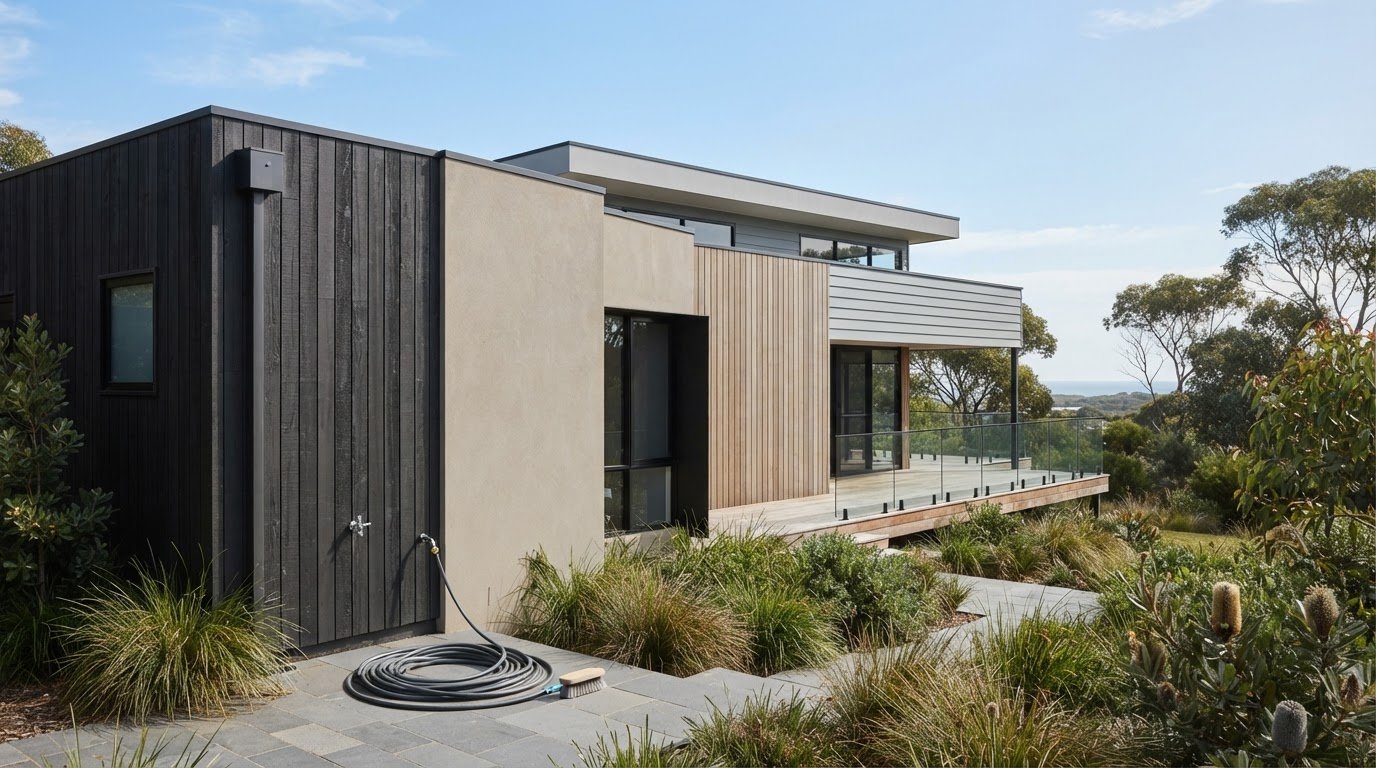
Maintaining your surface is remarkably simple compared to the traditional timber routine. For most dirt and debris, a garden hose and mild dish soap are sufficient. Use a soft-bristled broom to scrub away stubborn spots. It's vital to avoid pressure washers at high settings or harsh chemical cleaners, as these can compromise the protective cap. Regular cleaning prevents organic matter from settling, which is essential for maintaining a pristine architectural finish.
Is WPC decking truly environmentally friendly?
Our composite solutions are a sustainable alternative to harvesting slow-growth hardwoods. The boards are manufactured using a high percentage of recycled materials, typically including reclaimed timber fibres and recycled HDPE plastics like milk bottles. This process diverts significant waste from Australian landfills. Because the material doesn't require toxic oils, stains, or chemical preservatives throughout its life, it remains a cleaner choice for your garden's ecosystem and your family's health.
Does composite decking fade over time?
While all materials exposed to our extreme UV index will experience some change, premium capped composites are engineered for exceptional colour stability. Unlike timber, which greys off rapidly, our Ressisto range features a protective polymer shell that resists fading. You might notice a very subtle shift in tone during the first few months as the board settles, but it won't require restaining to maintain its original aesthetic for decades to come.
Do I need special tools to install a Paveezzi composite deck?
You can install our decking using standard woodworking tools, such as a mitre saw with a fine-toothed carbide blade and a cordless drill. The primary difference lies in the fastening method. Instead of traditional top-screwing, our boards utilise a proprietary hidden clipping system. These accessories ensure consistent expansion gaps and a clean, screw-free finish. While we don't provide installation services, these systems make the process straightforward for experienced builders and competent DIY enthusiasts.
Comments